Clinical excellence for absolute peace of mind
Expert Skin Cancer Detection by Miss Rakhee Nayar
Early intervention saves lives. Experience a bespoke approach to skin cancer detection and expert-led treatment pathways designed for both health and aesthetic preservation.
Patients Satisfaction Rate
Outstanding care and exceptional surgical results

Your Safety Starts Here
The Importance of Early Detection
What is early skin cancer detection? Early skin cancer detection is the process of identifying abnormal skin growths before they invade locally to a significant level or potentially spread to other parts of the body. When caught early, most skin cancers can be treated successfully in the vast majority of cases, with very high cure rates.
Regular self-examination and professional screenings are the most effective ways to ensure any suspicious lesions are treated before they become life-threatening.
From accurate detection to expert removal
A Dual Specialist Approach
When dealing with skin cancer, particularly on the face or other visible areas, the priority is twofold: complete removal of the cancer and the best possible aesthetic result.
Miss Rakhee Nayar offers a unique advantage through her dual training. As a Consultant Plastic Surgeon and a Mohs Surgery specialist, she provides a seamless transition from oncology to reconstruction.
- Precision Oncology: Using Mohs Micrographic Surgery to track and remove the "roots" of the cancer with microscopic accuracy.
- Reconstructive Excellence: Applying advanced plastic surgery techniques to repair the site, aiming for the smallest possible scar and the preservation of natural facial features.


What to Watch For
How to Detect Skin Cancer
How can you detect skin cancer early? The most effective way to detect skin cancer is through a monthly head-to-toe self-examination of your skin in a well-lit room.
You should look for any new growths or changes to existing moles, specifically monitoring for irregularities in shape, colour, or texture. If a lesion does not heal within four weeks, it should be professionally assessed by a specialist.
What to look for during your skin self-check
The ABCDE Rule for Melanoma
When checking your moles, follow the ABCDE framework to identify potential warning signs of melanoma:
One half of the mole does not match the other half.
Border
The edges are irregular, ragged, blurred, or notched.
The colour is not uniform and may include shades of brown or black, or sometimes patches of pink, red, white, or blue.
Diameter
The spot is larger than 6mm across (about the size of a pencil eraser), although melanomas can sometimes be smaller.
Evolving
The mole is changing in size, shape, or colour, or it has started to itch or bleed.
Spot the Outlier
The Ugly Duckling Sign
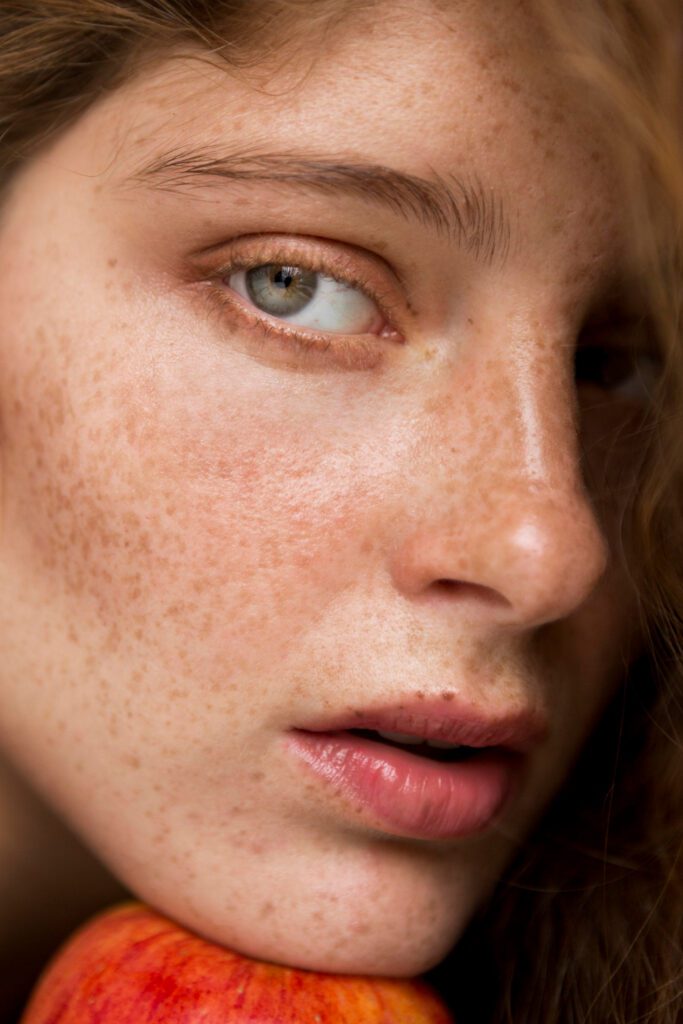
What is the Ugly Duckling sign? Most normal moles on your body look similar to one another. The Ugly Duckling sign is the identification of a single mole that stands out as different from the rest. If a lesion is darker, lighter, larger, or smaller than your other moles, it is considered suspicious and requires an urgent specialist consultation.
Symptom Checklist: Beyond Moles
Skin cancer does not always appear as a dark mole. In fact the more common skin cancers are not pigmented (dark). For Non-Melanoma Skin Cancers (BCC and SCC), look for the following symptoms:
Non-healing sores
Any crusty or scaly patch of skin that bleeds, heals, and then returns.
'Pearly' bumps
A translucent, waxy, or skin-coloured bump, often with visible tiny blood vessels.
Itching or tenderness
Any persistent discomfort or a sensation of "crawling" or irritation in a specific spot.
Firm, red nodules
A growth that feels hard to the touch and may develop a central crust or ulcer.
Your safety first
Can a blood test detect skin cancer?
No, routine blood tests cannot currently diagnose skin cancer. While research into liquid biopsies is advancing for monitoring advanced melanoma, a physical skin biopsy remains the only definitive way to confirm a diagnosis at present.
This involves removing a small sample of the suspicious tissue for expert microscopic analysis.
The Professional Screening
While self-checking is a vital first step, a professional screening by a consultant provides a level of accuracy that cannot be achieved at home.
- Dermatoscopy: Consultants use a specialised tool called a dermatoscope. This handheld device uses high-quality magnifying lenses and powerful lighting systems to see deep into the skin's surface. It allows the specialist to identify subtle structures and pigment patterns invisible to the naked eye.
- Expert Interpretation: A consultant-led exam ensures that benign "mimics" are not ignored and that high-risk lesions are identified early.

Peace of mind starts with knowledge
The Three Main Types of Skin Cancer
What are the most common forms of skin cancer? The three most common types of skin cancer are Basal Cell Carcinoma, Squamous Cell Carcinoma, and Melanoma. While they all originate in the skin cells, they differ significantly in appearance, growth rate, and their potential to spread to other parts of the body.

Basal Cell Carcinoma (BCC)
This is the most common and least aggressive form. It typically appears as a pearly, waxy, or skin-coloured bump, often on the face or neck. While it rarely spreads to distant organs, it can be locally destructive to skin and bone if left untreated.
Squamous Cell Carcinoma (SCC)
Often appearing as scaly red patches or open sores which grow in a matter of weeks, SCC is commonly found on sun-exposed areas like the ears, lips, and hands. It has a higher risk of spreading to the lymph nodes compared to BCC.
Melanoma
This is the most serious form of skin cancer. It usually develops from an existing mole or appears as a new, dark, irregular spot. Because it can spread rapidly, early detection and urgent surgical intervention are vital.
Proven Outcomes for All Skin Types
Surgery & Treatments
As a leading specialist in Mohs Micrographic Surgery, Miss Rakhee Nayar focuses on this gold-standard treatment for the most common non melanoma skin cancers. Unlike standard excision, Mohs surgery involves removing the cancer in thin layers and examining 100% of the margins under a microscope in real-time while the patient waits.
Unmatched Precision
This technique ensures that all "roots" of the cancer are removed before the patient leaves the clinic.
Highest Cure Rate
Under Miss Nayar’s expertise, Mohs surgery offers the highest success rate for Basal Cell Carcinoma and Squamous Cell Carcinoma, reaching up to 99% for new lesions.
Maximum Tissue Preservation
Because only cancerous tissue is removed, it is the ideal treatment for sensitive areas like the nose, around the eyes and lips, where preserving every millimetre of healthy skin is vital for the least invasive result.
Conditions We Treat
Basal cell Carcinoma
Squamous Cell Carcinoma
Melanoma
Head & Neck Skin Cancers
Moles
Warts
Scars
Skin Lesions
Cysts
Skin tag removal
Request an e-Consultation
Miss Nayar offers a convenient e-Consultation service for patients seeking a specialist opinion from across the UK and overseas. This secure digital pathway enables remote assessment of skin lesions and concerns, providing a prompt clinical recommendation.
It is an ideal first step for those considering Mohs surgery or reconstruction before travelling for an in-person appointment.
Easy steps for healthier skin
Reducing Your Risk
How can you prevent skin cancer? Skin cancer is one of the most preventable forms of the disease. By following a consistent sun-safety routine and avoiding artificial UV exposure, you can significantly reduce your lifetime risk of developing Basal Cell Carcinoma, Squamous Cell Carcinoma, and Melanoma.

Real Stories. Real Success
Patients Feedback


99.9% Patient Success Stories
Concerned About Skin Cancer?
Book a Specialist Assessment
Early detection is vital for the successful treatment of skin cancer and can contribute to achieving the best aesthetic outcomes. Contact Miss Rakhee Nayar’s clinic today for a comprehensive evaluation by a dual-trained Mohs doctor and plastic surgeon.
or Call Us Now
07740 306144
Circle cheshire Clinic
The Courtyard, Hall Ln, Wincham, Northwich CW9 6DG, United Kingdom
07740 306144
Schedule Your Visit
Where to See Miss Nayar
Miss Rakhee Nayar provides specialist Mohs and reconstructive surgery at Circle Health Cheshire Clinic. This modern, private facility offers expert care in a discreet environment for patients across Cheshire and the North West.

Frequently Asked Questions
We're Always Here to Help You
How long does Mohs surgery last?
You should expect to be at the clinic for approximately three to four hours. Complex or multi stage cases will take longer. While the actual surgical removal is quick, the majority of this time is spent waiting for Miss Rakhee Nayar to meticulously examine the tissue layers under the microscope to confirm the cancer is entirely gone.
What is the cure rate for Mohs surgery?
Mohs surgery provides the highest success rate of any skin cancer treatment, with a cure rate of up to 99% for primary cancers. Because Miss Nayar examines 100% of the surgical margins in real-time, it offers the best possible certainty that no cancerous cells have been left behind.
Can I return to work the day after surgery?
Most patients can return to light activities or office work the following day, though this depends on the location of the surgery and the nature of your job. If the procedure requires a larger reconstruction, Miss Nayar may recommend a few days of rest to allow initial swelling to subside.
Does a normal blood test mean I’m free of skin cancer?
No, a blood test cannot be used to rule out or diagnose skin cancer. A physical examination by a specialist using a dermatoscope, followed by a skin biopsy if necessary, remains the only definitive way to confirm that your skin is healthy and cancer-free.
Does skin cancer only appear in sun-exposed areas?
No, while skin cancer is most common on areas like the face, scalp, and hands, it can develop anywhere on the body. This includes areas rarely exposed to the sun, such as the soles of the feet, the palms of the hands, and under the fingernails, which is why a total body check is essential.
What happens if skin cancer is left untreated?
If left untreated, skin cancer can grow deeper into the surrounding tissue, potentially damaging muscle, cartilage, and bone. In the case of Squamous Cell Carcinoma and Melanoma, the cancer can also spread (metastasise) to the lymph nodes and other organs, making it much more difficult to treat.