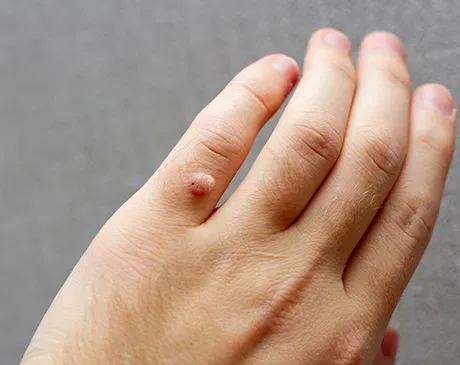
Pictures of Basal Cell Carcinoma (BCC) – Warning Signs
If you have noticed an unusual mark, bump, or sore on your skin and are searching for pictures to compare it against, you are not alone. Many people turn to images when they first notice a skin change, and it is a perfectly natural first step.
However, it is important to remember that no image can replace a clinical assessment — the only way to know for certain whether a lesion is a BCC is to have it examined by a specialist.
This article provides an overview of what basal cell carcinoma looks like, the different subtypes and where they commonly appear, and guidance on what to do if you spot something on your skin that concerns you.
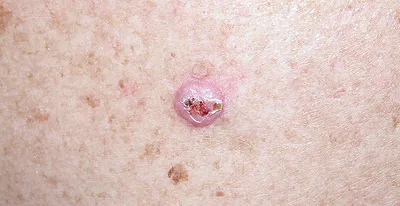
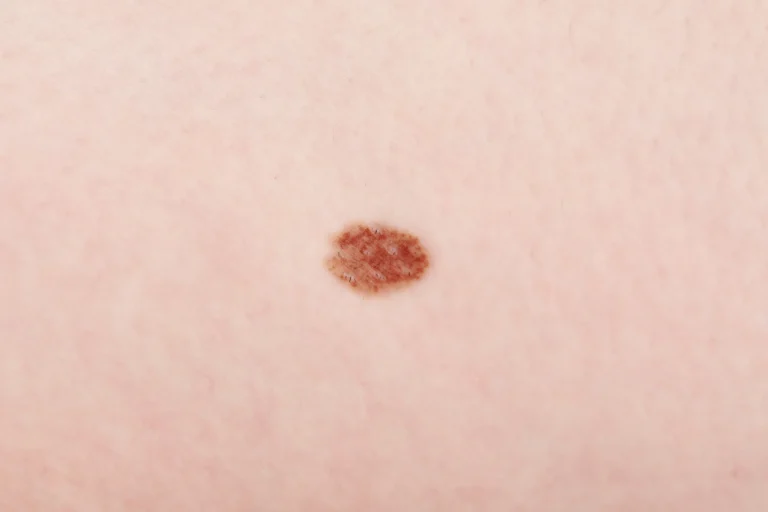
Basal cell carcinoma does not always look the same. Its appearance varies depending on the subtype, its location on the body, and how long it has been present. This is one of the reasons BCCs can be easy to overlook in the early stages.
That said, there are several visual features that are common across most types of BCC:
Request an e-Consultation
Speak with Miss Rakhee Nayar from the comfort of your own home and receive expert advice on your skin concern, treatment options, and next steps.
There are several subtypes of BCC, each with a slightly different appearance. Understanding these differences can help you recognise what to look out for on your own skin.
The appearance of a BCC can also vary depending on where it is located on the body. Here is what to look out for in the most common sites:
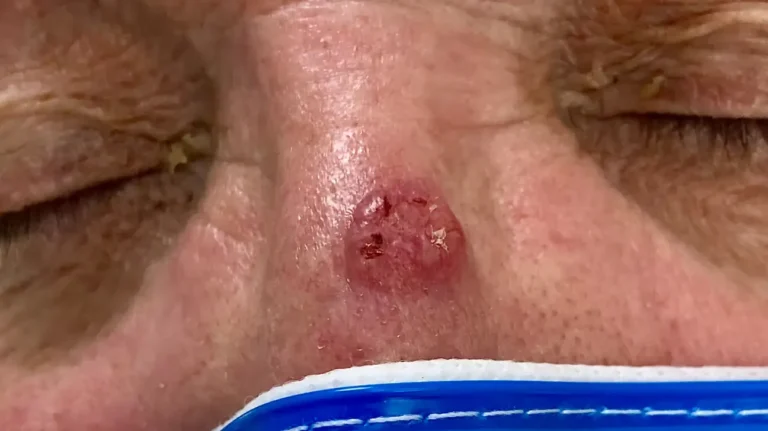
The face is the most common location for BCC, particularly around the nose, eyes, cheeks, and forehead. Facial BCCs often present as a small pearly bump or a non-healing sore. Because of the proximity to critical structures such as the eyes and nose, facial BCCs require particularly careful treatment by an experienced specialist.
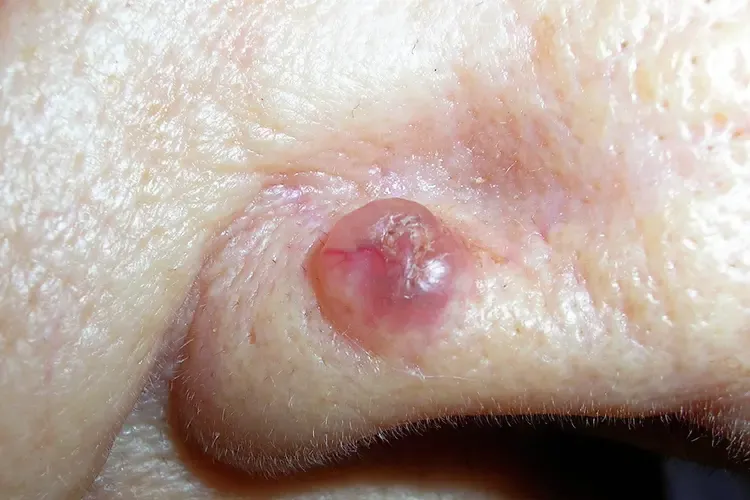
The nose is one of the most frequently affected sites. BCCs here may appear as a shiny nodule, a scabbing sore, or a subtle flattened area that is easy to dismiss as dry skin. Treatment on the nose requires a precise technique to preserve both function and appearance.
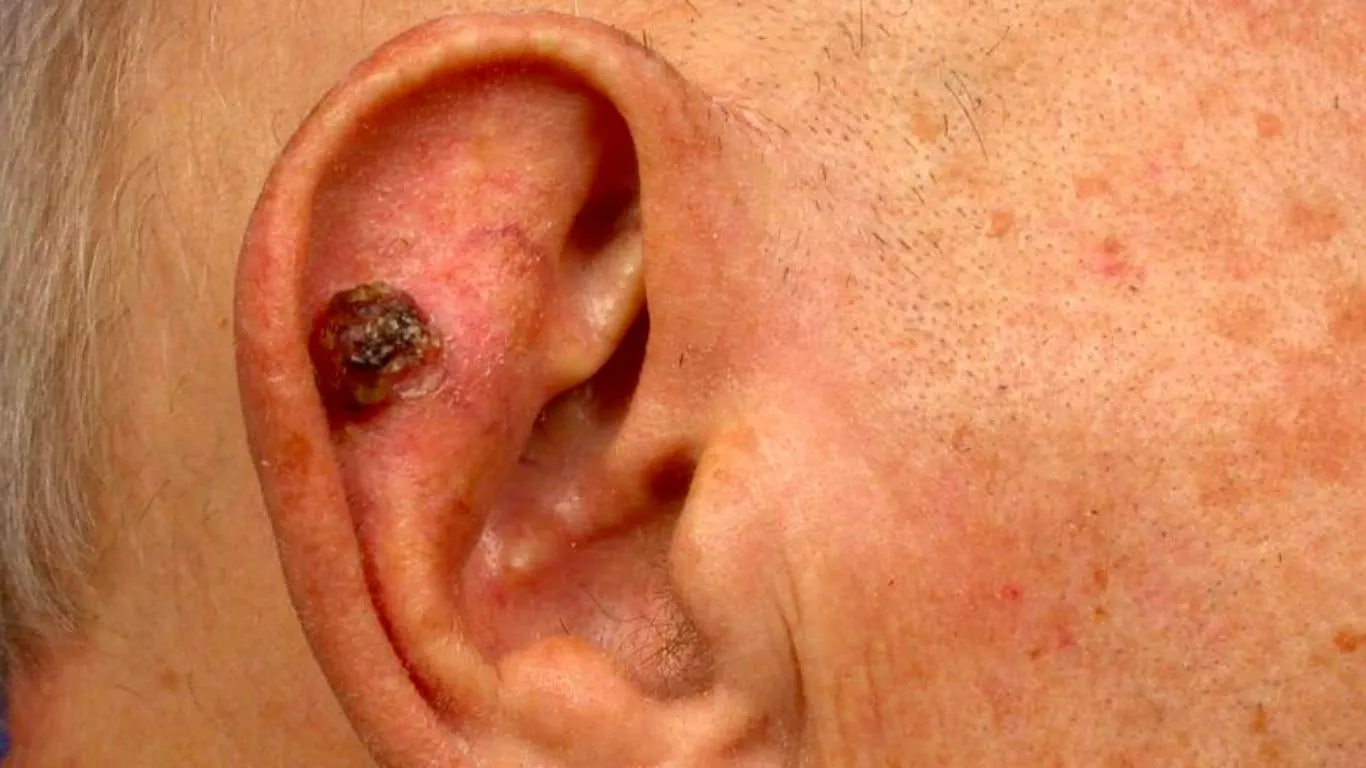
BCCs on the ear are often overlooked because the area is difficult to examine. They may present as a scaly or crusting patch, a persistent sore, or a small raised nodule on the outer ear or around the ear canal.
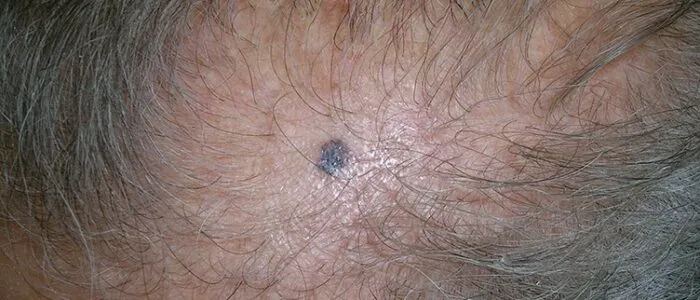
Scalp BCCs can be hidden by hair and may only be noticed after repeated bleeding or a non-healing sore. Fair-skinned individuals with a history of significant sun exposure are at particular risk.
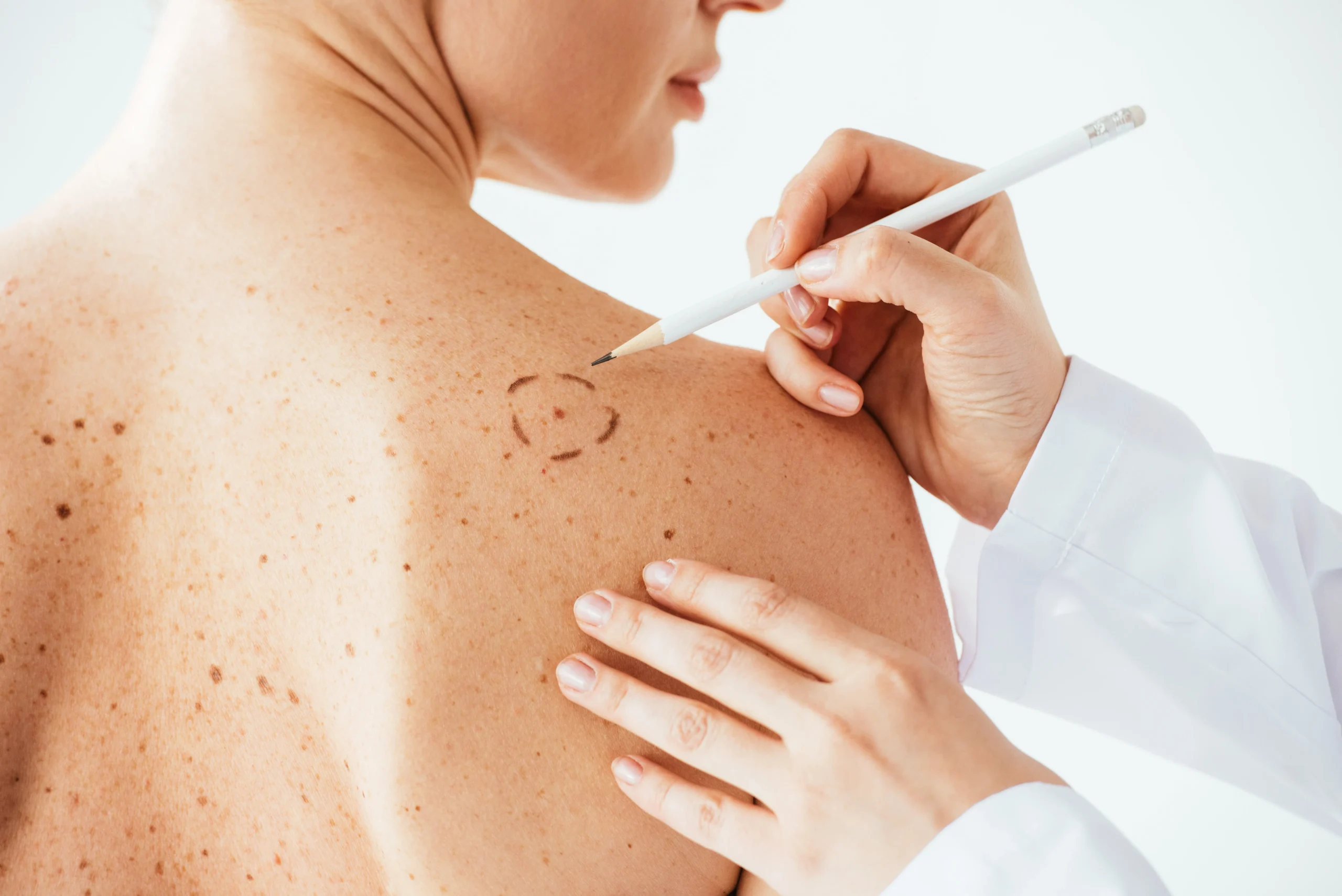
Superficial BCCs are more common on the trunk than other subtypes. They often appear as flat, scaly, red or pink patches and can be mistaken for areas of dry skin or mild eczema.
Whilst less common, BCC can develop on the hands and fingers. Treatment in this location requires particular care to preserve hand function. Miss Rakhee Nayar holds the European Board of Hand Surgery Diploma (EBHS) and performs Mohs surgery on the hand, keeping the wound as small as possible to preserve function.
The earlier a BCC is detected and treated, the simpler the procedure required and the better the outcome. Understanding the difference between early and advanced BCCs can help illustrate why prompt assessment matters.
Early stage BCC tends to be small, well-defined, and superficial. The borders are usually clear, tissue involvement is minimal, and treatment is straightforward. Many early BCCs can be treated with a relatively minor procedure under local anaesthetic.
Advanced BCC is larger, deeper, and may have poorly defined borders that make complete removal more technically demanding. Advanced BCCs are more likely to have invaded surrounding tissue and are more prone to recurrence following treatment. They may also require more extensive reconstruction after removal.
The key takeaway is simple: do not wait for a lesion to grow or change significantly before seeking advice. The sooner a BCC is assessed, the less invasive the treatment required.
Regularly checking your skin is one of the most effective ways to catch a BCC early. When examining your skin, use the ABCDE checklist as a guide. If a lesion on your skin meets any of these criteria, do not wait to see if it resolves on its own. Book a specialist assessment as soon as possible.
A
Asymmetry: one side of the lesion does not match the other
B
Border: edges are poorly defined, rolled, or irregular
C
Colour: pearly, translucent, pink, red, brown, or mixed colouring within the same lesion
D
Diameter: any size warrants attention, but larger lesions should be assessed urgently
E
Evolution: any change in size, shape, colour, or a new symptom such as bleeding, itching, or crusting
For nodular BCC specifically, dermatologists also use the EFG rule as an additional guide:
E — Elevated: the lesion is raised above the surrounding skin
F — Firm: the lesion feels firm to the touch
G — Growing: the lesion has increased in size over time
If any of the images or descriptions in this article look familiar, the most important step you can take is to have your lesion assessed by a specialist. A clinical examination, and if necessary a biopsy, is the only reliable way to confirm whether a lesion is a BCC and what treatment is needed.
Miss Rakhee Nayar offers prompt, expert assessment and surgical removal of BCCs across the North West, with e-Consultations available to patients throughout the UK.
As one of fewer than 10 women in the UK dual-trained in both plastic surgery and Mohs micrographic surgery, she brings over 20 years of surgical experience to every consultation.
Common Questions About BCC
What patients say about Miss Nayar
Paul Bridgeman
Google review, Circle Cheshire Clinic, September 2026
I honestly couldn't have asked for a better experience with my recent Mohs surgery.
The surgeon was absolutely spectacular, incredibly professional, skilled and reassuring. I felt completely confident and in safe hands throughout, and the care and attention given to me were exceptional.
Every member of staff was fantastic. Everyone was friendly, caring, professional and genuinely attentive, which made a potentially worrying experience feel so much easier. The reception team were also excellent, welcoming, efficient and incredibly well organised.
The facilities are first class too: modern, spotless and beautifully maintained. There is plenty of parking right next to the facility, and the surrounding park seating is a lovely added touch for anyone waiting or accompanying a patient.
From the moment I arrived to the moment I left, I felt that I was in the very best hands. It's clear that patient care really matters to this team.
A huge thank you to the surgeon, Miss Rakhee Nayar, and the entire team for looking after me so brilliantly. I wouldn't hesitate for a second to recommend them. Absolutely outstanding from start to finish.
Liam Walshe
Google review, Circle Cheshire Clinic, September 2026
This is an exceptional private Clinic giving 5 star treatment and outstanding patient care. Miss Rakhee Nayar (Highly Skilled) and her amazing team were absolutely fantastic today providing both the highest quality treatment and exceptional patient care. The approach to the treatment is nothing short of gold standard and pathway to my treatment was carefully explained in advance. I have nothing but praise for Miss Nayar and her lovely team including Kelly and Lisa on the administrative side. Great leadership, skill and outstanding delivery at this excellent Clinic. Huge thanks everyone!
H.S.
Top Doctors verified patient, 30 May 2024
Unbelievable service from start to finish. Zero waiting time, friendly people and thorough consultation - so pleased to have been introduced to this consultant!
L.E.
Top Doctors verified patient, 29 May 2024
Miss Nayar removed a suspicious lesion from my arm at St Helens Hospital. The care I experienced from the outpatient appointment down to the surgery was extremely professional and I am very pleased with the outcome and the reassurance provided.
10/10 service x
L.J.
Top Doctors verified patient, 12 February 2024
Ms Nayar completed minor facial surgery at St Helen's hospital. I can't recommend her enough! She was knowledgeable, patient, and highly professional.
As a nervous patient she reassured me throughout my procedure. She was incredibly gentle with her local anaesthetic.
Read all 56 patient reviews