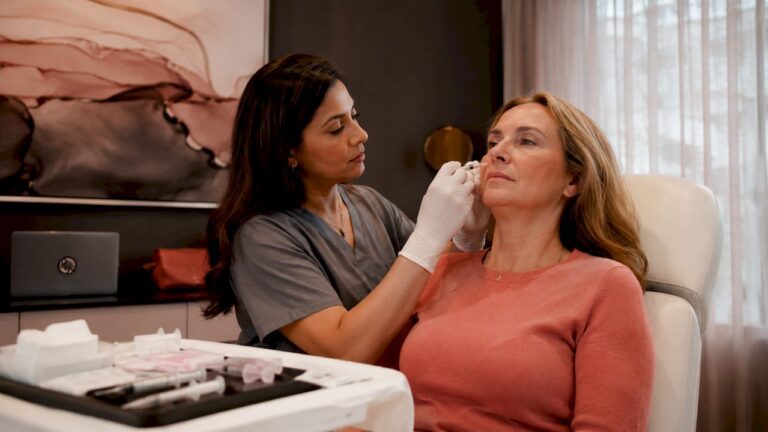
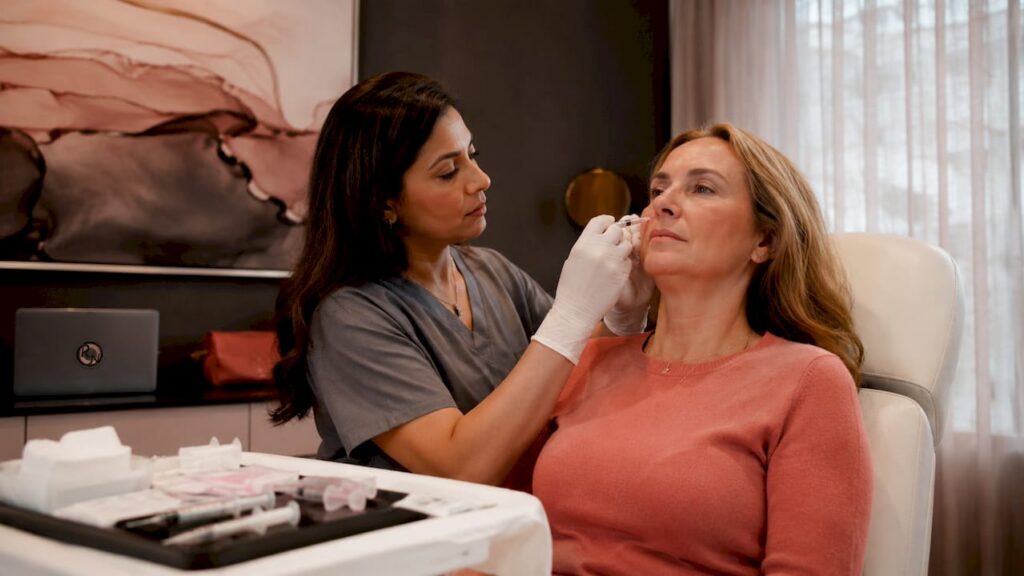
Local anesthesia in Mohs micrographic surgery is a medicine injected directly into the skin to numb the treatment area, allowing precise, multi-stage removal of skin cancer while you remain fully awake and free from pain. The agent used is almost always lidocaine combined with epinephrine, chosen because it controls both pain and bleeding at the surgical site. Mohs surgery is performed on awake patients using this targeted numbing approach, which means there is no general anaesthetic, no loss of consciousness, and no need for an overnight hospital stay. Understanding exactly how the anaesthetic works, what it feels like, and how it is managed across the multiple stages of the procedure will help you approach your appointment with confidence rather than apprehension.
What is local anesthesia in Mohs surgery?
Local anaesthesia in Mohs surgery is the targeted numbing of a defined area of skin and underlying tissue, achieved by injecting an anaesthetic agent around the tumour site before any tissue is removed. The term “local” distinguishes it from general anaesthesia, which renders a patient unconscious, and from regional anaesthesia, which numbs an entire limb or body region. In Mohs surgery, the goal is precise, confined numbing: only the area being operated on is affected.
Local anaesthetics block peripheral nerve signals, preventing pain messages from travelling from the skin to the brain. You remain fully conscious throughout. You can speak to the surgical team, ask questions, and move freely between stages. The numbing effect is localised, so your mental clarity and general physical function are entirely unaffected.
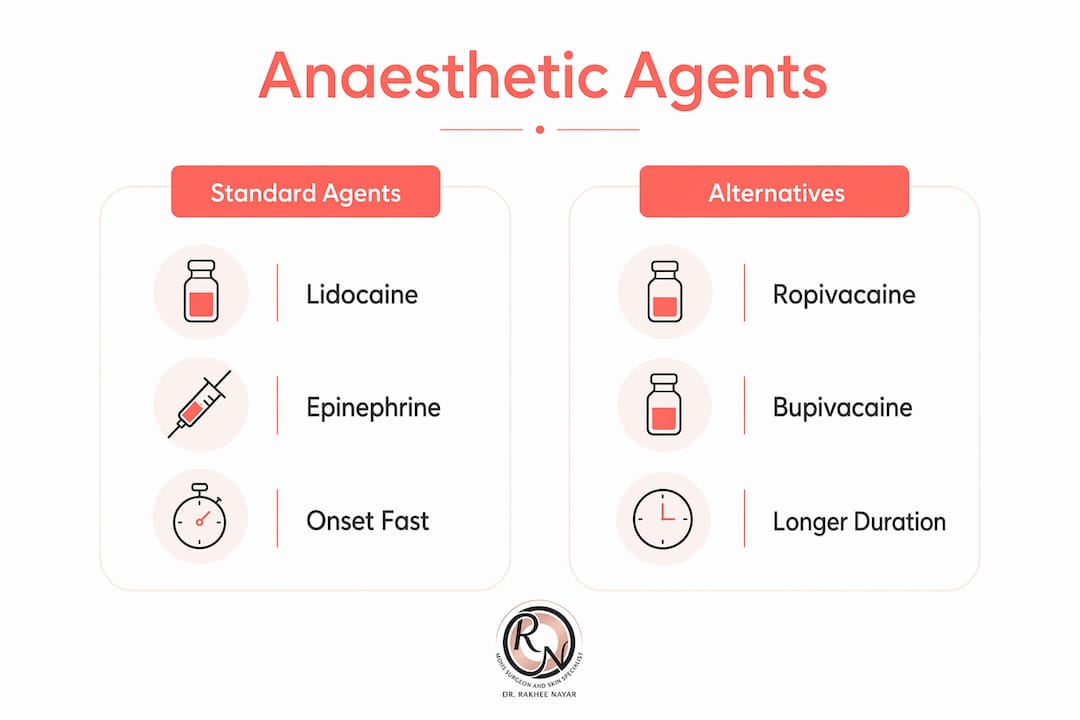
The standard agent used in Mohs surgery is lidocaine with epinephrine. Lidocaine provides the numbing effect, while epinephrine causes the small blood vessels in the area to constrict. Combining lidocaine with epinephrine controls bleeding as well as numbing the site, which is particularly important when operating on the face or other areas with a rich blood supply. This dual action makes it the preferred choice for the vast majority of Mohs procedures.
Because Mohs surgery involves multiple stages of tissue removal followed by laboratory analysis of each layer, the anaesthetic may need to be topped up between stages. Most Mohs surgeries take a few hours, involving this cyclical pattern of numbing, excision, and waiting. Knowing this in advance removes much of the uncertainty patients feel before their first procedure.
How does local anesthesia work during Mohs surgery?
Local anaesthetic agents work by temporarily blocking sodium channels in the membranes of peripheral nerve fibres. When sodium channels are blocked, the nerve cannot generate or transmit an electrical signal, so the sensation of pain never reaches the brain. The effect is reversible: once the drug is metabolised, normal sensation returns.
In practice, the surgeon injects the anaesthetic using a fine needle into the tissue surrounding the tumour. This technique is called infiltration anaesthesia or field block, depending on whether the injection is placed directly under the lesion or in a ring around it. The choice depends on the size and location of the tumour, as well as the anatomy of the area being treated. For facial lesions, where nerves are densely packed and anatomy is complex, facial anatomy considerations directly influence how and where the anaesthetic is placed.
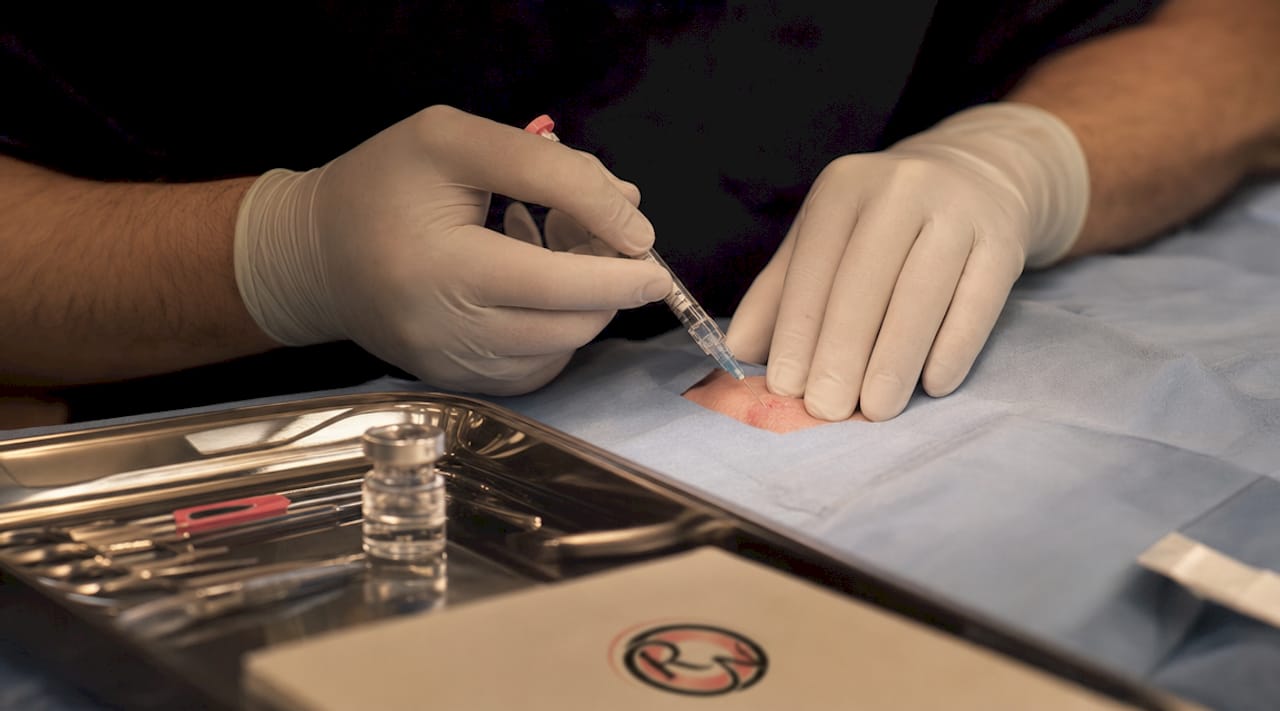
Once injected, the anaesthetic typically takes effect within two to five minutes. You will notice a spreading numbness, a sense of heaviness or fullness in the skin, and a loss of sharp sensation. You may still feel pressure, movement, or vibration during tissue removal, but patients should not experience pain when the anaesthetic is working effectively. This distinction matters: pressure is normal and expected; pain is a signal that more anaesthetic is needed, and you should tell the surgical team immediately.
The key differences between local and general anaesthesia in this context are worth stating clearly:
- Consciousness: You remain fully awake with local anaesthesia. General anaesthesia renders you unconscious.
- Recovery: Local anaesthesia wears off within hours. General anaesthesia requires a supervised recovery period.
- Risk profile: Local anaesthesia carries a significantly lower systemic risk, particularly for older patients or those with cardiovascular conditions.
- Suitability for Mohs: Because Mohs surgery requires patient cooperation across multiple stages, local anaesthesia is not just preferred; it is the standard of care.
Pro Tip: If you are anxious about needles, tell the team before the procedure begins. Topical numbing cream applied 30 to 45 minutes beforehand can reduce the sensation of the initial injection, and many clinics offer this routinely.
Which anaesthetic agents are used in Mohs surgery?
The choice of anaesthetic agent in Mohs surgery is not arbitrary. Each agent has a different onset time, duration of action, and side-effect profile, and the surgeon selects based on the expected length of the procedure, the patient’s medical history, and the need for haemostasis.
| Agent | Onset | Duration | Key advantage | Consideration |
|---|---|---|---|---|
| Lidocaine with epinephrine | 2–5 minutes | 30–90 minutes | Pain control and bleeding reduction | Requires reinjection for longer procedures |
| Ropivacaine | 5–10 minutes | 2–3 hours | Longer duration, less cardiac risk | Slower onset; less haemostatic effect |
| Bupivacaine | 5–10 minutes | 2–4 hours | Extended numbing | More acidic; painful on injection; cannot be buffered |
| Lidocaine alone | 2–5 minutes | 30–60 minutes | Rapid onset | No haemostatic benefit without epinephrine |
Lidocaine with epinephrine remains the first choice for most Mohs procedures. Agents like lidocaine with epinephrine are preferred to manage bleeding and provide adequate duration across the initial stages of surgery. The epinephrine component is particularly valuable on the face, where even modest bleeding can obscure the surgical field and complicate the precise tissue mapping that Mohs depends upon.
Ropivacaine is sometimes used as an adjunct when a longer procedure is anticipated, or when a patient has a history of cardiac arrhythmia that makes the higher epinephrine concentrations in standard lidocaine preparations less suitable. Its slower onset means it is rarely used as the sole agent for the first injection.
Bupivacaine, while longer-lasting, is more acidic and painful on injection and cannot be buffered with bicarbonate to reduce that discomfort. This makes it less preferred despite its duration advantage. In practice, it is occasionally used as a supplementary agent at the end of a procedure to provide extended post-operative comfort, rather than as the primary anaesthetic.
Modified lidocaine and epinephrine formulations have been developed to improve haemostasis and reduce toxicity risk, particularly for elderly patients or those taking anticoagulants. This is a meaningful development for the Mohs patient population, which skews older and often includes people on warfarin, apixaban, or aspirin.
Pro Tip: If you take blood thinners, inform the surgical team well before your appointment. The anaesthetic formulation and injection technique may be adjusted to account for your medication, and stopping anticoagulants is rarely necessary for Mohs surgery under local anaesthesia.
What does local anesthesia feel like during Mohs surgery?
Understanding the sensations you will experience at each stage of the procedure removes much of the anxiety that surrounds the unknown. The experience of local anaesthesia in Mohs surgery follows a predictable pattern, and knowing what to expect at each point makes a significant difference to how you tolerate the procedure.
The sequence typically unfolds as follows:
- The initial injection. The surgeon inserts a fine needle into the skin around the tumour site. You will feel a brief sting or pinch, followed by a mild burning sensation as the anaesthetic is deposited. The injection causes a brief sting that is the main source of discomfort at the start of the procedure. This lasts seconds, not minutes.
- Onset of numbness. Within two to five minutes, the area becomes numb. You may notice a feeling of warmth or tingling as the drug takes effect, followed by a loss of sharp sensation. The skin may feel swollen or tight.
- Tissue removal. The surgeon removes the first layer of tissue. You will feel movement and pressure but not pain. If you feel anything sharp or uncomfortable, say so immediately. The team will add more anaesthetic before continuing.
- The waiting period. The removed tissue is taken to the laboratory for analysis. This typically takes 45 to 90 minutes. The anaesthetic may begin to wear off during this time, particularly if the procedure requires more than one stage.
- Reinjection between stages. If a further stage is needed, the anaesthetic is topped up before the next excision. Local anaesthesia can be reinjected between stages without reaching toxic serum levels, so there is no clinical barrier to maintaining your comfort throughout.
- Reconstruction and closure. Once clear margins are confirmed, the wound is repaired. If reconstruction is required, the anaesthetic is refreshed to cover the repair site.
A point that surprises many patients: patients often find the injection more uncomfortable than the tissue removal itself. The removal stage, once numbness is established, is typically well tolerated. Anxiety about the procedure often exceeds the actual physical discomfort experienced.
Managing anxiety is a legitimate part of anaesthesia care. Slow, measured breathing during the injection phase reduces the perception of discomfort. Some patients find it helpful to focus on a fixed point or listen to music through headphones during the waiting periods. The surgical team is experienced in supporting patients through this process and will check in with you regularly.
How is local anesthesia managed across multiple stages?
Local anaesthetic management is actively planned during Mohs surgery to accommodate the variable length of the procedure and the repeated stages that may be required. This is not an afterthought; it is a core part of the procedural workflow.
The practical management of anaesthesia across a multi-stage Mohs procedure involves several considerations:
- Timing the initial injection. The first injection is given immediately before the first excision, not at the start of the appointment. This avoids unnecessary waiting in a numb state and ensures the anaesthetic is at peak effect when tissue removal begins.
- Monitoring numbness between stages. The surgical team will check whether the area remains numb before each subsequent excision. A simple touch test confirms whether a top-up is needed.
- Reinjection technique. When reinjecting, slow administration and buffering of lidocaine with bicarbonate reduces the discomfort of repeat injections. Buffering raises the pH of the solution, making it less acidic and therefore less painful on injection.
- Epinephrine and haemostasis. The epinephrine in the anaesthetic mixture continues to provide vasoconstriction for longer than the lidocaine provides numbing. This means bleeding control persists even as the numbing effect begins to fade, which is useful during the waiting periods between stages.
- Patient communication. The team will explain what is happening at each stage and invite you to report any discomfort. Clear communication is the most effective tool for managing patient comfort in a procedure that can last several hours.
For patients preparing for their first procedure, a detailed step-by-step Mohs surgery guide explains how each stage connects, including how anaesthesia fits into the overall workflow. Arriving well-rested, having eaten a light meal, and wearing comfortable clothing all contribute to a more settled experience on the day. You can also review how to prepare for Mohs surgery in advance to understand what to bring and what to expect from the clinic environment.
Key takeaways
Local anaesthesia in Mohs surgery numbs the treatment area precisely, keeps you awake and comfortable, and is actively managed across every stage of the procedure to maintain pain control without systemic risk.
| Point | Details |
|---|---|
| Standard agent | Lidocaine with epinephrine provides both pain control and bleeding reduction at the surgical site. |
| You remain conscious | Local anaesthesia does not cause unconsciousness; you are awake, aware, and able to communicate throughout. |
| Injection is the main discomfort | The brief sting of the initial injection is typically more uncomfortable than the tissue removal itself. |
| Reinjection is routine | Anaesthetic is topped up between stages as needed, without reaching unsafe levels. |
| Buffering reduces injection pain | Mixing lidocaine with bicarbonate before injection lowers acidity and reduces the burning sensation on administration. |
Expert Mohs surgery care with Miss Rakhee Nayar

Miss Rakhee Nayar is a GMC-registered Consultant Plastic Surgeon, FRCS (Plast), dual-trained in both Mohs micrographic surgery and plastic surgery, practising at Circle Cheshire in North West England. If you have been diagnosed with a skin cancer or have a lesion that concerns you, a specialist consultation will clarify your options and give you a clear picture of what treatment involves, including how anaesthesia is managed throughout your care. To learn more about the full Mohs surgery service or to explore skin cancer treatment pathways, visit the website to book a private or e-consultation. This article is for educational purposes only and does not constitute medical advice. Please consult a GMC-registered specialist for guidance specific to your situation.
FAQ
Does local anesthesia in Mohs surgery hurt?
The initial injection causes a brief sting or burning sensation lasting a few seconds. Once the anaesthetic takes effect, tissue removal should be entirely pain-free, though you may feel pressure or movement.
Will I be awake during Mohs surgery?
Yes. Local anaesthesia does not induce unconsciousness, so you remain fully awake and able to speak with the surgical team throughout the procedure.
How long does the anaesthetic last during Mohs surgery?
Lidocaine with epinephrine typically lasts 30 to 90 minutes. For longer procedures, the anaesthetic is topped up between stages to maintain comfort without reaching unsafe doses.
Can the anaesthetic be reapplied if it wears off mid-procedure?
Yes. Reinjection between stages is routine and safe. The surgical team will check your comfort before each excision and administer more anaesthetic if needed.
Is local anesthesia safe if I take blood thinners?
For most patients on anticoagulants, Mohs surgery under local anaesthesia proceeds safely without stopping medication. The epinephrine in the anaesthetic mixture helps control bleeding, and the surgical team will adjust the formulation and technique based on your specific medicines.
Recommended
- Mohs surgery myths vs facts: what patients need to know
- Why facial anatomy matters in Mohs surgery
- How to prepare for Mohs surgery: your step-by-step guide
- Cure rates in Mohs surgery: what patients need to know
Filed under Mohs Surgery