TL;DR:
- Cosmetic outcomes in skin cancer surgery include scar appearance, patient satisfaction, and psychosocial wellbeing, measurable through tools like FACE-Q. Surgical technique, patient factors, and postoperative care significantly influence these results, with Mohs surgery often leading to better cosmetic outcomes due to tissue preservation. Realistic expectations, preoperative counselling, and diligent wound care are essential for achieving the best possible aesthetic and psychological patient satisfaction.
Cosmetic outcomes in skin cancer surgery are defined as the measurable changes to a patient’s appearance, scar quality, and psychosocial wellbeing following surgical removal of a skin cancer. The clinical term used across research and practice is surgical aesthetic outcomes, though “cosmetic outcomes” is the phrase most patients use when searching for answers. These outcomes are not simply about how a scar looks. They encompass satisfaction with facial appearance, cancer-related worry, and the psychological distress that follows treatment. A 2026 prospective cohort study using the FACE-Q Skin Cancer module demonstrated statistically significant improvements across all these domains at 1, 3, 6, and 12 months post-surgery. Understanding what shapes these results gives you a clearer picture of what to expect and how to prepare.
What are cosmetic outcomes in skin cancer surgery?
Cosmetic outcomes after skin cancer surgery cover three interconnected areas: the visible appearance of the surgical site, the quality and acceptability of any scar, and the patient’s psychological response to both. Researchers and surgeons measure these using patient-reported outcome measures (PROMs), which are standardised questionnaires completed by patients themselves rather than assessed by a clinician alone.
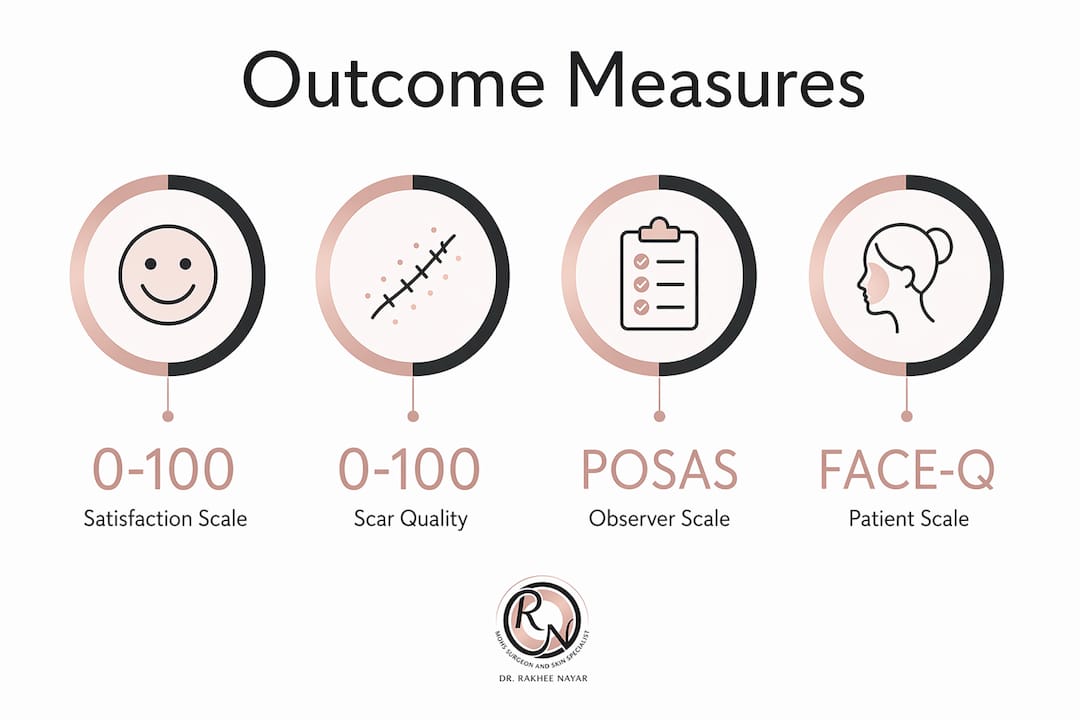
The most widely validated tool for facial skin cancer surgery is the FACE-Q Skin Cancer module. It scores patients across four scales:
- Appearance satisfaction: How content you are with the way your face looks after surgery
- Scar satisfaction: Your perception of the scar’s size, colour, and texture
- Cancer worry: Ongoing anxiety about recurrence or spread
- Psychosocial distress: The emotional and social impact of visible changes
Each scale runs from 0 to 100, with higher scores indicating better outcomes. A change of 5 to 7 points on this scale represents the minimally important difference (MID), meaning the smallest shift a patient would actually notice and consider meaningful. This matters because a statistically significant improvement in a clinical trial does not always translate to a change you would feel in daily life.
Clinicians also use observer-based tools such as the Patient and Observer Scar Assessment Scale (POSAS), which rates scar vascularity, pigmentation, thickness, and relief from both the patient’s and the surgeon’s perspective. Using both PROMs and observer scales together gives the most complete picture of cosmetic effects of skin surgery.
Pro Tip: Ask your surgical team which outcome measures they use to track your progress. If they use FACE-Q or POSAS, you can compare your scores at each follow-up appointment to see genuine, measurable improvement over time.
How do surgical techniques affect skin cancer surgery results?
The choice of surgical technique is the single biggest modifiable factor in cosmetic outcomes. Four main approaches are used after skin cancer excision: direct suturing, local flap surgery, skin grafting, and secondary intention healing (allowing the wound to close naturally without reconstruction).
| Technique | Scar satisfaction score (0–100) | Cancer anxiety score | Notes |
|---|---|---|---|
| Direct suturing | 91 | 14 | Highest satisfaction at 1 year |
| Flap surgery | 71 | 23 | Greater reconstructive complexity |
| Skin graft | Variable | Variable | Fibrin glue reduces complications |
| Secondary intention | Comparable to patch | Low | Suitable for selected sites |
In a Danish cohort, scar satisfaction after direct suturing scored 91 out of 100 compared to 71 after flap surgery, with cancer anxiety scores of 14 versus 23 respectively. This does not mean flap surgery is inferior. It means that more complex reconstruction, while often necessary for larger defects, carries a higher psychological burden that requires careful preoperative discussion.
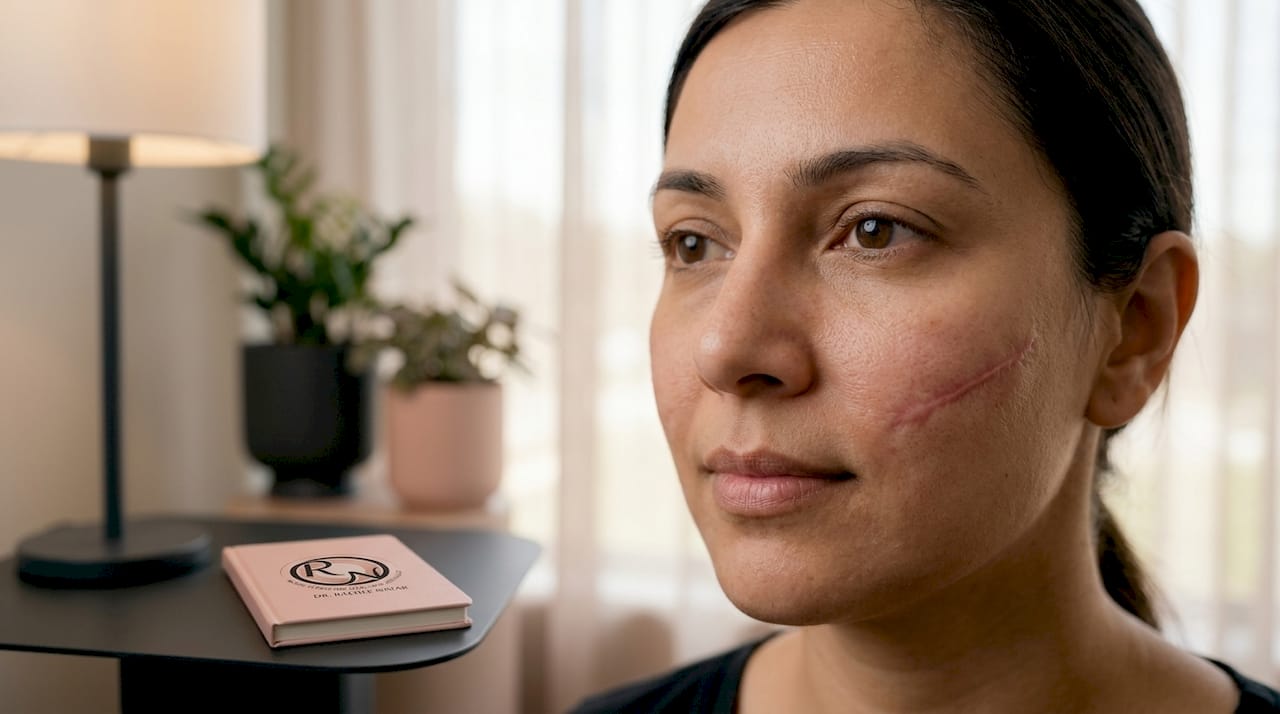
Mohs micrographic surgery offers a distinct advantage here. By removing tissue in precise, microscopically verified layers, it preserves the maximum amount of healthy skin around the tumour. Less tissue removed means a smaller defect and, in many cases, a simpler reconstruction with better post-surgery skin appearance. For skin cancers on the face, particularly around the nose, eyelids, and lips, this tissue-sparing approach directly improves the starting point for any cosmetic repair.
Healing adjuncts also play a role. In a randomised clinical trial of 100 patients, fibrin glue in skin grafts reduced the odds of early seroma formation and infection significantly, both of which compromise final scar quality if left unaddressed.
Pro Tip: If you are offered a choice between reconstruction techniques, ask specifically about the expected POSAS score and the typical healing timeline for each option at your anatomical site. The “best” technique varies by tumour location, not just tumour size.
What patient factors affect satisfaction with surgical outcomes?
Not every patient perceives the same surgical result in the same way. Age, cancer type, and psychological state all modulate how you experience and report cosmetic outcomes after skin cancer surgery.
Younger patients under 65 consistently report lower appearance satisfaction and greater scar bother following facial skin cancer surgery. This likely reflects both higher aesthetic expectations and differences in skin physiology. Younger skin has greater tension, which can widen scars, while older skin tends to heal with less visible scarring due to reduced collagen remodelling activity.
Several other patient-level factors influence how cosmetic results are perceived:
- Cancer type: Patients treated for melanoma or those requiring complex reconstructive repair report more appearance-related distress than those with smaller basal cell carcinomas treated by direct closure
- Cancer worry: There is a negative correlation between anxiety and scar satisfaction (r = 0.34 overall, rising to r = 0.56 in the flap surgery subgroup), meaning that patients who remain anxious about recurrence tend to rate their scars more harshly regardless of objective appearance
- Gender: Women in cohort studies report higher overall appearance satisfaction but rate their scars less favourably than men, suggesting different aesthetic reference points
- Preoperative expectations: Patients who receive detailed counselling about likely scar appearance and healing timelines before surgery report higher satisfaction afterwards
The implication is clear. Personalised preoperative counselling is not a courtesy. It is a clinical intervention that directly improves how patients experience their cosmetic outcomes.
How does postoperative care shape the final appearance?
The surgical technique sets the foundation, but postoperative care determines how well that foundation heals. Wound complications are the most preventable cause of poor cosmetic results, and their prevention begins on the day of surgery.
-
Prevent infection and seroma early. Fibrin glue, where appropriate, significantly reduces both seroma and infection rates in the first week post-surgery. Early complications disrupt the orderly phases of wound healing and increase the risk of hypertrophic or widened scars.
-
Allow time for scar maturation. Scars are not static. The remodelling phase of wound healing continues for up to 12 months, and most scars look their worst at 6 to 8 weeks before gradually softening, fading, and flattening. Judging a scar at 6 weeks is like judging a painting before it dries.
-
Consider autologous patch healing for selected defects. A randomised controlled trial comparing autologous patch healing to secondary intention after Mohs surgery found comparable POSAS scores and high patient satisfaction at 6 months. This technique, where a small skin disc from the excised specimen is replaced as a biological dressing, offers a practical alternative in suitable cases.
-
Protect the healing area from sun exposure. Ultraviolet radiation stimulates melanocytes in healing skin, causing post-inflammatory hyperpigmentation that makes scars appear darker and more prominent. Daily SPF 50 on the surgical site for at least 12 months is standard advice from most skin cancer surgical teams.
-
Follow your team’s wound care protocol precisely. Consistent dressing changes, avoiding tension on the wound, and attending follow-up appointments allow early identification of complications before they affect the final result.
What should you expect and how can you optimise your results?
Realistic expectations are the foundation of satisfaction. Reconstruction after skin cancer surgery aims to restore your appearance to its pre-cancer baseline, not to improve upon it. This distinction matters because patients who expect to look better after surgery than before are more likely to report dissatisfaction, even when the surgical result is objectively excellent.
A few principles help set the right expectations and give you the best chance of a good outcome:
- Scars improve significantly over 6 to 12 months. The appearance at 6 weeks is not the final result. Prospective data shows that satisfaction improves steadily across all FACE-Q domains up to 12 months post-surgery.
- Reconstructive options vary by site. A defect on the nose requires different planning than one on the cheek or scalp. Discuss the specific reconstructive options available for your tumour location before surgery.
- Sun protection is non-negotiable. Protecting the healing area from UV exposure reduces pigmentation changes and supports better long-term scar quality.
- Communicate openly with your surgical team. If you have concerns about appearance at any stage, raise them early. Many complications and dissatisfactions are addressable if caught before the scar fully matures.
Pro Tip: Take a photograph of your surgical site at 6 weeks, 3 months, and 6 months. Comparing images over time makes the gradual improvement visible in a way that day-to-day observation cannot.
Key takeaways
Cosmetic outcomes in skin cancer surgery are shaped by surgical technique, patient factors, and postoperative care in equal measure, and validated tools like FACE-Q make these outcomes measurable and comparable.
| Point | Details |
|---|---|
| Cosmetic outcomes are multidimensional | They include scar appearance, appearance satisfaction, cancer worry, and psychosocial distress. |
| Technique choice matters significantly | Direct suturing scores 91/100 for scar satisfaction versus 71/100 for flap surgery at one year. |
| Younger patients need more support | Those under 65 report lower satisfaction and greater scar bother, requiring tailored counselling. |
| Postoperative care prevents poor results | Fibrin glue, sun protection, and timely follow-up all reduce complications that worsen scarring. |
| Scars continue improving for 12 months | Final cosmetic results should not be judged before the full scar maturation period has passed. |
Why cosmetic outcomes deserve as much attention as cure rates
Having performed Mohs surgery and facial reconstruction for many years, I have come to believe that the surgical community has historically underweighted cosmetic outcomes relative to oncological ones. Cure rates are the right primary goal. But a patient who is cancer-free and deeply distressed by their appearance has not been fully served.
What the FACE-Q data makes plain is that cosmetic outcomes are biopsychosocial, not purely aesthetic. Cancer worry and psychosocial distress are as much a part of the outcome picture as scar width. I now use validated PROMs routinely, not because research demands it, but because they reveal things that a clinical examination cannot. A patient who looks well-healed to me may be scoring poorly on appearance satisfaction and cancer worry. Without asking, I would never know.
The finding that reconstructive technique influences cancer anxiety as well as scar appearance has changed how I counsel patients before surgery. More complex reconstruction is sometimes unavoidable, but when it is chosen, the psychological preparation needs to match the surgical complexity. That means honest conversations about healing timelines, realistic photographs of comparable cases, and a clear plan for follow-up support.
My view is that the best cosmetic outcome is not the most invisible scar. It is the outcome the patient feels genuinely at peace with. That requires both surgical skill and the kind of preoperative dialogue that sets expectations accurately from the start.
— Rakhee
Achieve the best possible result with expert care
At Rakhee Nayar – Mohs Surgeon and Skin Specialist, every treatment plan is built around two goals: complete cancer removal and the best achievable cosmetic result for your specific anatomy and tumour type. Miss Rakhee Nayar holds dual training in both Mohs micrographic surgery and plastic surgery, a combination that directly benefits patients who need precise excision followed by skilled reconstruction. Whether your priority is minimising scarring on a visible facial site or understanding what your healing journey will look like, a consultation gives you a clear, personalised picture. Explore Mohs micrographic surgery and facial reconstruction options to understand what is possible for your case.
FAQ
What does cosmetic outcome mean after skin cancer surgery?
A cosmetic outcome refers to the measurable result of surgery on your appearance, scar quality, and psychological wellbeing. It is assessed using validated tools like the FACE-Q Skin Cancer module, which scores appearance satisfaction, scar satisfaction, cancer worry, and psychosocial distress on a 0 to 100 scale.
How long does it take to see the final cosmetic result?
Scar maturation takes up to 12 months. Prospective cohort data shows that patient satisfaction with appearance and scar quality improves significantly at 1, 3, 6, and 12 months post-surgery, so the result at 6 weeks is not representative of the final outcome.
Does Mohs surgery give better cosmetic results than standard excision?
Mohs micrographic surgery preserves more healthy tissue by removing the tumour in microscopically verified layers, which reduces the size of the defect and often allows simpler reconstruction. Simpler reconstruction is associated with higher scar satisfaction scores and lower cancer-related anxiety.
Why do younger patients tend to have worse cosmetic outcomes?
Patients under 65 report lower appearance satisfaction and greater scar bother after facial skin cancer surgery. This reflects both higher aesthetic expectations and differences in skin physiology, as younger skin has greater tension during healing, which can result in wider or more prominent scars.
Can postoperative care improve cosmetic results?
Yes. Preventing early complications such as seroma and infection, protecting the healing area from UV exposure with SPF 50, and attending all follow-up appointments all contribute to better final scar quality. Fibrin glue in skin graft procedures has been shown in a randomised trial to significantly reduce both seroma and infection rates in the first week after surgery.