TL;DR:
- Reconstruction after Mohs surgery varies based on defect size, location, and patient health, influencing choice of techniques. Local flaps are preferred for facial defects due to their superior color, texture, and blood supply, especially on the nose; grafts and secondary healing are suitable in specific situations. Proper patient preparation, expectation management, and surgeon expertise are crucial for optimal aesthetic and functional outcomes.
After Mohs surgery removes a skin cancer from your face, a new challenge immediately presents itself: how do you rebuild what was taken? The reconstruction decision shapes not just how you look, but how your eyelids close, how your nose functions, and how confident you feel walking into a room. There is no single right answer, and that is precisely what makes it so important to understand the options clearly before your surgical appointment. This guide walks you through the key factors, the main techniques, their trade-offs, and the evidence behind each choice.
Key Takeaways
| Point | Details |
|---|---|
| Assess defect and patient | The characteristics of the wound and patient health determine the best reconstructive option. |
| Local flaps preferred | Local flaps generally offer superior cosmetic and functional results compared to grafts. |
| Grafts and secondary intention | Skin grafts and secondary healing are important solutions for large defects and specific areas. |
| Mitigate risks proactively | Optimising patient health before surgery reduces complications and improves outcomes. |
| Individualised approach | Personalised decisions guided by expert advice are key to the best facial reconstruction results. |
Understanding patient and defect factors
Having established the importance of choosing wisely, let us look at the critical factors that steer surgical decisions.
No two post-Mohs defects are identical. A surgeon evaluating reconstruction after skin cancer must weigh several variables simultaneously before recommending any particular approach. Size and depth are the obvious starting points. A small, superficial defect on the cheek presents entirely different possibilities compared to a deep defect spanning a centimetre or more on the nasal tip. Location matters enormously, too, because certain facial zones carry free margins, meaning edges that can distort if tension is applied incorrectly. The lower eyelid, the nasal ala, and the lip vermilion are all examples where even modest tension can cause functional problems like ectropion or nasal valve narrowing.
Patient health factors are equally decisive. Research confirms that diabetes, obesity, and smoking each independently worsen reconstructive outcomes, and that larger defects are consistently associated with poorer aesthetic results. This is not a minor footnote. Poor circulation from uncontrolled diabetes slows wound healing, increases infection risk, and reduces the viability of tissue flaps. Smoking restricts blood flow to skin, raising the chance that a flap will not survive. Obesity can make wound closure under tension more difficult and increase the likelihood of dehiscence, which is when wound edges separate before healing is complete.
Previous cancer treatments also change the surgical landscape. Radiotherapy alters tissue quality, making local flaps less reliable due to compromised vascularity in the treated field. Patients with a history of recurrent cancers or those where clear margins were only confirmed via surgical excision for skin cancer may need different reconstructive planning than first-time presentations.
Key factors your surgeon will assess:
- Defect size and depth: Shallow defects often heal well with simpler methods; deep defects may require multi-layer closure.
- Anatomical location: Free margin areas need tension-free repair to preserve function.
- Recurrence risk: High-risk subtypes may warrant a more conservative approach to enable easy surveillance.
- Patient comorbidities: Diabetes, smoking, and obesity all influence tissue handling choices.
- Tissue availability: The quality and quantity of nearby skin drives which flap or graft design is feasible.
“The best reconstructive choice is not the one that looks best on paper; it is the one that matches the defect, the patient’s health, and the surgeon’s ability to execute it safely and repeatably.” This principle guides every decision made before a single incision is placed.
Evidence confirms that concave areas and large defects require special consideration: secondary intention healing suits concave sites such as the temples and nasolabial folds, while grafts better serve large defects or cases with high recurrence risk, and staged procedures are reserved for complex scenarios.
Local flaps: The gold standard for facial reconstruction
With an understanding of the factors at play, we move to the most effective method: local flaps.
A local flap is tissue moved from directly adjacent to the defect. The skin is partially freed from its underlying attachments, rotated or advanced, and sutured into place while maintaining its original blood supply. Because the replacement tissue comes from the same facial region, it closely matches the colour, thickness, and texture of what was removed. This is the fundamental reason why local flaps are preferred over grafts for facial and Mohs defects, particularly on the nose.
Several flap designs have become established workhorses in facial reconstruction:
- Bilobed flap: Particularly suited to the nasal ala, tip, and sidewall. It borrows tissue from two adjacent lobes to close a defect that would otherwise cause distortion if closed directly.
- Forehead flap: A two-stage procedure that uses the well-vascularised skin of the forehead to reconstruct larger nasal defects, especially the dorsum.
- Tunnelled (subcutaneous pedicle) flap: Tissue is advanced under a skin bridge, hiding the pedicle and producing a more concealed scar.
- Rhomboid and transposition flaps: Versatile designs used on cheeks, temples, and the perioral region.
Clinical data strongly supports these preferences. Studies comparing flap outcomes to grafts on the nose found that 100% of flap repairs were rated as acceptable by independent assessors, compared with 75% for grafts, with visual analogue scale scores also significantly favouring flaps. That is a clinically meaningful gap, not a statistical footnote.
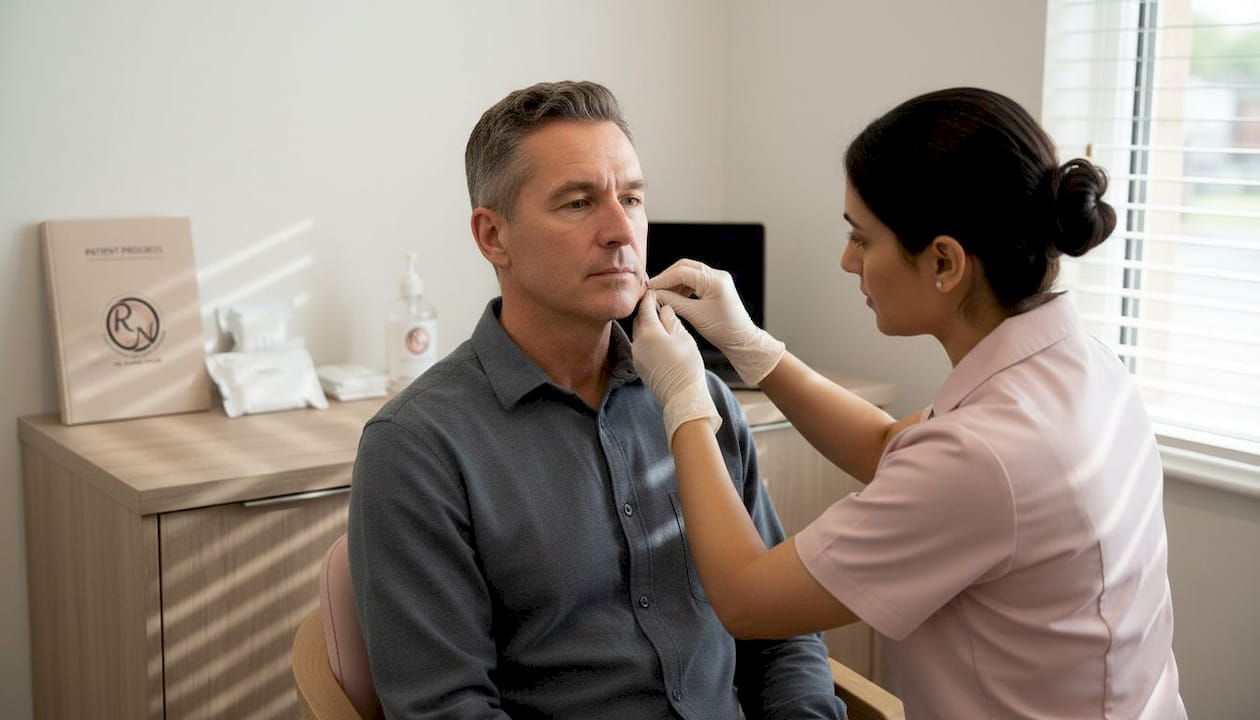
Flaps vs grafts: A direct comparison
| Feature | Local flap | Skin graft |
|---|---|---|
| Colour match | Excellent | Variable |
| Texture match | Excellent | Often poor |
| Blood supply | Maintained | Relies on recipient bed |
| Best suited to | Most facial defects | Large defects, high-risk sites |
| Scar visibility | Usually low | Can be more visible |
| Recovery time | Moderate | Similar or longer |
| Risk of distortion | Low with good technique | Higher |
Understanding how a plastic surgeon shapes outcomes is central to appreciating why flap design and execution matter as much as the chosen technique itself. Even with the same flap type, the final result depends heavily on surgical precision, flap orientation, and closure tension management.
Pro Tip: Ask your surgeon specifically which flap design they plan to use and where the donor site scar will fall. Understanding the scar pattern in advance helps manage expectations and supports better decision-making around the timing of any social or professional commitments.
If you want to understand more about the reconstruction process after Mohs surgery in detail, reviewing the specific steps involved helps demystify what can feel like an overwhelming experience.
Achieving good facial aesthetics after Mohs surgery is not an accident. It is the result of matching the right flap design to the right defect, in the right patient, executed with precision.
Skin grafts and secondary intention healing
While local flaps often dominate, certain situations favour alternative strategies.
Skin grafts involve transferring skin from a donor site, usually behind the ear, the neck, or the inner arm, to the defect. There are two main types. A full-thickness skin graft (FTSG) includes the epidermis and the full dermis, providing better cosmetic results but requiring a smaller donor area. A split-thickness skin graft (STSG) takes only a partial layer of dermis and can cover larger areas but often heals with a shinier, less natural appearance.
Grafts are particularly valuable when:
- The defect is too large to close with a local flap without creating significant distortion.
- The patient has had previous radiotherapy and local tissue is compromised.
- Recurrence risk is elevated and the surgeon wants to preserve the ability to monitor the site closely.
- The patient’s general health makes a longer flap procedure inadvisable.
Secondary intention healing is a different strategy altogether. Rather than closing the wound surgically, the defect is allowed to heal naturally through granulation tissue formation, wound contraction, and epithelialisation. This sounds counterintuitive, but it is genuinely effective in the right setting. Concave sites such as the temples and nasolabial folds lend themselves well to this approach because the skin contracts inward rather than pulling on free margins. The result can be surprisingly natural, and without any donor site morbidity.
For nasal reconstruction specifically, bilobed flaps remain the standard for the ala, tip, and sidewall, while the forehead flap is reserved for larger dorsal defects. The choice between a flap and a graft on the nose is not merely cosmetic; it also affects the structural support of the nasal valve and long-term breathing comfort.
Pro Tip: If secondary intention healing is being recommended for your site, ask for photographs of previous patient outcomes at that location. This gives you a realistic idea of what healing looks like at six weeks versus six months, which are often very different pictures.
Patients considering SCC facial reconstruction should be aware that squamous cell carcinoma carries a higher risk of local recurrence and perineural spread than basal cell carcinoma. This influences whether a graft over a flap is chosen to facilitate ongoing site monitoring.
Complications and risk mitigation
Any surgical option comes with risks, so understanding and mitigating complications is a critical step.
Facial reconstructive surgery after Mohs excision carries a well-characterised complication profile. Research into facial Mohs defect reconstruction identifies infection, necrosis, wound dehiscence, haematoma, and suboptimal scarring as the most frequent adverse events. Site-specific complications add an additional layer of concern: ectropion can result from over-tight closure near the lower eyelid; alar retraction distorts the shape and function of the nose; lip distortion affects speech and eating. Complication rates are notably higher in the cheek and perioral regions, and patients with diabetes or obesity face a significantly increased risk of poor outcomes.
Common complications and their prevention:
- Infection: Maintained with sterile technique and, where appropriate, prophylactic antibiotics. Wound hygiene instructions post-operatively are critical.
- Necrosis: Flap necrosis is the most feared complication and occurs when the blood supply is insufficient. Careful flap design and avoiding tension reduce this risk substantially.
- Haematoma: Pressure dressings and avoidance of anticoagulants in the perioperative period reduce bleeding risk.
- Dehiscence: Suture placement and tension management are key. Patients must avoid strenuous activity during the early healing phase.
- Ectropion: Preventing this requires vertical tension to be avoided near the lower lid. Experienced surgeons plan flap vectors accordingly.
“Pre-operative optimisation is not optional. For patients with modifiable risk factors, taking four to eight weeks to stabilise blood glucose, lose weight, or stop smoking before elective reconstruction can make the difference between a smooth recovery and a significant complication.”
Your recovery will also benefit from clear post-operative instructions covering wound cleaning, sun protection for at least twelve months after surgery to avoid hyperpigmentation of scars, sleeping position guidance to reduce oedema, and explicit signs of concern that warrant a prompt call to your surgical team. Understanding aesthetic surgery after cancer in the broader sense also helps patients contextualise their healing journey.
If you want to understand the full range of possible complications across different reconstructive techniques, the facial reconstruction surgery overview provides detailed guidance. For a broader look at reconstructive possibilities, the facial reconstruction guide is a useful resource.
Expert perspective: What really shapes outcomes in facial reconstruction after Mohs surgery
Having covered options and risks, let us consider how practical experience shapes real-world outcomes.
There is a temptation to view facial reconstruction as a technical problem with a technical solution. Identify the defect, select the flap, close the wound. In reality, the cases that achieve genuinely excellent results are distinguished by something less visible in any surgical atlas.
The first is patient preparation. It is not unusual for a patient with poorly controlled diabetes to be advised to delay reconstruction for several weeks. That conversation is sometimes unwelcome. But tissue that has inadequate microvascular perfusion will not heal well regardless of how elegant the flap design is. The same logic applies to smoking. Nicotine causes vasoconstriction that is measurable and clinically significant. Stopping smoking for even four to six weeks before surgery substantially improves tissue oxygenation, which directly reduces necrosis risk.
The second is expectation alignment. Patients often arrive focused on what a reconstruction will look like immediately after surgery, rather than at twelve months. Swelling, bruising, and initial scar redness are all normal parts of healing that bear no resemblance to the final outcome. Surgeons who take the time to walk patients through the healing timeline, including the often frustrating period of a thick, pink scar at three months, produce patients who are calmer, more compliant with wound care, and ultimately more satisfied.
The third is the value of dual expertise. Mohs surgery for facial skin cancer is not just a cancer-removal procedure; it is the first step in a reconstructive process. When the surgeon performing the excision also plans the reconstruction, flap design can be incorporated into the excision margins from the outset. Incisions can be oriented to fall in natural skin creases. Tissue sparing during excision can be deliberate. The entire approach is more coherent when both steps are in the same skilled hands.
The uncomfortable truth is that no published guideline can substitute for an experienced surgeon who knows which rules to follow and, just as importantly, when to adapt them for the individual in front of them.
Discover expert facial reconstruction care in North West England
If you are weighing your reconstructive options after a skin cancer diagnosis, having access to a surgeon with genuine dual expertise in Mohs excision and plastic reconstruction makes a significant practical difference. Miss Rakhee Nayar provides exactly this combination at her clinic in North West England.
Her facial reconstruction surgery services cover the full range of reconstructive techniques, from local flap design to graft placement and complex staged repairs. Every patient receives an individual assessment that accounts for defect characteristics, health status, and personal priorities. Whether you are restoring function and confidence after a basal cell carcinoma excision or planning reconstruction following a more complex skin cancer removal, the clinic offers private consultations, e-consultations for initial assessments, and a clear pathway to treatment.
Frequently asked questions
Which facial reconstructive method offers the best cosmetic result after Mohs surgery?
Local flaps generally provide the best colour and texture match, particularly on the nose. Flap outcomes show 100% acceptability compared with 75% for grafts, making them the preferred choice where tissue availability allows.
When is secondary intention healing used in facial reconstruction?
Secondary intention healing is well suited to concave areas like temples and the nasolabial fold, where natural wound contraction produces good results without requiring donor tissue or complex flap planning.
What are the risks associated with facial reconstructive surgery after Mohs excision?
Common risks include infection, necrosis, and haematoma, along with site-specific issues such as ectropion near the eye and alar retraction on the nose; patients with diabetes or obesity face a higher overall complication rate.
Can patient health be optimised to improve reconstructive outcomes?
Controlling diabetes, obesity, and smoking before surgery substantially reduces complication risk and improves both healing and long-term aesthetic results.
Recommended
- Facial Reconstruction Surgery | Expert Mohs Surgery | UK
- What is Facial Reconstruction? | Expert Guide by Dr Nayar
- How plastic surgeons shape outcomes after Mohs surgery
- Aesthetic surgery after cancer: options and expert insights
Filed under Facial Reconstruction