TL;DR:
- Plastic surgeons focus on restoring function and appearance after skin cancer removal by tailoring reconstruction to each defect’s specifics. Their goal is to ensure oncological safety while achieving optimal aesthetic and functional outcomes, guided by defect size, location, and patient factors. The choice of reconstructive technique significantly impacts healing, complication rates, and patient satisfaction, especially in complex facial areas.
Most people facing a skin cancer diagnosis focus entirely on one question: can the tumour be removed? That question matters, of course. But it is only half the story. Plastic and reconstructive surgeons focus on restoring both function and appearance after cancer excision, tailoring reconstruction to defect size, depth, and location. The wound left behind after tumour removal can affect your ability to blink, smile, breathe through your nose, or simply feel confident in your own skin. This guide explains exactly how plastic surgeons approach that challenge and what it means for your care.
Key Takeaways
| Point | Details |
|---|---|
| Dual role | Plastic surgeons in skin cancer care remove tumours and create tailored reconstructions for both appearance and function. |
| Technique matters | Reconstructive technique choice—flap, graft, or closure—influences final cosmetic and functional outcomes. |
| Complications exist | Grafts carry higher risk of wound complications, so surgeon and patient must weigh benefits and risks. |
| Patient involvement | Your concerns, goals and preferences are vital for planning the best reconstructive outcome. |
The dual role of the plastic surgeon in skin cancer care
When a plastic surgeon becomes involved in your skin cancer treatment, their goal is not simply to close a wound. They are simultaneously thinking about oncological safety, which means ensuring all cancer has been cleared with safe margins, and about how the healed result will look and function months or years from now. This is a fundamentally different mindset from general surgical wound closure.
Reconstructive surgeons tailor each plan to the individual defect. No two skin cancer wounds are identical. A small lesion on the cheek demands a completely different reconstructive plan compared to a larger defect on the nasal tip or the eyelid margin. The anatomical site, depth of excision, proximity to critical structures, and the patient’s skin type all feed into the final surgical decision.
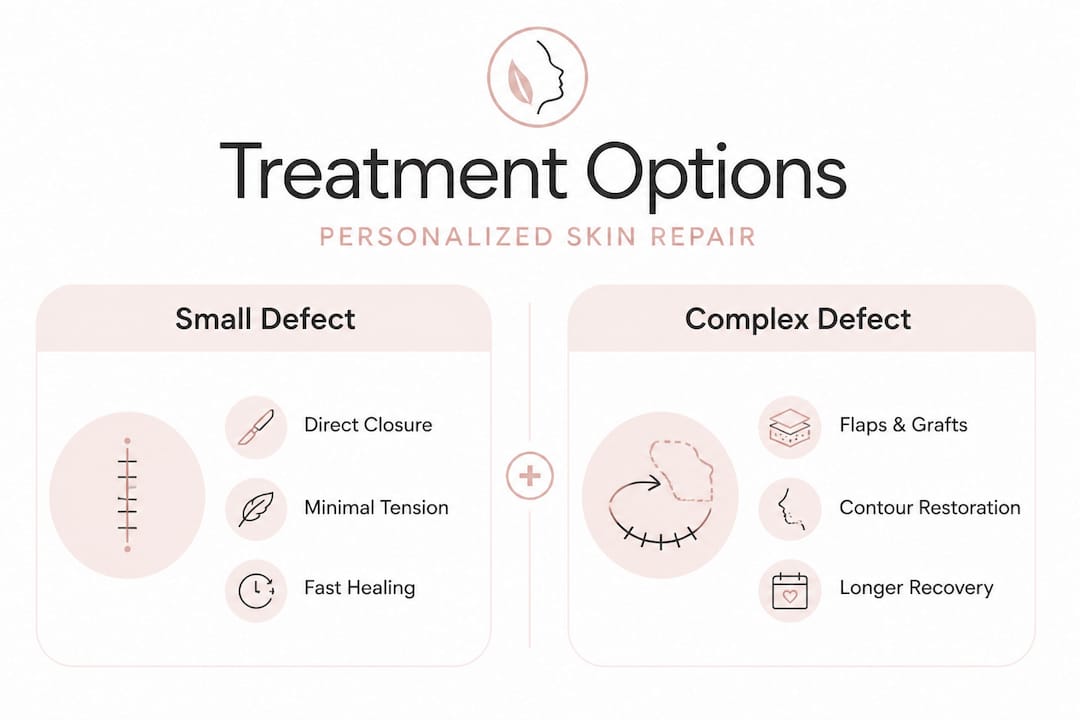
Here is a summary of how defect characteristics influence the reconstructive approach:
| Defect characteristic | Reconstructive considerations |
|---|---|
| Small, superficial, low tension | Direct closure or healing by secondary intention |
| Moderate size, good skin laxity | Local flap with matching skin tone and texture |
| Large or deep defect | Skin graft or regional flap such as a forehead flap |
| Proximity to eyelid or lip | Functional preservation prioritised alongside aesthetics |
| Compromised vascular supply | Flap preferred over graft to ensure reliable healing |
The plastic surgeon’s role in shaping Mohs outcomes extends well beyond technical closure. It includes careful planning of incision lines to follow natural skin creases, selecting donor tissue that closely matches the colour and texture of the surrounding skin, and anticipating how scars will mature over the following 12 to 18 months.
Key considerations guiding every reconstructive decision:
- Defect size and depth: A superficial wound behaves very differently from one involving underlying muscle or cartilage.
- Anatomical location: High-risk facial zones such as the nose, eyelids, lips, and ears demand heightened precision.
- Patient skin characteristics: Thickness, elasticity, and sun damage history all influence how skin heals.
- Oncological margins: Reconstruction only begins once clear margins are confirmed, particularly in Mohs surgery.
- Patient priorities: Minimising visible scarring, preserving movement, and restoring symmetry are personalised goals.
Achieving functional and confidence restoration is not an afterthought in this process. It is built into the surgical plan from the very first consultation.
Choosing the right reconstructive technique: options and decision factors
Once tumour clearance is confirmed, the plastic surgeon turns to the question of how best to repair the wound. The range of techniques available is broader than most patients realise, and the right choice depends on a careful reading of both the wound itself and the person it belongs to.
The main reconstructive closure options include direct closure, skin grafts, local flaps, regional flaps such as the forehead flap, and allowing the wound to heal naturally by secondary intention. Each carries its own advantages, limitations, and recovery profile.
Here is how the main techniques compare:
| Technique | Best suited for | Advantage | Limitation |
|---|---|---|---|
| Direct closure | Small defects with adequate skin laxity | Simple, fast, minimal donor site | Not suitable for large or tight wounds |
| Healing by secondary intention | Selected small facial defects | No donor site, good results in concave areas | Longer healing time |
| Skin graft | Larger or awkward defects | Can cover significant area | Colour mismatch, needs healthy vascular bed |
| Local flap | Moderate facial defects | Matched skin, own blood supply | Technically demanding |
| Forehead flap | Complex nasal reconstruction | Excellent skin match for nose | Multi-stage procedure, visible during healing |
A critical biological principle governs the choice between grafts and flaps. Skin grafts require a healthy vascular bed to survive, whereas local flaps carry their own blood supply, making them far more reliable in wounds with compromised tissue, scarring, or prior radiotherapy. This distinction is clinically important because placing a graft on an inadequate base risks failure, requiring further surgery and potentially a worse cosmetic result.
Here is a step-by-step outline of how a reconstructive decision is typically reached:
- Confirm clear oncological margins before planning reconstruction.
- Assess defect size, depth, and the structures involved, such as cartilage, muscle, or nerve.
- Evaluate the quality and availability of surrounding tissue for local flap harvest.
- Consider the patient’s medical history, including anticoagulant use, diabetes, or prior radiotherapy.
- Discuss aesthetic priorities with the patient, including scar placement and anticipated recovery time.
- Select the technique that best balances oncological safety, wound biology, and aesthetic goals.
- Plan a staged approach where necessary, for example in forehead flap reconstruction for nasal defects.
The value of combining Mohs and plastic surgery lies precisely in this integrated planning. When the Mohs surgeon and the reconstructive plastic surgeon work as a team, or when one surgeon has dual training in both disciplines, the entire process becomes more fluid, more efficient, and more consistently excellent.
Pro Tip: Ask your surgeon specifically whether a local flap or graft is being proposed and why. Understanding the reasoning helps you make a genuinely informed decision about your own care, rather than simply consenting to a plan you have not had fully explained.
For a broader view of the treatment and reconstruction guide covering excision and repair together, it is worth exploring how these decisions are made in clinical practice.
How reconstructive choice affects outcomes: evidence from UK Mohs practice
The stakes of choosing the right reconstructive technique are real and measurable. Evidence from UK and international Mohs surgery cohorts consistently shows that technique selection influences not just how a wound heals, but how the patient feels about the result and what complications, if any, they experience.
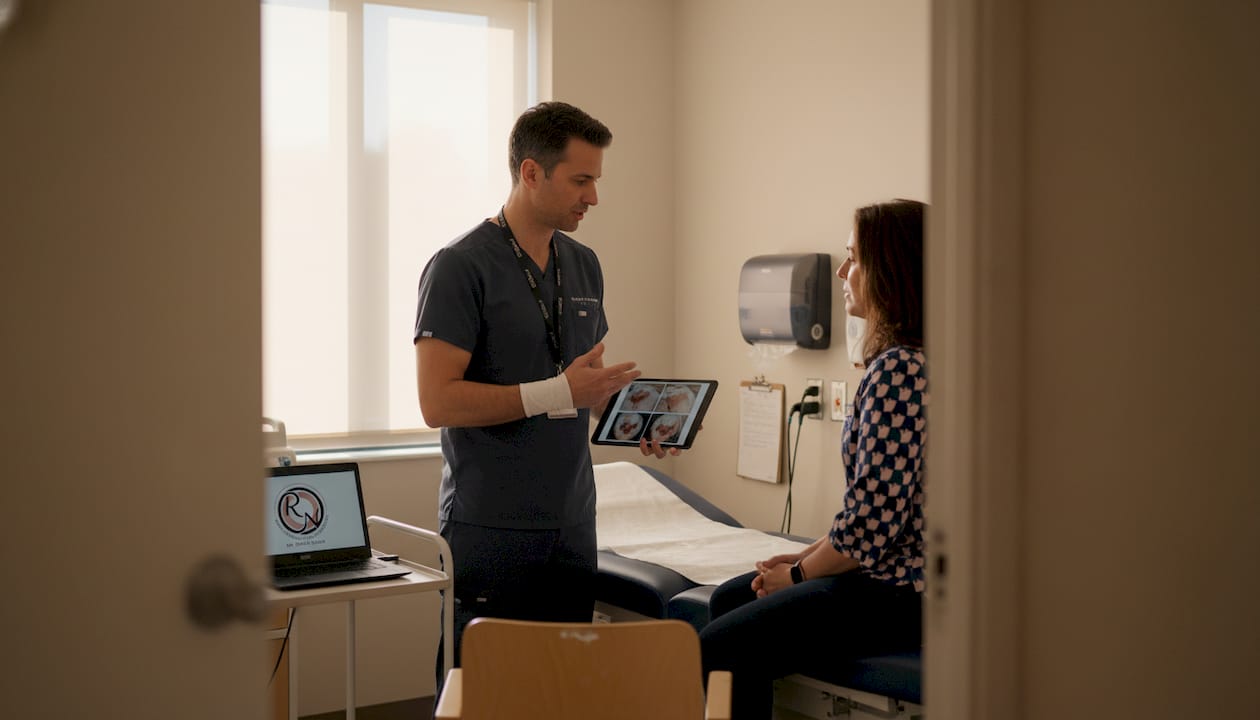
For nasal reconstruction specifically, local flap and forehead flap methods are frequently favoured over full-thickness skin grafts in terms of aesthetic outcomes. The nose is one of the most technically challenging areas of the face to reconstruct, given its three-dimensional structure, distinct skin zones, and prominence. A patch of grafted skin that contracts or fails to match in texture can leave a visible and permanent reminder of the surgery, whereas a well-planned flap can be remarkably natural in appearance.
UK cohort data provides a sobering but valuable benchmark for complication rates following Mohs surgery with in-house wound repair. In a study of 1,000 UK patients, researchers documented the following:
- Minor complications: 3.6% of cases
- Intermediate complications: 3.1% of cases
- Major complications: 0.8% of cases
Patients who received a skin graft had a significantly higher adjusted risk of experiencing a complication requiring clinical intervention. This does not mean grafts should be avoided entirely. In many cases they remain the most appropriate solution. But it does reinforce the importance of selecting the technique that best suits the individual wound, not simply the fastest or easiest repair available.
Key factors that influence complication risk include:
- Repair type: Grafts carry higher complication rates compared to primary closures and many flap repairs.
- Anatomical site: Certain locations, such as the lower leg, are inherently higher risk for healing.
- Patient health: Conditions like diabetes, obesity, or smoking significantly impair wound healing.
- Surgeon experience: The complexity of some repairs demands specialist reconstructive expertise.
- Timing: Where possible, staging the reconstruction after confirmed tumour clearance improves outcomes.
Viewing natural Mohs reconstruction results gives a clearer picture of what can realistically be achieved when technique selection and surgical skill combine effectively. The aim is always to make the repair as invisible as possible while preserving every bit of function.
Patients seeking aesthetic options after cancer should also be aware that further refinement procedures, such as scar revision or laser resurfacing, can sometimes improve results once the initial wound has matured.
Planning for success: patient involvement and risk management
One of the most underappreciated aspects of skin cancer reconstruction is the patient’s own role in the process. Too often, patients arrive at the surgical stage having been told very little about what the reconstructive journey actually involves. This is a missed opportunity, and frankly, it is not good enough.
“The best reconstructive outcomes occur when the patient and surgeon make decisions together, with a shared understanding of what is technically possible, what the realistic risks are, and what matters most to the individual.”
Patients who are well-informed about their options, including the differences between closure methods, expected recovery timelines, and potential complications, are consistently better prepared to manage the process. They ask better questions. They follow post-operative guidance more carefully. And they are more likely to report satisfaction with their outcome, even when the result is not perfect.
Evidence from the reconstructive literature raises an important caution, however. A detailed review of facial reconstruction found that 81% of studies did not use standardised outcome measures, meaning it can be genuinely difficult to compare surgical approaches or to give patients precise, evidence-based predictions about their personal results. This heterogeneity in the literature should not alarm you, but it does mean that your surgeon’s direct clinical experience matters enormously alongside published data.
Steps you can take to prepare for and protect your reconstruction:
- Ask about all available options before consenting to a specific repair technique. There may be more than one valid approach for your wound.
- Disclose your full medical history including any blood-thinning medication, previous skin cancer treatment, or radiotherapy.
- Discuss your aesthetic priorities openly. Tell your surgeon which aspects of your appearance matter most to you.
- Follow all pre-operative instructions regarding smoking cessation, medication adjustments, and wound care.
- Understand the recovery timeline so that you are not alarmed by normal stages of healing, such as bruising, swelling, or temporary redness.
- Attend all follow-up appointments to monitor healing and address any early complications before they escalate.
Reliable Mohs surgery recovery tips can make a significant difference to the final result. Equally, knowing what to expect with scarring after your procedure helps set realistic expectations and reduces unnecessary anxiety during what is already a stressful time.
Benchmarking your risk individually is also worthwhile. In the UK Mohs cohort data, major complications occurred in 0.8% of repair cases, an encouragingly low figure. Your own risk may be higher or lower depending on health factors that your surgeon can help you assess in advance.
Our perspective: what most patients do not realise about plastic surgeons in skin cancer care
Patients are often surprised to discover how much thought goes into planning a skin cancer repair before a single incision is made. The common assumption is that reconstruction is a secondary consideration, something dealt with once the cancer is gone. In reality, the best outcomes happen when oncological planning and reconstructive planning occur together, not in sequence.
What truly separates excellent reconstructive outcomes from merely adequate ones is the surgeon’s understanding of wound biology at a granular level. Knowing that a particular patient’s skin has poor elasticity due to years of sun exposure, for example, changes which flap design is most suitable. Recognising that a wound sits over a mobile anatomical structure, like the lip or the lower eyelid, means anticipating how tension from repair could distort function and planning accordingly from the outset.
The evidence base, whilst valuable, can only take you so far. As already noted, a large proportion of reconstructive studies lack standardised outcome measures. This means that surgeon judgement, refined through years of specialist practice, remains an irreplaceable part of the equation. No algorithm can fully substitute for hands-on expertise in reading a wound and matching a repair to the patient in front of you.
We believe the most meaningful outcomes come from surgeons with dual training in both Mohs and plastic surgery, or from genuinely integrated teams where both disciplines work in close collaboration. The evidence for better outcomes with teamwork is compelling, and the clinical logic is straightforward. When oncological precision and reconstructive artistry are combined from the very beginning of treatment, the patient benefits at every stage. The impact on outcomes is not marginal. It can be the difference between a result that restores confidence and one that leaves a lasting reminder of illness.
Expert care: your next steps with leading plastic and Mohs surgeons
Facing a skin cancer diagnosis and the prospect of reconstruction can feel overwhelming, but you do not have to navigate it alone or without access to the very best expertise available.

Miss Rakhee Nayar holds a rare combination of dual specialist training in both Mohs micrographic surgery and plastic surgery, offering patients across the UK and internationally a genuinely integrated approach to skin cancer removal and facial reconstruction. From your first consultation, you will receive a fully personalised plan that considers both your oncological needs and your aesthetic goals. Explore the full range of Mohs surgery options available, learn more about facial reconstruction surgery tailored to your specific wound, and discover how Miss Nayar’s approach aims to restore function and confidence at every stage of your recovery.
Frequently asked questions
What is the main role of a plastic surgeon after skin cancer removal?
Plastic surgeons restore function and appearance after tumour excision by reconstructing the wound, using a technique tailored to the specific defect’s needs. Their goal is both oncological safety and the best possible aesthetic result.
Is Mohs surgery always followed by plastic surgery reconstruction?
Not every case requires plastic surgery after Mohs; the reconstructive technique chosen depends on defect size, depth, and anatomical location, with some smaller wounds closing directly or healing naturally.
What are the risks of skin grafts compared to flaps?
Patients receiving a graft had higher adjusted odds of a complication requiring intervention, and grafts may also produce a less natural colour and texture match compared to local flaps in many facial areas.
Can patients influence which reconstructive method is used?
Yes. Patient goals and expectations are considered alongside clinical wound factors in a shared decision-making process, and your aesthetic priorities are a legitimate and valued part of surgical planning.
How common are major complications after reconstructive surgery?
Major complications occurred in 0.8% of Mohs repair cases in a UK cohort, making serious adverse events uncommon, though prompt clinical attention is essential if they do arise.
Recommended
- Aesthetic surgery after cancer: options and expert insights
- Surgical excision for skin cancer: treatment & reconstruction
- Expert skin health tips for Mohs surgery recovery
- How to minimise scarring after skin cancer removal
Filed under Facial Reconstruction