
TL;DR:
- Proper preparation reduces anxiety, ensures smooth procedures, and supports better recovery.
- Collaborate with a support person, organize transport, and pack essentials like medications and entertainment.
- Follow official UK guidelines, avoid unverified sources, and arrive well-informed and calm on surgery day.
Receiving a skin cancer diagnosis is frightening, and the prospect of surgery can feel overwhelming. Yet Mohs micrographic surgery is one of the most precise and effective treatments available, offering outstanding cure rates and excellent cosmetic results, particularly on the face. Knowing how to prepare properly can transform your experience from one of anxiety to one of quiet confidence. This guide walks you through everything, from understanding the procedure itself to what to pack, what to do the night before, and what to expect on the day.
Contents: Steps to Prepare for Mohs Surgery
- Understanding Mohs surgery and why preparation matters
- Checklist: What to organise before your appointment
- How to prepare the night before and on the day
- What to expect from your hospital visit and recovery plan
- Our perspective: Avoid common pitfalls and trust UK-approved advice
- How we support your Mohs surgery journey
- Frequently asked questions
Key Takeaways
| Point | Details |
|---|---|
| Best cure and cosmetic results | Mohs surgery offers up to a 99% cure rate and unmatched scarring and cosmetic outcomes for skin cancer removal. |
| Proper preparation matters | Following an expert-endorsed checklist reduces anxiety and ensures a smooth day. |
| Arrange practical support | Always bring a support person as you will not be able to drive after the procedure. |
| Use trusted resources | Rely on NHS and BAD information to avoid dangerous online myths or unverified advice. |
Understanding Mohs surgery and why preparation matters
Mohs micrographic surgery is a specialised technique in which a surgeon removes skin cancer layer by layer, examining each layer under a microscope before deciding whether to continue. This process continues until no cancer cells remain. It is precise, methodical, and designed to remove as little healthy tissue as possible, which is why it produces such favourable cosmetic outcomes.
Not everyone needs Mohs surgery, but it is particularly recommended for cancers in specific situations. You may be a candidate if your tumour is located on the face, ears, nose, or eyelids, if the cancer has returned after previous treatment, if the edges of the tumour are poorly defined, or if you are immunocompromised. Understanding what Mohs surgery is helps you appreciate why it is the gold standard for these cases.
The figures speak for themselves. The British Association of Dermatologists confirms that Mohs is preferred for high-risk facial areas because it achieves cure rates of up to 99%, while also preserving as much surrounding healthy tissue as possible. For Mohs for facial skin cancer, this dual benefit of precision and cosmesis is especially significant.
Here is a quick comparison to help you understand how Mohs differs from other approaches:
| Treatment | Cure rate | Tissue preservation | Same-day results |
|---|---|---|---|
| Mohs surgery | Up to 99% | Excellent | Yes |
| Standard excision | 90-95% | Moderate | No |
| Radiotherapy | Variable | Poor | No |
Being well-prepared matters more than many patients realise. Arriving organised, calm, and informed means the clinical team can focus entirely on your care rather than managing avoidable complications. It also means you are less likely to experience delays, and your recovery is likely to be smoother. There are also Mohs myths and facts worth reviewing before your appointment, as misconceptions can cause unnecessary worry.
Key reasons to prepare thoroughly:
- Reduces pre-operative anxiety significantly
- Ensures the surgical team has all necessary information
- Prevents avoidable delays on the day
- Supports a smoother, faster recovery
- Helps your support person know what to expect
What to organise before your appointment
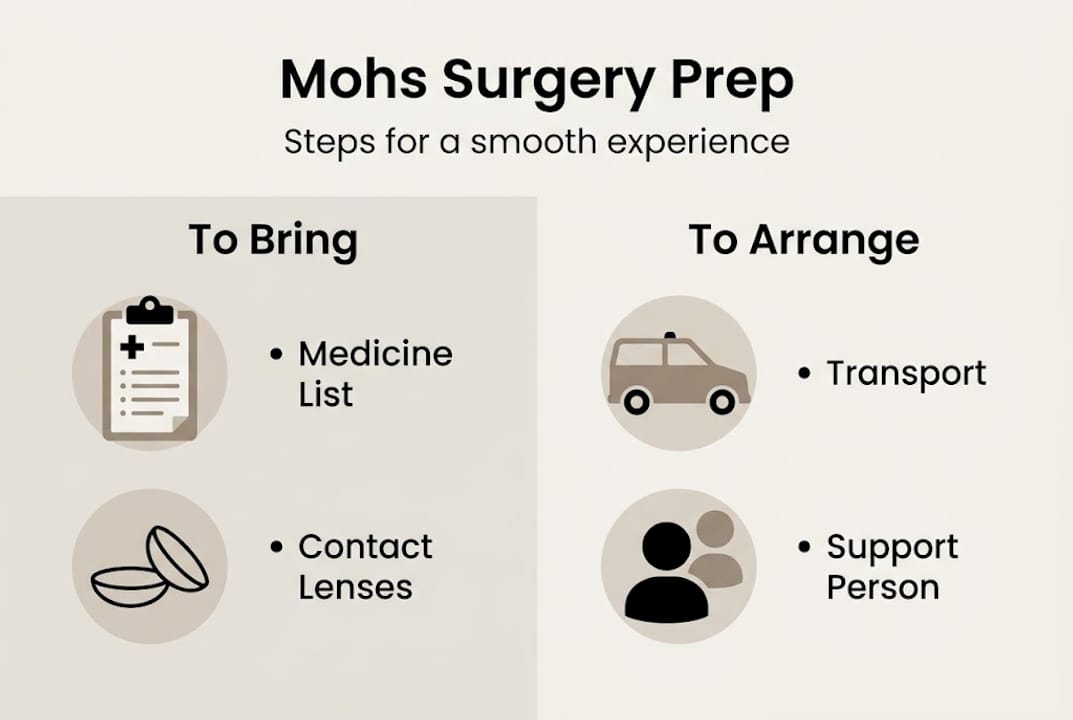
Once you understand the procedure, practical preparation becomes your priority. The official BAD checklist provides clear guidance, and we have expanded it here into a step-by-step format you can follow in the days leading up to your surgery.
Your numbered pre-surgery checklist:
- Arrange a support person. You will not be able to drive after surgery, so organise someone to accompany you and take you home. This is not optional.
- Book your transport. Whether a friend, family member, or taxi, confirm arrangements well in advance.
- Compile your medication list. Write down every medication, supplement, and vitamin you take, including doses and frequency.
- Note any allergies. Include drug allergies, latex sensitivity, and any known reactions to anaesthetic agents.
- Plan your clothing. Choose a top that buttons or zips at the front, so it does not need to go over your head post-surgery.
- Pack entertainment. Mohs surgery can take several hours. Bring a book, magazine, or downloaded content on your phone or tablet.
- Remove nail varnish. Clinical teams may need to monitor your circulation via your fingernails.
- Arrange childcare or pet care. You may be away from home longer than expected.
The official BAD guidance specifically recommends arranging transport in advance and bringing glasses or contact lenses if you use them, along with a list of medications and allergies, comfortable front-buttoning clothes, and reading material. Understanding support after Mohs surgery is equally important, so speak to your clinical team about what help you may need at home.
| To bring | To arrange |
|---|---|
| Medication and allergy list | Transport home |
| Glasses or contact lenses | Support person |
| Book or magazine | Childcare if needed |
| Comfortable front-buttoning top | Time off work |
| Snacks and water | Post-op help at home |
Pro Tip: Choose loose, dark-coloured clothing on the day. Post-surgery dressings can be bulky, and darker fabrics are more forgiving if any minor bleeding occurs through the dressing.
How to prepare the night before and on the day
With your checklist complete, the final phase of preparation focuses on your physical and mental readiness in the 24 hours before surgery.
The night before:
- Get a full night of sleep. Fatigue increases anxiety and can make local anaesthetic less comfortable.
- Avoid alcohol entirely. It can affect bleeding and interact with medications.
- Clarify any outstanding questions. Call the clinic if you are unsure about anything, particularly regarding medications.
- Lay out everything you need. Bag packed, outfit chosen, transport confirmed.
- Avoid applying any creams, lotions, or serums to the area being treated.
On the morning of surgery:
- Shower as normal but do not apply any skincare products, perfume, or deodorant near the surgical site.
- Remove all makeup completely, including foundation, concealer, and any eye makeup. Bring a list of all medications and allergies to hand over to the team.
- Eat a light breakfast unless your hospital has specifically told you not to.
- Wear your front-buttoning top and comfortable, flat shoes.
- Arrive on time, or slightly early, to allow for registration without rushing.
Pro Tip: A short mindfulness exercise or breathing technique in the car on the way to hospital can genuinely reduce cortisol levels and help you feel calmer when you arrive. Even five slow, deep breaths makes a measurable difference.
Important: Do not attend your Mohs surgery appointment alone. You will be unable to drive home safely after the procedure, and you will benefit enormously from having a trusted person with you throughout the day. This is a clinical requirement, not merely a suggestion.
For those concerned about scarring, it is worth reading about minimising scarring after skin cancer removal before your appointment. Being informed about the recovery process helps you set realistic expectations and follow post-operative advice more confidently. You can also consult the official BAD guide for further preparation detail.
What to expect from your hospital visit and recovery plan
Knowing what will happen on the day removes a great deal of uncertainty. Mohs surgery is performed under local anaesthetic, meaning you will be awake but comfortable throughout. The process is methodical and unhurried, because accuracy is everything.
Here is what typically unfolds during your hospital visit:
- Registration and paperwork. You will check in, complete consent forms, and have your details confirmed.
- Pre-operative consultation. A pre-op discussion is often offered to talk through the procedure, your expectations, and any alternatives. This is your opportunity to ask final questions.
- Local anaesthetic injection. The area is numbed thoroughly before any tissue is removed. This is usually the most uncomfortable moment of the entire procedure.
- First tissue layer removed. The surgeon removes a thin layer of tissue and maps it precisely.
- Laboratory analysis. You wait while the tissue is processed and examined under a microscope. This typically takes 45 to 60 minutes per stage.
- Further stages if needed. If cancer cells remain at the margins, the process is repeated in the precise location where cells were found.
- Wound closure. Once clear margins are confirmed, the wound is closed. This may involve direct closure, a skin flap, or a graft, depending on the size and location.
Your support person can wait with you between stages, which many patients find enormously reassuring. The BAD patient leaflet provides detailed information about what to expect during each stage.
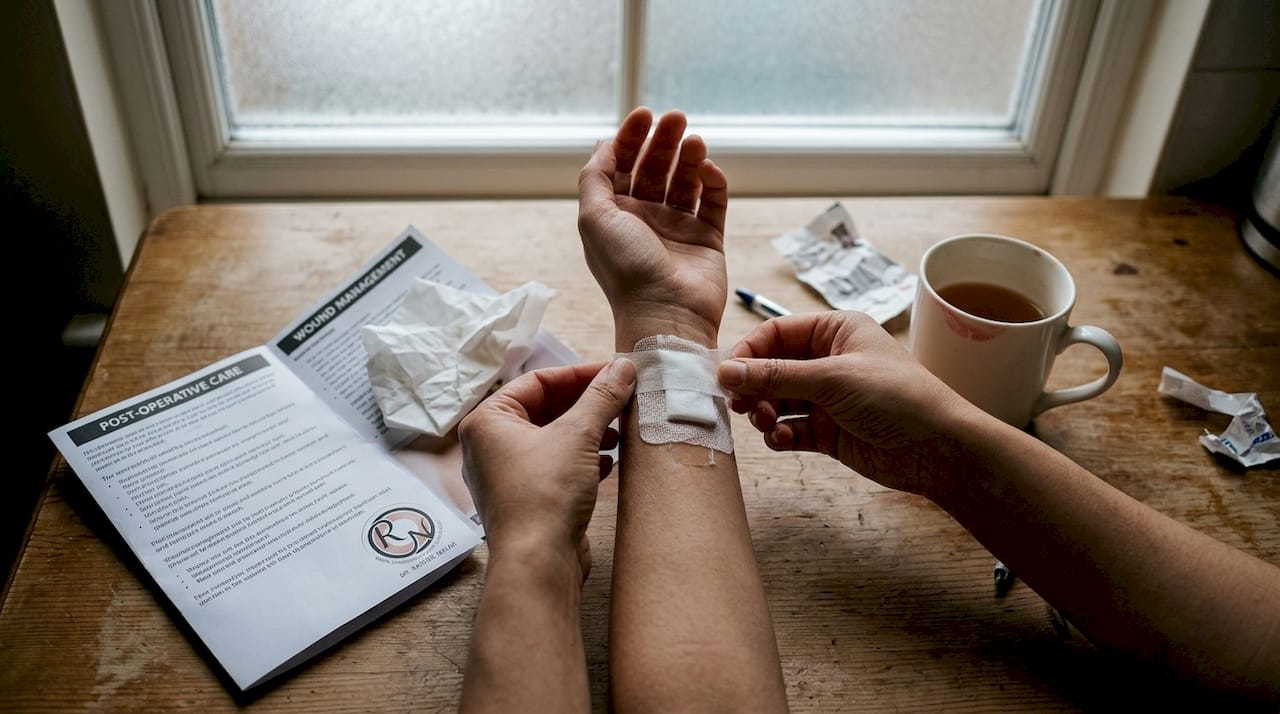
For immediate aftercare, you will receive written post-operative instructions. Follow them precisely. Keep the wound dry for the period advised, attend any follow-up appointments, and contact the clinic promptly if you notice signs of infection.
Reading about post-Mohs reconstruction in advance helps you understand what healing may look like. It is also worth reviewing Mohs myths and facts so you are not misled by inaccurate information during recovery.
Avoid common pitfalls
In our experience, the patients who feel most at ease before and after Mohs surgery are not necessarily those who have researched the most. They are the ones who have researched well. There is a significant difference.
Social media forums and unmoderated patient groups can be genuinely harmful in this context. A frightening anecdote shared by one person, in a completely different clinical situation, can cause disproportionate anxiety for someone whose case is entirely different. The British Association of Dermatologists guide is explicit: avoid speculative online sources and use approved sites such as BAD and SkinHealthInfo instead.
We have seen patients arrive having convinced themselves of worst-case scenarios based on forum posts, only to find that their actual experience bore no resemblance to what they had read. Conversely, patients who followed the official checklist, asked their clinical team clear questions, and arrived prepared consistently reported feeling more in control and recovering more smoothly.
Pro Tip: Bookmark the BAD patient information leaflet and the NHS skin cancer pages before your appointment. These are your most reliable sources, and reviewing common Mohs myths will help you separate fact from fiction quickly.
Trust the process. Trust your clinical team. And trust UK-approved information.
How we support your Mohs surgery journey
Preparing for Mohs surgery is far easier when you have expert guidance from the very beginning. At mohssurgeon.co.uk, Miss Rakhee Nayar brings dual training in both plastic surgery and Mohs surgery, meaning your care is guided by someone who understands both the precision of cancer removal and the importance of cosmetic outcomes.
Whether you are still trying to understand what Mohs surgery involves or you are ready to book a consultation with our Mohs surgery specialists, we are here to support every step. From your first question to your final follow-up, our team ensures you feel informed, cared for, and confident. You can also explore your facial reconstruction options if you have questions about what happens after cancer removal.
Frequently asked questions
Can I eat and drink before Mohs surgery?
Yes, in most cases you can have a light meal and water beforehand, as Mohs surgery uses local rather than general anaesthetic. Always confirm with your specific hospital, as individual instructions may vary.
Do I need to stop any medications before surgery?
Do not stop any medication unless your clinical team has explicitly told you to do so. List all medications and allergies and bring them to your appointment so your surgeon can review them.
How long does the Mohs procedure take?
Most Mohs procedures take several hours because each tissue layer must be examined before the next stage begins. Plan to be at the hospital for the full day.
Who can come with me to the hospital?
Bring one trusted support person, as driving post-surgery is not permitted and having someone with you significantly reduces anxiety during the waiting periods between stages.
Why should I trust only approved UK resources for Mohs preparation?
Approved sources such as the BAD, NHS, and SkinHealthInfo provide clinically verified preparation advice that is consistent with what your surgical team will tell you, reducing the risk of confusion or avoidable errors.