

A second opinion in skin cancer care is an independent specialist assessment of your diagnosis and proposed treatment plan. Research shows that second opinions change treatment plans in up to 42% of cancer cases and alter diagnoses in approximately 7.5% of cases. Those figures are not reasons for alarm. They are reasons to ask questions. The NHS recognises and accommodates second opinion requests, particularly for complex or uncertain cases. Miss Rakhee Nayar, GMC-registered Consultant Plastic Surgeon and specialist in Mohs micrographic surgery, regards a second opinion as routine good practice, not a sign of distrust.
Why seek a second opinion for skin cancer: the clinical case
Skin cancer diagnosis is not always straightforward. Basal cell carcinoma, squamous cell carcinoma, and melanoma each carry different treatment implications, and the margin between an accurate and an inaccurate read of a biopsy can be clinically significant. A second opinion gives a separate specialist the opportunity to review your pathology slides, imaging, and clinical notes independently.
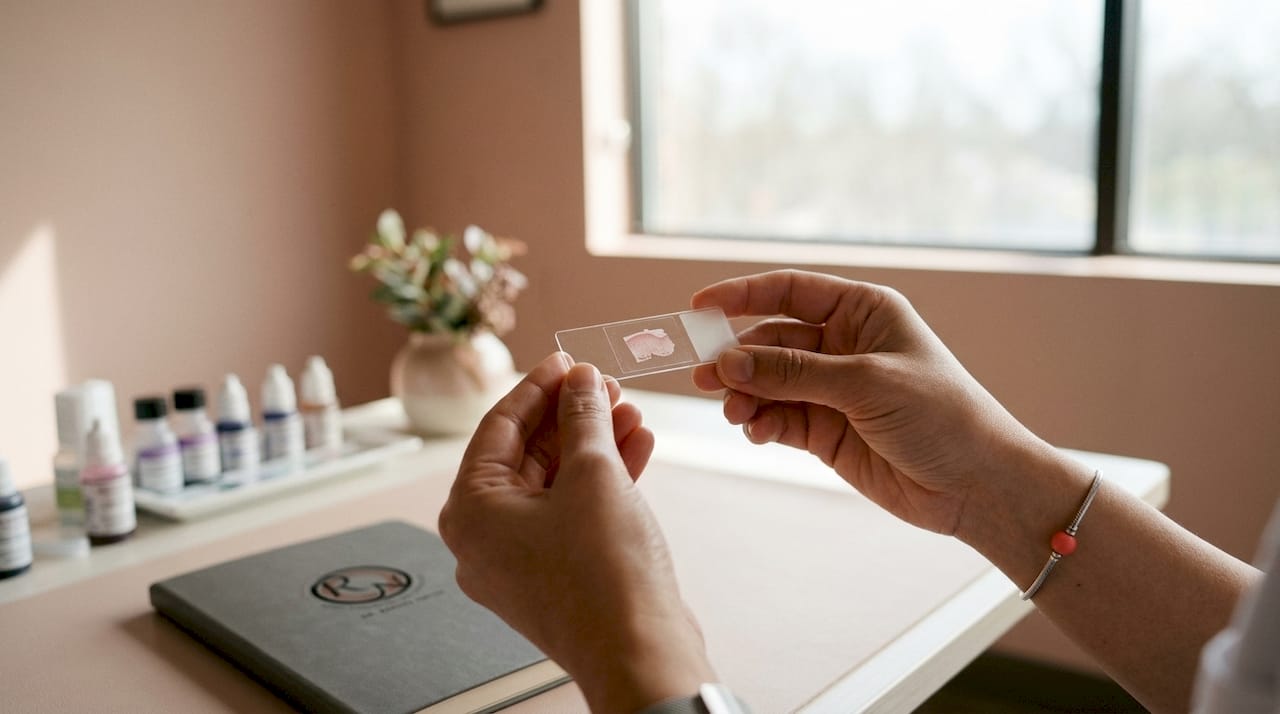
Pathology review is the cornerstone of a meaningful second opinion. Routine review by a dermatopathologist is considered a standard, sometimes life-saving step in dermatology second opinions. This matters because subtle differences in tumour subtype, depth, or margin status can change whether a patient needs Mohs micrographic surgery, standard excision, or a wider resection.
The data on treatment changes is striking. Beyond the 42% treatment plan change rate, surgical and imaging recommendations change in approximately 33% of cases following a second review. That means one in three patients who seek a second opinion receives a different recommendation about surgery or investigation. For a lesion on the face, nose, or ear, that difference can affect both cure rates and cosmetic outcomes.
A second opinion also reduces the risk of unnecessary treatment. Overdiagnosis and overtreatment are recognised problems in dermatology. A second specialist may confirm that a lesion is less aggressive than initially thought, sparing a patient from a more extensive procedure. The reverse is equally true: a second opinion can identify a cancer that was underestimated at first assessment.
Pro Tip: Bring your original biopsy slides, dermoscopy images, and any imaging reports to your second opinion appointment. A summarised letter alone is not sufficient for a thorough review.
When should you consider consulting another dermatologist?
Certain clinical situations make a second opinion particularly worthwhile. Patients do not always know when to ask, so the following triggers are worth recognising.
- Your initial diagnosis is uncertain or inconclusive. If your report uses terms such as “atypical,” “borderline,” or “cannot exclude,” a second pathology review is appropriate.
- The proposed treatment is highly invasive. Any suggestion of wide local excision, lymph node sampling, or complex reconstruction on the face, nose, ears, or eyelids warrants independent review. Second opinions are specifically advised when treatments carry major cosmetic or functional risk.
- Your cancer type is rare or aggressive. Merkel cell carcinoma, dermatofibrosarcoma protuberans, and high-risk squamous cell carcinoma are uncommon. Fewer clinicians have extensive experience with them, making specialist review more valuable.
- You have not improved after treatment. Recurrent or persistent disease after surgery or radiotherapy is a clear signal that a fresh assessment is needed.
- You feel uncertain about your care. Poor communication, unanswered questions, or a sense that your concerns have not been heard are all valid reasons to seek another view. Patient confidence in a treatment plan directly affects adherence and outcomes.
- Your lesion is on a cosmetically or functionally sensitive site. Skin cancers on the face, scalp, hands, or genitalia require careful surgical planning. A specialist in facial skin cancer treatment will assess both oncological clearance and reconstruction options together.
NHS cancer centres, including formal referral pathways such as those at Clatterbridge Cancer Centre, accommodate second opinion requests from patients or GPs. Knowing this pathway exists removes one barrier to asking.
What is the process for seeking a second opinion in the UK?
The process is more straightforward than most patients expect. Patients have no legal right to a second opinion under NHS rules, but NHS institutions widely recognise and accommodate such requests, especially for complex or doubtful cases. Your GP or current consultant can refer you, and most will do so without hesitation when asked clearly.
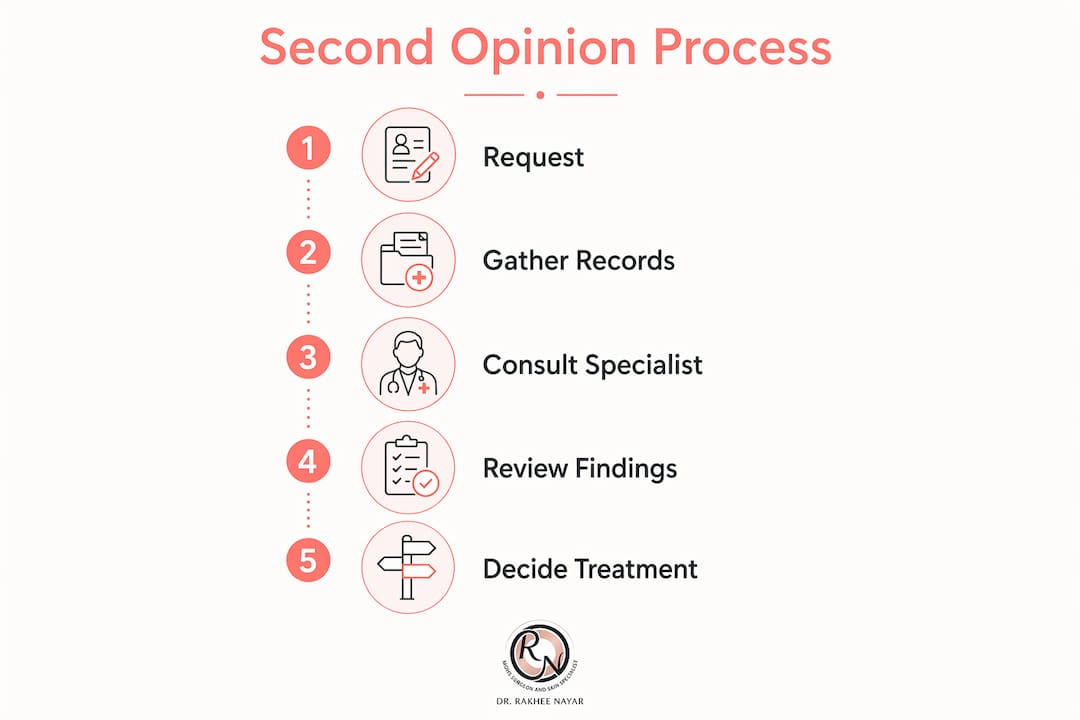
How to request a referral
Speak directly to your GP or the consultant managing your care. Explain that you would like an independent review before committing to treatment. You do not need to justify the request at length. A straightforward statement such as “I would like a second opinion before proceeding” is sufficient. Most clinicians will respect this.
Choosing the right specialist
The value of a second opinion depends heavily on the expertise of the person providing it. For skin cancers on the face or in cosmetically sensitive areas, a surgeon with dual training in Mohs micrographic surgery and plastic surgery offers a perspective that a general dermatologist cannot replicate. Specialised expertise in Mohs surgery and facial reconstruction is particularly important for high-risk or cosmetically sensitive lesions, where the second opinion often helps identify the most appropriate surgical approach.
What to bring
- Original pathology slides (not just the written report)
- Dermoscopy images or clinical photographs
- Any CT, MRI, or ultrasound imaging
- Your original referral letter and biopsy report
- A list of questions you want answered
Bringing original records including pathology slides and imaging is essential. Summarised reports alone do not allow a thorough independent review.
Timing and urgency
Speed matters with aggressive skin cancers. Balancing clarity with timeliness is critical, and patients should discuss timing openly with their primary care team. A second opinion sought promptly, within one to two weeks of diagnosis, rarely causes harmful delay. Waiting several months without treatment, however, can affect outcomes for fast-growing tumours. Be transparent with both your original team and your second specialist about the timeline.
Pro Tip: Ask your second specialist to send a written report directly to your GP and original consultant. This keeps your care coordinated and avoids gaps in communication.
What benefits can patients expect from a second opinion?
The most immediate benefit is clarity. A second opinion either confirms your original diagnosis and plan, giving you confidence to proceed, or it identifies something that needs to change. Both outcomes serve you.
Expert consensus confirms that second opinions build patient confidence and satisfaction even when the diagnosis and treatment plan remain unchanged. Knowing that two independent specialists have reached the same conclusion is genuinely reassuring. It is not a wasted exercise simply because the answer did not change.
A second opinion can also prevent unnecessary procedures. Patients who receive a more conservative assessment from a second specialist may avoid surgery that carries significant cosmetic or functional risk. For lesions near the eye, lip, or nose, this distinction matters enormously. Understanding your skin cancer detection options fully, before committing to a surgical plan, is a reasonable and responsible step.
“A second opinion reassures patients by confirming original plans or providing alternatives, helping them feel empowered to proceed with treatment. Patients are advised to approach second opinions with realistic expectations, understanding that agreement with the first opinion is common and can still be genuinely beneficial.”
The empowerment dimension is underappreciated. Patients who understand their diagnosis and have actively participated in choosing their treatment plan show better adherence and report higher satisfaction with their care. A second opinion is one of the clearest ways to move from passive recipient to informed participant in your own treatment. That shift in perspective has real clinical value.
Key takeaways
A second opinion for skin cancer is a standard clinical step that improves diagnostic accuracy, refines treatment plans, and builds the patient confidence needed to proceed with care.
| Point | Details |
|---|---|
| Treatment plans change frequently | Second opinions alter cancer treatment plans in up to 42% of cases, making them clinically significant. |
| Pathology review is central | Bring original biopsy slides, not just written reports, to allow a thorough independent assessment. |
| NHS supports the process | NHS institutions accommodate second opinion requests; ask your GP or consultant for a referral. |
| Timing requires care | Seek a second opinion promptly to avoid delays, particularly for aggressive or fast-growing skin cancers. |
| Confidence is a valid outcome | Even when the diagnosis does not change, a confirmed plan increases patient confidence and treatment adherence. |
Miss Nayar’s view: second opinions are part of good care
Patients sometimes worry that asking for a second opinion will offend their doctor or signal a lack of trust. In my experience, the opposite is true. Specialist surgeons regularly value second opinions in complex skin cancer cases, viewing them as integral to good care rather than a sign of distrust. Any clinician who discourages you from seeking one is the exception, not the rule.
Where I find second opinions most valuable is in cases involving the face, nose, eyelids, or ears. These are sites where the surgical approach must balance complete tumour removal with the best possible cosmetic and functional outcome. A patient who arrives having already had a second opinion is often better prepared. They have thought carefully about their options, they have questions ready, and they are more confident in the decisions they make.
My practical advice is this: go in with realistic expectations. The second opinion may simply confirm what you were already told. That confirmation is not a failure. It is the reassurance you need to move forward with certainty. If the second opinion does suggest a different approach, that information is valuable and worth discussing openly with both specialists involved in your care.
Prompt treatment matters, particularly for squamous cell carcinoma and melanoma. A second opinion sought within one to two weeks of diagnosis rarely compromises outcomes. What does compromise outcomes is prolonged uncertainty that leads to delayed treatment. Use the second opinion to resolve uncertainty, not to postpone a decision indefinitely.
— Miss Rakhee Nayar
Specialist skin cancer consultations with Rakhee Nayar – Mohs Surgeon and Skin Specialist
If you have received a skin cancer diagnosis and want an independent specialist review, Rakhee Nayar – Mohs Surgeon and Skin Specialist offers confidential second opinion consultations at her private clinic in North West England, with e-consultation options available for patients across the UK and internationally.
Miss Nayar holds dual training in plastic surgery and Mohs micrographic surgery, a combination that allows her to assess both oncological clearance and reconstruction planning in a single consultation. Whether you are concerned about a lesion on the face, have been offered a procedure you do not fully understand, or simply want confirmation before proceeding, her practice provides thorough, personalised assessments. You can read more about Mohs micrographic surgery and review skin cancer symptoms to prepare for your consultation.
This article is for information only and does not constitute medical advice. Consult a GMC-registered specialist for guidance specific to your situation.
FAQ
What is a second opinion in skin cancer care?
A second opinion is an independent assessment of your diagnosis and proposed treatment by a specialist who was not involved in your original care. It may include review of pathology slides, imaging, and clinical notes.
Does seeking a second opinion delay my treatment?
A second opinion sought promptly, typically within one to two weeks of diagnosis, rarely causes harmful delay. Discussing timing with your primary care team helps avoid any unnecessary gap in treatment, particularly for aggressive cancers.
Will my NHS doctor refer me for a second opinion?
Patients have no legal right to a second opinion under NHS rules, but NHS institutions widely accommodate such requests. Ask your GP or current consultant directly; most will refer you without difficulty, especially for complex or uncertain cases.
What should I bring to a second opinion appointment?
Bring your original pathology slides, dermoscopy images, any CT or MRI imaging, your biopsy report, and your original referral letter. A written summary alone is not sufficient for a thorough independent review.
Does a second opinion always lead to a different diagnosis?
No. Second opinions confirm the original diagnosis and treatment plan in the majority of cases. Even when nothing changes, the confirmation builds confidence and helps patients proceed with greater certainty.