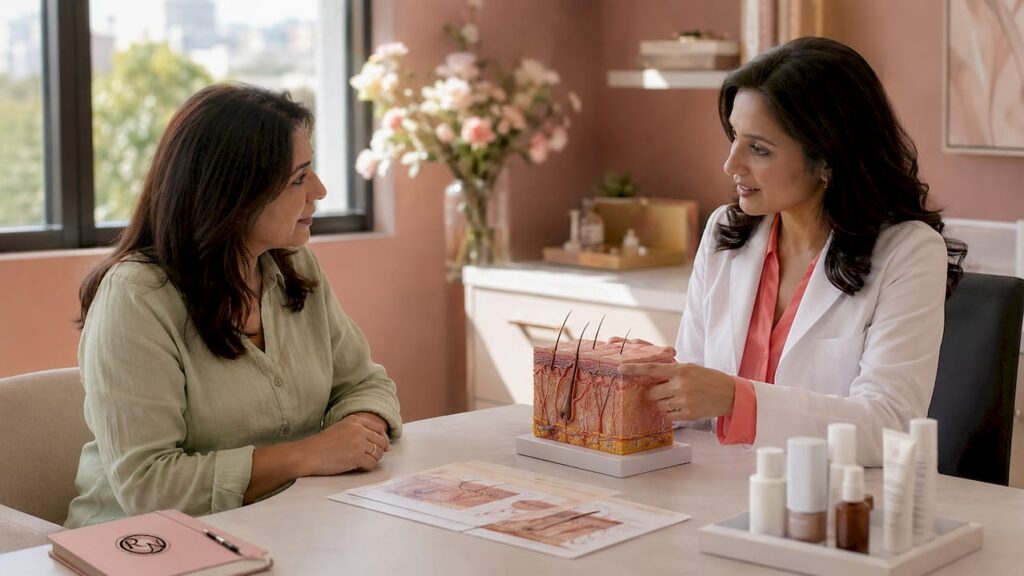
Manchester skin cancer treatment options include surgical excision, Mohs micrographic surgery, photodynamic therapy, cryotherapy, and radiotherapy, with surgery as the standard approach for most cases. The right treatment depends on the type of skin cancer, its location, size, and your overall health. Surgery remains the primary treatment for most skin cancers in the UK, typically performed under local anaesthetic as a minor outpatient procedure. The NHS aims to communicate a diagnosis or rule out cancer within 28 days of an urgent GP referral, and multidisciplinary teams across Manchester coordinate care from diagnosis through to reconstruction. For high-risk or facial cancers, Mohs micrographic surgery, led by Miss Rakhee Nayar at Rakhee Nayar – Mohs Surgeon and Skin Specialist, offers the highest cure rates with the least healthy tissue loss.
1. What surgical treatments are offered for skin cancer in Manchester?
Surgery is the most effective and most commonly used treatment for skin cancer. It removes the tumour with a margin of surrounding tissue, and the removed specimen is examined under a microscope to confirm complete clearance.
Standard excision
Standard surgical excision is performed under local anaesthetic as a day procedure. A surgeon removes the lesion along with a defined margin of healthy skin, and the wound is closed with sutures. This approach suits the majority of basal cell carcinomas (BCCs) and squamous cell carcinomas (SCCs) on the trunk and limbs. Some complex cases require plastic, maxillofacial, or oculo-plastic surgery, particularly when the tumour sits on the face or near sensitive structures.
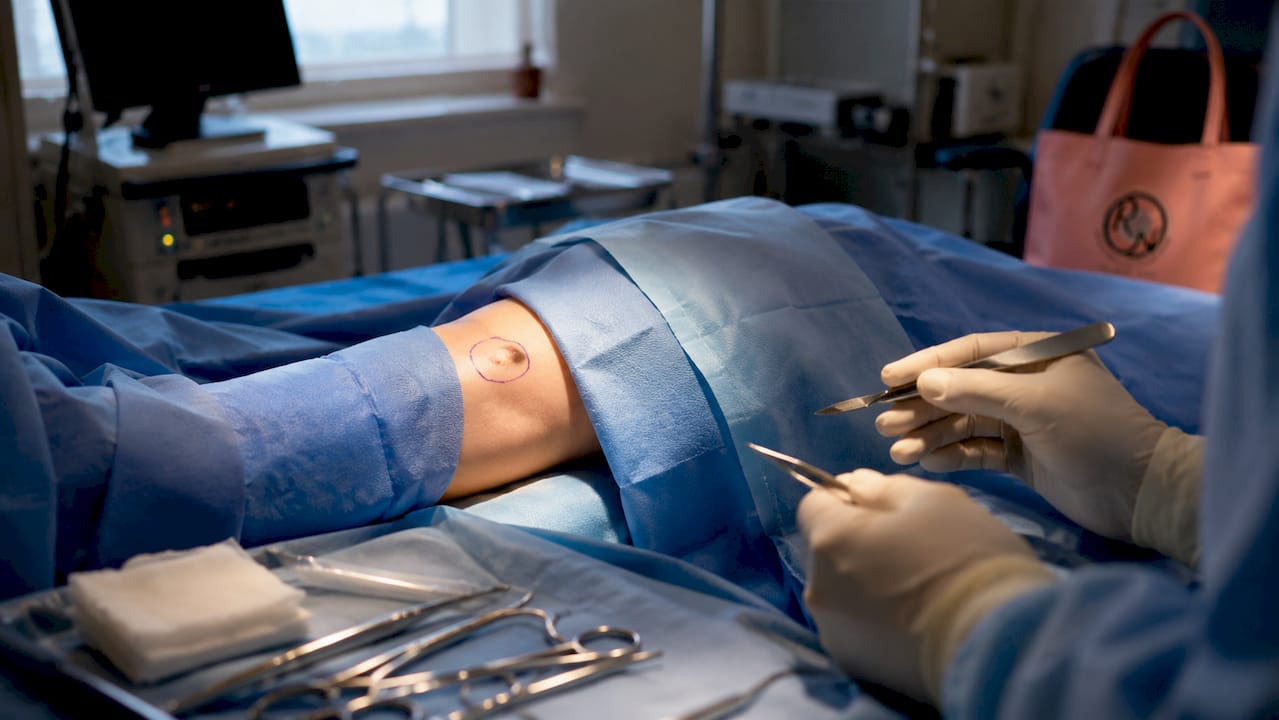
Mohs micrographic surgery
Mohs surgery is the gold standard for high-risk BCCs and SCCs, especially on the face, ears, nose, and eyelids. The surgeon removes the tumour in thin layers, examining each layer under a microscope before proceeding. This gives real-time confirmation of clear margins and preserves the maximum amount of healthy tissue. Mohs surgery offers the highest cure rates for complex skin cancers in cosmetically sensitive areas, and is recommended by UK clinical practice for these cases. Miss Rakhee Nayar is dual-trained in both plastic surgery and Mohs surgery, which means she can perform the excision and any necessary facial reconstruction in the same setting.
Surgical reconstruction
Reconstruction may follow excision, particularly on the face. Techniques include direct closure, skin flaps, and skin grafts, chosen according to the size and site of the defect. Facial reconstructive surgery aims to restore both function and appearance after tumour removal.
Key surgical options at a glance:
- Standard excision: suitable for most BCCs and SCCs on lower-risk sites; outpatient procedure under local anaesthetic
- Mohs micrographic surgery: recommended for high-risk, recurrent, or facial tumours; microscopic margin control at the time of excision
- Reconstruction: flaps or grafts used when the defect is too large for direct closure, particularly on the face
Pro Tip: If your lesion is on the nose, eyelid, ear, or lip, ask your GP specifically about referral for Mohs surgery rather than standard excision. The difference in tissue preservation on the face is clinically significant.
2. What non-surgical treatment options exist and when are they used?
Non-surgical treatments are available for specific types and stages of skin cancer. They are generally less effective than surgery for definitive cure, but they serve an important role for patients who are unsuitable for surgery or who have low-risk, superficial lesions.
Photodynamic therapy (PDT)
Photodynamic therapy applies a light-sensitising cream to the lesion, which is then activated by a specific wavelength of light. PDT is suitable for superficial, low-risk BCCs and some pre-cancerous lesions such as actinic keratoses. It produces good cosmetic results on thin, flat lesions but is not appropriate for nodular or infiltrative BCCs.
Cryotherapy
Cryotherapy uses liquid nitrogen to freeze and destroy abnormal cells. It is a minimally invasive option for select cases, including superficial BCCs and actinic keratoses. The procedure is quick and performed in an outpatient setting, but recurrence rates are higher than with surgery for anything beyond very small, low-risk lesions.
Topical chemotherapy creams
Creams such as imiquimod and 5-fluorouracil (5-FU) are applied directly to the skin over several weeks. They are used for superficial BCCs and pre-cancerous conditions. Topical treatments are not effective for thicker or nodular BCCs, and they carry a risk of local skin reactions including redness, blistering, and crusting.
Radiotherapy
Radiotherapy uses targeted radiation to destroy cancer cells. It is reserved for patients who are unsuitable for surgery due to age, health, or the size and location of the tumour. Radiotherapy is also used as an adjuvant treatment after surgery when margins are close or involved. It requires multiple outpatient visits over several weeks and carries a small risk of long-term skin changes.
Non-surgical options at a glance:
- PDT: best for superficial, low-risk BCCs and pre-cancerous lesions
- Cryotherapy: suitable for small, superficial lesions; higher recurrence risk than surgery
- Topical creams: effective only for thin, superficial BCCs; not suitable for nodular disease
- Radiotherapy: used when surgery is not possible, or as adjuvant treatment
Pro Tip: A common misconception is that non-surgical treatments are always the “easier” option. Non-surgical treatments are generally less effective for long-term cure, and choosing them for the wrong lesion type can result in recurrence that is harder to treat second time around.
3. How does the multidisciplinary team in Manchester influence skin cancer treatment?
A multidisciplinary team (MDT) is the backbone of skin cancer care across Manchester and the wider North West. The MDT brings together surgeons, dermatologists, oncologists, histopathologists, and specialist nurses to review each case and agree on the most appropriate treatment plan.
MDT involvement means no single clinician makes treatment decisions in isolation. Each patient’s tumour type, risk classification, and personal circumstances are discussed collectively. This is particularly important for high-risk or unusual presentations where the correct treatment pathway is not straightforward.
Specialist skin cancer nurses play a central role in the MDT. Patients may be referred to a specialist nurse as part of their care pathway, providing a consistent point of contact for information, support, and coordination between appointments. This reduces patient anxiety and improves continuity of care.
Teledermatology is increasingly integrated into Manchester NHS skin cancer pathways. Patients may attend clinics for high-quality lesion photographs rather than an initial face-to-face consultation. Remote assessment by a specialist allows faster triage and helps the MDT meet the national 28-day diagnosis target. It also reduces unnecessary outpatient appointments for lesions that can be assessed remotely.
MDT roles in skin cancer care:
- Surgeons: perform excision, Mohs surgery, and reconstruction
- Dermatologists: diagnose and manage non-surgical cases; oversee PDT and topical treatments
- Oncologists: advise on radiotherapy and systemic treatments for advanced disease
- Specialist nurses: coordinate care, support patients, and liaise between teams
- Teledermatology services: enable remote triage and faster diagnosis
Patient involvement in treatment decisions is a core principle of MDT working. You have the right to understand your options, ask questions, and contribute to the plan agreed for your care.
4. How to decide the best treatment option for your skin cancer in Manchester
Treatment selection depends on a combination of tumour factors and patient factors. No single treatment suits every patient or every lesion.
Tumour factors
The type of skin cancer matters most. BCCs are the most common and are usually treated with excision or Mohs surgery depending on risk classification. SCCs carry a higher risk of spread and generally require surgical removal with confirmed clear margins. Melanoma is managed differently again, with wide local excision and sentinel lymph node biopsy considered in appropriate cases.
Lesion location is a key driver of treatment choice. Tumours on the face, particularly around the eyes, nose, ears, and lips, carry higher risk and are more likely to require Mohs surgery to achieve clear margins while preserving function and appearance. Lesions on the trunk or limbs in low-risk sites are more often managed with standard excision.
Size and growth pattern also influence the decision. A small, well-defined, superficial BCC on the back may be suitable for cryotherapy or PDT. A large, infiltrative, or recurrent BCC on the nose is not. Referral urgency depends on size, growth rate, and lesion location, particularly proximity to the eyes, nose, and ears.
Patient factors
Your age, general health, and any medications you take affect which treatments are safe and practical. Patients on anticoagulants require careful surgical planning. Patients with significant comorbidities may be better suited to non-surgical options if surgery carries unacceptable risk.
| Factor | Favours surgery or Mohs | Favours non-surgical options |
|---|---|---|
| Lesion location | Face, ears, nose, eyelids | Trunk, limbs, low-risk sites |
| Lesion type | Nodular, infiltrative, recurrent BCC; SCC | Superficial BCC, actinic keratosis |
| Lesion size | Larger or ill-defined | Small and well-defined |
| Patient health | Fit for local anaesthetic | Significant comorbidities |
| Priority | Cure rate and margin control | Cosmesis with minimal intervention |
Pro Tip: Bring a written list of your medications and any previous skin procedures to your first consultation. This information directly affects which treatment options are safe and appropriate for you.
A specialist consultation with Miss Nayar or your MDT is the only reliable way to determine the right treatment for your specific lesion. Biopsy results, dermoscopy findings, and clinical examination together inform the final plan.
Key takeaways
Surgery is the most effective treatment for most skin cancers in Manchester, with Mohs micrographic surgery offering the highest cure rates for high-risk and facial lesions.
| Point | Details |
|---|---|
| Surgery is first-line treatment | Surgical excision or Mohs surgery is recommended for most BCCs and SCCs. |
| Mohs surgery for high-risk cases | Mohs provides microscopic margin control, preserving healthy tissue on the face. |
| Non-surgical options have limits | PDT, cryotherapy, and topical creams suit only low-risk, superficial lesions. |
| MDT coordinates your care | Surgeons, dermatologists, nurses, and teledermatology services work together on your plan. |
| Tumour and patient factors both matter | Location, type, size, and your health together determine the safest and most effective option. |
What I have learned from treating skin cancer in Manchester
By Miss Rakhee Nayar
The question I am asked most often is: “Do I really need surgery?” Patients arrive hoping for a cream or a quick freeze, and I understand why. Surgery sounds more serious. But the evidence is clear, and I tell patients plainly: for most skin cancers, surgery gives you the best chance of a lasting cure.
What I have found over years of practice is that the patients who do best are those who act early. A small BCC on the nose, caught and treated promptly with Mohs surgery, can be closed with a simple flap and leave a barely visible scar. The same tumour left for two years becomes a reconstruction challenge that tests every skill I have.
Teledermatology has changed the diagnostic pathway in ways I think are genuinely positive. Patients in the North West who might previously have waited months for a face-to-face appointment can now have their lesion assessed remotely within days. That speed matters. Early diagnosis expands treatment options and reduces the complexity of surgery when it is needed.
The MDT model is not bureaucracy. It is the reason patients with unusual or high-risk tumours get the right treatment first time. When a histopathologist, a dermatologist, and a surgeon all review the same case, the plan that emerges is better than any one of us would produce alone.
My honest advice: if you have a lesion that concerns you, get it assessed. If your GP refers you, attend promptly. And if Mohs surgery is recommended, understand that the recommendation is based on your specific tumour’s risk profile, not a default. The goal is always to remove the cancer completely and leave you looking and functioning as well as possible.
— Miss Rakhee Nayar
Skin cancer care at Rakhee Nayar – Mohs Surgeon and Skin Specialist
Rakhee Nayar – Mohs Surgeon and Skin Specialist offers private, consultant-led skin cancer diagnosis and treatment at Circle Cheshire in the North West. Miss Nayar’s dual training in plastic surgery and Mohs surgery means she can manage the full pathway from early skin cancer detection through to surgical excision and facial reconstruction in a single specialist setting.
Private consultations and e-consultations are available for patients across Manchester and the wider North West, as well as for those travelling from further afield. If you have received a skin cancer diagnosis or have a lesion that concerns you, a consultation with Miss Nayar gives you access to expert assessment and a clear, personalised treatment plan. To book, visit mohssurgeon.co.uk or contact the clinic directly. This article is not medical advice. Consult a GMC-registered specialist for guidance specific to your situation.
FAQ
What is the most common skin cancer treatment in Manchester?
Surgical excision under local anaesthetic is the most common treatment for skin cancer in Manchester and across the UK. Mohs micrographic surgery is recommended for high-risk or facial tumours where margin control and tissue preservation are priorities.
How quickly will I receive a skin cancer diagnosis on the NHS?
The NHS 28-day faster diagnosis standard applies to urgent GP referrals for suspected melanoma and squamous cell carcinoma. Most basal cell carcinomas are referred routinely rather than urgently unless they are large or in a sensitive location.
Is Mohs surgery available privately in the North West?
Mohs micrographic surgery is available privately through Rakhee Nayar – Mohs Surgeon and Skin Specialist at Circle Cheshire. Miss Nayar is dual-trained in Mohs surgery and plastic surgery, offering excision and reconstruction in the same specialist setting.
When is non-surgical treatment appropriate for skin cancer?
Non-surgical options such as PDT, cryotherapy, and topical creams are appropriate for superficial, low-risk BCCs and pre-cancerous lesions. They are not recommended for nodular, infiltrative, or recurrent tumours, where surgery provides significantly better long-term outcomes.
What does a multidisciplinary team do for skin cancer patients?
An MDT reviews each patient’s diagnosis, tumour characteristics, and health to agree on the most appropriate treatment plan. In Manchester, MDTs include surgeons, dermatologists, oncologists, and specialist nurses, with teledermatology used to support faster triage and diagnosis.