
Skin cancer specialist referral criteria are defined by specific clinical features and national guidelines to ensure rapid, appropriate care for potentially malignant lesions. In the UK, the NHS and NICE use structured pathways, including the weighted 7-point checklist and the 2-week wait (2WW) urgent referral system, to prioritise suspected melanoma and squamous cell carcinoma (SCC) for fast-track specialist review. Basal cell carcinoma (BCC) usually follows a routine referral pathway, with urgency reserved for high-risk cases. Understanding these criteria helps you have informed conversations with your GP and act promptly when a lesion changes. Miss Rakhee Nayar, Consultant Plastic Surgeon and Mohs specialist, guides this article.
1. What clinical features trigger urgent referral for suspected melanoma?
Melanoma carries the highest mortality risk of the common skin cancers. The NHS uses the weighted 7-point checklist to decide whether a pigmented lesion warrants urgent specialist referral. A score of 3 or more, or the presence of a single major feature, triggers a 2WW urgent suspected cancer referral. That threshold exists because early melanoma is highly treatable, while delayed diagnosis significantly worsens outcomes.
Major features (score 2 each):
- Change in size
- Irregular shape or border
- Irregular colour (multiple shades within one lesion)
Minor features (score 1 each):
- Diameter greater than 7mm
- Inflammation
- Oozing or bleeding
- Sensory change such as itch or altered sensation
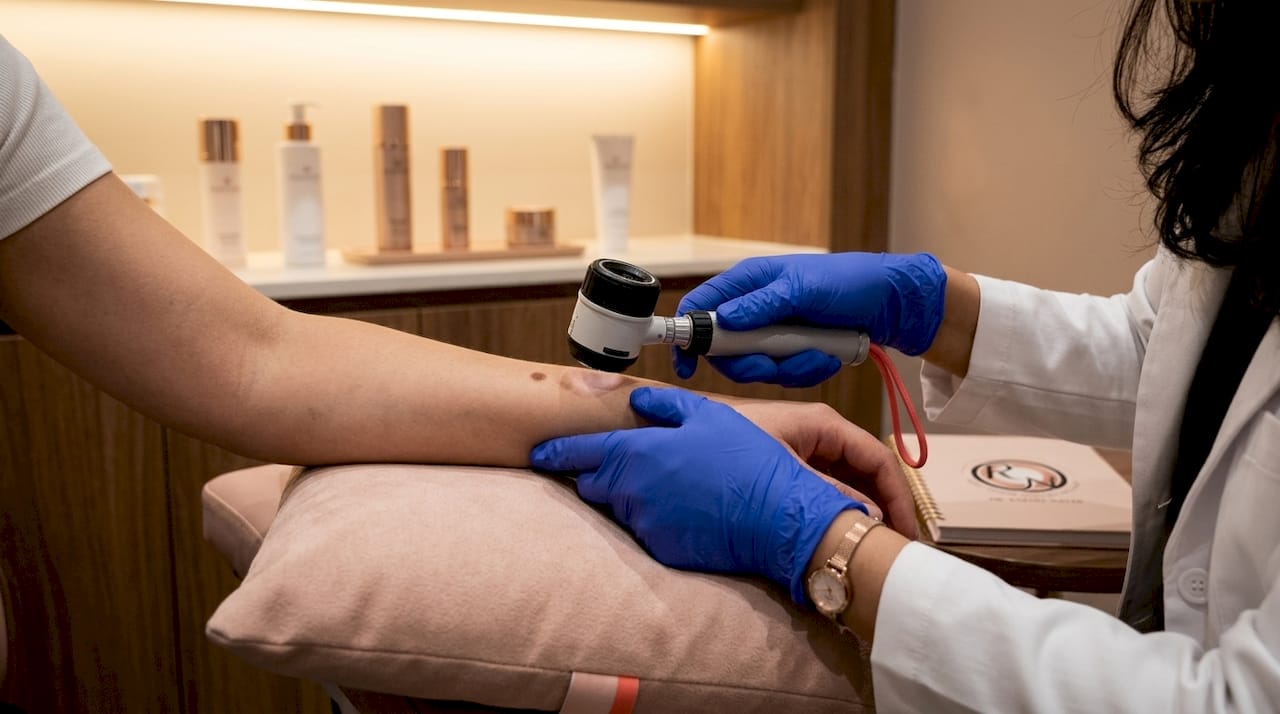
GPs also use dermoscopy findings to inform referral urgency, assessing features such as atypical pigment networks, regression structures, and irregular vascular patterns that are not visible to the naked eye. A GP trained in dermoscopy can identify lesions that warrant referral even when the 7-point score alone is borderline.
Pro Tip: Document any changing lesion with dated photographs taken in consistent lighting. A clear visual record of progression over weeks or months gives your GP objective evidence and strengthens the case for urgent referral.
The NHS 14-day appointment target means you should be seen by a specialist within two weeks of an urgent referral. This is a clinical goal rather than a legal guarantee, but you have the right to follow up with your GP if that window is not met.
2. When does suspected squamous cell carcinoma require urgent referral?
Squamous cell carcinoma is the second most common skin cancer in the UK and carries a meaningful risk of local invasion and, in some cases, spread to lymph nodes. The referral threshold for SCC is based on lesion behaviour and appearance rather than a scoring system.
Suspected SCC features that prompt urgent 2WW referral include:
- A persistent, non-healing keratotic or crusted lesion lasting more than four weeks
- A rapidly growing nodule on sun-exposed skin
- Ulceration without a clear traumatic cause
- A lesion arising within a pre-existing scar or area of chronic inflammation
- Firm, indurated texture on palpation
SCC most commonly appears on the face, scalp, ears, back of the hands, and lower lip. These are all areas with cumulative sun exposure over decades. Patients with a history of organ transplantation or long-term immunosuppression face a substantially higher risk of aggressive SCC and should be referred with a lower threshold.
Safety netting applies to borderline cases. If a lesion does not yet meet the criteria for urgent referral, your GP should give you clear written or verbal instructions on what changes to watch for and when to return. Safety netting is a recognised clinical strategy that transfers some monitoring responsibility to the patient for lesions outside urgent referral thresholds.
Pro Tip: If your GP is uncertain about a lesion on sun-damaged skin that has not healed within four weeks, ask specifically whether an urgent 2WW referral is appropriate under NICE NG12 criteria. You are entitled to ask that question directly.
3. Which BCC cases require specialist referral, and when is urgency needed?
Basal cell carcinoma is the most common skin cancer in the UK. Most BCCs are referred routinely rather than urgently, because they grow slowly and rarely spread beyond the skin. Routine referral typically means being seen within 18 weeks under NHS waiting time standards, though many patients are seen sooner.
Typical BCC features that prompt a routine referral include:
- A pearly or translucent nodule with rolled edges
- A flat, scar-like lesion with an ill-defined border
- A lesion that bleeds easily or fails to heal fully
- Superficial red, scaly patches on the trunk
Urgent referral for BCC is appropriate when the lesion is large, located in a functionally or cosmetically sensitive area, or when delay risks significant harm. High-risk sites include the nose, inner canthus of the eye, eyelids, ears, and lips. BCC on the face near these structures can infiltrate deeply before the surface appearance suggests severity. BCC near functional structures on the face warrants prompt specialist review to preserve both function and appearance.
Pro Tip: When speaking to your GP about a facial lesion, mention its exact location in relation to the eye, nose, or ear. Location is a key factor in deciding between routine and urgent referral, and your GP may not have examined the lesion under magnification.
Not all suspicious lesions require urgent referral. The NHS prioritises melanoma and SCC for 2WW pathways, with BCC triaged according to lesion-specific risk factors. Understanding this distinction prevents unnecessary anxiety and helps you ask the right questions at your GP appointment.
4. How does the national suspected cancer referral process work?
The national skin cancer referral process follows a structured pathway from GP assessment to specialist confirmation. Knowing each stage helps you track your own care and identify if something has stalled.
- GP assessment. Your GP examines the lesion, applies the 7-point checklist or clinical judgement for SCC and BCC, and decides on urgent or routine referral.
- Urgent 2WW referral. For suspected melanoma or SCC, the GP submits a 2WW referral. The 14-day target means you should receive a specialist appointment within two weeks.
- Routine referral. For most BCCs and lower-risk lesions, a routine outpatient referral is made. Waiting times vary by NHS trust.
- Teledermatology triage. Many NHS trusts now use teledermatology, where a GP submits clinical photographs for remote specialist review. This can accelerate triage without requiring an in-person appointment.
- Specialist consultation. A dermatologist, Mohs surgeon, or plastic surgeon reviews the lesion, may perform a biopsy, and confirms the diagnosis.
- NHS Faster Diagnosis Standard. The 28-day diagnosis target requires that cancer is either confirmed or excluded within 28 days of referral. This standard applies across all suspected cancer pathways.
- Safety netting for non-referred lesions. If your lesion does not meet referral criteria, your GP should document a safety net plan. Safety netting transfers monitoring responsibility to you, with clear guidance on what changes should prompt an urgent return.
- Follow-up if timelines slip. If you have not received an appointment within the expected window, contact your GP surgery to confirm the referral was submitted and ask them to chase the appointment.
Patients can also request a 2WW referral directly. Under NICE NG12 criteria, you can ask your GP whether your lesion history and changes make you eligible for an urgent suspected cancer referral. GPs are not obliged to agree, but the conversation is appropriate and encouraged.
For patients who want a faster route to diagnosis, a private specialist consultation with Rakhee Nayar – Mohs Surgeon and Skin Specialist offers assessment without NHS waiting times. A full lesion evaluation by a consultant with dual training in plastic surgery and Mohs micrographic surgery provides both diagnostic clarity and a clear treatment plan.
5. Referral criteria at a glance: melanoma, SCC, and BCC compared
The table below summarises the key differences in referral criteria, urgency, and clinical features across the three main skin cancer types.
| Feature | Melanoma | Squamous cell carcinoma | Basal cell carcinoma |
|---|---|---|---|
| Referral pathway | Urgent 2WW | Urgent 2WW | Routine (urgent if high risk) |
| Key clinical trigger | 7-point score ≥3 or single major feature | Non-healing keratotic lesion, rapid growth, ulceration | Pearly nodule, non-healing lesion, facial high-risk site |
| Common sites | Back, legs, face, nails | Face, scalp, ears, hands, lower lip | Face, ears, nose, trunk |
| Urgency exceptions | All suspected cases are urgent | Immunosuppressed patients: lower threshold | Large lesion or near eye, nose, ear: consider urgent |
| Diagnosis target | 28 days from referral | 28 days from referral | 28 days from referral |
| Scoring tool used | Weighted 7-point checklist | Clinical judgement and lesion features | Clinical judgement and site risk |
This table reflects NICE NG12 guidance and NHS referral standards. Individual GP decisions may vary based on clinical context, patient history, and local trust protocols.
Key takeaways
Skin cancer specialist referral criteria in the UK are determined by cancer type, lesion features, and site risk, with melanoma and SCC prioritised for urgent 2WW pathways and most BCCs managed through routine referral.
| Point | Details |
|---|---|
| Melanoma triggers urgent referral | A 7-point checklist score of 3 or more, or one major feature, prompts a 2WW referral. |
| SCC requires clinical judgement | Non-healing, crusted, or rapidly growing lesions on sun-exposed skin warrant urgent referral. |
| BCC is usually routine | Urgency applies only when lesions are large or near functional facial structures. |
| 28-day diagnosis standard | The NHS Faster Diagnosis Standard aims to confirm or exclude cancer within 28 days of referral. |
| Safety netting fills the gap | Lesions below referral thresholds should have a documented monitoring plan with clear return criteria. |
Specialist skin cancer care at Rakhee Nayar – Mohs Surgeon and Skin Specialist
Rakhee Nayar – Mohs Surgeon and Skin Specialist offers consultant-led assessment for patients with suspicious lesions or a confirmed skin cancer diagnosis. Miss Nayar holds dual training in plastic surgery and Mohs micrographic surgery, providing both diagnostic expertise and access to the full range of skin cancer treatment options from excision to facial reconstruction.
Private consultations are available in person at Circle Cheshire, North West England, and via e-consultation for patients across the UK and internationally. If you have received a referral and want a second opinion, or if you are concerned about a lesion and do not want to wait for an NHS appointment, a private consultation provides a clear clinical assessment without delay. For guidance on recognising the signs that warrant specialist review, the skin cancer symptoms guide is a useful starting point.
This article is for general information only and does not constitute medical advice. Consult a GMC-registered specialist for assessment of any suspicious lesion.
FAQ
What score on the 7-point checklist triggers urgent referral?
A score of 3 or more on the weighted 7-point checklist, or the presence of a single major feature, triggers an urgent 2WW suspected melanoma referral under NICE NG12 guidelines.
How long does the NHS 2-week wait referral process take?
The 2WW pathway targets specialist review within 14 days of GP referral. The NHS Faster Diagnosis Standard then aims to confirm or exclude cancer within 28 days of that referral.
Does a BCC always need urgent referral?
Most BCCs are referred routinely rather than urgently. Urgent referral applies when a BCC is large, located near the eye, nose, ear, or lip, or when delay risks significant functional or cosmetic harm.
Can I ask my GP for an urgent skin cancer referral?
Yes. Under NICE NG12 criteria, you can ask your GP whether your lesion history and changes make you eligible for a 2WW urgent suspected cancer referral. Your GP will assess eligibility based on clinical features.
What is safety netting in skin cancer care?
Safety netting is a clinical strategy used when a lesion does not meet urgent referral criteria. Your GP provides clear instructions on what changes to monitor and when to return for urgent review, transferring some monitoring responsibility to you.
Recommended
- Skin cancer symptoms and signs: the UK guide for early detection
- How to schedule a Mohs consultation in the UK
- Why travel for skin cancer treatment: a patient guide
- How to find expert skin surgeons: a UK patient guide
Filed under Choosing Your Care


