
TL;DR:
- Common myths like a base tan protecting against sunburn are scientifically false.
- UV exposure from indoor tanning is significantly more harmful than natural sunlight.
- Skin cancer can affect anyone regardless of age, skin tone, or sun habits.
Misconceptions about skin cancer are not just frustrating — they are genuinely dangerous. Many people walk away from well-meaning conversations with friends or a quick scroll through social media convinced that a tan is healthy, that sunscreen is toxic, or that skin cancer only happens to pale, elderly people. 59% of adults under 35 believe common tanning and sun protection myths, and those beliefs have real consequences. This article sets the record straight on the most widespread myths, giving you the accurate, clinically grounded knowledge you need to protect yourself, spot problems early, and make better decisions about your skin health.
Key Takeaways
| Point | Details |
|---|---|
| No safe tan exists | Tanning, whether outdoors or in salons, permanently damages skin and raises cancer risk. |
| Anyone can get skin cancer | Regardless of age or skin tone, everyone needs proper sun protection and awareness. |
| Sunscreen alone is not enough | Protection is most effective when sunscreen is part of a larger plan including shade and clothing. |
| Myths can be dangerous | Believing common misconceptions may delay diagnosis or encourage risky behaviour. |
| Early action saves lives | Regular self-checks and professional skin exams improve outcomes for everyone. |
The most dangerous myths about tanning and sun exposure
Myths about tanning run deep. They are woven into beauty culture, reinforced by social media, and dressed up as wellness advice. But the science tells a very different story.
Myth 1: A base tan protects you from sunburn
This is one of the most persistent myths around. A so-called base tan provides roughly the equivalent of SPF 3 to 4. That is almost nothing. It offers no meaningful defence against UV damage. Every time UV radiation hits your skin, it is causing DNA damage regardless of whether you look bronzed or pale.
Myth 2: Indoor tanning is safer than sun exposure
Sunbeds are not a gentler alternative. Indoor tanning emits up to 15 times more UV radiation than natural sunlight. That is a staggering difference. People who use sunbeds before the age of 35 increase their melanoma risk by 59%. There is no safe dose of artificial UV.
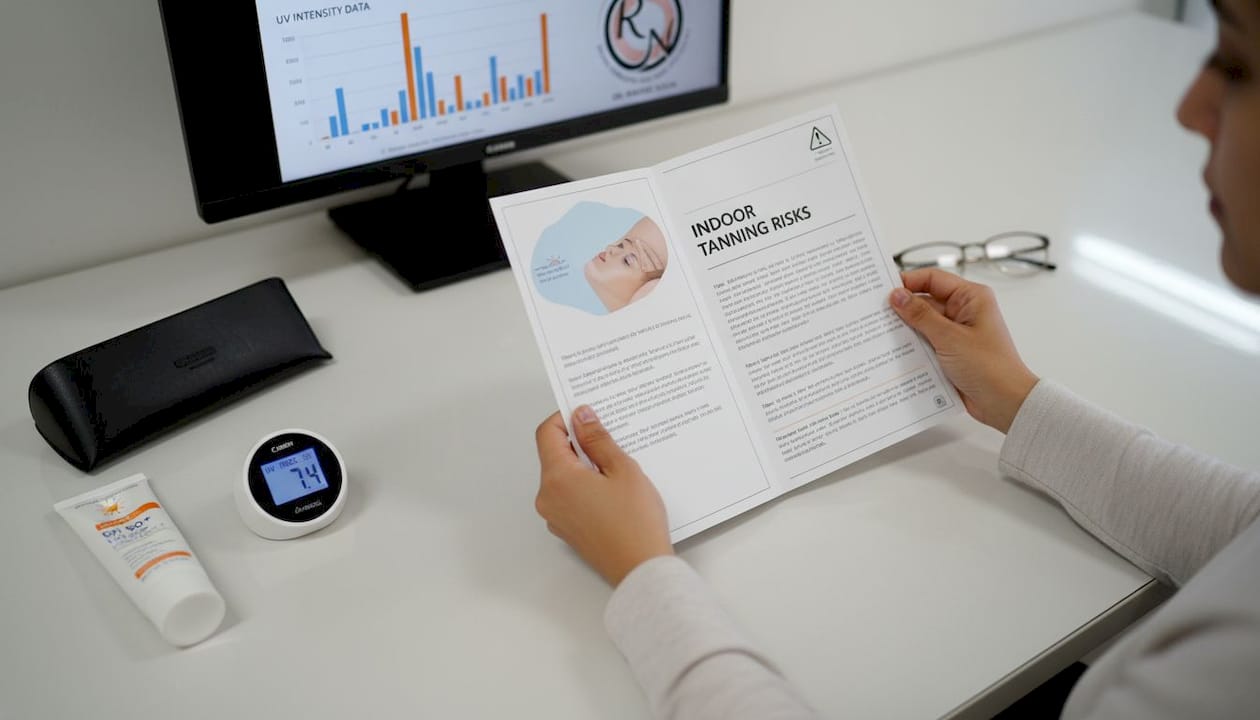
The statistics make this even harder to ignore. 90% of nonmelanoma skin cancers and 86% of melanomas are directly linked to UV exposure. Understanding the types of skin cancer can help you appreciate exactly what is at stake.
| Common myth | The reality |
|---|---|
| A base tan protects skin | Equivalent to SPF 3; offers minimal protection |
| Sunbeds are safer than sun | Emit up to 15x more UV than natural sunlight |
| You can’t burn on a cloudy day | Up to 80% of UV rays pass through clouds |
| Tanning is a sign of health | Tanning is a sign of DNA damage, not health |
Some habits genuinely protect you:
- Wear broad-spectrum SPF 30 or higher every day
- Cover up with UV-protective clothing when outdoors
- Seek shade between 11am and 3pm when UV index peaks
- Never use a sunbed, regardless of your skin tone
Pro Tip: If you like the appearance of a tan, choose a self-tanning product instead. It colours the surface of skin without causing any UV damage, and your future self will thank you.
For anyone curious about what happens when sun damage does lead to a diagnosis, reading up on Mohs surgery myths can help demystify the most effective treatment available.
Clarifying the truth about sunscreen safety and effectiveness
Sunscreen has become the subject of some alarming online claims. Social media posts suggest chemical sunscreens cause cancer, disrupt hormones, or are more harmful than helpful. These claims are not supported by clinical evidence.
There is no evidence that sunscreen causes skin cancer. The opposite is true: consistent sunscreen use significantly reduces your risk. Concerns about chemical filters such as oxybenzone centre on studies using concentrations far higher than those found in real-world products. Mineral sunscreens containing zinc oxide or titanium dioxide are a perfectly valid alternative if you prefer to avoid chemical filters, but both types work.
“Use a broad-spectrum sunscreen with at least SPF 30, apply it generously, and reapply every two hours — or immediately after swimming or sweating. Sunscreen is not optional; it is part of your daily health routine.”
Here is something most people miss, though: sunscreen is not a complete strategy on its own. People who apply SPF 50 and then spend four hours at the beach at noon often end up with more UV exposure than they would have had otherwise, because the sunscreen gives them a false sense of invincibility.
Sunscreen works best as part of a layered approach. Here is what that looks like in practice:
- Apply broad-spectrum SPF 30 or higher every morning, including on cloudy days
- Reapply every two hours when outdoors
- Wear wide-brimmed hats and UV-protective clothing
- Seek shade during peak UV hours (11am to 3pm)
- Wear UV-blocking sunglasses to protect the delicate skin around your eyes
Pro Tip: Apply sunscreen to dry skin at least 15 minutes before going outside. Many people apply it as they walk out the door, which means it has not had time to bond properly.
If you have concerns about a suspicious lesion or want to understand your overall risk, reviewing our high-risk skin cancer guide is a solid starting point. You can also explore broader information on more on skin cancer to deepen your understanding.
Who gets skin cancer? Myths about age, skin tone, and risk
One of the most harmful myths is that skin cancer is a condition for fair-skinned, elderly people who spent their youth sunbathing. This stereotype has real consequences because it causes many people to ignore warning signs or skip skin checks entirely.
Skin cancer can affect anyone, regardless of age or skin tone. Melanoma is one of the most common cancers in young adults aged 15 to 34. People of colour often receive a later diagnosis because both patients and clinicians may not consider skin cancer a possibility, and that delay can dramatically worsen outcomes.
Here is what the evidence shows:
- Darker skin tones are less likely to burn, but UV damage still accumulates
- Acral lentiginous melanoma, the type affecting palms, soles, and nail beds, is more common in people of colour
- Black patients with melanoma have a five-year survival rate significantly lower than white patients, largely due to later-stage diagnosis
- Skin cancer in people under 40 is rising, not falling
“Do not assume that skin cancer cannot happen to you because of your ethnicity or your age. The skin does not discriminate. Regular self-examination and professional screening are important for everyone.”
Knowing what to look for makes an enormous difference. Irregular borders, changing moles, new lesions that do not heal, or discolouration under a nail are all signs worth investigating promptly. Learning about skin cancer detection gives you a clear framework for what to check and when to act.
Pro Tip: Do a full-body skin check once a month using good lighting and a mirror for hard-to-see areas. If you notice anything that changes, bleeds, or simply does not look right, book an appointment rather than waiting to see whether it resolves on its own.
Sunscreen myths and the importance of a complete sun protection strategy
Even after understanding the dangers of UV exposure and who is at risk, many people still rely on sunscreen alone as their entire defence strategy. That is not enough.
Sunscreen should be used as part of a broader protection strategy that includes shade, clothing, and avoiding peak UV hours. When used correctly in combination with other measures, the results are powerful. Early detection and good prevention habits together mean that most skin cancers, caught at an early stage, are very treatable.
Consider this: five or more sunburns between the ages of 15 and 20 increases your melanoma risk by 80%. That figure puts youthful sun habits in stark perspective. Damage accumulates over decades, which is why protection now matters enormously, whatever your age.
A genuinely protective routine includes:
- Daily broad-spectrum sunscreen (SPF 30 minimum)
- UV-protective clothing, including long sleeves where practical
- A wide-brimmed hat when outdoors
- Seeking shade between 11am and 3pm
- Avoiding sunbeds entirely
- Regular self-checks and professional skin assessments
- Following up properly after any skin cancer treatment
Pro Tip: Plan outdoor exercise for early morning or early evening. You still get all the benefits of being outside without the peak-UV exposure that comes with midday activity.
After any skin cancer treatment, the follow-up period is critical. Reviewing guidance on follow-up after treatment ensures you are not leaving your recovery to chance. Combining that with sound skin health tips builds habits that protect you long term.
Our perspective: Why myth-busting is vital for lasting skin cancer prevention
Myths about skin cancer persist because they are comfortable. Believing that a tan is healthy, that darker skin is immune, or that sunscreen is suspicious gives people permission to do what they already want to do. That is a very human response. But in medicine, comfort and safety are not always the same thing.
What we see clinically is that patients who arrive with later-stage diagnoses often had warning signs they dismissed, sometimes for years, because of exactly these myths. Image culture plays a role too. A bronzed appearance still reads as attractive and healthy in much of Western society, and that is a difficult association to undo with statistics alone.
Real change happens through honest conversation, not just information. Challenging a friend who books a sunbed, asking a family member about their last skin check, or questioning a social media post about sunscreen are all acts of prevention. The science is settled. UV exposure causes cancer. Sunscreen, shade, and clothing reduce that risk. Regular checks save lives.
Reading more on Mohs surgery myths extends this myth-busting into treatment, which is equally important for those already navigating a diagnosis.
Expert guidance on skin cancer: Take your next step
If reading this has prompted questions about your own skin, do not put it off.
Early detection is the single most effective way to improve outcomes. Miss Rakhee Nayar offers expert book a skin cancer check appointments for anyone with concerns, whether that is a changing mole, a lesion that is not healing, or simply peace of mind from a thorough assessment. For those already facing a diagnosis, you can learn about Mohs surgery, the gold-standard technique for removing skin cancers on the face with precision and the best possible cosmetic outcomes. Explore comprehensive skin cancer care to understand the full range of services available to you.
Frequently asked questions
Can skin cancer develop if I always wear sunscreen?
Skin cancer can still develop even with consistent sunscreen use, particularly if it is not applied correctly, reapplied regularly, or used without other protective measures such as shade and clothing. Sunscreen is an important layer of defence, but not a standalone strategy.
Are darker skin tones really at risk for skin cancer?
Yes, skin cancer affects all skin tones. Anyone can get skin cancer, and people of colour are at particular risk of a later diagnosis, which worsens outcomes significantly.
Do I need to avoid all sun exposure to prevent skin cancer?
You do not need to avoid sun entirely, but a sensible approach matters. Using sunscreen, wearing protective clothing, and seeking shade during peak hours all reduce risk considerably. A comprehensive approach is far more effective than avoidance alone.
Is indoor tanning really worse than outdoor sun exposure?
Yes. Indoor tanning emits up to 15 times more UV radiation than natural sunlight, making it considerably more dangerous than spending equivalent time outdoors.