

TL;DR:
- Follow-up care involves regular skin exams, self-checks, and sun protection to detect recurrence early.
- Monthly self-examinations using the ABCDE rule help identify suspicious skin changes promptly.
- Personalised follow-up plans, emotional support, and consistent sun protection reduce recurrence risk and improve wellbeing.
Finishing skin cancer treatment is a significant milestone, but the weeks and months that follow can feel unsettling. The risk of recurrence is real: 40–50% of patients develop another skin cancer within five years of their first diagnosis, making structured follow-up essential rather than optional. Knowing what to expect, what to watch for, and how to protect yourself can make an enormous difference to your long-term outcomes. This article gives you a clear, practical framework covering professional check-ups, self-examination, sun protection, managing side effects, and emotional wellbeing after treatment.
Key Takeaways
| Point | Details |
|---|---|
| Regular check-ups | Consistent follow-up visits with specialists are vital for monitoring recurrence or new skin cancers. |
| Monthly self-exams | Examining your skin monthly can help you spot warning signs early and seek quick medical advice. |
| Sun protection | Daily use of sunscreen and protective habits greatly reduce your risk of future skin cancers. |
| Tailored care matters | The best follow-up plan is personalised to your cancer type, risk, and lifestyle. |
| Emotional support | Addressing anxiety and seeking support resources is an important part of full recovery. |
What to expect from follow-up care
Post-treatment follow-up is not simply a routine box-ticking exercise. It is a structured, ongoing process designed to catch any signs of recurrence early, identify new skin cancers, and support your overall recovery. Follow-up care after skin cancer treatment involves regular dermatologic exams, self-skin checks, sun protection, and monitoring for recurrence or new cancers, tailored by cancer type (BCC, SCC, melanoma) and individual risk factors.
Your appointments will typically involve a full skin examination by a dermatologist or specialist surgeon, a review of any symptoms you have noticed, and discussion of your sun protection habits. For higher-risk cases, a multidisciplinary team may be involved, including oncologists, plastic surgeons, and specialist nurses. This is particularly relevant if your cancer was large, deeply invasive, or located in a cosmetically sensitive area.
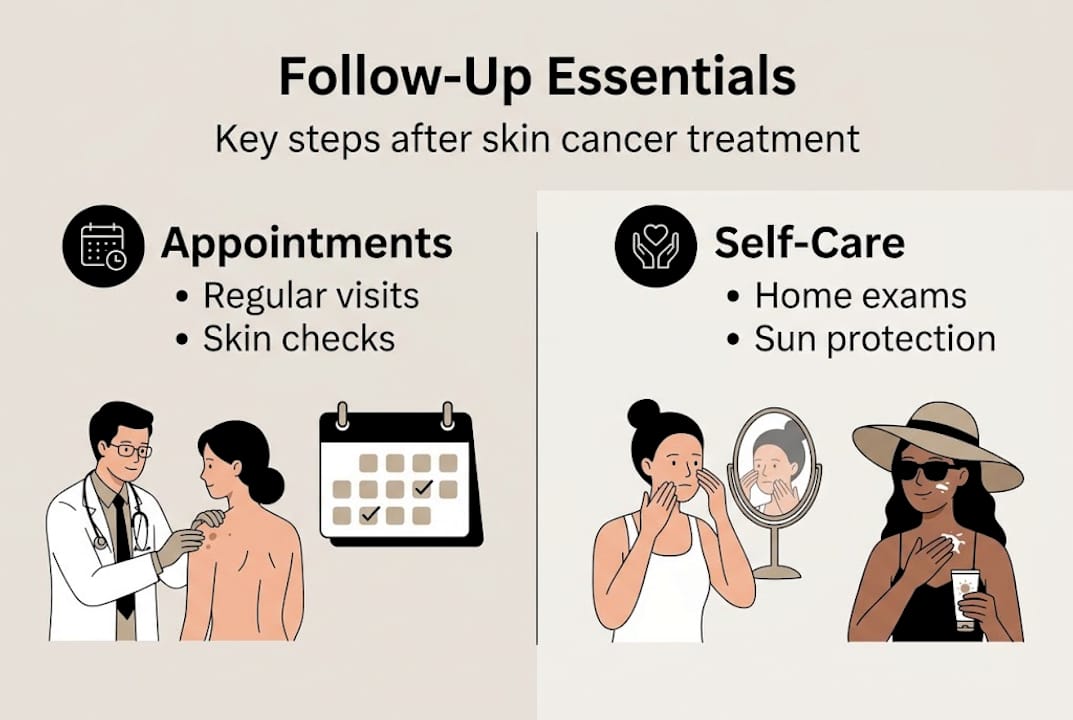
The schedule of appointments varies depending on your cancer type and stage. Here is a general overview:
| Cancer type | Year 1 | Years 2–5 | Beyond 5 years |
|---|---|---|---|
| Basal cell carcinoma (BCC) | Every 6 months | Annually | As needed |
| Squamous cell carcinoma (SCC) | Every 3–6 months | Every 6–12 months | Annually |
| Melanoma (early stage) | Every 3–6 months | Every 6–12 months | Annually |
| Melanoma (advanced stage) | Every 3 months | Every 3–6 months | Every 6–12 months |
For some patients, particularly those with melanoma or high-risk SCC, imaging such as ultrasound or CT scans may form part of follow-up. Blood tests are less common but may be requested if specific markers need monitoring.
- Bring a written list of any changes you have noticed to every appointment
- Note any new spots, changes in existing lesions, or unusual symptoms
- Ask your specialist about the skin cancer detection process and what signs warrant an urgent call
- If you had reconstructive work, discuss reconstruction after Mohs surgery outcomes at each visit
Pro Tip: Write down your questions before each appointment. Consultations can feel rushed, and a short list ensures you leave with the answers you actually need.
How to perform skin self-examinations at home
Besides professional appointments, active involvement at home is critical. Here’s how to carry out self-checks effectively.
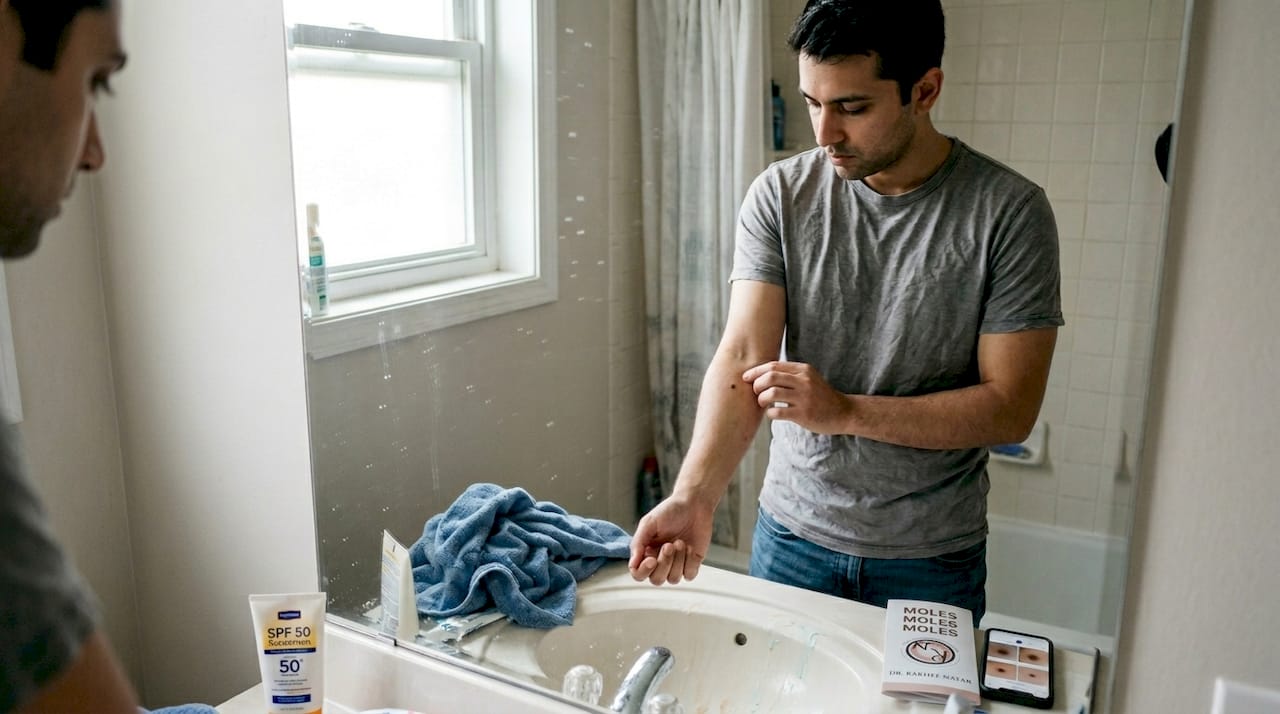
Monthly skin checks are one of the most powerful tools you have. They cost nothing, take around ten minutes, and can catch changes between clinic visits when problems are still small and highly treatable. Guidance from BAPRAS recommends performing self-exams monthly, watching for ABCDE changes in moles, and maintaining consistent sun protection.
Use the ABCDE rule to assess any mole or lesion:
- A – Asymmetry: One half does not match the other
- B – Border: Edges are irregular, ragged, or blurred
- C – Colour: Uneven shading, multiple colours, or unusual tones
- D – Diameter: Larger than 6mm (roughly the size of a pencil eraser)
- E – Evolution: Any change in size, shape, colour, or a new symptom such as bleeding
Here is a step-by-step guide for a thorough self-examination:
- Stand in a well-lit room with a full-length mirror and a hand mirror nearby
- Examine your face, ears, scalp (use a comb to part the hair), and neck
- Check your chest, abdomen, and both sides of your arms
- Use the hand mirror to inspect your back, buttocks, and the backs of your legs
- Sit down to check the soles of your feet, between your toes, and your nails
- Note any new, changing, or unusual spots and photograph them for comparison
“Any lesion that does not heal within four weeks, bleeds spontaneously, or changes rapidly should be reviewed by a specialist without delay.”
Common mistakes include checking only sun-exposed areas, skipping the scalp, and forgetting the soles of the feet. Skin cancer can appear anywhere. Reviewing self-examination techniques and learning what different spotting skin lesions look like will sharpen your eye over time.
Pro Tip: Take photographs of existing moles each month using the same lighting and angle. Visual comparison over time is far more reliable than memory alone.
Protecting yourself to prevent recurrence
With at-home checks covered, it is equally vital to prevent further skin damage. Let’s look at the best ways to reduce your future risk.
Sun protection using SPF 30 or higher sunscreen, protective clothing, and avoiding peak sun hours is critical for preventing recurrence or new cancers. This is not simply about applying cream on sunny days. It is a daily habit that needs to become second nature, regardless of the weather or season.
Here are the evidence-based strategies that make the biggest difference:
- Apply a broad-spectrum SPF 30+ sunscreen every morning, even in winter or when indoors near windows
- Reapply every two hours when outdoors, or immediately after swimming or sweating
- Wear UPF-rated clothing, wide-brimmed hats, and UV-protective sunglasses
- Avoid direct sun between 11am and 3pm, when UV radiation is strongest
- Seek shade whenever possible, particularly on high UV index days
- Avoid sunbeds entirely. There is no safe level of artificial UV exposure for someone with a skin cancer history
One concern many patients raise is vitamin D. Avoiding the sun does not mean becoming deficient. Most people can maintain adequate vitamin D levels through a short period of incidental sun exposure on the arms and legs outside peak hours, or through supplementation if advised by their GP.
Consistency matters more than perfection. Missing a single day of sunscreen is far less damaging than abandoning the habit altogether after a few weeks. Thinking about minimising scarring after treatment also reinforces why protecting healing skin from UV is so important in the months following surgery.
Pro Tip: Keep a travel-sized SPF 50 sunscreen next to your toothbrush. Applying it becomes part of your morning routine rather than an afterthought.
Managing long-term effects and knowing when to seek help
Safeguarding your health also means knowing what to look for as you recover. Here’s how to handle lasting effects and when to get more support.
High-risk cases require more frequent surveillance and careful management of late effects such as lymphoedema or immune-related issues. Even after successful treatment, some patients experience effects that appear weeks or months later.
| Common concern | When to monitor at home | When to contact your specialist |
|---|---|---|
| Mild swelling around the treated area | First few weeks post-surgery | Persists beyond 4 weeks or worsens |
| Numbness or tingling | Common short-term | Spreads or does not improve |
| Scarring or skin tightness | Expected during healing | Restricts movement or causes pain |
| Fatigue | Normal after treatment | Severe or interfering with daily life |
| New lumps or hard areas | Note and photograph | Contact specialist promptly |
Managing scarring prevention proactively, using silicone gel or sheets as directed, can significantly improve cosmetic outcomes. For those who have undergone complex procedures, recovery after Mohs may involve staged reviews with your surgeon to assess healing and reconstruction results.
- Keep a simple symptom diary between appointments
- Record dates, descriptions, and any photographs of changes
- Share this log with your specialist at each visit
Pro Tip: Use a free notes app on your phone to log symptoms as they happen. Brief, dated entries are far more useful to your care team than trying to recall details weeks later.
Dealing with emotional wellbeing and support options
Physical recovery is only part of the story. Emotional and psychological support matters just as much, especially after cancer treatment.
Feeling anxious, uncertain, or even low after finishing treatment is entirely normal. Many patients describe a strange sense of vulnerability once active treatment ends. The regular contact with medical teams stops, and the structure that provided reassurance disappears. Patient anxiety is common after skin cancer treatment, and involvement in your own care plan alongside access to support resources genuinely improves emotional outcomes.
Practical strategies that help include:
- Joining a skin cancer support group, either locally or online, to connect with others who understand your experience
- Speaking openly with your GP or specialist about anxiety. They can refer you to counselling or psychological support services
- Using mindfulness or relaxation techniques to manage worry between appointments
- Staying physically active, which has well-documented benefits for mood and immune function
- Contacting Macmillan Cancer Support (0808 808 00 00) or the Skin Cancer Foundation for practical information and emotional guidance
“You do not need to wait until your next appointment to raise a concern. If something is worrying you, contact your care team. That is exactly what they are there for.”
Talking to your medical team about your emotional state is not a sign of weakness. It is a clinical need. Psychological recovery is a genuine part of the healing process, and teams are trained to support it.
Why individualised follow-up matters more than any single guideline
Here is something that does not get said often enough: there is no single, universally agreed follow-up protocol for skin cancer survivors. International guidelines from bodies such as NCCN, NICE, and AAD vary in their recommendations, but all agree on the importance of frequent monitoring in the early years.
Rigid adherence to a single guideline can actually work against you if it overlooks your specific cancer type, your skin tone, your occupation, or your personal risk factors. Someone who works outdoors every day needs a different strategy from someone who works in an office. A patient with a history of immunosuppression needs closer surveillance than someone with no complicating factors.
What we have seen in practice is that patients who actively shape their follow-up plan with their specialist, ask questions, and treat appointments as a two-way conversation tend to feel more in control and more confident in their recovery. Digital tools and teledermatology are also opening up new possibilities, allowing patients to submit photographs of concerning lesions between appointments for rapid review.
True peace of mind does not come from following a checklist. It comes from understanding your own risk, building a relationship with a specialist who knows your case, and staying engaged with your own health. That combination is more powerful than any guideline alone.
Next steps: expert support for your recovery
Recovery after skin cancer treatment is not something you should navigate alone. If you would like personalised guidance on your follow-up plan or want to understand your options more clearly, specialist support is available.

At mohssurgeon.co.uk, Miss Rakhee Nayar offers expert specialist skin cancer care with a focus on individual risk and outcomes. Whether you want to understand more about Mohs surgery explained or need expert reconstruction support following your procedure, the clinic provides both in-person and e-consultation options. Your circumstances are unique, and your follow-up plan should reflect that. Reaching out for specialist input is one of the most proactive steps you can take for your long-term health.
Frequently asked questions
How often are follow-up visits needed after skin cancer treatment?
Melanoma follow-up is stage-dependent, with higher stages requiring more frequent visits. Generally, appointments occur every 3 to 12 months initially, becoming less frequent as years pass without recurrence.
What should I look for during self-examination?
Check your skin monthly for new lesions, non-healing spots, and use the ABCDE rule to monitor moles for asymmetry, irregular borders, colour changes, diameter, or evolution.
How can I protect myself from getting skin cancer again?
Use SPF 30+ sunscreen daily, wear protective clothing, and avoid strong midday sun to minimise your risk of recurrence or a new skin cancer developing.
What complications should I look out for after skin cancer treatment?
Contact your doctor if you notice persistent swelling, hard lumps, spreading numbness, or pain in the treated area, as high-risk cases require close monitoring for late effects.
Is it normal to feel anxious after skin cancer treatment?
Yes, anxiety is very common. Speaking to your care team or accessing support resources can ease these feelings and help you feel more in control of your recovery.
Recommended
- How to minimise scarring after skin cancer removal
- Skin Cancer Detection – Expert Mohs Surgery | UK
- Skin Cancer Treatment & Surgery | Mohs Surgery UK
- Reconstruction After Mohs Surgery | Natural Results
- Skin Care – Oxyhealth
Filed under Recovery and Aftercare


