Effective post-operative wound management is defined as the systematic process of keeping a surgical wound clean, protected, and monitored until full tissue repair is complete. Knowing how to manage post-surgery wounds correctly reduces the risk of infection, supports faster healing, and improves the final appearance of the scar. NHS guidance recommends keeping wounds dry for the first 24–48 hours, changing dressings using aseptic technique, and watching for early signs of infection from day two onwards. Miss Rakhee Nayar, GMC-registered Consultant Plastic Surgeon and Mohs surgeon at Circle Cheshire, advises that most complications arise not from the surgery itself but from avoidable errors in home wound care. This guide sets out the evidence-based steps every patient needs to follow.
What are the essential steps for post-surgery wound care?
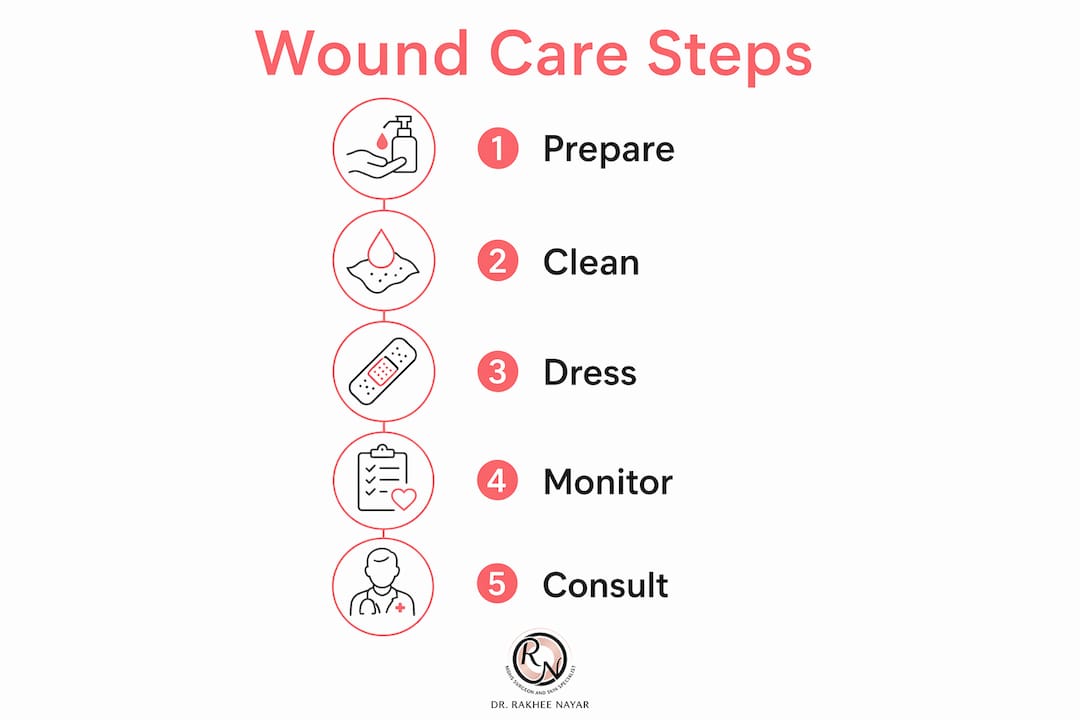
Good wound care begins before you touch the wound. The single most protective action is thorough hand washing with soap and water for at least 20 seconds immediately before and after any contact with the wound or dressing. Avoid touching wounds except when necessary, as this reduces bacterial contamination and supports aseptic technique. Limiting unnecessary contact is one of the simplest and most effective wound management tips available.
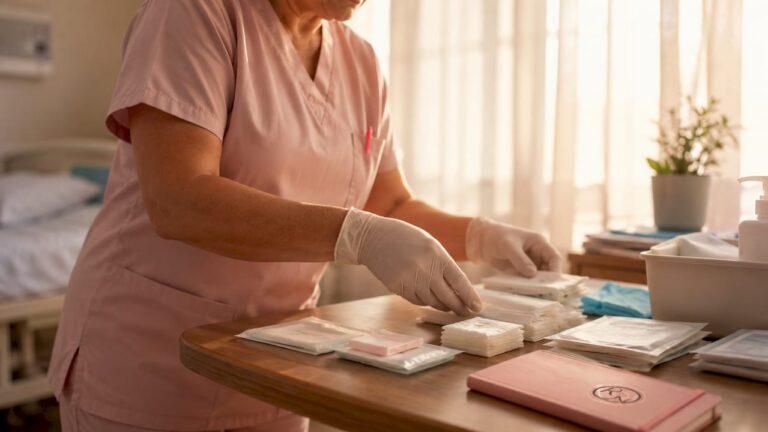
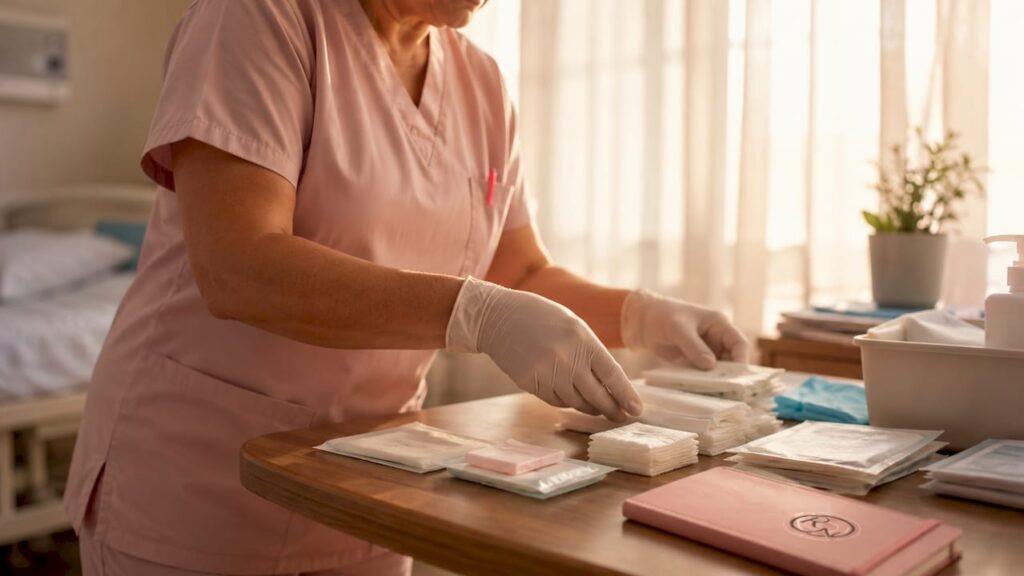
Having the right supplies ready at home prevents improvisation, which is a common source of error. The table below outlines what you need and why.
| Supply | Purpose |
|---|---|
| Sterile non-stick dressings | Protect the wound surface without adhering to healing tissue |
| Sterile gauze pads | Absorb light ooze and apply gentle pressure if needed |
| Mild unperfumed soap | Clean surrounding skin without irritating the wound edge |
| Clean, soft towels | Pat the area dry after washing without friction |
| Disposable gloves | Reduce contamination risk during dressing changes |
| Medical tape or fixation strips | Secure dressings without excessive pressure on the wound |
Keep all supplies in a clean, dry container. Do not store them in a bathroom cabinet where steam and humidity can compromise sterility. A sealed plastic box kept in a bedroom drawer works well for most patients.
Pro Tip: Set up your wound care supplies in a dedicated spot with good lighting before your first dressing change. Rushing to find gauze mid-procedure increases the chance of touching contaminated surfaces.
Strict adherence to aseptic technique and limiting the frequency of dressing changes boosts healing success by reducing tissue disruption and infection risk. Change dressings only as instructed by your surgical team, not more frequently out of anxiety.
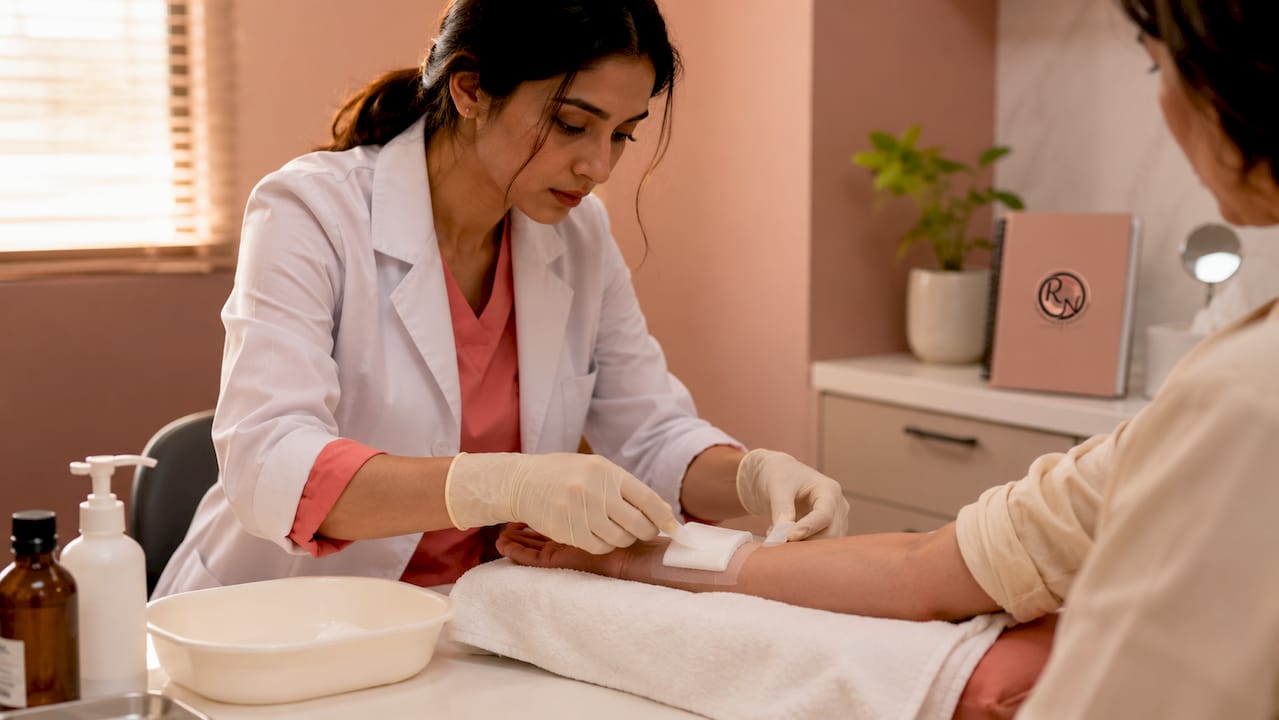
How and when should you clean and dress a surgical wound?
The timing of first contact with water matters more than most patients realise. Keep the wound dry for the first 24–48 hours after surgery before showering. Wetting the wound too early softens the wound edges, risks dissolving stitches prematurely, and creates conditions where bacteria can enter. This is one of the most common mistakes patients make, and it is entirely avoidable.
Once the initial period has passed, follow these steps for safe wound cleaning.
- Wash your hands thoroughly with soap and water before starting.
- Remove the existing dressing gently, peeling from the edge rather than pulling across the wound.
- Step into the shower and allow warm water to run over the wound indirectly. Do not spray water directly onto the wound, and avoid any water pressure on the healing tissue.
- Use a small amount of mild, unperfumed soap on the surrounding skin only. Do not apply soap directly into the wound.
- Rinse the area by letting water flow naturally across it.
- Pat the wound and surrounding skin dry with a clean, soft towel. Do not rub.
- Allow the area to air for one to two minutes before applying a fresh dressing.
- Apply a sterile non-stick dressing and secure it with medical tape.
- Wash your hands again immediately after completing the dressing change.
Never soak the wound in a bath until it is fully healed. Soaking softens and weakens the wound edges and significantly raises infection risk. Avoid swimming pools and hot tubs for the same reason. Perfumed soaps, antiseptic wipes, and hydrogen peroxide should not be used on healing wounds, as they damage new tissue rather than protecting it.
Understanding oxygen’s role in wound healing helps explain why keeping a wound moist but not wet matters. Adequate tissue oxygenation supports new cell growth, while waterlogged tissue becomes hypoxic and heals poorly.
What are the warning signs of infection in a surgical wound?
Surgical site infections can develop between 2–3 days and up to two weeks after surgery. Catching infection early makes treatment straightforward. Left unaddressed, a wound infection can spread, delay healing by weeks, and worsen scarring.
The signs to watch for include:
- Increasing pain at the wound site, rather than gradual improvement
- Spreading redness around the wound edges
- Warmth or swelling that worsens after the first two days
- Yellow or green discharge with an unpleasant odour
- Fever above 38°C
- Red streaks extending away from the wound
One important and frequently overlooked point: redness as an infection sign can be difficult to detect on brown or black skin tones. Patients with darker skin should pay particular attention to increasing pain, warmth to the touch, swelling, and any odour from the wound. Relying on colour change alone is not sufficient for everyone.
Minor redness, mild swelling, and small amounts of oozing are normal healing signs if they settle within a few days. The key distinction is direction of travel: improving signs are reassuring, worsening signs require action.
For active bleeding, apply firm pressure with a clean gauze pad or towel for 15–20 minutes without lifting the pad to check. If bleeding does not stop after this, seek urgent medical advice. Contact your surgical team or attend an urgent care centre.
Pro Tip: Take a photograph of your wound each day from the same angle and distance. A visual record makes it far easier to judge whether redness or swelling is spreading or settling, and it gives your surgeon useful information if you need to call for advice.
How can you support healing and reduce scarring after surgery?
Once the wound has closed, the work of scar management begins. Scar maturation is a slow biological process. Scar improvement can take up to two years, and patients who engage actively with scar care during this period achieve noticeably better results than those who do not.
The most effective post-healing practices include:
- Scar massage: Once the wound is fully closed and your surgeon confirms it is safe, massage the scar gently with an unperfumed cream twice daily for 10 minutes. This softens the scar tissue, reduces sensitivity, and improves the final appearance. For detailed guidance on this, the cosmetic outcomes checklist from Rakhee Nayar – Mohs Surgeon and Skin Specialist provides a structured approach.
- Sun protection: Apply a broad-spectrum sunscreen of SPF 30 or higher to the scar every day for at least one year after surgery. New scar tissue has no melanin protection and burns easily, which causes permanent darkening and worsens the final appearance.
- Dissolvable stitch bumps: Dissolvable stitches sometimes fail to fully absorb and may create small firm bumps under the skin. These nearly always resolve on their own over several weeks. They are not a sign of infection unless accompanied by redness, warmth, or discharge.
- Lifestyle factors: Smoking significantly impairs wound healing by reducing blood flow and tissue oxygenation. Stopping smoking before and after surgery produces measurable improvements in healing speed and scar quality. Excessive alcohol consumption also delays healing and should be avoided during recovery.
For patients who have undergone facial procedures, the post-surgery skincare guide after Mohs from Rakhee Nayar – Mohs Surgeon and Skin Specialist covers site-specific scar care in detail. Facial wounds require particular attention because the skin is thinner, more mobile, and more exposed to sunlight than wounds on the trunk or limbs.
What are common mistakes in wound management and how do you avoid them?
Most wound care problems at home fall into a small number of predictable categories. Recognising them in advance is the most reliable way to avoid them.
| Common error | Correct practice |
|---|---|
| Wetting the wound within the first 24–48 hours | Keep the wound dry until the initial period has passed |
| Spraying shower water directly onto the wound | Allow water to run over the area indirectly only |
| Changing dressings more often than instructed | Follow the frequency advised by your surgical team |
| Touching the wound without washing hands first | Always wash hands for 20 seconds before any wound contact |
| Using antiseptic wipes or hydrogen peroxide | Use mild unperfumed soap on surrounding skin only |
| Assuming all bumps or redness indicate infection | Monitor trends over 24–48 hours before contacting your team |
Allergic reactions to dressing materials are less common but do occur. If you notice a rash, blistering, or intense itching around the dressing edges rather than at the wound itself, the adhesive or dressing material may be the cause. Contact your surgical team for an alternative product.
Delayed healing is not always a sign of infection. Poor nutrition, uncontrolled diabetes, and certain medications including steroids and anticoagulants all slow the healing process. If your wound is not progressing as expected, discuss these factors with your surgeon rather than increasing the frequency of dressing changes, which causes more harm than good.
Pro Tip: If you are unsure whether a sign is normal or concerning, contact your surgical team before changing your wound care routine. A brief phone call is always preferable to an avoidable complication.
Advanced therapies such as hyperbaric oxygen treatment are used in specialist settings for wounds that fail to heal through standard care. The HBOT wound healing guide explains how increased tissue oxygenation supports repair in complex cases.
Key takeaways
Effective post-surgery wound management requires keeping the wound dry initially, using aseptic technique for every dressing change, recognising infection signs early, and committing to scar care for up to two years after surgery.
| Point | Details |
|---|---|
| Keep the wound dry initially | Avoid wetting the wound for the first 24–48 hours to protect stitches and wound edges. |
| Hand hygiene is non-negotiable | Wash hands for 20 seconds before and after every wound contact to prevent contamination. |
| Know all infection signs | Monitor pain, warmth, swelling, and odour, not just redness, especially on darker skin tones. |
| Scar care takes time | Massage with unperfumed cream twice daily and apply SPF 30+ sunscreen for at least one year. |
| Seek advice early | Contact your surgical team at the first sign of concern rather than waiting for symptoms to worsen. |
What I have learnt from years of post-operative wound care
Patients consistently underestimate how much their own behaviour at home shapes the final result. I see this pattern repeatedly: the surgery goes well, the wound is closed beautifully, and then a preventable complication arises because a patient showered too soon, or changed their dressing four times a day out of anxiety, or used an antiseptic spray they found in the bathroom cabinet.
The most common source of wound problems is not infection from the operating theatre. It is well-intentioned over-management at home. Touching the wound repeatedly, even with clean hands, disrupts the fragile new tissue that forms in the first days after surgery. Leaving a wound alone, within the boundaries of your discharge instructions, is genuinely difficult for most patients. The anxiety of not knowing whether things are progressing normally is real, and I take it seriously.
This is why I place considerable weight on clear written instructions and the reassurance that psychological clarity reduces errors in wound care adherence. When patients understand what normal healing looks like, they are less likely to intervene unnecessarily.
Facial wounds deserve a specific mention. The face heals faster than most body sites because of its rich blood supply, but it is also more visible and more emotionally significant. Patients often judge their outcome far too early. A scar that looks red and raised at six weeks will look dramatically different at six months. I ask my patients to commit to the full two-year scar maturation process before drawing conclusions. The care of facial surgery wounds requires patience above all else.
If you are uncertain about any aspect of your wound, contact your surgical team. Do not search for reassurance online and do not ask a pharmacist to assess a surgical wound. A brief consultation with a GMC-registered specialist is always the right first step.
— Miss Rakhee Nayar
Specialist wound care support after Mohs surgery
Mohs micrographic surgery removes skin cancer layer by layer, which means the resulting wound can be larger and more complex than a standard excision. Post-operative wound care after Mohs requires the same core principles described in this guide, applied with particular care to the face and other cosmetically sensitive sites.

Rakhee Nayar – Mohs Surgeon and Skin Specialist offers private consultations at Circle Cheshire for patients who need expert guidance on wound management following Mohs surgery or facial reconstructive procedures. Miss Nayar provides personalised wound care plans, follow-up assessments, and access to specialist scar management advice. E-consultations are available for patients who cannot attend in person. For patients concerned about a skin lesion that may require surgical treatment, the skin cancer detection guide provides clear information on next steps.
This article is for general information only and does not constitute medical advice. Consult a GMC-registered specialist for guidance specific to your situation.
FAQ
How long should I keep a surgical wound dry?
Keep the wound dry for the first 24–48 hours after surgery before showering. Avoid soaking in a bath until the wound is fully healed.
When should I be concerned about my wound?
Contact your surgical team if you notice increasing pain, spreading redness, warmth, swelling, yellow or green discharge, or a fever above 38°C. Infection can develop between two days and two weeks after surgery.
How do I spot infection if I have darker skin?
Redness may not be visible on brown or black skin tones. Focus on increasing pain, warmth to the touch, swelling, and any unpleasant odour from the wound as the primary indicators.
How long does scar healing take after surgery?
Scar maturation takes up to two years. Regular massage with unperfumed cream and daily SPF 30+ sunscreen for at least one year after surgery produce the best long-term results.
Is it normal to have small bumps near my stitches?
Dissolvable stitches sometimes leave small firm bumps that resolve on their own over several weeks. These are not a sign of infection unless accompanied by redness, warmth, or discharge.