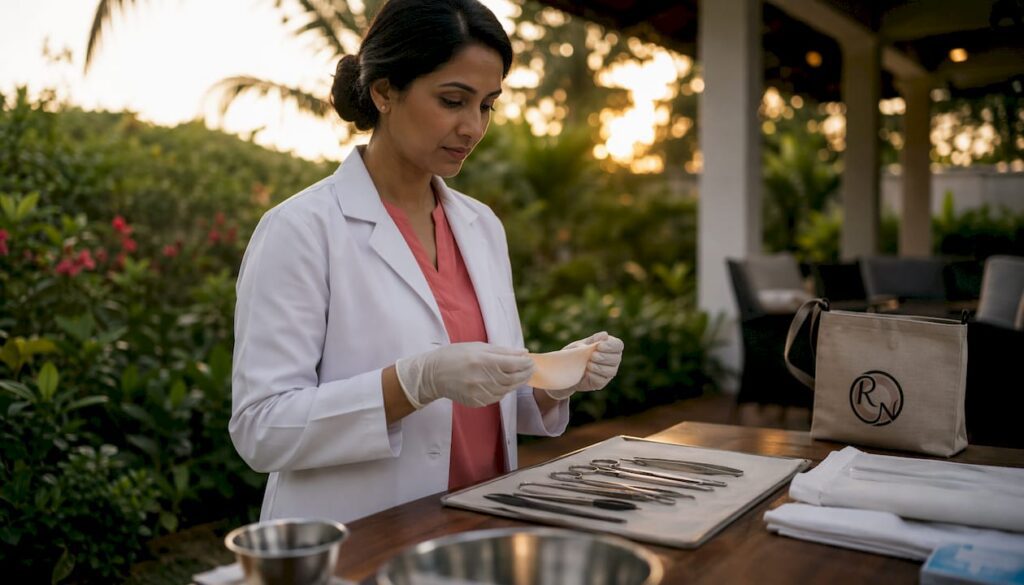
Skin grafting is defined as a surgical procedure in which healthy skin is removed from one part of the body, called the donor site, and transplanted to cover an area where skin has been lost or damaged. The procedure is used most commonly after burns, trauma, or skin cancer surgery, including excision of basal cell carcinoma and squamous cell carcinoma. New skin connects to the blood supply at the wound site within approximately five days. Rakhee Nayar – Mohs Surgeon and Skin Specialist provides this procedure as part of a broader programme of skin cancer treatment and facial reconstruction, guided by NHS and NICE clinical standards.
What is skin grafting and what are the main types?
Two principal graft types exist in reconstructive surgery: split-thickness skin grafts and full-thickness skin grafts. The choice between them depends on the size of the wound, its location, and the functional and cosmetic demands of the area being repaired.
Split-thickness skin grafts
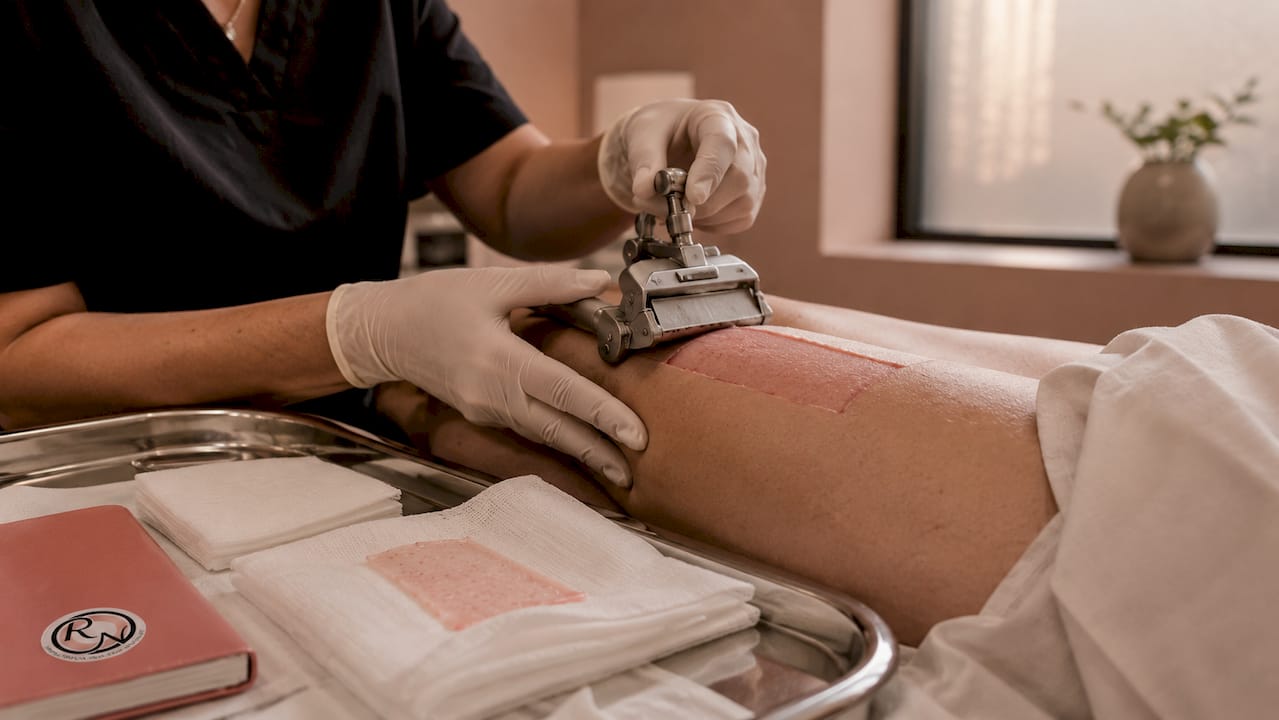
A split-thickness skin graft removes the epidermis and a portion of the dermis from the donor site. Because only part of the dermis is taken, the donor site retains enough tissue to heal on its own without stitches, typically within 5–10 days. This type of graft is well suited to covering large wound areas, such as those caused by extensive burns or wide surgical excisions. The resulting skin tends to be thinner and may differ in colour and texture from the surrounding skin, but it provides reliable coverage where area is the priority.
Full-thickness skin grafts
A full-thickness skin graft removes the entire epidermis and dermis. Because the donor site cannot regenerate on its own, the surgeon closes it directly with stitches. Full-thickness grafts produce a closer colour and texture match to the surrounding skin, which makes them the preferred choice for cosmetically sensitive areas such as the face. They are smaller in size than split-thickness grafts and are not suitable where large coverage is needed.
Pro Tip: Grafts cannot survive on bare bone, bare tendon, or heavily irradiated tissue. The wound bed must have a healthy blood supply for the graft to take.
| Feature | Split-thickness graft | Full-thickness graft |
|---|---|---|
| Layers taken | Epidermis and part dermis | Full epidermis and dermis |
| Donor site healing | Heals independently | Closed with stitches |
| Coverage area | Large wounds | Smaller, precise areas |
| Cosmetic result | Variable colour match | Closer colour and texture match |
| Typical use | Burns, large defects | Face, cosmetically sensitive sites |
How is the skin grafting procedure performed?
The skin grafting procedure follows a structured sequence from donor site selection through to wound fixation. Understanding each step helps patients know what to expect before and after surgery.
-
Donor site selection. The surgeon selects a donor site based on skin colour, texture, and thickness. Common donor sites include the thigh, buttocks, and upper back. For full-thickness grafts on the face, skin from behind the ear or the upper eyelid often provides the closest match.
-
Anaesthesia. The type of anaesthesia depends on the size of the procedure and the patient’s general health. Local anaesthesia is used for small grafts. Regional or general anaesthesia is required for larger procedures or when the patient’s comfort demands it.
-
Harvesting the graft. For split-thickness grafts, the surgeon uses a surgical instrument called a dermatome to shave a thin, uniform layer of skin from the donor site. For full-thickness grafts, the skin is excised with a scalpel and the donor wound is closed directly.
-
Meshing the graft. Meshing a split-thickness graft involves passing it through a device that creates a lattice pattern of small cuts. This expands the graft to cover a larger surface area and allows fluid to drain from beneath it, reducing the risk of the graft lifting away from the wound bed.
-
Fixing the graft. The graft is placed over the prepared wound bed and secured with stitches, staples, or surgical glue. A dressing is applied over the top to hold the graft firmly in place and protect it during the critical early healing phase.
-
Donor site dressing. The donor site is covered with a non-adherent dressing, such as Mefix, which remains in place for 1–2 weeks while the skin regenerates beneath it.
Pro Tip: The wound bed must be clean and free of dead tissue before the graft is placed. Any contamination or residual infection significantly reduces the chance of the graft taking successfully.
What does recovery from skin grafting involve?
Recovery from a skin grafting procedure involves two separate healing processes: one at the graft site and one at the donor site. Both require careful attention, and patients often find the donor site more uncomfortable than the graft site itself.
Healing timelines
Donor site healing takes 5–10 days for split-thickness grafts, after which the dressing can usually be removed. The graft site shows initial signs of integration within approximately two weeks, though full maturation of the skin takes considerably longer. The first clinical review typically occurs 4–7 days after surgery, when the surgeon assesses whether the graft has begun to connect to the underlying blood supply.
Appearance and sensation after surgery
The graft site often looks bruised, pink, or red in the weeks following surgery. This is a normal part of healing and not a sign that something has gone wrong. Sensory nerve regrowth into the graft begins around 4–5 weeks after surgery. Some patients experience numbness at the graft site before sensation gradually returns. A degree of permanent sensory change or colour difference is possible and patients should be prepared for this before surgery.
Managing donor site symptoms
- The donor site is often the primary source of post-operative discomfort, including pain and itching.
- Patients should avoid scratching the donor site, as this can disrupt healing and introduce infection.
- Antihistamines can help manage itching effectively during the healing phase.
- The donor site dressing should be kept dry and left undisturbed for as long as the clinical team advises.
- Any soaking, friction, or premature removal of the dressing increases the risk of delayed healing.
Long-term skin protection
Sun protection with SPF 50 and physical barriers such as clothing is required indefinitely after healing. Graft and donor sites lose some of their natural pigmentation and protective capacity, making them more vulnerable to ultraviolet damage than normal skin. This is a lifelong consideration, not a temporary precaution. Patients who neglect sun protection risk burns, further pigmentation changes, and potential long-term skin damage at both sites.
For detailed guidance on post-surgery wound care, including dressing management and signs of infection, specialist resources are available to support patients through recovery.
What are the benefits and risks of skin grafting?
Skin grafting is a well-established procedure with a clear clinical rationale. Like all surgery, it carries risks that patients should understand before giving consent.
Benefits of the procedure
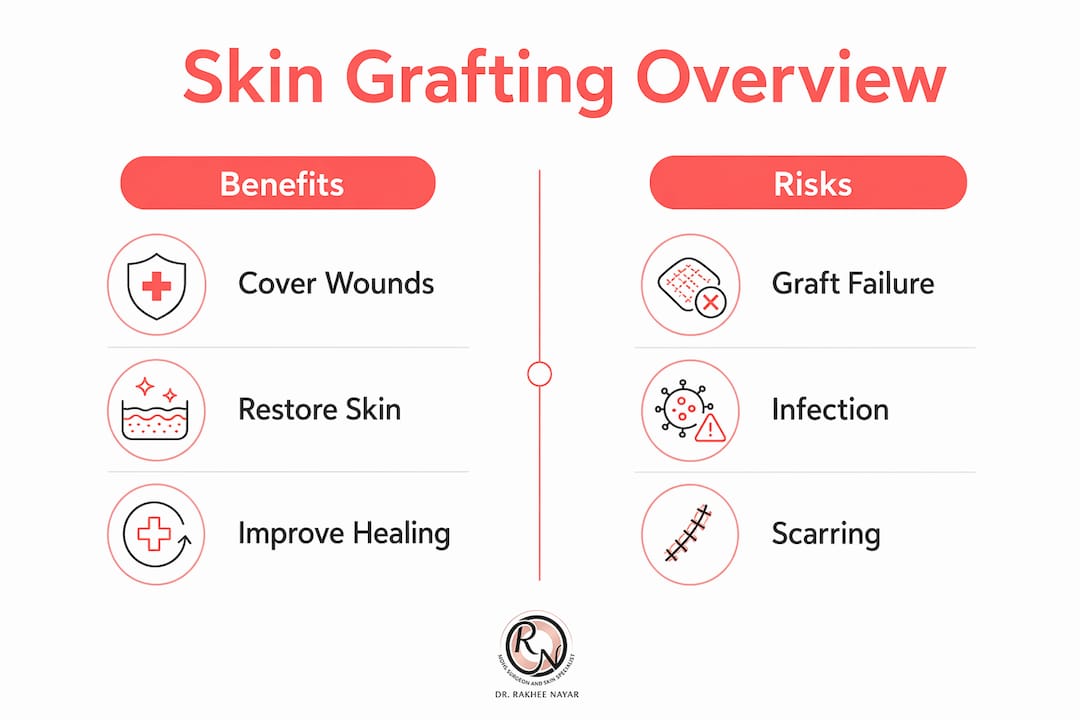
Skin grafting provides reliable coverage of wounds that cannot heal on their own. It reduces the risk of infection by closing open wounds promptly. It minimises scarring compared with leaving a large wound to heal by secondary intention, where the body closes the wound gradually without surgical assistance. For patients who have undergone Mohs micrographic surgery for skin cancer removal, grafting restores both function and appearance to the affected area. The procedure is relatively straightforward and is performed routinely in plastic surgery units across the UK.
Risks to be aware of
- Graft failure. Bleeding beneath the graft is the most common cause of failure. Blood pooling under the graft prevents it from connecting to the wound bed’s blood supply. If bleeding occurs, applying firm pressure for ten minutes is the correct first response before contacting the surgical team.
- Infection. Signs of infection include fever, a foul odour from the wound, increased redness or swelling, and bleeding that soaks through the dressing. Any of these signs requires prompt medical review.
- Scarring. All skin grafts produce some degree of scarring at both the graft and donor sites. The extent varies by graft type, location, and individual healing.
- Colour and texture differences. The grafted skin may not match the surrounding skin perfectly, particularly with split-thickness grafts. Some permanent colour change or indentation at the graft site is possible.
- Permanent indentation. Full-thickness grafts generally produce a flatter result, but some contour change at the donor site is expected.
Graft failure risk can be reduced substantially with strict dressing care, keeping the wound dry, and avoiding friction or pressure on the graft during the early healing phase. Patient vigilance is as important as surgical technique in achieving a good outcome.
For patients concerned about scarring after skin cancer removal, guidance on minimising post-surgical scarring provides practical strategies to support the best possible cosmetic result.
Key takeaways
Skin grafting is a reliable surgical procedure, but its success depends equally on surgical technique and patient care of both the graft and donor sites throughout recovery.
| Point | Details |
|---|---|
| Two graft types | Split-thickness grafts cover large areas; full-thickness grafts suit cosmetically sensitive sites like the face. |
| Blood supply is critical | The graft carries no blood supply of its own; the wound bed must be healthy and vascular for the graft to survive. |
| Donor site needs attention | The donor site often causes more discomfort than the graft site and requires careful dressing management for 1–2 weeks. |
| Sensory recovery takes time | Nerve regrowth begins around 4–5 weeks post-surgery; some permanent sensory or colour change is possible. |
| Lifelong sun protection | SPF 50 and physical barriers are required indefinitely, as graft and donor sites remain more vulnerable to UV damage. |
What I have learned from treating patients who need skin grafts
Patients consistently underestimate the donor site. They arrive focused on the graft, on whether the new skin will take, on what the repaired area will look like. The donor site is almost an afterthought. In my experience, this is where most of the post-operative discomfort actually comes from, and it is where patients are most likely to make mistakes with their dressings.
The other thing I see regularly is patients who stop their sun protection too soon. They reach the point where the skin looks healed, the colour has settled, and they assume the precautions no longer apply. They do. Grafted skin does not recover its full natural protection against ultraviolet radiation. That vulnerability is permanent, and a single significant sunburn on a graft site can undo months of careful healing.
What I tell every patient before surgery is this: the procedure itself is the straightforward part. The outcome depends on what happens in the weeks and months afterwards. Keeping dressings dry, resisting the urge to scratch, attending every follow-up appointment, and applying SPF 50 every day without exception. These are not optional extras. They are the difference between a good result and a poor one.
Skin grafting after Mohs surgery or wide excision is not a cosmetic afterthought. It is a functional repair. When it is done well, and cared for properly, it restores both the integrity and the appearance of the skin in a way that genuinely improves quality of life. If you are facing this procedure, ask your surgeon every question you have. A well-informed patient heals better.
— Miss Rakhee Nayar
Skin grafting and reconstruction at Mohs Surgeon UK
Skin grafting is often the final step in a treatment pathway that begins with skin cancer detection and removal. At Rakhee Nayar – Mohs Surgeon and Skin Specialist, Miss Nayar combines her dual training in plastic surgery and Mohs micrographic surgery to plan reconstruction from the moment of diagnosis, not as an afterthought.
Whether you have been referred for Mohs surgery or are seeking a second opinion on a reconstruction plan, Miss Nayar offers private consultations at Circle Cheshire in North West England, as well as e-consultations for patients across the UK and internationally. If you are concerned about a lesion or have already received a skin cancer diagnosis, the skin cancer detection service provides a clear starting point. For patients considering reconstruction, the facial reconstruction surgery page outlines the full range of options available.
This article is for information only and does not constitute medical advice. Consult a GMC-registered specialist for assessment and treatment recommendations specific to your situation.
FAQ
What is skin grafting used for?
Skin grafting is used to cover areas where skin has been lost due to burns, trauma, or surgical removal of skin cancer. It promotes healing, reduces infection risk, and restores the skin’s protective function.
How long does a skin graft take to heal?
The donor site typically heals within 5–10 days. The graft site shows initial integration within approximately two weeks, though full maturation takes longer and sensory recovery may continue for several months.
What causes a skin graft to fail?
Graft failure is most commonly caused by bleeding beneath the graft, which prevents the new skin from connecting to the wound’s blood supply. Infection and poor wound bed preparation are also contributing factors.
Does a skin graft leave a scar at the donor site?
All skin grafts leave some scarring at the donor site. Split-thickness donor sites heal independently and typically leave a flat, pale scar. Full-thickness donor sites are closed with stitches and may leave a linear scar.
Is sun protection really needed long-term after a skin graft?
SPF 50 and protective clothing are required indefinitely after healing. Grafted and donor skin loses some of its natural UV protection permanently, making both sites more susceptible to sunburn and further damage than normal skin.