TL;DR:
- Persistent pink bumps on the nose can be early skin cancers that are often mistaken for harmless blemishes. Early detection through clinical examination and biopsy is critical because precise removal with Mohs surgery preserves tissue and reduces recurrences. Post-removal, expert reconstruction restores both appearance and function, with specialists planning excision and repair seamlessly for optimal outcomes.
That persistent pink bump on your nose is easy to dismiss as a spot, a scar, or dry skin. But skin cancer nose presentations are frequently mistaken for harmless blemishes, and that delay in seeking help is where real damage begins. The nose is one of the most UV-exposed surfaces on your face, and its thin skin leaves little room for error when cancer takes hold. This guide explains what to look for, how diagnosis works in the UK, why Mohs surgery is the treatment of choice, and what expert reconstruction can do for both your health and your appearance.
Key Takeaways
| Point | Details |
|---|---|
| Nose vulnerability | The nose’s constant sun exposure and thin skin make it a common site for skin cancer requiring early attention. |
| Early signs | Persistent sores, pearly bumps, or scaly patches on the nose should prompt swift professional evaluation. |
| Mohs surgery | Mohs offers highly precise cancer removal with minimal healthy tissue loss, ideal for delicate nasal areas. |
| Reconstructive care | Expert nasal reconstruction restores both appearance and breathing function after cancer removal. |
| Prevention and follow-up | Daily sunscreen use, protective habits, and regular skin checks are essential for ongoing skin health. |
Understanding skin cancer on the nose
The nose sits at the centre of your face and takes the full force of daily sun exposure, year-round. Unlike the cheek or forehead, nasal skin is thin, closely bound to cartilage and bone, and has almost no spare tissue to absorb an advancing tumour. As noted by skin cancer specialists, the nose is a high-risk area for skin cancer due to constant UV exposure and thin skin with little spare tissue. That combination means cancers here invade deeper structures faster than they would elsewhere.
The three types of skin cancer most commonly found on the nose are:
- Basal cell carcinoma (BCC): The most frequent type. BCCs grow slowly but can erode cartilage if left untreated.
- Squamous cell carcinoma (SCC): Grows faster than BCC and carries a higher risk of spreading to lymph nodes.
- Melanoma: Less common on the nose but the most dangerous, capable of spreading rapidly to distant organs.
Each type behaves differently and demands a different level of urgency. What they share is a tendency to be underestimated in their early stages, particularly on a site where people assume any mark is cosmetic. Early detection is not just about cure rates. It is about avoiding the complex, multi-stage reconstruction that becomes necessary when cancer has reached cartilage or deeper tissue.
Recognising the early signs and diagnosis of skin cancer on the nose
Knowing what to look for is your first practical tool. The early nose skin cancer symptoms vary by type, but there are consistent warning signals worth knowing.
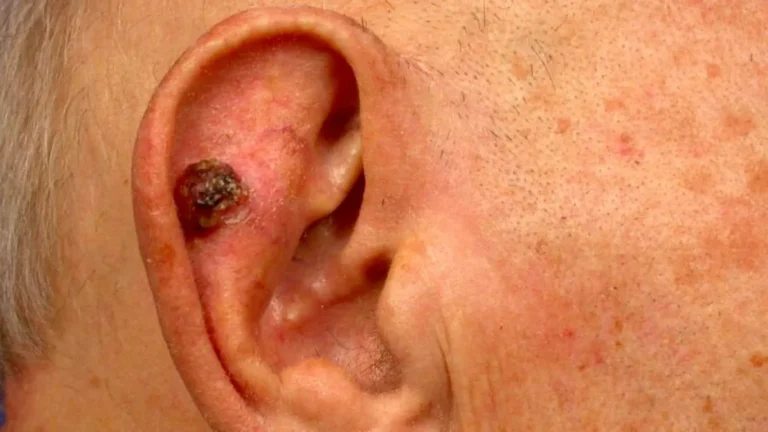
Basal cell carcinoma typically appears as a pearly or waxy bump, sometimes with visible blood vessels on the surface. It may look like a pimple that never fully heals, or a sore that bleeds, scabs over, and then bleeds again. Some BCCs appear as a flat, flesh-coloured or slightly pink scar-like area.
Squamous cell carcinoma usually presents as a firm, rough, or scaly patch, sometimes red or crusted. It can resemble a wart or a thickened area of skin that does not respond to moisturiser. It may bleed when touched.
Melanoma on the nose often appears as a new or changing dark spot with irregular borders, uneven colour, or a diameter larger than 6mm. Any mole or pigmented lesion that changes over weeks warrants urgent review.
Common nose cancer signs to watch for include:
- A sore or spot that has not healed within four weeks
- Bleeding or crusting that recurs without obvious cause
- A shiny, pearly, or translucent bump
- A rough, scaly patch that feels different to surrounding skin
- A dark or multicoloured lesion with irregular edges
Pro Tip: Searching for nose skin cancer pictures or skin cancer on nose photos online to compare your lesion is understandable, but unreliable. Professional evaluation is essential because clinical dermoscopy and skin biopsy are the only methods that can accurately diagnose skin cancer. A photograph, however detailed, cannot reveal what lies beneath the skin surface.
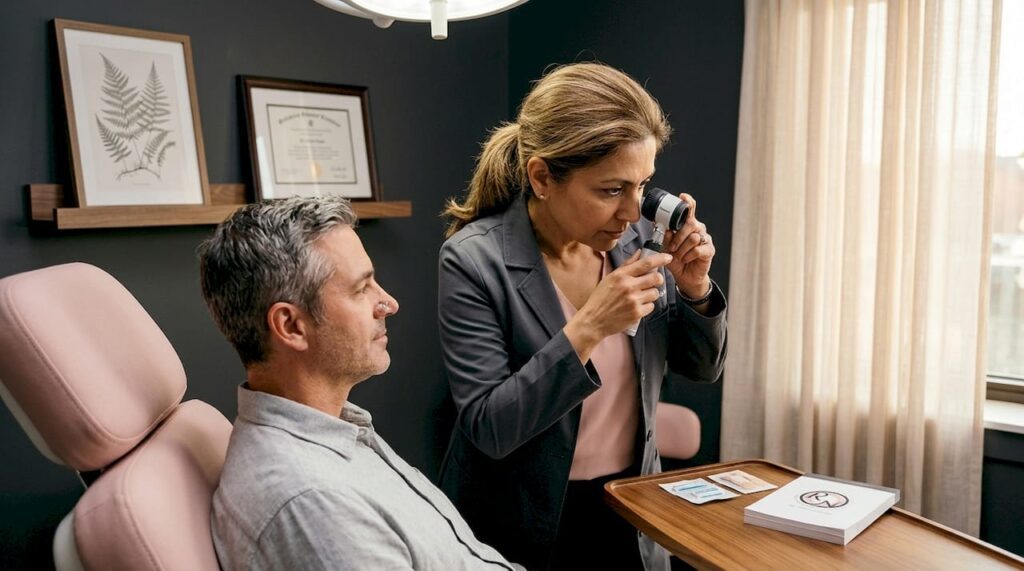
In the UK, diagnosis begins with a clinical examination, often using dermoscopy, a handheld device that magnifies skin structures not visible to the naked eye. If the lesion looks suspicious, a biopsy is taken. A small sample of tissue is sent to a pathology lab to confirm the cancer type and its aggressiveness. NICE referral guidelines recommend urgent referral when BCC lesions show typical features or sit in high-risk sites such as the nose. Do not wait for a GP to raise it. If you notice a lesion that fits the descriptions above, ask specifically about an urgent skin cancer referral.
For further detail on identifying basal cell carcinoma on the face, including the nose, specialist resources can help you understand what to look for before your appointment.
Mohs surgery: the preferred treatment for skin cancer on the nose
Once a nasal skin cancer is confirmed, the question becomes how to remove it completely while preserving as much healthy tissue as possible. On the nose, where every millimetre matters for both function and appearance, Mohs micrographic surgery is the gold standard.
Mohs surgery works by removing the visible tumour and then examining the tissue margins under a microscope while you wait. If cancer cells remain at the edge, another precise layer is removed from exactly that location. This continues until all margins are clear. The result is complete cancer removal with the least possible loss of healthy tissue, which is critical near delicate sites like the nose.
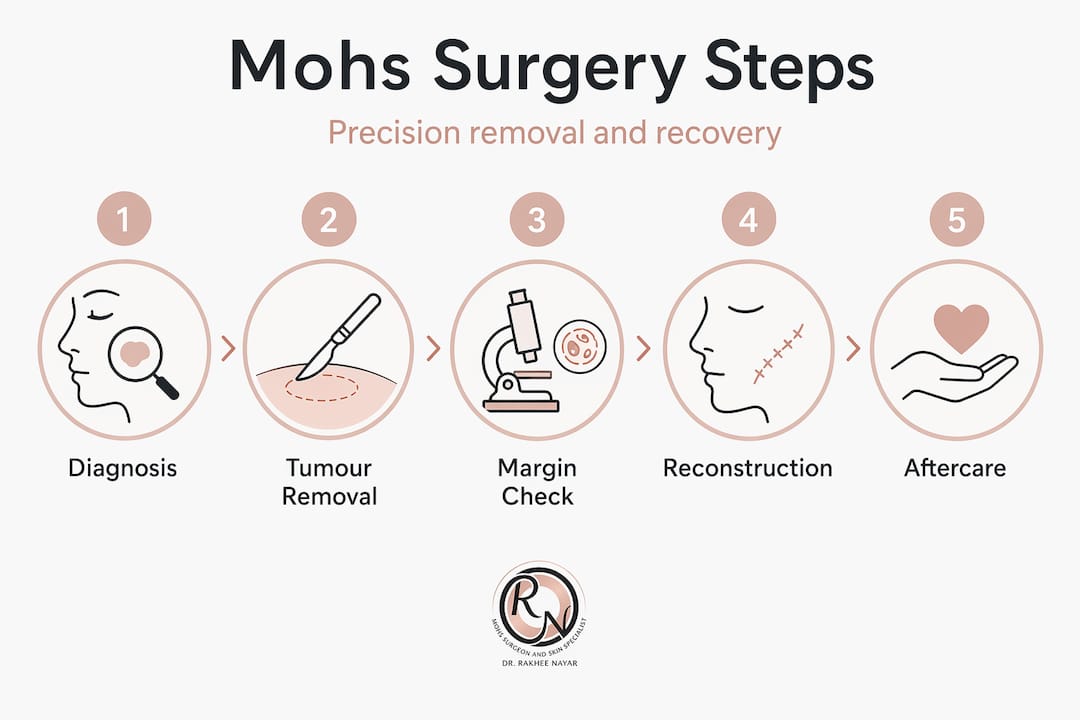
Why does this matter so much on the nose specifically? Standard surgical excision removes a fixed margin of tissue around the tumour, typically 4 to 5mm, without real-time microscopic confirmation. On the nose, that margin can mean removing cartilage unnecessarily or leaving cancer cells behind if the tumour has an irregular shape. Mohs eliminates that guesswork.
Key advantages of Mohs surgery for nasal skin cancer:
- Microscopic margin control at every stage
- Tissue-sparing technique suited to thin nasal skin
- Same-day confirmation of complete removal
- Lower recurrence rates than standard excision
- Preserves nasal structure, breathing function, and cosmetic appearance
How a Mohs procedure typically unfolds:
- Local anaesthetic is applied to the nose
- The visible tumour is removed with a small margin
- The tissue is mapped, colour-coded, and examined microscopically
- If cancer cells remain, only the affected area is re-excised
- Steps 3 and 4 repeat until all margins are clear
- Reconstruction of the wound begins, often on the same day
Mohs surgery offers cure rates of up to 99% for some primary nasal skin cancers, making it the most reliable option available given the nose’s limited spare skin and cartilage.
Pro Tip: When choosing Mohs surgery for a nasal lesion, look for a surgeon with dual training in both Mohs microsurgery and reconstructive plastic surgery. Having both skills in one specialist means the removal and the repair are planned together from the outset, rather than handed off between two separate clinicians.
For patients specifically concerned about Mohs surgery on the nose, understanding the reconstruction phase is just as important as understanding the excision itself.
Expert reconstructive surgery after skin cancer removal on the nose
Removing the cancer is only half the story. What happens next determines how your nose looks, feels, and functions for the rest of your life. Nasal reconstruction after skin cancer excision is one of the most technically demanding areas of facial plastic surgery.
The nose is not a flat surface. It has distinct subunits: the tip, the ala (the flared sides), the dorsum (the bridge), and the sidewalls. Each has different skin thickness, texture, and underlying structure. A defect on the nasal tip requires a completely different approach to one on the bridge or the ala.
Common reconstructive options include:
- Primary closure: Suitable only for very small defects where wound edges can be brought together without distorting the nose
- Local skin flaps: Tissue from adjacent nasal or facial skin is repositioned to cover the defect, preserving colour and texture match
- Full-thickness skin grafts: Skin taken from behind the ear or the inner arm is used to fill the defect
- Paramedian forehead flap: A multi-stage procedure using forehead skin for larger nasal defects, considered the benchmark for complex nasal reconstruction
| Technique | Best for | Advantage | Consideration |
|---|---|---|---|
| Primary closure | Small defects | Simple, one-stage | Risk of distortion if too large |
| Local skin flap | Medium defects | Good colour match | Requires skill to avoid scarring |
| Full-thickness graft | Moderate defects | Versatile | Colour match can vary |
| Forehead flap | Large or complex defects | Excellent tissue quality | Multi-stage, longer recovery |
Reconstruction after nasal skin cancer restores both function and confidence, addressing the complex structural challenges the nose presents.
Pro Tip: Ask your surgeon to explain which nasal subunit your defect falls within and why they have chosen a particular reconstruction technique. A surgeon who can answer that question clearly, with reference to your specific anatomy, is one who has genuinely planned your care rather than applying a generic approach.
For a broader overview of facial reconstructive surgery types, specialist resources can help you understand what to expect at each stage of recovery.
Prevention, aftercare, and follow-up for optimal outcomes
Surgery addresses the cancer that exists today. Prevention and aftercare determine whether you face the same situation again in five years.
Practical steps to protect your nose and support recovery:
- Apply a broad-spectrum sunscreen of SPF 30 or higher to your nose every morning, even in winter. Daily SPF 30+ application is the most effective single step for preventing recurrence given the nose’s constant UV exposure.
- Wear a wide-brimmed hat when outdoors for extended periods
- Avoid peak UV hours between 11am and 3pm, particularly in summer
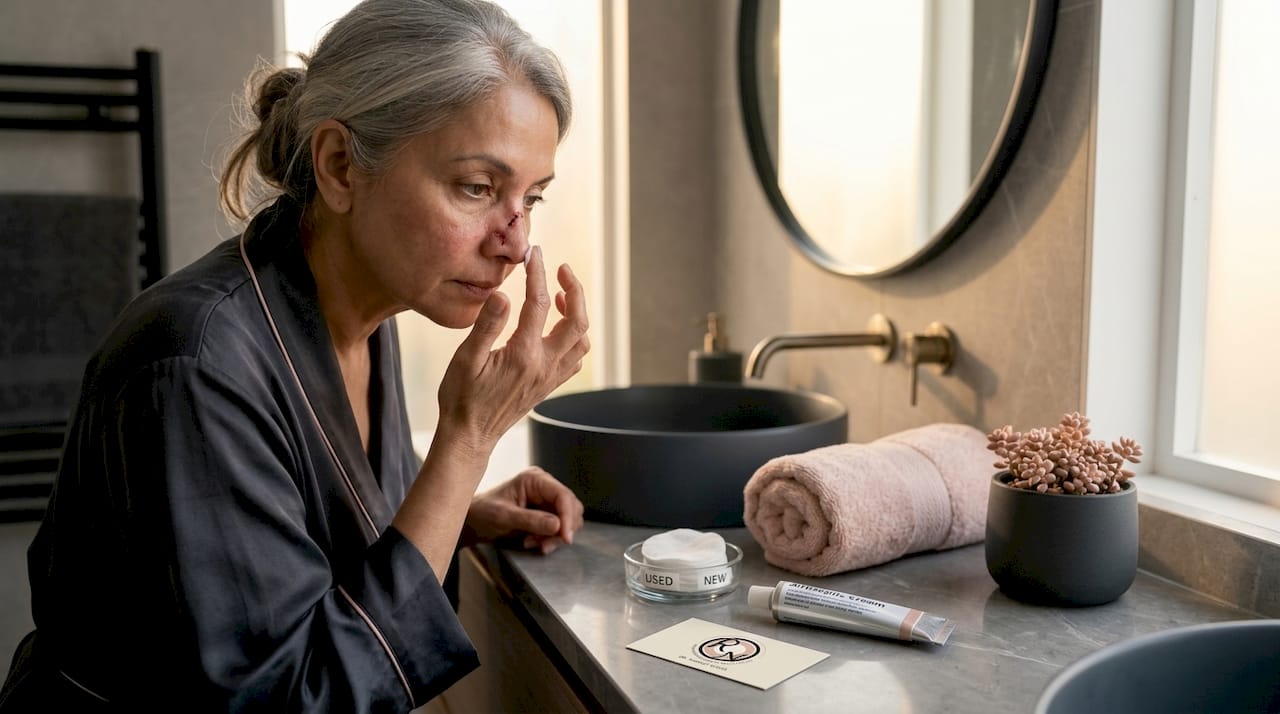
- Keep surgical wounds moist with petroleum jelly or prescribed ointment to support healing and reduce scarring
- Avoid blowing your nose forcefully for at least two weeks after surgery
- Sleep with your head elevated on an extra pillow to reduce post-operative swelling
- Attend all follow-up appointments and schedule skin checks every 6 to 12 months
Recovery after Mohs surgery on the nose is generally well tolerated, but the reconstruction site needs time and care. Swelling and bruising are normal in the first two weeks. Redness at the scar can persist for several months before settling. For detailed skin care after Mohs surgery, specialist guidance covers wound care, scar management, and what to expect at each stage.
Pro Tip: Scar maturation on the nose can take 12 to 18 months. Many patients judge their cosmetic outcome too early and become unnecessarily anxious. A well-executed reconstruction often looks dramatically better at 12 months than it does at 12 weeks. Patience, sun protection, and consistent moisturising make a measurable difference to the final result.
For broader skin cancer prevention tips relevant to long-term skin health, specialist resources can support your recovery beyond the surgical phase.
The unique value of specialised Mohs and reconstructive care for nasal skin cancer
Here is something most patients do not hear until after their treatment: the surgeon who removes your nasal skin cancer and the surgeon who repairs the defect do not always share the same priorities. A Mohs surgeon focused purely on excision may leave a wound that is technically clear of cancer but difficult to reconstruct well. A reconstructive surgeon who was not present during excision may not fully understand the geometry of what was removed. That gap in communication is where cosmetic and functional outcomes suffer.
The most significant advantage of choosing a specialist with dual training in Mohs microsurgery and reconstructive plastic surgery is that excision and reconstruction are planned as a single procedure. The surgeon knows, before making the first incision, how the defect will be closed. That changes the approach to tissue removal, the orientation of the wound, and the choice of reconstruction technique.
Mohs surgery combined with expert reconstruction achieves the best balance of tissue preservation and natural-looking results on the nose, precisely because the two disciplines inform each other in real time.
Patients who attend general surgical units for nasal skin cancer sometimes receive adequate cancer clearance but suboptimal reconstruction, not because the surgeons lack skill, but because nasal reconstruction is genuinely specialist territory. The nose is unforgiving. A scar that contracts slightly too much, a flap that does not match the surrounding skin tone, or a tip that loses its natural projection are outcomes that affect how a person looks and feels every day. Choosing a specialist centre that treats the nose as a whole, not just a site for tumour removal, is the decision that separates a good outcome from a genuinely excellent one.
For patients weighing their options, why choose Mohs surgery over standard excision for facial skin cancer is a question worth exploring in depth before committing to a treatment pathway.
Trusted UK specialists for skin cancer treatment and nasal reconstruction
If you have noticed a suspicious lesion on your nose, or you have already received a diagnosis and are weighing your treatment options, early specialist input makes a measurable difference to your outcome.
Miss Rakhee Nayar holds rare dual training in both Mohs micrographic surgery and reconstructive plastic surgery, meaning your cancer removal and nasal repair are managed by one expert with a single, coherent plan. Her clinic in North West England offers private consultations, e-consultations for patients across the UK, and in-person treatment for both straightforward and complex nasal skin cancers. Whether you are at the stage of choosing Mohs surgery UK, exploring facial reconstructive surgery options, or simply want a professional opinion on a lesion that concerns you, expert skin cancer detection and treatment is available without a long wait.
Frequently asked questions
What does early skin cancer on the nose look like?
Early skin cancer on the nose can appear as a persistent sore, a pearly or waxy bump, or a scaly red patch that lasts more than four weeks and may bleed or crust. Symptoms on the nose typically include a non-healing sore, a pearly or waxy bump, or a scaly red patch persisting for more than four weeks.
Can skin cancer on the nose spread to other parts of the body?
Yes, particularly for squamous cell carcinoma and melanoma, early detection and treatment are crucial to prevent spreading to lymph nodes and other areas. Skin cancer on the nose can spread, especially with SCC and melanoma, making early treatment vital.
Why is Mohs surgery preferred for skin cancer on the nose?
Mohs surgery is preferred because it precisely removes cancer with minimal damage to healthy tissue, reducing recurrence risk and preserving nasal function and appearance. Mohs microscopically controlled surgery reduces recurrence rates and limits how much normal tissue is removed, especially near delicate sites like the nose.
How is skin cancer on the nose diagnosed in the UK?
Diagnosis involves a professional dermoscopy examination followed by a skin biopsy to confirm the cancer type and guide treatment, as self-evaluation cannot reliably detect skin cancer. Diagnosis requires dermoscopy and biopsy because self-check photos cannot confirm cancer.
Recommended
- Skin Cancer on the Nose – Symptoms & Treatment – Expert Mohs Surgery | UK
- Mohs Surgery on the Nose | Miss Rakhee Nayar
- Facial Mohs surgery recovery: your complete workflow
- Why choose Mohs surgery for facial skin cancer removal?
Filed under Spotting Skin Cancer