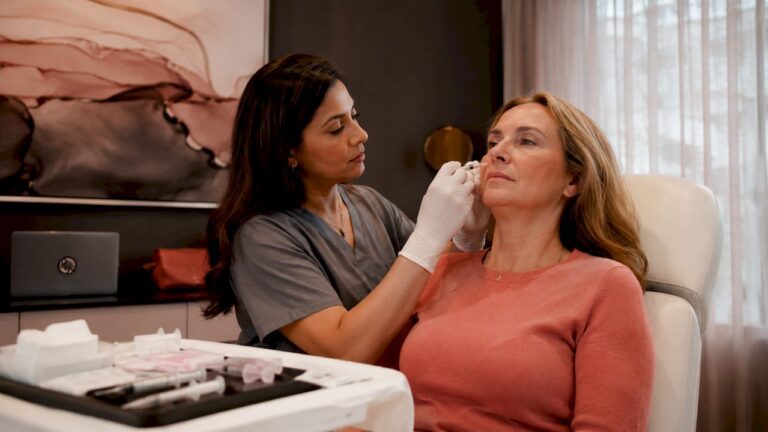
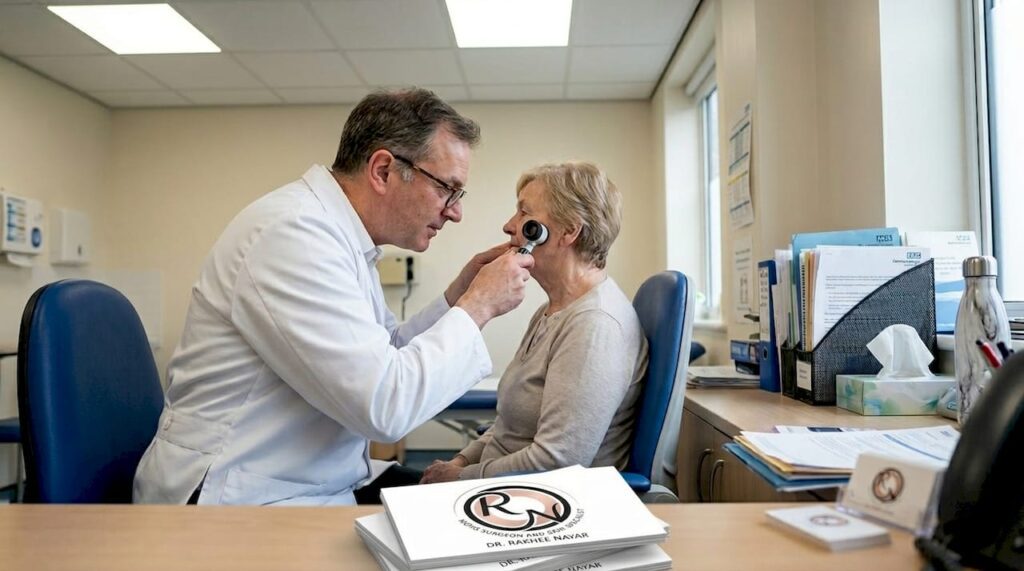
What can actually go wrong with Mohs surgery? Serious complications are uncommon, and the procedure has one of the best safety and cure-rate profiles in skin cancer treatment. Most patients experience only the expected, manageable side effects of any skin surgery, such as swelling, bruising and a scar.
Searching “Mohs surgery gone wrong” before a procedure is a completely normal way to prepare, and it deserves a straight answer rather than reassurance alone. Miss Rakhee Nayar, a Consultant Plastic Surgeon and Mohs Micrographic Surgeon, talks every patient through the realistic risks at consultation, precisely so nothing on the day comes as a surprise.
Key takeaways
| Point | Detail |
|---|---|
| Cure rate | Around 99% five-year cure rate for primary basal cell carcinoma. |
| Common risks | Bleeding, bruising, pain and scarring, all manageable and expected. |
| Less common risks | Infection, temporary numbness, rarely the cancer returning. |
| Biggest risk it avoids | Leaving cancer cells behind, by checking the entire margin under the microscope. |
| What patients usually mean | Most “gone wrong” searches are really about normal healing, not failure. |
How often does Mohs surgery actually go wrong?

In clinical terms, “going wrong” usually means the cancer wasn’t fully removed or came back later. On that measure, Mohs surgery performs better than any other treatment for basal cell carcinoma and squamous cell carcinoma. Published research summarised by the National Institutes of Health’s clinical reference on Mohs micrographic surgery reports five-year cure rates of around 99% for primary basal cell carcinoma, 94.4% for recurrent basal cell carcinoma, and 92 to 99% for primary squamous cell carcinoma.
Those figures exist because of how the technique works, not despite it. Every piece of tissue removed is examined under a microscope on the same day, so the surgeon knows before you leave whether the margins are clear. There’s no waiting days for a lab report and hoping nothing was missed.
The common side effects that aren’t a failure
Most of what feels alarming after Mohs surgery is normal healing, not evidence that anything went wrong. According to the British Association of Dermatologists’ patient guidance on Mohs surgery, the more common effects are:
| Effect | What to expect |
|---|---|
| Bleeding and bruising | Normal for a few days after surgery, usually minimal. More likely if you take blood-thinning medication. |
| Pain | Usually mild and manageable with over-the-counter painkillers such as paracetamol. |
| Scarring | Every skin surgery leaves some scar. The aim is to make it as neat and well-placed as possible. |
These aren’t complications in the sense most people mean when they search for surgery “gone wrong.” They’re the expected cost of removing skin cancer safely, and they settle down within days to a few weeks for most patients. Our guide to how long swelling lasts after Mohs surgery on the face covers the normal healing timeline in more detail.
The less common risks worth knowing about
A smaller group of risks happen less often but are still worth understanding before your procedure. Infection is possible, though not common, and your surgeon may prescribe antibiotics if they judge you to be at higher risk. Nerve damage can occasionally occur, since small nerves in the skin sit close to the surgical area, and this can cause numbness that’s usually temporary. Muscle weakness from nerve damage is rare.
Cancer recurrence, the outcome most people are really worried about when they search “Mohs surgery gone wrong,” is also uncommon precisely because of how thoroughly the margins are checked during the procedure itself. It isn’t zero, since no medical treatment offers a 100% guarantee, but it’s lower than with most alternative treatments for basal cell and squamous cell carcinoma.
Does needing more than one stage mean something went wrong?
No. Needing a second, third or occasionally further stage on the day is built into how Mohs surgery works, not a sign that anything has gone wrong. If the lab check shows cancer cells at the edge of the tissue removed, only that precise area is re-excised, and the process repeats until the margin is clear.
This can feel unsettling if you weren’t expecting it, but it’s the technique doing exactly what it’s designed to do. Our guide to what happens between Mohs surgery stages explains this waiting and checking process step by step, and our page on how long Mohs surgery actually takes covers why the number of stages varies from patient to patient.
How these risks are minimised in practice
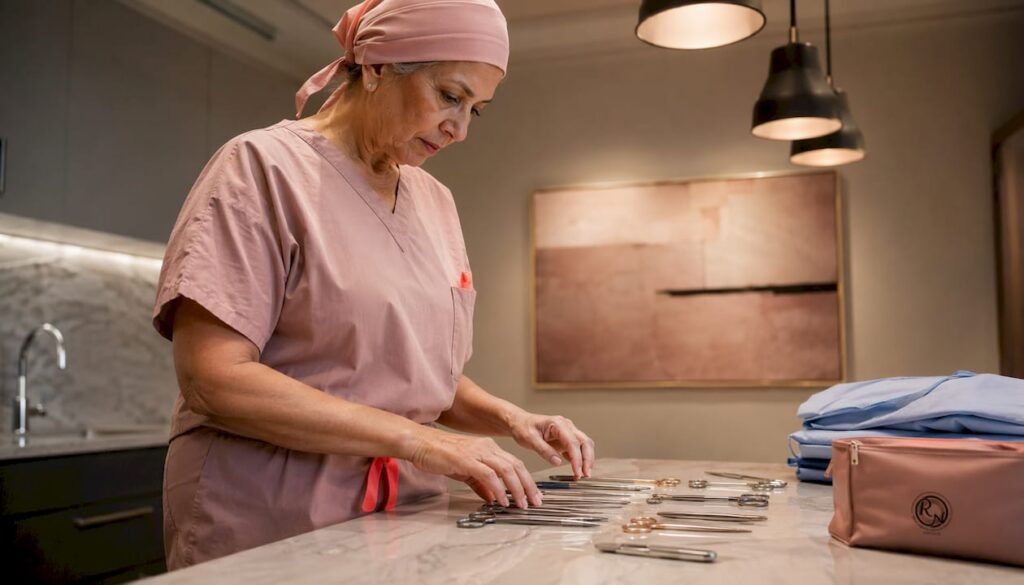
The biggest single safeguard in Mohs surgery is the same-day, complete margin check described above, but experience matters too. A surgeon who has read thousands of slides recognises subtle patterns that are easy to miss with less practice, and that directly affects both cure rates and how much healthy tissue is preserved.
Where reconstruction is needed, having a surgeon trained in both Mohs surgery and plastic reconstruction, as Miss Nayar is, reduces risk in a different way. The same surgeon who removed the cancer plans and performs the repair, with a full understanding of the wound rather than relying on a handover between two different specialists. Our page on what Mohs micrographic surgery actually involves explains how the technique itself is built around minimising risk at every stage.
What to do if you’re still worried before your surgery
It’s entirely reasonable to want to understand the specific risks for your own case before you consent to surgery, rather than relying on general statistics. Factors like the size and location of your skin cancer, your skin type, your medication and your general health can all shift your individual risk profile slightly.
Raising this directly at your pre-surgery consultation, rather than searching for worst-case stories online, gets you a far more useful answer. A good surgeon would rather spend extra time on your questions beforehand than have you arrive on the day still anxious.
Talking to your surgeon about risk
A realistic conversation about risk, including what’s common, what’s rare and what the evidence actually shows, tends to be far more reassuring than either false certainty or vague worry. Mohs surgery’s safety record exists precisely because the technique is designed to catch problems before you leave the clinic, not after.
If you’d like to talk through the risks for your specific diagnosis, Miss Rakhee Nayar and her team are happy to go through this in detail at your consultation, alongside what to expect on the day itself.
FAQ
What can go wrong with Mohs surgery?
Serious complications are rare. Common effects are bleeding, bruising, pain and scarring. Less common risks include infection, temporary nerve numbness, and, rarely, the cancer returning.
What is the success rate of Mohs surgery?
Published five-year cure rates are around 99% for primary basal cell carcinoma and 94.4% for recurrent basal cell carcinoma, among the highest of any skin cancer treatment.
Is it normal to need more than one stage of Mohs surgery?
Yes. Needing further stages simply means the lab check found cancer cells at the edge of the tissue removed. Only that specific area is re-excised, and this is a normal part of how the technique works.
Can Mohs surgery leave a bad scar?
All skin surgery leaves some scar. Because Mohs surgery removes the smallest possible amount of tissue, wounds and resulting scars tend to be smaller than with standard excision, especially on the face.
How likely is nerve damage after Mohs surgery?
Nerve damage is a less common risk. It can cause temporary numbness in the treated area, and in rare cases muscle weakness, but permanent significant nerve injury is uncommon.
Recommended
- What is Mohs Micrographic Surgery? | Miss Rakhee Nayar
- How Long Does Mohs Surgery Actually Take? A Timeline From Consultation to Closure
- What Happens Between Mohs Surgery Stages? Understanding the Interval
- How Long Does Swelling Last After Mohs Surgery on the Face?
Filed under Mohs Surgery