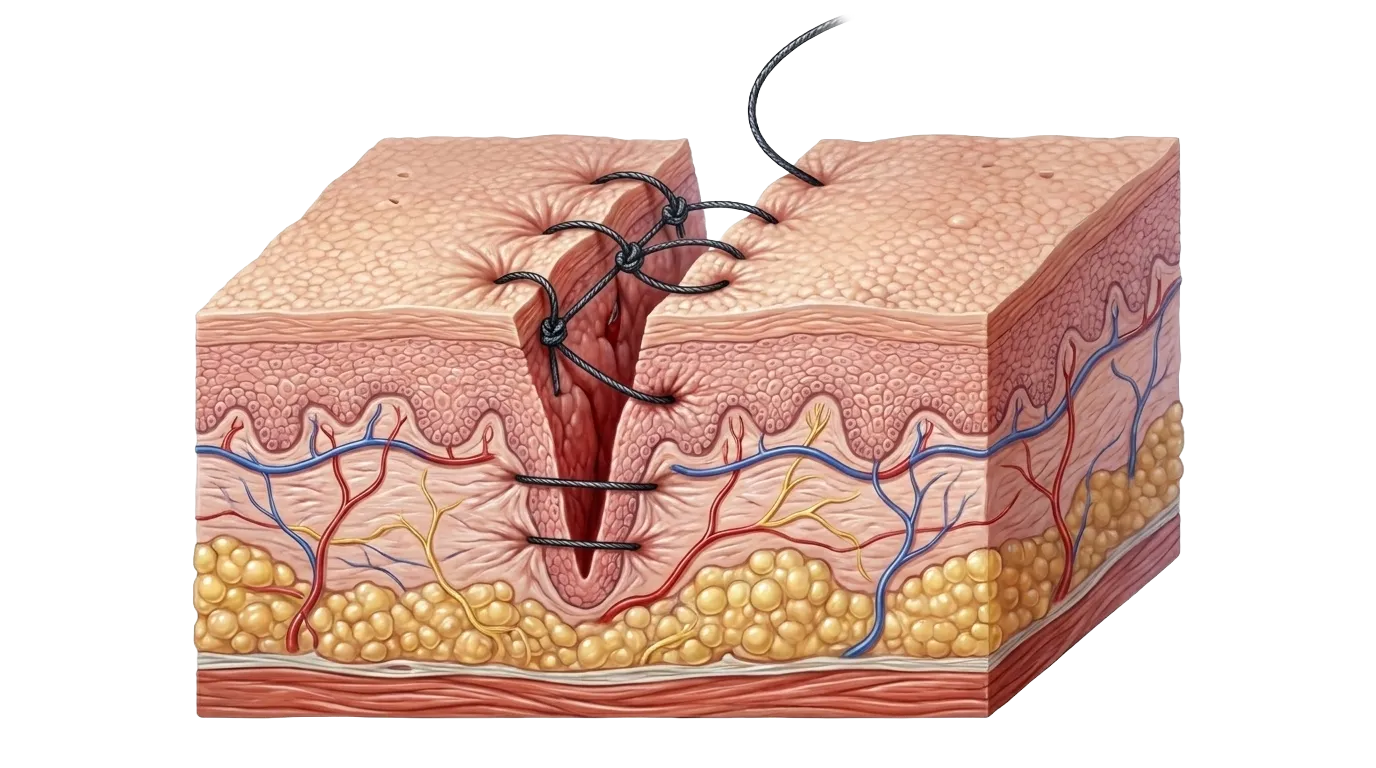
Direct closure brings the edges of the wound together in a fine line of stitches, placed along the natural creases of the face. Planned and carried out by Consultant Plastic Surgeon Miss Rakhee Nayar.
Women in the UK dual-trained in Mohs and plastic surgery
of 36 patients would recommend Miss Nayar (PHIN, September 2026)
The simplest repair
What is Direct Closure?
Direct closure, sometimes called primary closure, is the simplest way to repair the wound left after Mohs surgery. The edges of the wound are brought together and stitched in a fine line.
Because Miss Nayar removes the cancer and plans the repair herself, the position and direction of the final scar is decided with the whole face in mind, not just the wound.
Choosing the repair
When is Direct Closure Used?
Direct closure suits small to moderate wounds in areas where there is enough loose, mobile skin nearby to close the gap without distorting anything.
It is often the preferred repair on the cheek, forehead, temple, neck and body.
Where the skin is tight, or closing the wound would pull on the eyelid, lip or nostril rim, a local flap or skin graft usually gives a better result.
The wound can be closed without pulling on a free edge such as the eyelid, lip or nostril.
There is enough skin laxity in the surrounding area.
The scar can sit inside a natural crease, wrinkle or hairline.
Skin colour and texture on both sides of the wound are a close match.
Planned around you
What Makes Direct Closure Work Well?
Direct closure uses the patient’s own neighbouring skin, so the colour and texture match. The skill is in shaping and placing the line.
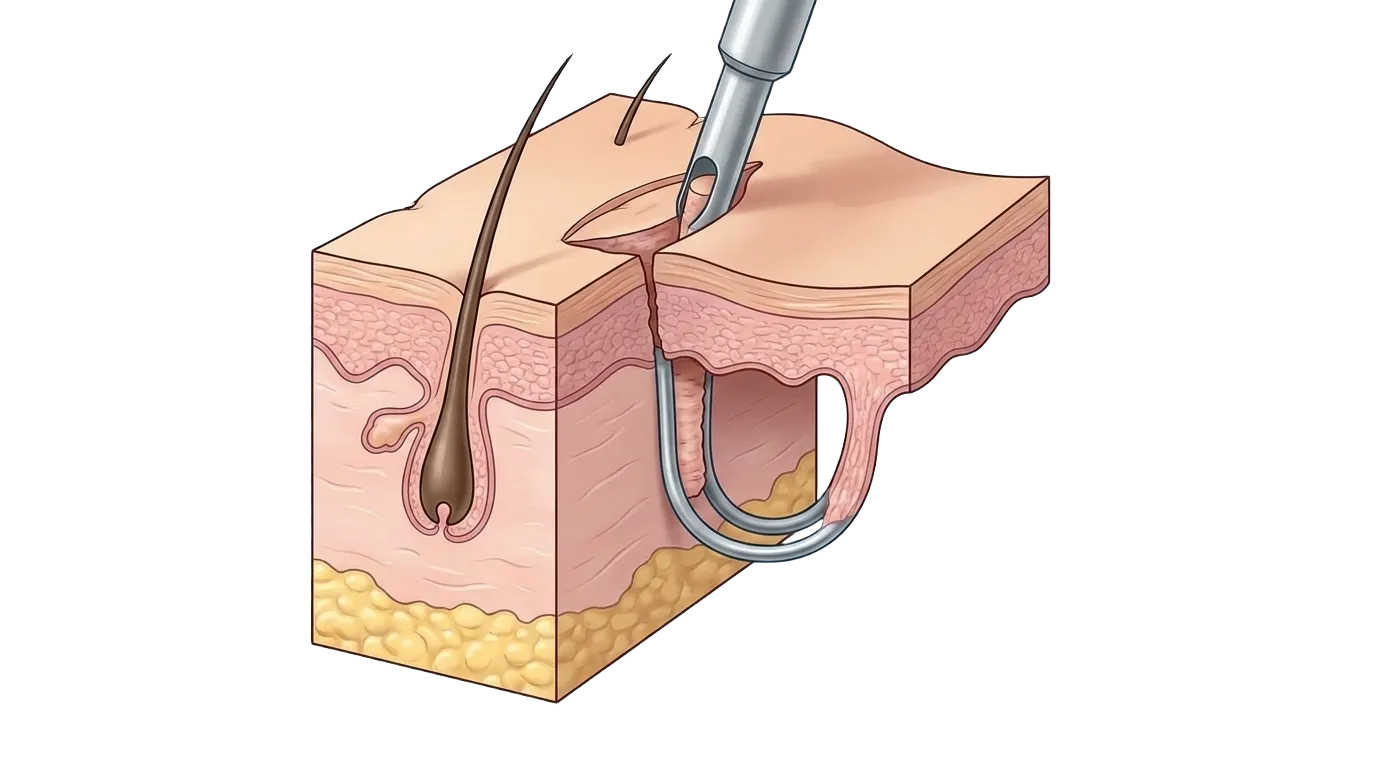
The wound is usually reshaped into a narrow ellipse so the edges sit together without bunching, then closed in layers.

Layered Stitching
Deep stitches take the tension off the skin, and fine surface stitches line up the edges precisely.
Scar Placement
The line is planned to follow the natural creases and tension lines of the face wherever possible.
Same-Day Repair
Once the margins are clear, the repair usually takes twenty to forty minutes in the same visit.
Simple Aftercare
Most patients go home the same day with a simple dressing.
Clinical background
Why Choose Miss Rakhee Nayar for Your Reconstruction?
Reconstruction is where the result you live with is decided. With over 20 years of surgical experience, Miss Rakhee Nayar brings training in both skin cancer surgery and plastic surgery to the same operation.
One Surgeon, Start to Finish
Miss Nayar is one of fewer than 10 women in the UK dual-trained in both plastic surgery and Mohs micrographic surgery.
That means the surgeon who checks your margins under the microscope is the same one who plans and carries out the repair, knowing exactly what has been removed and why.
The Dual-Specialist Advantage
This combination means the person who removes your cancer is the same person who plans and carries out the repair. Miss Nayar is accredited as both a Consultant Plastic Surgeon and a Mohs surgeon.
- Cancer removal with every margin checked
- Repair chosen for your face and your wound
- One consultant from consultation to follow-up
- Plastic surgery training (FRCS Plast)
Training and Appointments
Miss Nayar is a Consultant Plastic Surgeon at Mersey and West Lancashire Teaching Hospitals NHS Trust, and sees private patients at Fairfield Independent Hospital and Circle Cheshire Clinic.
- She chairs the Mohs Surgery Training Interface Group (JCST), the national committee for Mohs fellowship training in the UK.
- She holds an MBChB with Honours and an MD from the School of Cancer Studies at the University of Liverpool.
- She is a Fellow of the Royal College of Surgeons of Edinburgh (FRCS Plast) and holds the European Board of Hand Surgery Diploma (EBHS).
- She is an active member of the British Association of Plastic, Reconstructive and Aesthetic Surgeons (BAPRAS) and the British Medical Association.
Where it is used
Where Direct Closure Is Used
Direct closure works best where the skin is naturally loose. Miss Nayar will tell you at consultation whether it suits your wound, or whether another repair will look better.
Read about the other reconstruction options: healing by secondary intention, local flap, full-thickness skin graft, split skin graft, nasolabial flap and forehead flap.
The Cheek
The Forehead
The Temple
The Neck
The Body and Limbs
Request an e-Consultation
Miss Nayar offers a convenient e-Consultation service for patients seeking a specialist opinion from across the UK and overseas. This secure digital pathway enables remote assessment of skin lesions and concerns, providing a prompt clinical recommendation.
It is an ideal first step for those considering Mohs surgery or reconstruction before travelling for an in-person appointment.
Step by step
What the Procedure Involves
Most repairs are carried out under local anaesthetic on the same day as the Mohs surgery, once the microscope has confirmed the margins are clear. Each step is explained as it happens.
Years of surgical experience
The area is numbed with local anaesthetic, so you stay awake but should not feel pain.
Once the microscope has confirmed clear margins, Miss Nayar plans the direction of the line.
The wound is shaped into a narrow ellipse so the edges will sit flat.
Deep stitches are placed to take the tension off the skin.
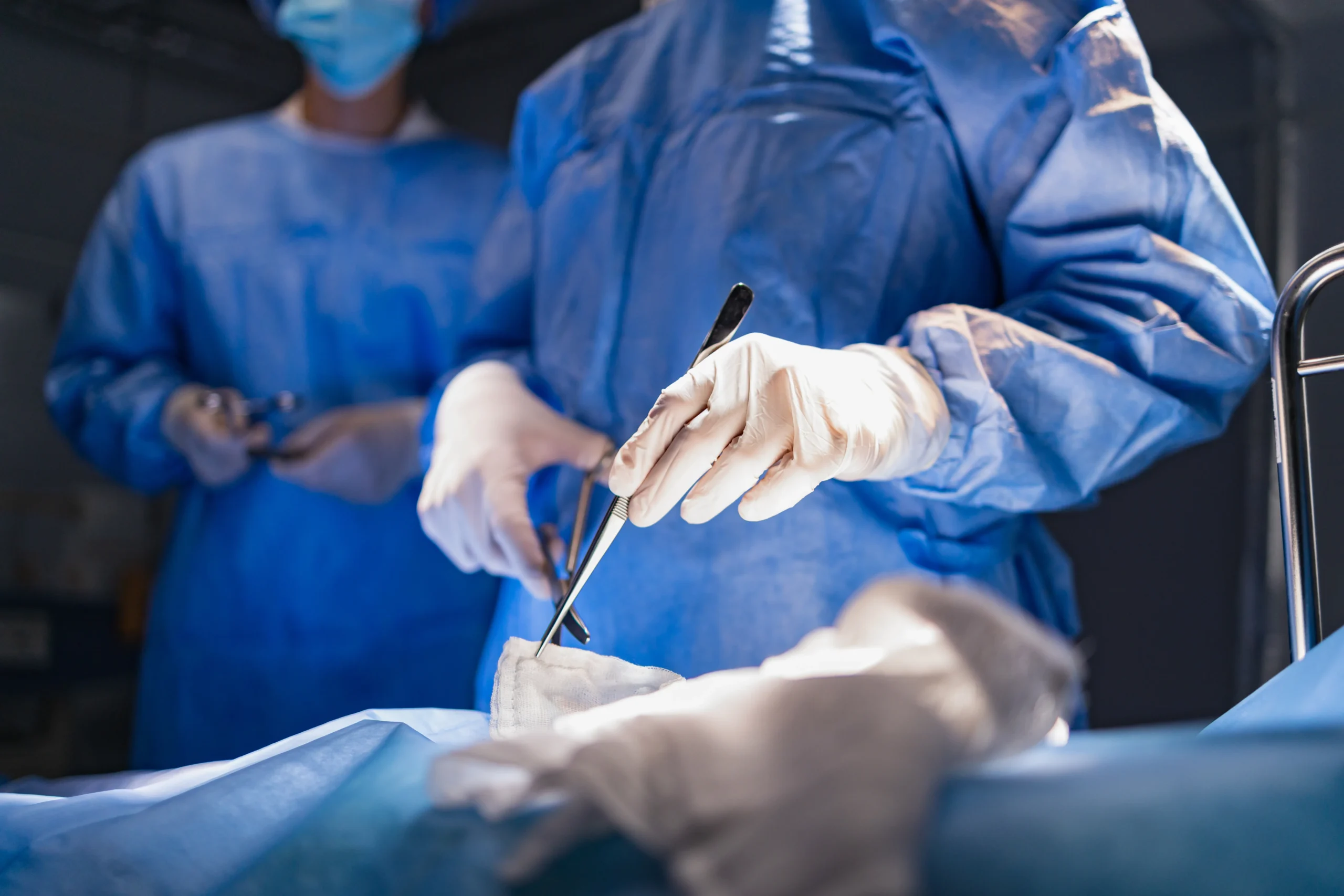
Fine surface stitches line up the edges, and a simple dressing is applied.
Other options
Other Reconstruction Options
Direct closure is not right for every wound. Where it would pull on a nearby feature or leave too much tension, one of these repairs is usually chosen instead.
Local Flap
Neighbouring skin moved across on its own blood supply for a close match. Read more
Full-Thickness Skin Graft
Skin taken from a hidden donor site and laid into the wound. Read more
Healing by Secondary Intention
The wound is dressed and left to heal on its own, in the right sites. Read more
Nasolabial Flap
Cheek skin from beside the nose, used to rebuild the side of the nose. Read more
Healing week by week
Recovery and Healing
Recovery after direct closure is usually straightforward. Miss Rakhee Nayar gives you a clear aftercare plan and sees you again to check the repair.
- Days 1 to 3: some swelling and bruising is normal, particularly around the eyes after surgery on the upper face. Keep the dressing dry.
- Days 5 to 14: surface stitches are removed, earlier on the face and later on the body.
- The line looks red and slightly raised at first. This is expected.
- Weeks 3 to 8: redness begins to fade. The scar may feel firm underneath as the deep tissue remodels.
- Months 3 to 12: the scar continues to soften, flatten and pale.
- Sun protection and gentle massage, once the wound has fully sealed, both help the final result.
In Patients' Words
Patients Feedback


What Our Patients Say
Concerned About Skin Cancer?
Book a Specialist Assessment
Early assessment usually means a smaller operation and a simpler repair. Contact Miss Rakhee Nayar’s clinic for an assessment by a consultant dual-trained in Mohs and plastic surgery.
or Call Us Now
07740 306144
Circle cheshire Clinic
The Courtyard, Hall Ln, Wincham, Northwich CW9 6DG, United Kingdom
07740 306144
contact@mohssurgeon.co.uk
Schedule Your Visit
Where to See Miss Nayar
Miss Rakhee Nayar provides specialist Mohs and reconstructive surgery at Circle Health Cheshire Clinic. This modern, private facility offers expert care in a discreet environment for patients across Cheshire and the North West.


Frequently Asked Questions
We're Always Here to Help You
How long will the scar be?
Usually about three times the length of the original wound, because the wound is shaped into an ellipse so the edges sit flat. A longer, flatter line is usually less noticeable than a short, puckered one.
When are the stitches removed?
Usually after five to seven days on the face, and later on the body, where the skin is under more tension.
Can I wash my face?
Keep the dressing dry for the first couple of days. After that, you will be told how to clean the area gently until the stitches are removed.
Will I be awake for the surgery?
Yes. Most repairs are carried out under local anaesthetic, so you stay awake and can talk to the team throughout. It also avoids the need for a general anaesthetic.
How long will it take?
It depends on how many Mohs layers are needed before the repair, which cannot be known in advance. Plan to be at the clinic for at least half a day.
Will it leave a scar?
All surgery leaves a scar. The aim of direct closure is a single fine line that follows the natural lines of the face, so the eye reads it as a crease rather than a mark.