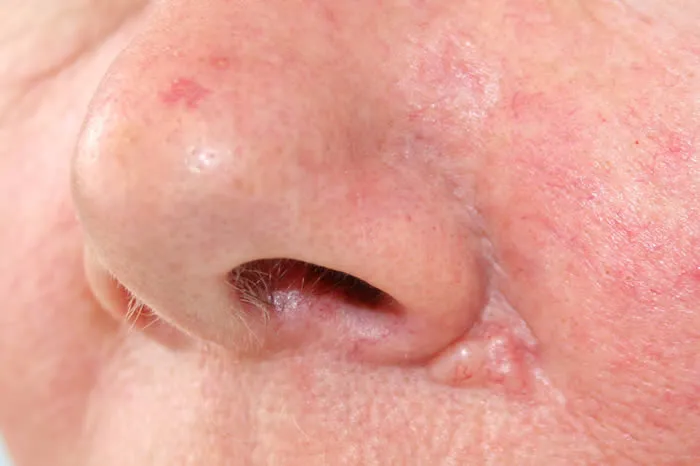
Surgery is the main treatment for basal cell carcinoma (BCC), as for other non-melanoma skin cancers. Low-risk BCCs can also be treated by scraping, freezing, creams or photodynamic therapy. Mohs micrographic surgery may be offered for higher-risk BCCs on the face or hands whose edges are hard to see, and for BCCs that have come back.
Women in the UK dual-trained in Mohs and plastic surgery
of 36 patients would recommend Miss Nayar (PHIN, September 2026)
Your options
What are the treatment options for basal cell carcinoma?
Surgery is the main treatment for non-melanoma skin cancer, including BCC. These are the main treatments, and when Cancer Research UK says each is used.
| Treatment | When it is used |
|---|---|
| Surgical excision The BCC is cut out with a margin of healthy-looking skin. A wider excision, sometimes closed with a skin graft or flap, is used for high-risk BCCs. | Most BCCs |
| Mohs micrographic surgery The BCC is removed in thin layers, and the edges of each layer are checked under the microscope before the wound is closed. | Higher-risk BCCs on the face or hands whose edges are hard to see, and BCCs that have come back |
| Curettage and electrocautery The BCC is scraped away and the base is treated with an electric needle. | Mainly low-risk BCCs |
| Cryotherapy The BCC is frozen with liquid nitrogen. | Some BCCs; a GP may do this |
| Imiquimod cream A cream applied at home over several weeks. | Low-risk BCCs, when surgery is not possible or not wanted |
| Photodynamic therapy A light-sensitive cream is applied and then activated with a light. | Superficial low-risk BCCs, and thin nodular BCCs when other treatments are not possible |
| Radiotherapy High-energy radiation is aimed at the BCC. | When surgery is not possible, for deeper or large BCCs, or alongside other treatment |
| Vismodegib A tablet that blocks a pathway BCC cells use to grow. | Rarely; it is not widely available in the UK |
Choosing a treatment
Which treatment is right for my basal cell carcinoma?
It depends mainly on whether the BCC is low risk or high risk. A specialist looks at:
- where it is, because the nose, eyelids, lips and ears have little spare skin
- how big it is, and whether its edges can be seen clearly
- its type under the microscope, which a biopsy confirms
- whether it has been treated before and come back
- your general health, and what matters to you about the treatment
A small, superficial BCC on the back may suit a cream or freezing. A BCC on the side of the nose with an unclear edge is the kind Mohs surgery is used for. Our page on what a BCC looks like shows the common types.

Every margin checked
When is Mohs surgery used for basal cell carcinoma?
Mohs surgery may be offered for higher-risk BCCs on the face or hands whose edges are hard to see, and for BCCs that have come back after treatment. The surgeon removes the visible BCC and a thin layer around it, and the edges of that layer are checked under the microscope while you wait. If cancer remains at an edge, another thin layer is taken from that spot only.
Because each layer is checked before the wound is closed, as little healthy skin as possible is removed. That matters most on the nose, eyelids, lips and ears. Mohs surgery for BCC explains the day step by step.
Higher-Risk BCCs
Mohs is used for BCCs on the face or hands whose edges are hard to see, and for BCCs that have come back.
Every Edge Checked
The edges of each thin layer are examined under the microscope while you wait, before the wound is closed.
Healthy Skin Spared
Further tissue is taken only where the microscope shows cancer remains.
Repair on the Same Day
Once the margins are clear, the wound is usually repaired at the same visit.
Standard surgery
What happens during surgical excision for BCC?
Surgical excision removes the BCC with a margin of healthy-looking skin around it. The tissue goes to the laboratory, where the margins are checked after the operation, and the wound is closed at the same visit.
For a high-risk BCC, a wider excision may be needed, and the wound may be closed with a skin graft or flap. Our skin lesion removal page covers what to expect on the day.
Years of surgical experience
Repairing the wound
How is the wound repaired after a BCC is removed?
The repair depends on the size and position of the wound. Miss Nayar is trained in plastic surgery as well as Mohs, and she repairs the wound herself once the cancer has been removed. Reconstruction after Mohs surgery covers the options in more detail.
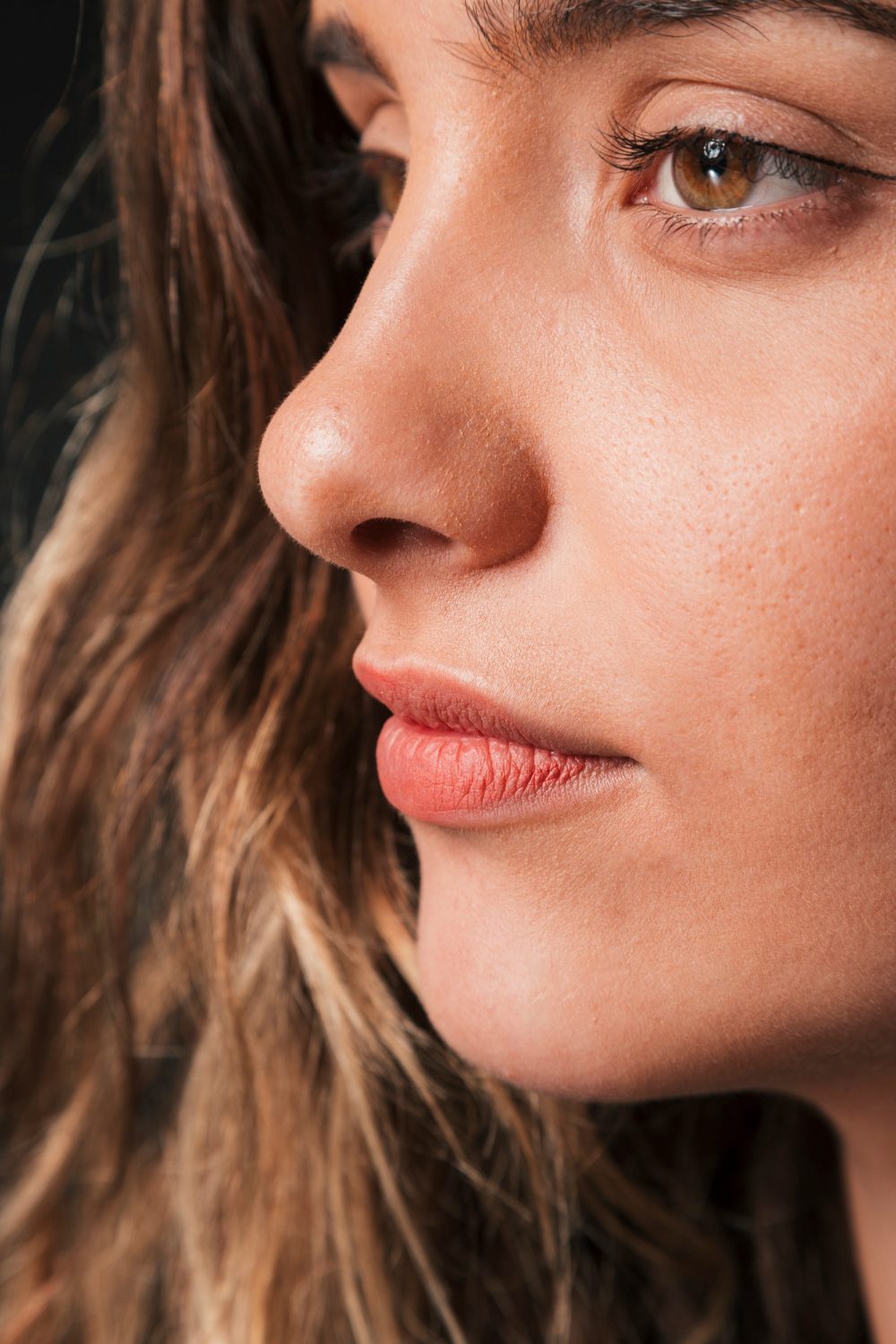
Direct Closure
The edges of the wound are stitched together. Read about direct closure.
Local Flap
Nearby skin is moved to cover the wound. Read about the local flap, and on the nose the nasolabial flap and forehead flap.
Skin Graft
Skin from another site covers the wound, as a full-thickness skin graft or a split skin graft.
Healing on Its Own
A small wound may be left to heal by itself, known as healing by secondary intention.
Timing
How quickly does a basal cell carcinoma need treating?
A BCC is rarely urgent, but it should not be left. BCCs usually grow slowly, and it is very rare for one to spread to another part of the body. A BCC does keep growing into the skin around it, and treatment is more complicated when it is large by the time it is treated.
How serious is a basal cell carcinoma? covers this in more detail.

Clinical background
Private treatment for basal cell carcinoma with Miss Rakhee Nayar
Miss Rakhee Nayar is a Consultant Plastic Surgeon and Mohs surgeon with over 20 years of surgical experience. She is one of fewer than 10 women in the UK dual-trained in both plastic surgery and Mohs micrographic surgery.
Hers is a surgical practice. She treats BCC by Mohs micrographic surgery or surgical excision, and she repairs the wound herself once the cancer has been removed.
Where she sees patients
Miss Nayar sees adults at two private hospitals:
- Circle Cheshire Clinic, The Courtyard, Hall Lane, Wincham, Northwich CW9 6DG
- Fairfield Independent Hospital, Crank Road, Crank, St Helens WA11 7RS
To arrange an appointment, send an enquiry or call Lisa, Miss Nayar’s secretary, on 07740 306144. There is no charge for an enquiry and no obligation to book.
In Patients' Words
Patients feedback


What Our Patients Say
Concerned About Skin Cancer?
Book a Specialist Assessment
Early assessment usually means a smaller operation and a simpler repair. Contact Miss Rakhee Nayar’s clinic for an assessment by a consultant dual-trained in Mohs and plastic surgery.
or Call Us Now
07740 306144
Circle Cheshire Clinic
The Courtyard, Hall Ln, Wincham, Northwich CW9 6DG, United Kingdom
07740 306144
contact@mohssurgeon.co.uk
Schedule Your Visit
Where to see Miss Nayar
Miss Rakhee Nayar sees private patients, adults only, at Circle Cheshire Clinic in Northwich and at Fairfield Independent Hospital in St Helens.
07740 306144
Frequently Asked Questions
Common questions about BCC treatment
Can basal cell carcinoma be treated without surgery?
Some can. Cancer Research UK lists creams (imiquimod or fluorouracil), photodynamic therapy and freezing for some low-risk BCCs, and radiotherapy for when surgery is not possible. Surgery is still the main treatment for most BCCs.
Is Mohs surgery used for every BCC?
No. Mohs surgery may be offered for higher-risk BCCs on the face or hands whose edges are hard to see, and for BCCs that have come back after earlier treatment. Many other BCCs are removed by standard excision.
Will BCC treatment leave a scar?
Any treatment that cuts the skin leaves a scar. Its size and position depend on the size of the wound and how it is repaired. Scarring after Mohs surgery explains how a scar changes over the following months.
Will I need check-ups after treatment?
Yes. The NHS says you will have regular check-ups during and after treatment. Between check-ups, contact your specialist if you notice anything new, or a change at the treated site.