TL;DR:
- Most Mohs surgery days run from mid-morning into the afternoon, and some go on longer. The British Association of Dermatologists describes it as taking half a day on average, occasionally a full day.
- Each stage has two parts: a short excision, around 15 to 20 minutes, followed by a wait while the lab checks the margins, usually about an hour, longer for a larger sample.
- Around 9 in 10 patients are clear after just one or two stages, but there is no reliable way to know your own number in advance.
- How your wound is closed adds its own time. Some repairs happen the same day, others need a second appointment a few days later with a plastic surgeon.
How long does Mohs surgery take? Most patients are at the hospital or clinic for somewhere between three hours and a full day. The British Association of Dermatologists describes it as taking half a day on average, though it can run longer.
There is no single figure that applies to everyone, because Mohs surgery is not done in one continuous cut the way standard excision is. It is done in stages, with a wait for laboratory results between each one, and that is exactly what makes it more time-consuming but also far more precise. Miss Rakhee Nayar, a Consultant Plastic Surgeon and Mohs Micrographic Surgeon, talks new patients through this timeline at consultation so nobody arrives on surgery day unsure of what the hours ahead will involve.
Key takeaways
| Point | Detail |
|---|---|
| Typical total time | Half a day on average, occasionally a full day from arrival to going home. |
| First excision | Around 15 to 20 minutes under local anaesthetic. |
| Wait per stage | Roughly an hour for a small sample, up to three hours for a larger or more complex one. |
| Number of stages | About 90% of patients are clear after one or two stages. |
| Closure | Sometimes same day, sometimes a separate appointment days later, depending on the repair needed. |
What happens on Mohs surgery day, step by step
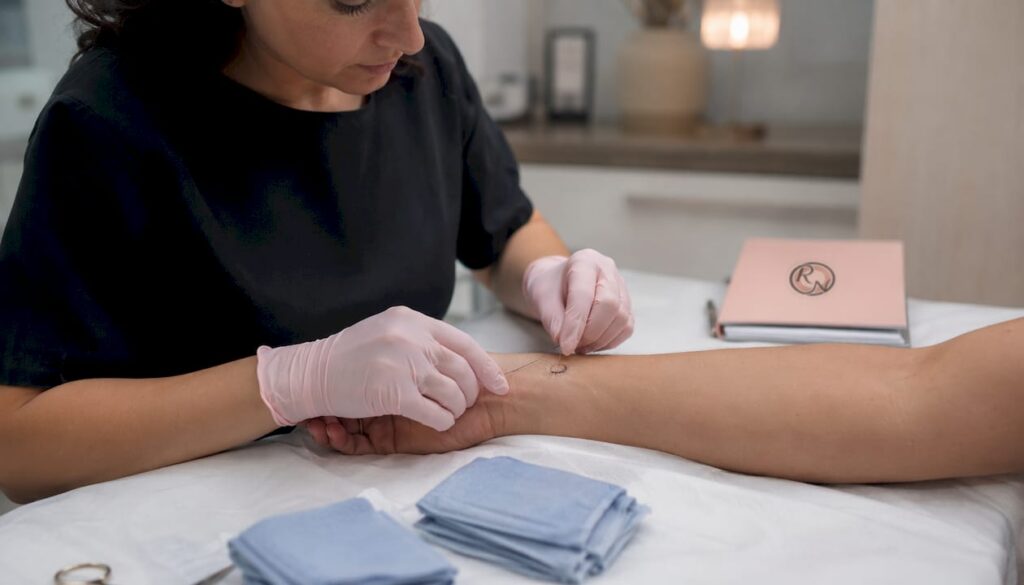
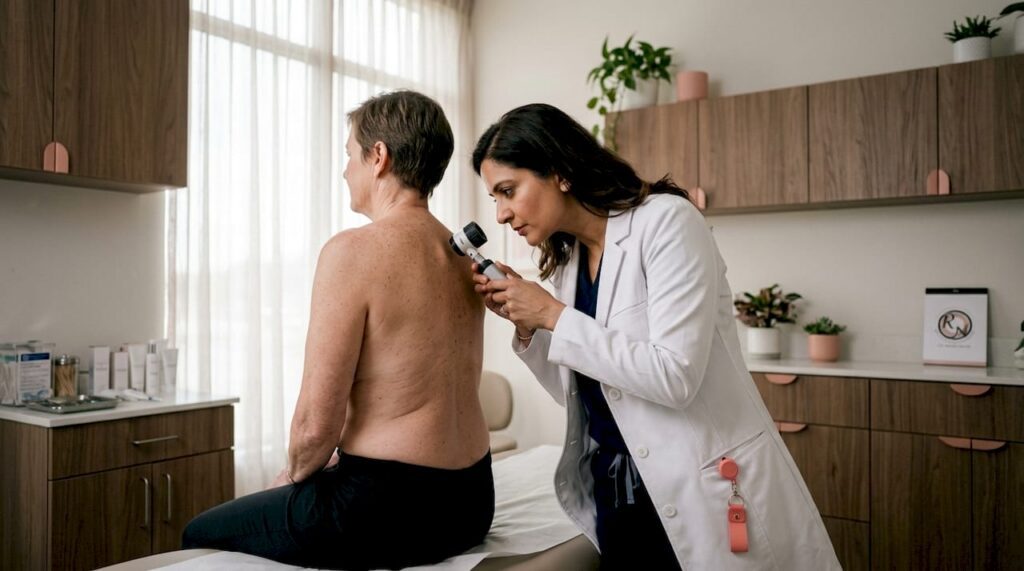
You will check in much as you would for any hospital appointment and change into a gown. Your surgeon examines the area, marks it with a pen, and usually takes a photograph for your medical records with your permission.
A local anaesthetic injection numbs the site. It stings briefly and settles within moments. You stay fully awake throughout, since Mohs surgery is done under local anaesthetic rather than a general anaesthetic, so there is no need to fast beforehand and no grogginess to plan around afterwards.
The surgeon then removes the visible tumour along with a thin margin of surrounding skin. This first excision is the quick part. What takes the time is everything that happens next. Our page on what Mohs micrographic surgery actually involves covers the technique itself in more depth if you want the full picture before your appointment.
Mohs surgery timeline at a glance
This is a general shape for a straightforward, one or two stage day. Your own timeline will vary depending on your particular case.
| Step | What happens | Typical time |
|---|---|---|
| Check in and marking | Gown change, marking the area, photograph for your notes. | A short initial step before anaesthetic is given |
| Local anaesthetic | Injection to numb the site before the first cut. | A few minutes, effective almost immediately |
| First excision (stage 1) | Visible tumour and a thin margin removed, dressing applied. | Typically around 15 to 20 minutes |
| Waiting for lab results | Tissue is mapped, processed and checked under the microscope while you wait nearby. | About an hour, up to three for a larger sample |
| Further stages, if needed | Repeated only over any area where cancer remains at the edge. | Same excision-and-wait cycle again, often quicker since only a small area needs re-checking |
| Closure | Wound left to heal, stitched, grafted, flap repair, or referred on. | Same day in most cases, or a separate appointment for some referrals |
How long does the first excision take
The initial removal is usually the fastest part of the whole day, taking around 15 to 20 minutes once the anaesthetic has taken effect. The surgeon cuts around and slightly under the visible tumour, controls any bleeding, and applies a dressing before you return to the waiting area.
What surprises most patients is how quickly that first part is over compared with everything that follows. The procedure is not slow because the cutting is slow. It is slow because of what happens between cuts.
Why the wait between stages is usually about an hour
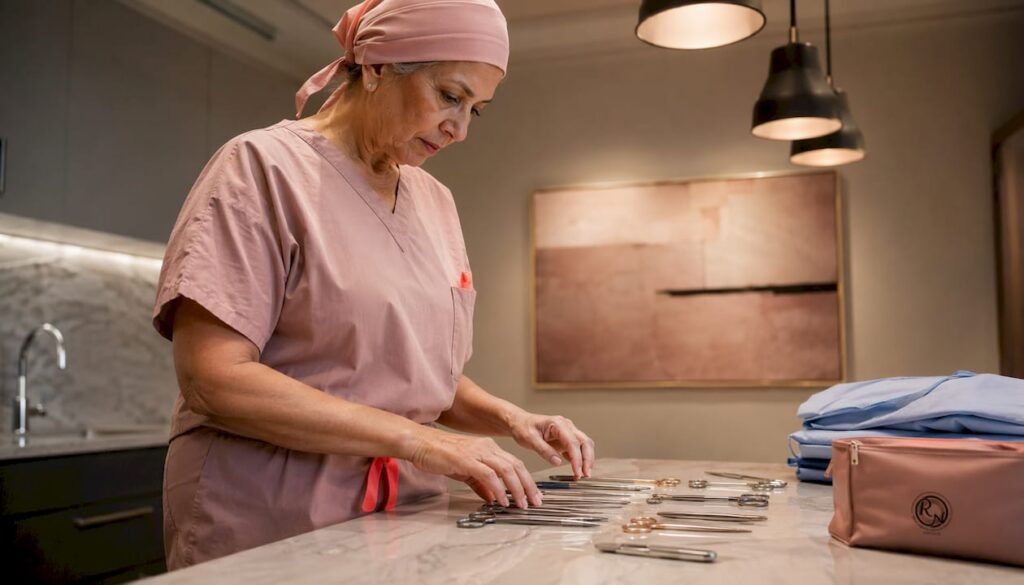
Once your tissue sample is removed, it goes straight to an on-site laboratory. There, it is mapped, frozen, sliced wafer thin, and examined under a microscope, so the surgeon can see whether any cancer cells remain at the outer edge or base of what was removed.
NHS guidance puts this at around an hour for a small specimen, with larger or more complex samples taking longer, sometimes up to three hours in total by the time results are confirmed. You will typically wait in a recovery area with a dressing on the wound while this happens, alongside other patients having the same procedure that day.
Because your local anaesthetic usually wears off within about two hours, you may need a top-up injection if a further stage is required. This is entirely normal and is one of the main reasons a Mohs day involves more waiting than most people expect going in.
How many stages will you need
Nobody can tell you in advance exactly how many stages your surgery will need, because that depends on how far the cancer actually extends once it is examined under the microscope, which is precisely the thing Mohs surgery is designed to find out.
What we can say with confidence is that most people need fewer stages than they fear. Around 9 in 10 patients are completely clear after one or two stages. A smaller number need three or more, particularly for larger tumours, cancers that have come back after previous treatment, or those in a spot where the edges are hard to judge by eye.
If your case needs more than two stages
Each additional stage repeats the same pattern: a further, more targeted excision only where cancer remains, followed by another wait for lab results. Because later stages usually only need to remove tissue from a smaller, specific area, they are often quicker than the first excision, even though the overall day gets longer.
How your wound is closed and what that adds to the day
Closure only happens once your surgeon has confirmed the cancer is fully cleared, and it is where your total timeline can vary the most. There are five broad options, and which one applies to you depends on the size, depth and location of the wound.
| Closure method | Who typically does it | Timing |
|---|---|---|
| Left to heal naturally | Dressed by the clinical team, no further cutting | Adds no extra cutting time, wound heals over several weeks |
| Direct stitches | The Mohs surgeon | A relatively short addition to the same day |
| Skin graft | The Mohs surgeon or a plastic surgeon | Takes longer than a direct stitch, usually still same day |
| Local skin flap | A plastic or Mohs surgeon trained in flap repair | The most involved repair, but usually still completed same day |
| Referral to another surgeon | An oculoplastic, plastic, or other specialist surgeon | A separate appointment, often a few days later |
This last option is where dual training genuinely changes the shape of your timeline. When the surgeon who removes the cancer can also carry out the reconstruction, more patients are able to have both done in a single visit rather than waiting for a second referral appointment. Our reconstruction after Mohs or BCC surgery page explains how that works in practice and what it can mean for facial repairs specifically.
What makes some Mohs surgery days longer than others
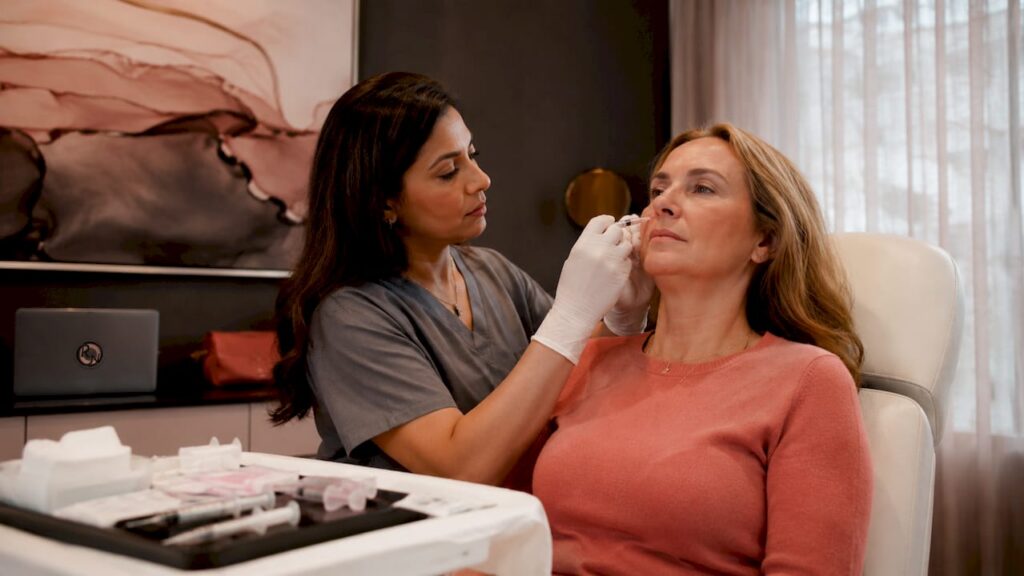
A handful of variables account for most of the difference between a short, straightforward morning and a full day at the clinic.
- The size of the tumour. Larger areas simply take longer to excise and to process in the lab.
- How many stages are needed. Each additional stage adds another cutting and waiting cycle.
- The location. Delicate areas such as the eyelid, nose or lip demand a slower, more careful excision.
- How the wound is closed. A simple dressing takes minutes; a flap repair takes considerably longer.
- How busy the clinic is that day. You may wait longer between stages if several patients are being treated at once.
Is Mohs surgery slower than standard excision
Yes, on the day itself. Standard excision is usually done in one sitting, with the tissue sent away afterwards and results returned days later by letter. Mohs surgery takes longer on the day precisely because the margins are checked under the microscope there and then, before you leave, rather than sent off with the answer coming later.
That trade-off is the whole point of the technique. A longer day buys a same-day answer on whether the cancer is fully out, and a cure rate that is higher than standard excision for the cancers Mohs surgery is normally used for, particularly on the face.
How to plan your day
A little preparation makes the waiting far more bearable. Arrange for someone to bring you and take you home, since driving is not advised afterwards. Bring a book, headphones or work you can do quietly, since the between-stage waits are the largest single chunk of the day. Eat a normal meal beforehand unless you are told otherwise, as local anaesthetic does not require fasting.
Our full step-by-step guide to preparing for Mohs surgery covers what to pack, what to ask beforehand, and how to set the rest of your day aside so the appointment does not clash with anything you cannot move.
Booking your Mohs surgery
Knowing roughly what your day will involve tends to settle most of the anxiety that comes with a skin cancer diagnosis. The exact number of hours is impossible to promise in advance, but a clear explanation of what happens at each stage, and why, is not.
Miss Rakhee Nayar’s dual training as both a Mohs micrographic surgeon and a Consultant Plastic Surgeon means the same specialist who removes your skin cancer can, in many cases, also carry out the reconstruction, rather than passing you on to a separate surgical team on a separate day. If you would like to discuss your own likely timeline before booking, get in touch through the contact page to arrange a consultation.
FAQ
How long does Mohs surgery take from start to finish?
Most patients are at the hospital or clinic for half a day on average, though a straightforward single-stage case can be quicker and a complex one can take a full day.
Can Mohs surgery be done in under an hour?
The excision itself takes about 15 to 20 minutes, but the laboratory processing between stages means the appointment as a whole is very rarely under an hour, even with just one stage.
Do I find out the same day if the cancer is gone?
Yes. That is the main advantage of Mohs surgery over standard excision. Your margins are checked under the microscope while you wait, so you know before you go home whether the cancer has been fully removed.
Why do some patients need a second appointment for closure?
If your reconstruction is complex and needs a specific specialist who was not available that day, closure may be arranged for a few days later instead. Where the Mohs surgeon is also trained in reconstruction, this second appointment can often be avoided.
Should I clear my whole day for Mohs surgery?
It is sensible to. Even when your case turns out to be straightforward, you cannot know that in advance, and clinics generally advise setting aside the whole day rather than booking anything afterwards.
Recommended
- What is Mohs Micrographic Surgery? | Miss Rakhee Nayar
- Reconstruction After Mohs Surgery | Natural Results
- How to prepare for Mohs surgery: your step-by-step guide
- Local anesthesia in Mohs surgery: what patients should know
Filed under Mohs Surgery


