
TL;DR:
- Swelling after Mohs surgery on the face usually peaks in the first two to three days, then improves noticeably within a week.
- Most swelling and bruising has settled within seven to fourteen days, though this varies by site, wound size and your own healing pace.
- Surgery near the eyes, nose or forehead often causes more visible swelling, sometimes enough to partly close an eyelid for a few days, because those areas drain less efficiently.
- Worsening swelling after day three or four, especially with spreading redness, heat or fever, is not normal and should be checked by your surgical team promptly.
How long does swelling last after Mohs surgery on the face? For most patients, visible swelling peaks within the first two to three days, then eases steadily over the following week, with most of it gone by around two weeks. Some sites, particularly near the eyes, can take a little longer to fully settle.
Swelling is one of the most common questions Miss Rakhee Nayar, a Consultant Plastic Surgeon and Mohs Micrographic Surgeon, hears from patients in the days after surgery, usually because it looks more dramatic than it feels. Knowing what’s typical, and what isn’t, makes that first week considerably less worrying.
Key takeaways
| Point | Detail |
|---|---|
| When it peaks | Usually days one to three after surgery. |
| When it settles | Noticeably better within a week, largely resolved by around two weeks. |
| Worse near the eyes | Surgery near the eyes, nose or forehead often swells more and can take longer. |
| What helps | Ice, elevation and rest in the first 48 hours. |
| When to worry | Swelling that gets worse after day three or four, with redness, heat or fever. |
Where swelling fits in the wider picture. How the wound is closed shapes how it swells and how it settles. Read about reconstruction after Mohs surgery, or arrange a consultation with Miss Nayar.
The swelling timeline, day by day
Swelling follows a fairly predictable pattern for most patients, though the exact pace depends on the size of the wound and how it was closed.
| Timeframe | What’s typical |
|---|---|
| Day 1 | Mild to moderate swelling begins, often more noticeable the morning after surgery than immediately afterwards. |
| Days 2 to 3 | Swelling usually peaks here, sometimes alongside bruising as blood from the surgical site settles under the skin. |
| Days 4 to 7 | Swelling steadily reduces. Most patients notice a clear difference by the end of the first week. |
| Week 2 | Residual swelling is usually mild and often only noticeable to the patient themselves. |
| Beyond 2 weeks | Any lingering puffiness is typically slight and continues to fade as the wound matures. |
Why swelling can be worse near the eyes, nose or forehead
The upper face drains fluid less efficiently than areas like the cheek or jaw, largely because gravity pulls fluid downward and the tissue around the eyes is thin and loosely attached. This means surgery on the forehead, temple or upper nose can cause swelling to travel down into the eyelids over the first day or two, sometimes enough to partly or fully close one eye temporarily.
This looks alarming but is rarely a sign of a problem. It typically improves within a few days as the fluid redistributes and drains. Very occasionally, swelling around the eye can persist for longer, and case reports describe rare instances where an unrelated factor, such as a tight-fitting CPAP mask, disrupts normal drainage during healing. If swelling near your eye isn’t improving as expected, it’s always worth flagging to your surgical team rather than assuming it will resolve on its own.
What actually helps reduce swelling
Simple measures in the first two days make the biggest difference. An ice pack wrapped in a clean cloth, used for short periods rather than continuously, helps limit swelling while the wound is freshest. Keeping your head elevated, with an extra pillow or two overnight, stops fluid pooling in the face the way it would if you were lying flat.
Beyond that, rest matters more than most patients expect. Bending forward, strenuous activity or anything that raises blood pressure in the first few days tends to make swelling worse, not better. Our full facial Mohs surgery recovery workflow covers the day-by-day aftercare routine, including wound cleaning and dressing changes, in more detail than swelling alone.
Swelling versus bruising, what’s normal
Swelling and bruising often arrive together but aren’t the same thing, and both are expected parts of healing. Swelling is fluid building up in the tissue, giving a puffy, tight appearance. Bruising is blood that has leaked under the skin, showing as purple, blue or yellow-green discolouration as it’s gradually reabsorbed.
Bruising can actually take longer to fade than swelling, sometimes lingering for two to three weeks as it changes colour, particularly in areas with thinner skin like around the eyes. Neither swelling nor bruising on its own is a cause for concern, and the British Association of Dermatologists lists both as expected, common effects of Mohs surgery rather than complications, unless paired with the warning signs below.
When swelling isn’t normal
The general rule is that swelling should be at its worst in the first few days, then improve. Swelling that gets worse rather than better after day three or four is the main signal something may need attention.
Contact your surgical team the same day if you notice any of the following alongside swelling: spreading redness beyond the wound edges, warmth or heat over the area, increasing pain rather than gradual improvement, discharge or fever. These can point to infection or, less commonly, a collection of blood or fluid under the skin that needs draining.
Does reconstruction affect how long swelling lasts?
Wounds closed with a skin flap or graft tend to swell a little more, and for slightly longer, than wounds closed with simple stitches, since more tissue has been moved or handled. This is normal and expected rather than a sign of a poor outcome.
Where reconstruction is more involved, having a surgeon trained in both Mohs surgery and plastic reconstruction, as Miss Nayar is, means the repair is planned with healing and swelling in mind from the outset. Our page on reconstruction after Mohs surgery explains what to expect from the different repair options.
Talking to your surgeon about swelling
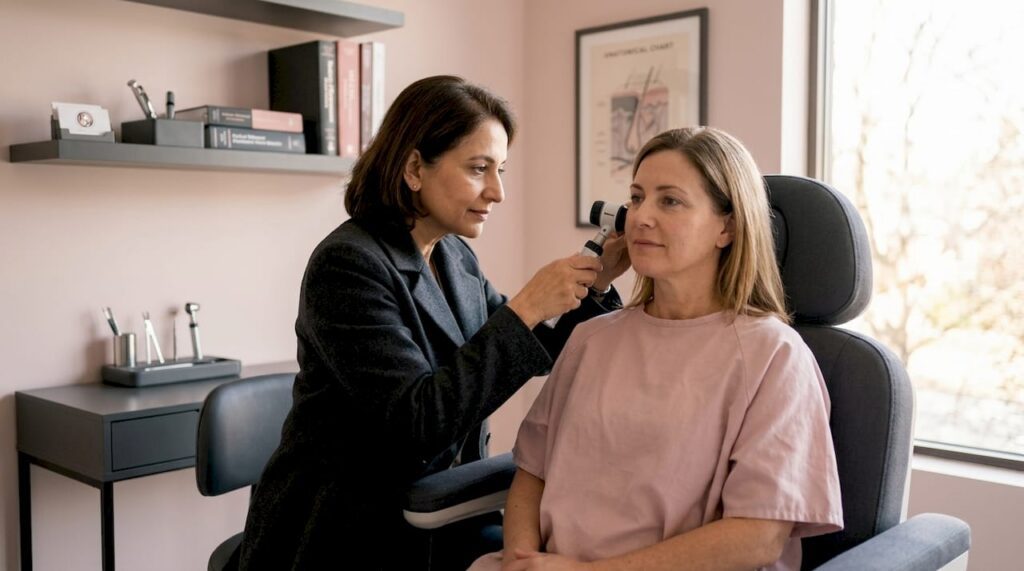
Most swelling after facial Mohs surgery is simply part of healing, and knowing the general pattern to expect tends to ease a lot of first-week anxiety. Still, no two patients heal identically, and a quick check-in is always better than a week of quiet worry.
If you’re unsure whether your swelling is following a normal pattern, or you’d like to know what to expect for your specific procedure, Miss Rakhee Nayar and her team are happy to talk it through, either at your pre-surgery consultation or during aftercare.
FAQ
How long does swelling last after Mohs surgery on the face?
Swelling usually peaks within two to three days, improves noticeably over the following week, and is largely resolved by around two weeks. Areas near the eyes can take a little longer.
Why is my eye swollen shut after Mohs surgery?
Surgery on the forehead, temple or upper nose can cause fluid to travel down into the eyelid, sometimes closing the eye temporarily. This is common and usually improves within a few days.
How can I reduce swelling after Mohs surgery?
Ice packs wrapped in a cloth, keeping your head elevated, and resting rather than bending or exerting yourself in the first 48 hours all help limit swelling while the wound is freshest.
When should I worry about swelling after Mohs surgery?
If swelling gets worse after day three or four, or is joined by spreading redness, heat, increasing pain, discharge or fever, contact your surgical team the same day.
Does swelling last longer if I had reconstruction?
Wounds closed with a skin flap or graft tend to swell a little more and for slightly longer than those closed with stitches alone, since more tissue is involved. This is a normal part of healing.
Recommended
- What is Mohs Micrographic Surgery? | Miss Rakhee Nayar
- Reconstruction After Mohs Surgery | Natural Results
- Facial Mohs surgery recovery: your complete workflow
- How Long Does Mohs Surgery Actually Take? A Timeline From Consultation to Closure
Filed under Mohs Surgery