Key Takeaways:
- Mohs surgery is used mainly for basal cell carcinoma (BCC) and squamous cell carcinoma (SCC), the two most common skin cancers.
- Invasive melanoma is not treated with Mohs surgery. Wide local excision, sometimes with a lymph node check, is the standard treatment.
- The exception is melanoma in situ, an early, non-invasive form, which some specialist centres do treat with a Mohs-based technique.
- A handful of rarer cancers, including dermatofibrosarcoma protuberans and sebaceous carcinoma, can also be treated this way.
- Which treatment is appropriate depends on both the type of cancer and where it is, not the diagnosis alone.
Mohs surgery is not used for every skin cancer. It’s used mainly for basal cell carcinoma and squamous cell carcinoma, the two most common types, and it is specifically not the standard treatment for invasive melanoma.
That distinction matters, because the type of cancer is one of the first things that determines which treatment path is right. The full range of options available once a diagnosis is confirmed is set out on the skin cancer treatment and surgery page.
Basal cell carcinoma, the most common reason for Mohs surgery

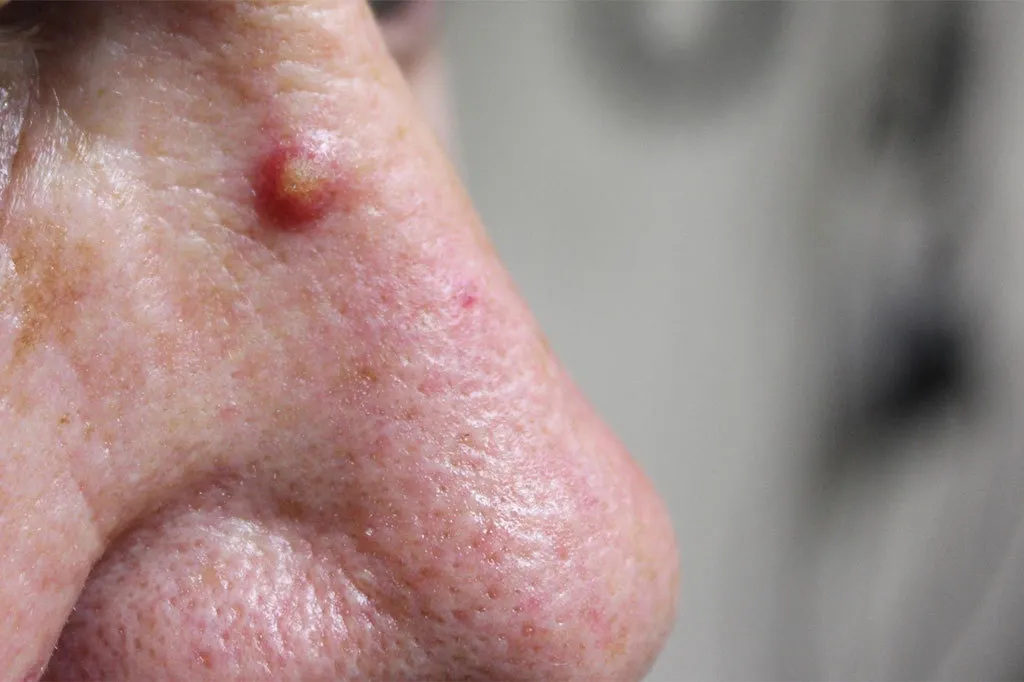
Basal cell carcinoma, usually shortened to BCC, is the most frequent reason Mohs surgery is used. It’s the most common form of skin cancer overall and rarely spreads beyond the skin, but it can grow along an irregular, hard-to-see path underneath the surface.
That unpredictable growth pattern is exactly what Mohs surgery is built to handle, checking the entire margin under a microscope rather than estimating it. What BCC looks like and how it’s diagnosed is covered on the basal cell carcinoma page.
Squamous cell carcinoma, the second most common
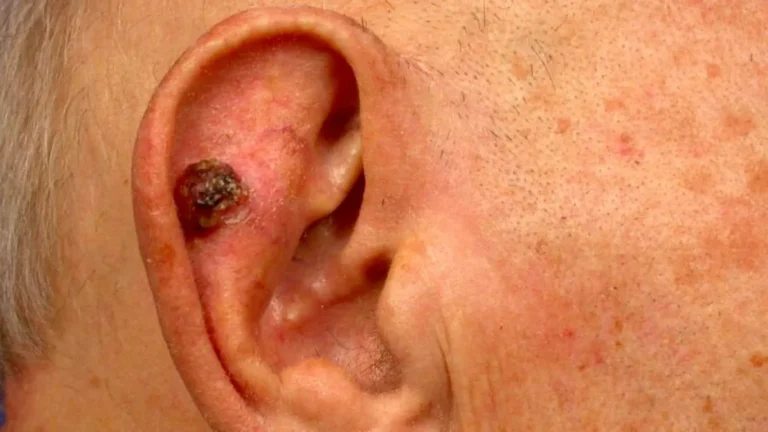
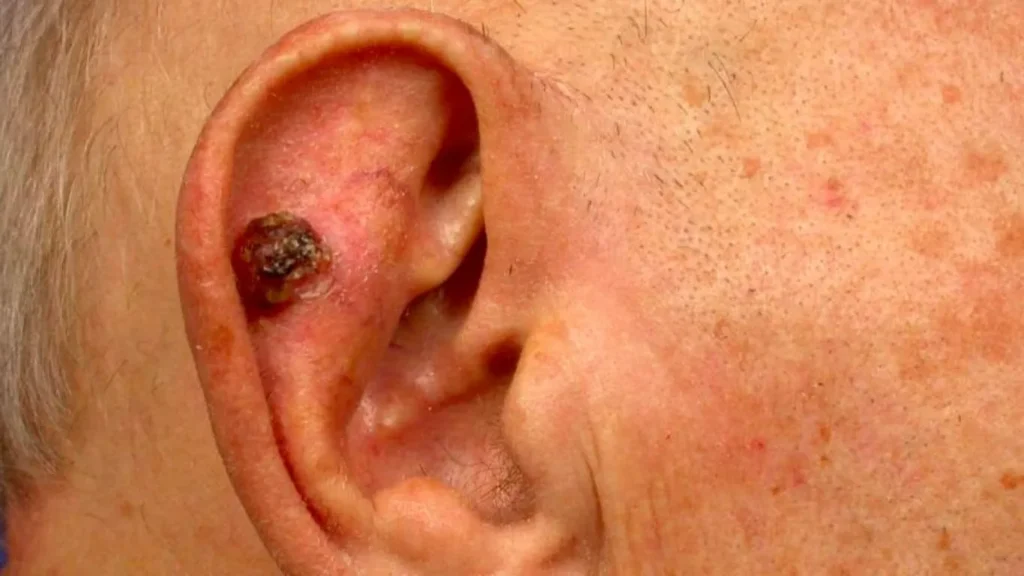
Squamous cell carcinoma, or SCC, is the second most common skin cancer and the second most common reason for Mohs surgery. Unlike BCC, SCC carries a small but real risk of spreading if it isn’t fully removed, which makes complete margin clearance especially important.
Higher-risk SCCs, larger, poorly defined, recurrent, or on the face, ears, or hands, are exactly the cases where Mohs surgery is most often recommended. How it’s identified and staged is covered by the squamous cell carcinoma page.
Why melanoma is usually treated differently
Melanoma is a different kind of skin cancer, and invasive melanoma is not treated with Mohs surgery. The standard approach is wide local excision, removing a set margin of skin around the tumour based on how deep it has grown, sometimes with a lymph node check as well.
Cancer Research UK’s guidance on melanoma surgery confirms this wider-excision approach as the standard, rather than the margin-by-margin technique Mohs surgery uses. How melanoma is diagnosed and staged is covered separately in what melanoma is.
The melanoma exception, lentigo maligna and melanoma in situ
There is one melanoma-related exception. Melanoma in situ, including a subtype called lentigo maligna, is an early, non-invasive stage confined to the outermost layer of skin. Because it hasn’t grown downward yet, some specialist centres treat it with a Mohs-based technique.
The Appropriate Use Criteria for Mohs surgery, developed jointly by the American Academy of Dermatology and several surgical bodies, specifically covers lentigo maligna and melanoma in situ as one of its recognised categories, separate from invasive melanoma. This distinction is explained in more depth by melanoma in situ.
Rarer cancers Mohs surgery can treat
Beyond BCC and SCC, a small number of rarer skin cancers are also recognised as appropriate for Mohs surgery in specialist centres. These include dermatofibrosarcoma protuberans, a slow-growing tumour that spreads in thread-like roots under the skin, sebaceous carcinoma, and extramammary Paget’s disease.
What links all of these to BCC and SCC is the growth pattern, not how common the cancer is. Tumours that spread unpredictably along the skin, rather than as a single solid lump, are the ones where checking the full margin under a microscope makes the biggest difference.
Cancer type at a glance
| Cancer type | Is Mohs surgery typically used? |
|---|---|
| Basal cell carcinoma (BCC) | Yes, one of the most common uses |
| Squamous cell carcinoma (SCC) | Yes, especially in higher-risk cases |
| Melanoma in situ / lentigo maligna | Sometimes, in specialist centres |
| Invasive melanoma | No, wide local excision is standard |
| Dermatofibrosarcoma protuberans | Yes, in specialist centres |
| Sebaceous carcinoma | Yes, in specialist centres |
| Extramammary Paget’s disease | Yes, in specialist centres |
Why the site matters as much as the cancer type

Cancer type alone doesn’t decide the treatment. UK surgical standards for Mohs surgery, jointly published by the British Association of Plastic, Reconstructive and Aesthetic Surgeons and the British Oculoplastic Surgery Society, describe it as most appropriate for a high-risk presentation in a high-risk anatomical location.
In practice, that means a small, straightforward BCC on the back might not need Mohs surgery at all, while a similar-looking BCC on the eyelid, nose, or ear usually does, because there’s so little spare tissue to work with in those areas.
Finding the right treatment for your diagnosis
If you’ve had a biopsy confirming BCC, SCC, or a rarer skin cancer, the next step is finding out whether Mohs surgery is appropriate for your specific case, not just your diagnosis. The skin cancer treatment and surgery page sets out the full range of options, and how the right one is chosen.
Get in touch through the contact page to arrange a consultation and discuss which approach fits your diagnosis.
FAQ
What type of cancer is Mohs surgery used for?
Mainly basal cell carcinoma and squamous cell carcinoma, the two most common skin cancers. It’s also used for a small number of rarer tumours and, in specialist centres, for melanoma in situ.
Can Mohs surgery treat melanoma?
Not invasive melanoma. That’s treated with wide local excision, sometimes alongside a lymph node check. Mohs surgery is only used for melanoma in situ, an early, non-invasive stage, and only in some specialist centres.
What’s the difference between BCC and SCC?
Both are far more common and far less likely to spread than melanoma. BCC rarely spreads at all, while SCC carries a small but real risk of spreading if it isn’t fully removed, which is why complete margin clearance matters for both.
Does Mohs surgery treat rare skin cancers?
Yes, a small number of rarer tumours, including dermatofibrosarcoma protuberans, sebaceous carcinoma, and extramammary Paget’s disease, are also recognised as appropriate for Mohs surgery in specialist centres.
Why does the type of skin cancer affect which treatment is used?
Different skin cancers grow differently. Mohs surgery is best suited to cancers that spread unpredictably under the skin’s surface, which is common in BCC and SCC but not how invasive melanoma typically behaves.
Recommended
- Skin Cancer Treatment & Surgery
- About Basal Cell Carcinoma (BCC)
- What Is Squamous Cell Carcinoma (SCC)?
- What is Mohs Micrographic Surgery?
Filed under Basal and Squamous Cell Carcinoma