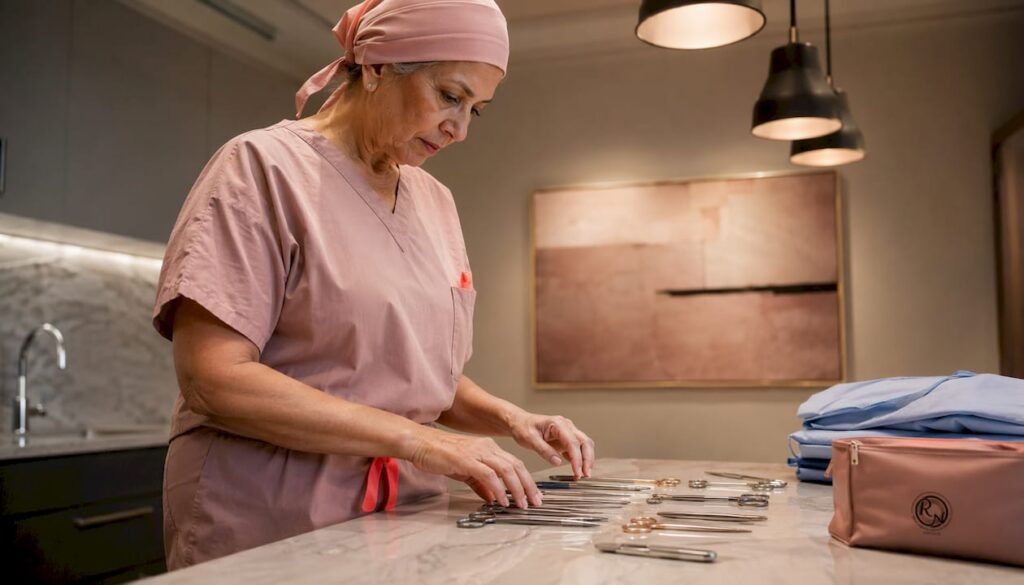
Removing a skin cancer completely, first time, with the smallest possible wound is the central goal of modern skin cancer surgery. For tumours on the face, particularly around the nose, eyelids, and lips, the margin between “enough” and “too much” tissue removed can affect how you look and function for the rest of your life. Mohs micrographic surgery addresses this directly by examining 100% of the surgical margin in real time, achieving 5-year cure rates of 99% for primary basal cell carcinoma (BCC) and 90–99% for primary squamous cell carcinoma (SCC).
Why precise tumour removal is critical in skin cancer treatment
Skin cancers, especially BCC and SCC, often extend beyond what is visible to the naked eye. Those subclinical “roots” are exactly what standard excision can miss, because traditional bread-loaf sectioning evaluates only a small fraction of the cut edge. Incomplete removal means residual cancer cells remain, the tumour recurs, and the patient faces further surgery, often with a larger defect and a lower chance of cure second time around.
Precision matters most on the face, where every millimetre of healthy tissue has functional or aesthetic value. Preserving healthy tissue around the nose, eyelids, and lips protects structures that are difficult or impossible to reconstruct fully once lost.
Key reasons why thorough, margin-controlled removal is the clinical standard:
- Recurrence prevention. The five-year recurrence rate for primary BCC treated with Mohs surgery is approximately 1%, compared with around 10.1% for standard surgical excision.
- Tissue conservation. A map-based approach removes cancerous tissue only where it is confirmed present, leaving healthy skin intact.
- Functional preservation. Sparing tissue around the eyelid or lip protects vision, speech, and facial expression.
- Fewer repeat procedures. Confirmed clear margins during surgery reduce the likelihood of re-excision, repeat anaesthesia, and additional scarring.
- Better reconstruction options. Smaller defects give the reconstructing surgeon more to work with, producing superior cosmetic results.
- Psychological benefit. Knowing the cancer has been fully cleared at the time of surgery reduces anxiety and the burden of uncertainty.
Authoritative UK bodies including NICE, the British Association of Dermatologists (BAD), BAPRAS, and the British Skin and Dermatology Society (BSDS) all recognise Mohs micrographic surgery as the treatment of choice for high-risk facial skin cancers. Cancer Research UK notes that skin cancer is the most common cancer in the UK, making access to effective, tissue-sparing treatment a genuine public health priority.
How Mohs micrographic surgery achieves this level of precision
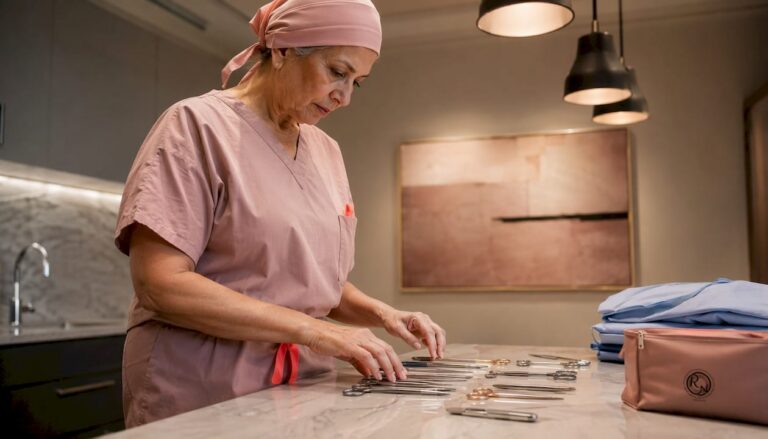
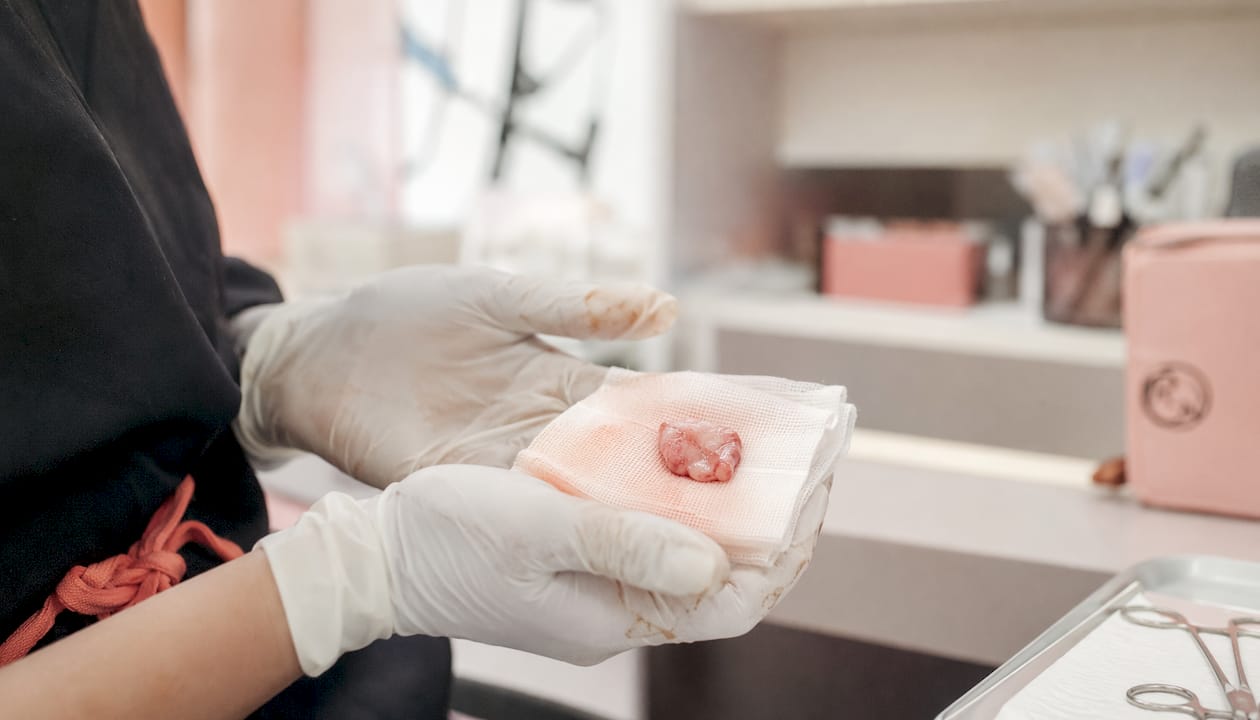
Mohs surgery works layer by layer. The surgeon removes a thin disc of tissue around the visible tumour, then processes it on-site while you wait. The tissue is frozen, sectioned horizontally, and examined under the microscope. Because the sections are cut horizontally rather than vertically, virtually 100% of the peripheral and deep margin can be assessed in a single stage. If cancer cells remain at any point on the map, only that precise area is re-excised. The cycle repeats until all margins are clear.
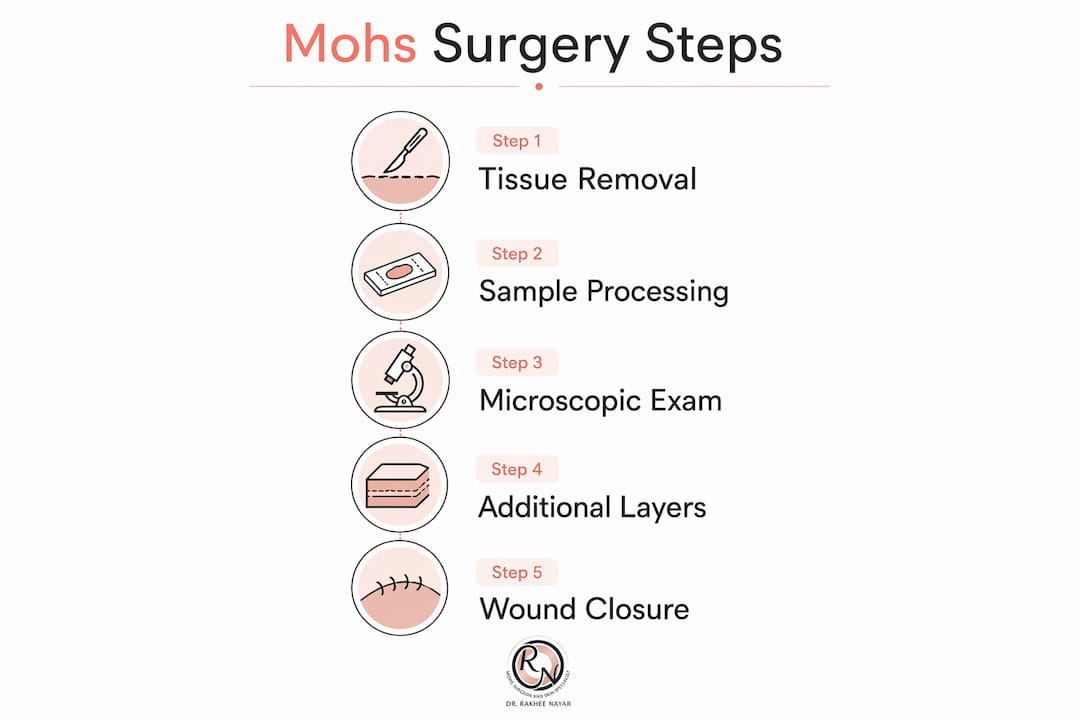
This is fundamentally different from standard excision, where the specimen is sent to an external laboratory and results return days later. By that point, the wound has already been closed, and any residual tumour requires a second operation. Conventional excision removes considerably more tissue than Mohs surgery, particularly for recurrent tumours, resulting in larger defects and more complex reconstruction.
Pro Tip: Bring a trusted companion to your Mohs appointment. Tissue processing takes time on the day, and having someone with you makes the waiting periods considerably more comfortable.
Miss Rakhee Nayar, GMC-registered Consultant Plastic Surgeon FRCS (Plast), MD, is dual-trained in both Mohs surgery and plastic surgery. This combination is uncommon in the UK and means that tumour removal and facial reconstruction can be planned together from the outset, rather than handed between two separate specialists. She practises at Circle Cheshire in North West England.
Cure rates at a glance: 5-year cure rates for Mohs surgery: primary BCC 99%, recurrent BCC 94.4%, primary SCC 92–99%, recurrent SCC 90%.
Patients suitable for Mohs surgery in the UK typically have one or more of the following, in line with BAD and BSDS guidance:
- A tumour with poorly defined borders
- A lesion on a high-risk facial site (nose, eyelid, ear, lip)
- A recurrent tumour after previous treatment
- An aggressive histological subtype such as morphoeic or infiltrative BCC
Private initial consultations with Miss Nayar are priced at £200–£300, with total surgery costs varying according to complexity. Insurance authorisation is advisable before booking. For a full breakdown, see costs and insurance at Rakhee Nayar – Mohs Surgeon and Skin Specialist.
Management of blood-thinning medications before surgery is personalised. Some patients are advised to pause aspirin or ibuprofen temporarily; others are not. Clear communication with Miss Nayar’s team before the procedure is the safest approach.
If you are considering your options, the benefits of Mohs for facial cancers are explained in detail on the Rakhee Nayar – Mohs Surgeon and Skin Specialist website, alongside guidance on skin cancer detection for patients who are still at the diagnostic stage.
To arrange a private consultation with Miss Nayar at Circle Cheshire, visit mohssurgeon.co.uk. This article is for information only and does not constitute medical advice. Consult a GMC-registered specialist for assessment and treatment recommendations.
Key takeaways
Mohs micrographic surgery achieves the highest published cure rates for facial skin cancers by examining 100% of the surgical margin in real time, removing only confirmed cancerous tissue and leaving healthy structures intact.
| Point | Details |
|---|---|
| Recurrence rate with Mohs | Five-year recurrence for primary BCC is approximately 1%, versus around 10.1% with standard excision. |
| Cure rates | Primary BCC 99%, recurrent BCC 94.4%, primary SCC 90–99%, recurrent SCC 90% at five years. |
| Tissue conservation | Mohs removes cancerous tissue only where confirmed present, producing smaller defects and better reconstruction options. |
| UK private consultation cost | Initial consultations are priced at £200–£300; total surgery costs vary with complexity. |
| Who is suitable | Patients with poorly defined borders, high-risk facial sites, recurrent tumours, or aggressive histological subtypes. |
FAQ
What makes Mohs surgery more precise than standard excision?
Mohs surgery examines virtually 100% of the surgical margin in real time using horizontal tissue sections, whereas standard excision evaluates only a small fraction of the cut edge through bread-loaf sectioning, leaving subclinical tumour roots undetected.
Is Mohs surgery available on the NHS?
Mohs surgery is available on the NHS for eligible patients, though waiting times and access vary by region. Private treatment with Miss Nayar at Circle Cheshire offers faster access and the benefit of dual plastic surgery and Mohs expertise in a single specialist.
How long does a Mohs procedure take?
Most patients require multiple stages of tissue removal, with each stage taking approximately one hour to process on-site. The full procedure commonly takes several hours, so patients should plan for a full day.
What are the risks of imprecise tumour removal?
Incomplete removal leaves residual cancer cells that can cause local recurrence, and once an SCC has recurred, the risk of spread to regional lymph nodes increases. Repeat surgery on previously operated tissue is also technically more demanding and carries a higher risk of a poor cosmetic outcome.
How do I know if I am suitable for Mohs surgery?
Suitability is assessed at consultation based on tumour type, location, size, and histological subtype, in line with BAD and BSDS guidelines. Patients with facial BCCs or SCCs, particularly at high-risk sites or with recurrent disease, are the most common candidates.