TL;DR:
- A dual-trained surgeon possesses formal qualifications in both Mohs micrographic surgery and plastic reconstruction, enabling seamless, same-day procedures that improve aesthetic outcomes and reduce patient anxiety. Their comprehensive intraoperative knowledge and high-volume specialized training lead to better decision-making, safety, and long-term cosmetic results for complex facial skin cancers. Choosing a dual-trained specialist provides integrated care that significantly benefits patients needing precise, efficient, and confident surgical management.
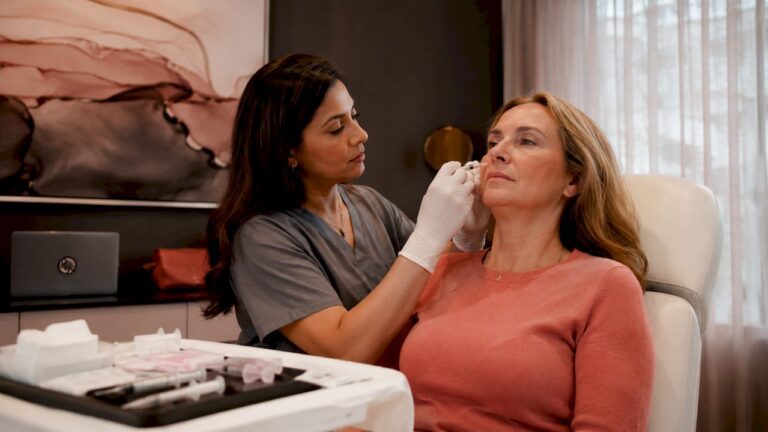
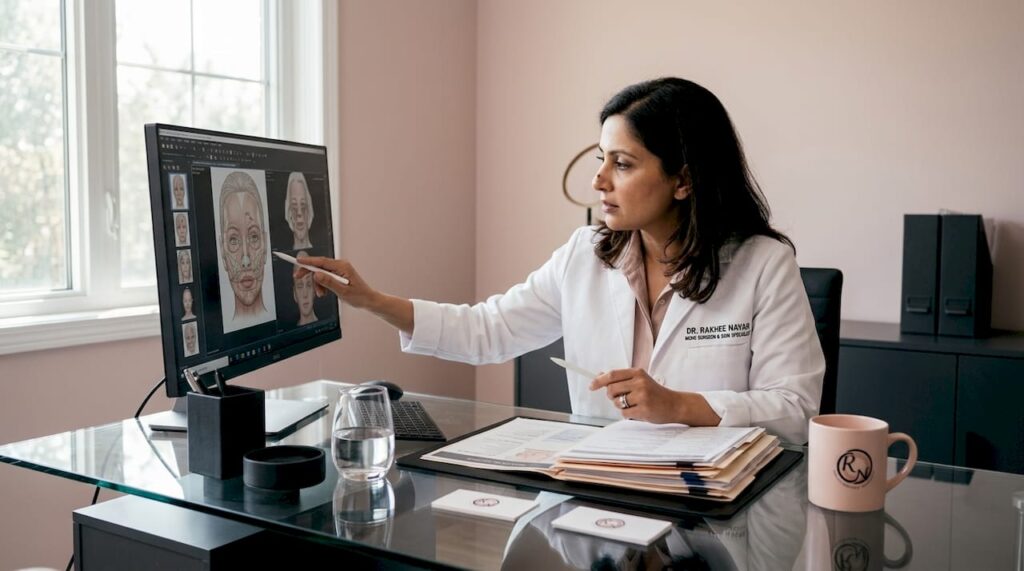
A dual-trained surgeon is a specialist who holds formal qualifications in two distinct surgical disciplines, most commonly Mohs micrographic surgery and plastic reconstructive surgery, and practises both within a single clinical encounter. The advantages of dual-trained surgeons are most visible in cosmetically sensitive procedures: one operator plans the excision and the reconstruction simultaneously, retaining full intraoperative knowledge of how the defect evolves. Miss Rakhee Nayar, a UK-based Mohs surgeon and skin specialist, exemplifies this model, offering same-day excision and reconstruction for skin cancers on the face and other delicate anatomical sites. The benefits extend well beyond convenience, touching operative confidence, patient safety, and long-term aesthetic outcomes.
1. Advantages of dual-trained surgeons: seamless continuity of care
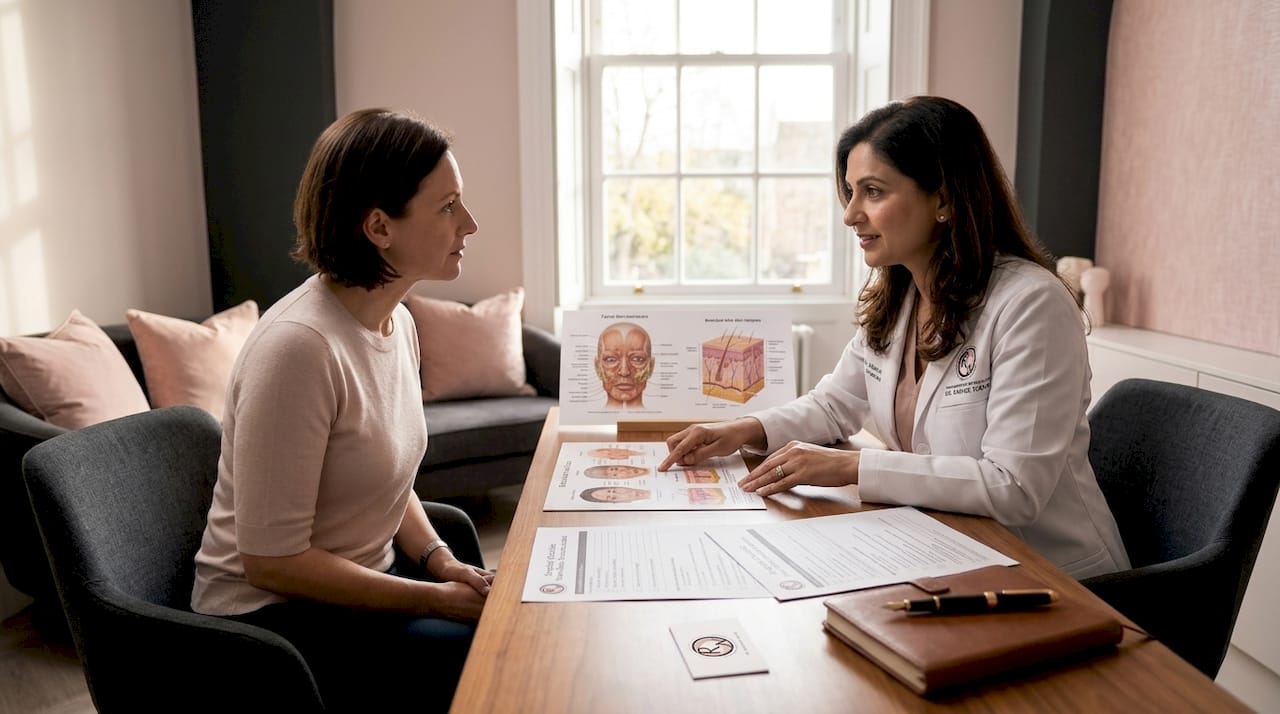
The conventional pathway for skin cancer on the face involves a dermatologist or Mohs surgeon removing the tumour, followed by a separate referral to a plastic surgeon for reconstruction. That handoff introduces delays, communication gaps, and the loss of critical intraoperative context. A dual-trained surgeon eliminates the referral gap entirely.
Continuity under one surgeon reduces the risk of losing information between excision and reconstruction stages, which is particularly significant for cosmetically sensitive sites such as the nose, eyelid, and lip. The surgeon who removed the tumour knows the exact geometry of the defect, the tissue tension, and the margin status before a single reconstructive stitch is placed. That knowledge does not transfer perfectly through a written referral letter.
Key continuity benefits include:
- No waiting period between tumour removal and wound repair
- Consistent surgical decision-making from incision to closure
- Reduced number of anaesthetic episodes for the patient
- Fewer clinic appointments and lower administrative burden
- Preserved intraoperative context for optimal flap or graft selection
Pro Tip: When evaluating a surgeon for facial skin cancer, ask directly whether they hold dual qualifications in both Mohs surgery and plastic reconstruction. The answer determines whether your care pathway involves one expert or two.
2. Same-day reconstruction reduces patient anxiety
Staged procedures place patients in a psychologically difficult position: they leave theatre with an open wound and wait days or weeks for repair. Patients report meaningful psychological benefit from single-visit care compared with staged procedures. That finding matters clinically because anxiety affects wound healing, pain perception, and post-operative compliance.
A dual-trained surgeon performing same-day facial reconstruction removes this source of distress entirely. The patient arrives, the cancer is excised with clear margins confirmed by frozen section histology, and the wound is repaired before they leave. For procedures on the nose or periorbital region, where visible disfigurement between stages would be significant, this model is particularly valuable.
The psychological benefit also translates into practical outcomes. Patients who are less anxious ask better questions, follow post-operative instructions more carefully, and attend follow-up appointments at higher rates. These behaviours directly influence scar quality and long-term cosmetic results.
3. Intraoperative knowledge optimises reconstruction planning
Sequential excision and reconstructive surgeries by separate teams lack the intraoperative evolving defect perspective that a dual-trained surgeon retains throughout the procedure. This is not a minor technical detail. The size, depth, and orientation of a Mohs defect change with each stage of excision, and the optimal reconstructive choice at stage one may be entirely different from the optimal choice at stage three.
A dual-trained surgeon optimises reconstruction planning by observing the defect evolve in real time and selecting the flap or graft that best suits the final wound geometry. A separate reconstructive surgeon, working from a photograph or a brief handover note, is making decisions with incomplete information. On the face, where millimetres determine cosmetic outcomes, that information gap has real consequences.
This advantage is especially pronounced for complex anatomical subunits such as the alar rim, the medial canthus, and the vermilion border of the lip. These sites demand precise tension-free closure, and the surgeon who performed the excision is best placed to achieve it.
4. High-volume specialised training builds operative confidence
The benefits of dual training are not simply structural. They are also cognitive and technical, built through years of high-volume, focused operative experience. ISAPS fellowship data shows 81.4% of fellows report increased operative confidence after high-volume aesthetic training, drawn from 469 surgeons across 27 countries. That confidence translates directly into calmer decision-making under pressure and more consistent technical execution.
Dual training pathways typically require the surgeon to achieve competence in two demanding disciplines before independent practice. The training volume required to reach that standard is substantially higher than for a single-specialty pathway. The result is a surgeon whose hands have performed a greater number and variety of procedures before they operate independently.
The confidence-building elements of dual training include:
- High-volume case exposure across two distinct operative disciplines
- Mentorship from senior surgeons in both specialties simultaneously
- Exposure to complex cases that single-specialty trainees rarely encounter
- Repeated practice of reconstructive techniques on cosmetically sensitive sites
- Formal assessment against competency standards in both disciplines
Pro Tip: Ask a prospective surgeon how many Mohs cases and how many facial reconstructions they perform annually. Volume is a reliable proxy for technical confidence and procedural fluency.
5. Structured mentorship reduces surgical errors
Dual training programmes are structured around longitudinal mentorship, and that structure has a measurable impact on patient safety. A 2026 review identifies premature autonomy as a key risk factor for surgical errors, with structured mentorship cited as the primary mitigation. Surgeons who progress to independent practice without adequate supervision carry a higher risk of overconfidence and poor complication recognition.
Dual-trained surgeons, by definition, complete two full training pathways before independent practice. That extended period under supervision means they have encountered and managed a wider range of complications, received feedback on a broader set of decisions, and developed the clinical judgement that only comes from longitudinal guidance.
“Mentorship structure significantly affects risk profiles and surgical maturity, with longitudinal mentorship strongly recommended to mitigate premature autonomy and surgical overconfidence.”
Systemic safeguards reinforce this individual benefit. The WHO Surgical Safety Checklist, when combined with the oversight of a dual-trained surgeon, reduces mortality and complication rates substantially. The checklist addresses process; the dual-trained surgeon addresses judgement. Together, they represent a more complete safety system than either element alone.
6. Dual training pathways require adapted evaluation
Analysis of 36,298 residency applicants shows that dual-degree and dual-training candidates demonstrate distinct patterns that require specialised mentorship and evaluation strategies. This finding has a practical implication: dual-trained surgeons are not simply single-specialty surgeons with an extra qualification. They develop differently, think differently, and require assessment frameworks that reflect the breadth of their training.
For patients, this means that the standard metrics used to evaluate a single-specialty surgeon may underestimate the capability of a dual-trained practitioner. Procedure volume in one specialty alone does not capture the full picture. The relevant measure is integrated competence across both disciplines, assessed against standards that reflect the demands of combined practice.
For medical professionals referring patients, this distinction matters when selecting a surgeon for complex facial reconstruction following Mohs surgery. A dual-trained surgeon’s plastic surgery expertise in skin cancer care represents a qualitatively different capability, not simply an additive one.
7. Dual-trained versus single-trained surgeons: a direct comparison
The practical differences between dual-trained and single-trained surgeons become clearest when examined across the factors that matter most to patients and referring clinicians.
| Factor | Dual-trained surgeon | Single-trained surgeon |
|---|---|---|
| Continuity of care | One surgeon manages excision and reconstruction | Separate specialists required for each stage |
| Intraoperative knowledge | Full real-time defect awareness throughout | Reconstruction planned from handover information |
| Operative confidence | Built across two high-volume training pathways | Built within one specialty |
| Cosmetic outcomes | Reconstruction optimised to evolving defect geometry | Reconstruction based on static post-excision assessment |
| Patient experience | Single visit, reduced anxiety, fewer appointments | Multiple visits, staged procedures, higher anxiety |
| Safety oversight | Extended mentorship across two disciplines | Mentorship within one specialty |
The table reflects the clinical advantages of the unified approach rather than a criticism of single-specialty surgeons, who provide excellent care within their scope. The distinction is most relevant for complex facial cases where the integration of excision and reconstruction decisions produces measurably better outcomes.
Key takeaways
Dual-trained surgeons deliver superior outcomes in facial skin cancer care because they integrate excision knowledge and reconstructive expertise within a single operative encounter, eliminating the information loss and delays inherent in staged, multi-specialist pathways.
| Point | Details |
|---|---|
| Continuity eliminates information loss | One surgeon retains full intraoperative context from excision through to final closure. |
| Same-day reconstruction reduces anxiety | Patients avoid staged procedures and the psychological burden of an unrepaired wound. |
| High-volume dual training builds confidence | 81.4% of fellows report increased operative confidence after specialised high-volume training. |
| Structured mentorship improves safety | Longitudinal supervision across two disciplines reduces premature autonomy and surgical errors. |
| Integrated planning optimises cosmetic results | Real-time defect awareness allows reconstruction choices that static handover notes cannot replicate. |
Consult a dual-trained specialist for skin cancer care
If you are facing a skin cancer diagnosis on the face or another cosmetically sensitive site, the surgeon you choose determines both the cure rate and the cosmetic outcome. Rakhee Nayar, Mohs Surgeon and Skin Specialist, offers Mohs micrographic surgery and same-day facial reconstruction surgery from her clinic in North West England, with e-consultations available for UK and international patients.
Miss Nayar’s dual training means your excision and reconstruction are planned and performed by one surgeon with complete intraoperative knowledge of your case. For patients and referring clinicians seeking the highest standard of skin cancer care, a consultation with a dual-trained specialist is the most direct route to optimal outcomes. Contact the clinic to discuss your case or book a private consultation.
FAQ
What does it mean to be a dual-trained surgeon?
A dual-trained surgeon holds formal qualifications and practises independently in two distinct surgical disciplines, such as Mohs micrographic surgery and plastic reconstructive surgery. This means they can perform both tumour excision and wound reconstruction within a single operative session.
Why choose a dual-trained surgeon for facial skin cancer?
A dual-trained surgeon retains full intraoperative knowledge of the defect as it evolves during excision, allowing reconstruction to be planned and executed with precision that a separate specialist cannot replicate from a handover note alone.
Does dual training improve patient safety?
Structured longitudinal mentorship across two disciplines reduces premature autonomy, which a 2026 review identifies as a key driver of surgical errors. Dual-trained surgeons complete extended supervised training before independent practice, producing a broader and more tested clinical judgement.
Is same-day reconstruction always possible with a dual-trained surgeon?
Same-day reconstruction is the standard model for dual-trained Mohs and plastic surgeons operating on facial skin cancers. It is subject to the complexity of the defect and the patient’s fitness, but it is the default approach rather than an exception.
How does dual training affect cosmetic outcomes?
Because the dual-trained surgeon observes the defect evolve across all Mohs stages, they select the reconstructive technique that best suits the final wound geometry. This real-time awareness produces cosmetic outcomes that staged, multi-specialist pathways consistently struggle to match.
Recommended
- Expert plastic surgery in skin cancer care: best results
- How plastic surgeons shape outcomes after Mohs surgery
- Mohs vs standard excision: what matters for your care
- Early detection benefits for skin cancer explained
Filed under Choosing Your Care