TL;DR:
- Combining Mohs micrographic surgery with plastic surgery results in higher cure rates and better tissue preservation. The coordinated approach produces superior aesthetic and functional outcomes with very low complication rates. Patients with facial tumors often benefit from this integrated treatment plan for optimal results.
Skin cancer treatment has come a long way, but one persistent myth still causes patients unnecessary anxiety: that Mohs micrographic surgery and plastic surgery are separate choices rather than a powerful partnership. Many people assume they must pick one approach or the other, when in fact the two disciplines work best when used together. A UK study of 1,000 cases showed a major complication rate of just 0.8%, underscoring how safe and effective coordinated care can be. This article explains precisely when and why combining Mohs surgery with plastic surgery produces superior cure rates, better tissue preservation, and outcomes that patients are genuinely satisfied with.
Key Takeaways
| Point | Details |
|---|---|
| Highest cure rates | Mohs surgery with plastic reconstruction maximises skin cancer cure rates and tissue preservation. |
| Superior cosmetic results | Combining both specialties leads to natural-looking, functional outcomes especially on the face. |
| Low complication risk | UK clinical data shows extremely low rates of major complications when using the combined approach. |
| Best for sensitive sites | The approach is essential for cancers in areas where appearance and function matter most. |
Understanding Mohs surgery and plastic surgery: What sets them apart?
Before you can appreciate why combining these two specialties works so well, it helps to understand what each one actually does — and where its limitations lie when used in isolation.
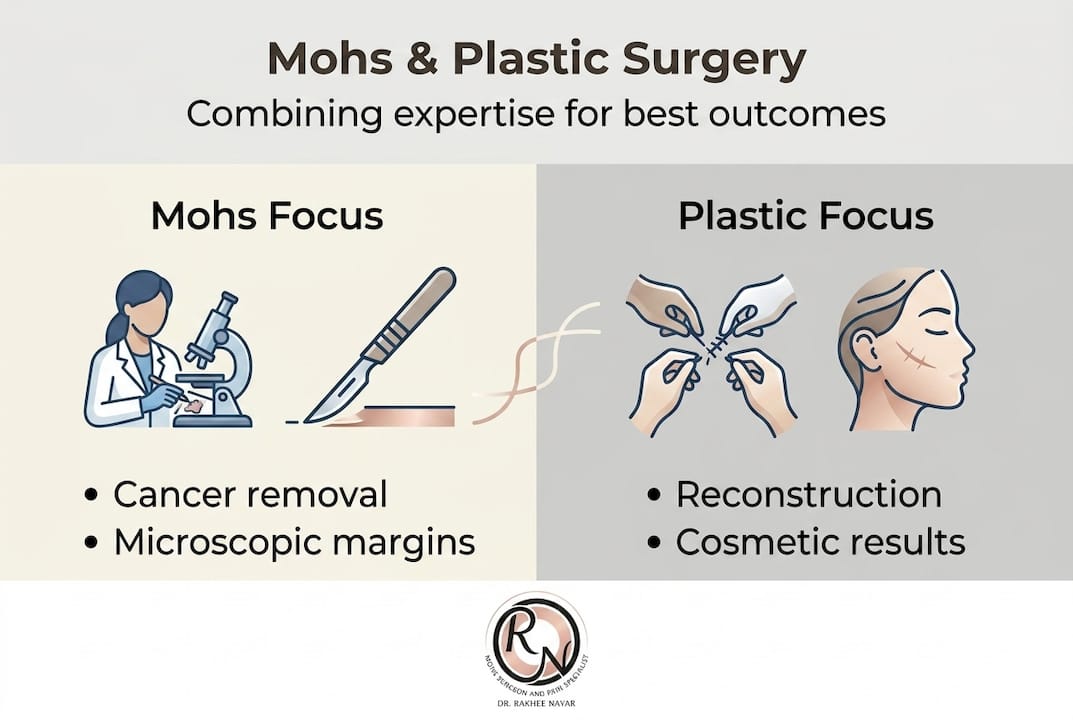
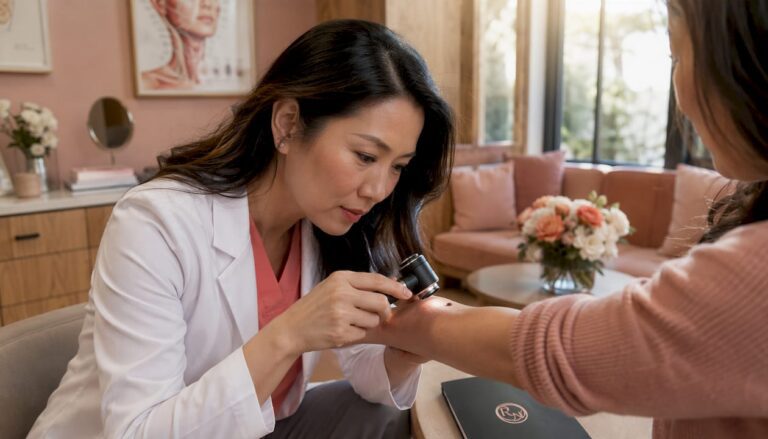
Mohs micrographic surgery (MMS) is a precise, staged surgical technique used to remove skin cancers such as basal cell carcinoma (BCC) and squamous cell carcinoma (SCC). What makes it distinctive is real-time microscopic examination of every excised tissue layer. The surgeon removes a thin layer of tissue, maps it, and examines 100% of the surgical margin under a microscope. If cancer cells remain, another layer is taken. This continues until the margins are completely clear. The result is maximum cancer removal with minimum healthy tissue loss. The approach achieves higher cure rates and superior tissue sparing compared with standard wide local excision, and major complication rates can be as low as 0.8% in experienced hands.
Plastic surgery, by contrast, focuses on reconstruction and restoration. Once a tumour has been fully removed, plastic surgery addresses what remains: the wound, the surrounding tissues, and the aesthetic and functional needs of the patient. This can range from a simple skin closure to a complex flap repair, where tissue is borrowed from a nearby area and repositioned to fill the defect.
The confusion many patients experience is understandable. Both disciplines operate in the same anatomical area, often on the same day, which can make them seem interchangeable. They are not. Think of Mohs surgery as the precision demolition phase and plastic surgery as the expert restoration phase. One clears the site; the other rebuilds it.
You can read a detailed explanation of the technique on the Mohs surgery explained page, and explore what reconstruction involves on the facial reconstruction overview page.
Comparing the two specialties at a glance
| Feature | Mohs surgery | Plastic surgery |
|---|---|---|
| Primary goal | Complete tumour removal | Restoration of form and function |
| Tissue handling | Preserves maximum healthy tissue | Repairs defect with optimal technique |
| Timing | During tumour clearance | After confirmed clear margins |
| Key outcome measure | Cure rate, clear margins | Aesthetic result, scar quality |
| Typical cases | BCC, SCC on face, ears, hands | Complex wounds, flap/graft repairs |
Knowing when each specialty operates alone versus in combination is equally important:
- Mohs alone: Small, low-risk tumours on less cosmetically sensitive areas with straightforward wound closure.
- Plastic surgery alone: Reconstructive needs following non-Mohs excision or after trauma.
- Both combined: Tumours on the face, nose, eyelids, or lips where precision clearance and complex reconstruction are both required for an excellent outcome.
The case for combining Mohs and plastic surgery: Evidence and advantages
Once you understand their distinct roles, it is essential to explore why using both together matters, backed by hard data.
The evidence supporting the combined approach is compelling and growing. Studies from both UK and international centres consistently show that patients who receive coordinated Mohs and reconstructive plastic surgery experience fewer complications, lower recurrence rates, and meaningfully better aesthetic results than those who undergo simpler post-Mohs wound closure.
“In a cross-sectional study of 1,000 patients undergoing Mohs surgery and wound repair at a UK teaching hospital, the major complication rate was just 0.8%, with patient satisfaction described as exceptionally high across reported success stories.”
This is a remarkable figure. For context, surgical complication rates for many facial procedures are significantly higher when performed without this degree of specialist collaboration and microscopic margin control.
Data at a glance
| Outcome measure | Mohs alone | Combined Mohs and plastic surgery |
|---|---|---|
| 5-year cure rate (BCC) | Up to 99% | Maintained or improved |
| Major complication rate | ~0.8% | ~0.8% or lower |
| Tissue preservation | High | Highest |
| Aesthetic satisfaction | Variable | Consistently high |
| Recurrence risk | Low | Lowest for complex sites |
The reconstruction success data available from combined-approach centres supports what these figures indicate: that seamless collaboration between specialties produces consistently superior results, particularly for defects on the nose, eyelids, lips, and ears.
Benefits of the combined approach:
- Tissue preservation: Because Mohs removes only what is cancerous, the plastic surgeon has more healthy tissue to work with during reconstruction.
- Aesthetic outcomes: Specialist reconstructive techniques produce less visible scars and better symmetry than basic wound closure.
- Lower recurrence risk: Confirmed clear margins before reconstruction ensures there is no residual cancer beneath the repair.
- Seamless aftercare: A coordinated team can monitor both the oncological and aesthetic aspects of recovery in one place.
- Reduced need for further operations: Getting reconstruction right the first time avoids revision surgery later.
Pro Tip: When seeking treatment, ask specifically whether your surgeon holds dual training or works in close collaboration with both a Mohs specialist and a reconstructive plastic surgeon. The two disciplines benefit enormously from real-time communication — ideally in the same theatre on the same day.
When is the combined approach recommended? Patient scenarios and decision points
With the advantages established, it is worth understanding in what circumstances your care team may propose combining Mohs and plastic surgery.
The combined approach is not universally required for every skin cancer. Many small tumours in low-risk locations can be treated with Mohs alone, followed by a simple closure. However, there is a clear group of patients for whom coordination between both specialties is not just beneficial but essential.
Anatomical sites where both specialties are most often needed:
The face is the single most common area where this combination is indicated. Within the face, certain zones are particularly demanding: the nose (including the nasal ala and tip), the eyelids, the lips, and the ears. These structures are complex, three-dimensional, and visible. A poorly reconstructed nose or eyelid is not merely a cosmetic problem — it can impair breathing, vision, or the ability to close the eye properly.
For patients with facial SCC or those seeking comprehensive BCC treatment, the combined approach is frequently the most appropriate pathway.
Typical patient scenarios that benefit from the combined approach:
- A patient with a large BCC on the nose requiring removal of cartilage and overlying skin, followed by a local flap or graft to restore the nasal contour.
- A patient with an SCC near the inner corner of the eye, where reconstruction must protect the tear duct and eyelid function.
- A patient with a recurrent tumour previously treated elsewhere, where scar tissue and altered anatomy demand specialist reconstructive planning from the outset.
- An older patient with thinning, sun-damaged skin around the mouth or cheeks, where flap design must account for skin laxity and facial movement.
- A patient with a tumour straddling a cosmetically important boundary, such as the lip-skin junction (vermilion border), where precise alignment during closure is critical.
Decision points your medical team will consider:
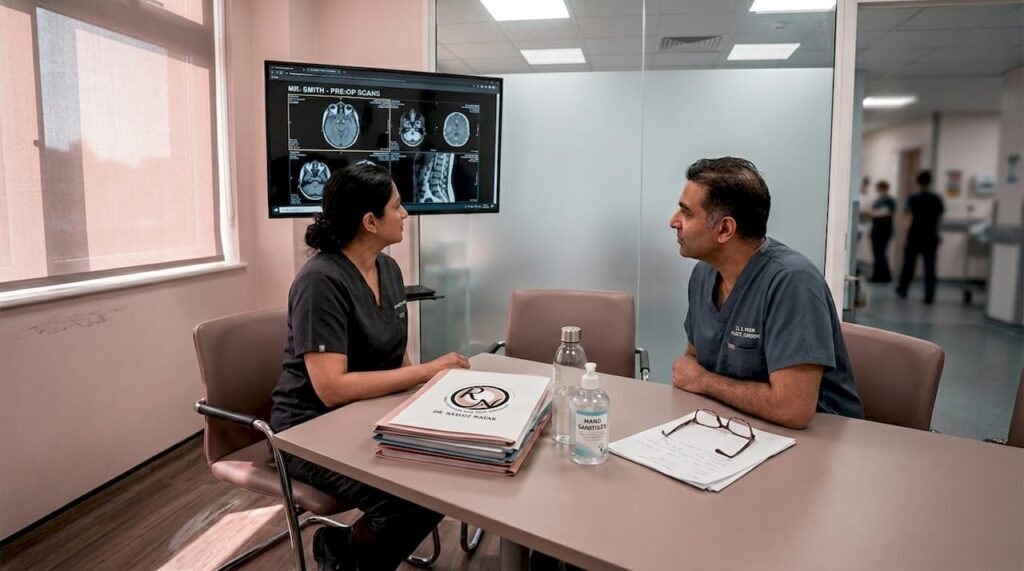
Your surgeon will assess tumour size, depth, and location; the complexity of the anticipated defect; your overall health and healing capacity; and your expectations regarding appearance and function. The involvement of plastic surgery is planned before, not after, tumour clearance — because reconstruction options are always better when the plastic surgeon has had input at the planning stage.
Pro Tip: Before your procedure, ask whether a plastic surgeon has reviewed your case alongside the Mohs surgeon. If reconstruction is likely to be complex, this joint review should happen before you enter the operating theatre, not as an afterthought once the tumour is removed.
What to expect: The combined surgical journey and your recovery
Once you know whether the combined approach is right for you, it is helpful to understand exactly what the process looks like in practice.
The step-by-step journey:
- Initial consultation and diagnosis: Your surgeon reviews your biopsy results, examines the lesion, and discusses treatment options. Imaging may be arranged for deeper or recurrent tumours.
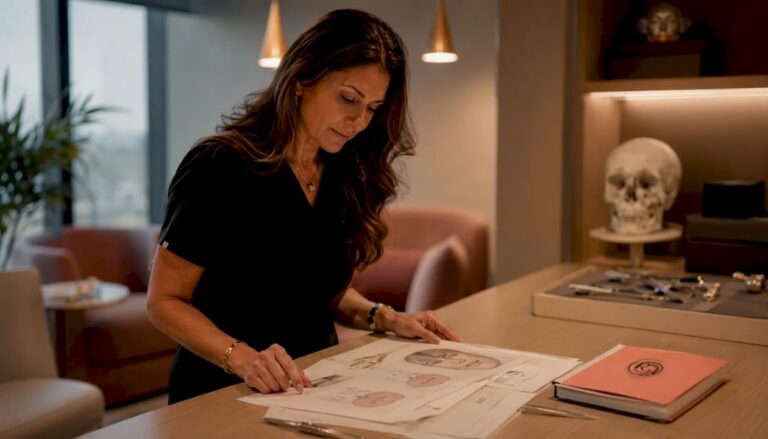
- Pre-operative planning: If reconstruction is anticipated to be complex, the plastic surgeon joins the planning discussion. Photographs are taken, the defect size is estimated, and flap or graft options are considered in advance.
- Mohs layer removal: On the day of surgery, Mohs excision begins under local anaesthetic. Each layer is mapped and examined microscopically while you wait comfortably. This can take several hours for complex tumours.
- Confirmation of clear margins: Once the pathology confirms complete tumour clearance, the reconstructive phase begins immediately. There is no second appointment, no delay, no second wound opening.
- Immediate reconstruction: The plastic surgeon (who may be the same dual-trained individual or a close colleague) performs the repair. This might be a local flap, a skin graft, or a more complex reconstruction depending on the defect.
- Aftercare and follow-up: Dressings are applied, and you receive detailed written instructions. Follow-up appointments monitor both wound healing and any signs of recurrence.
What is different and better when both specialists are involved:
- The reconstructive plan is designed with full knowledge of the exact defect size and shape, not estimated in advance.
- No tissue is wasted or compromised by over-excision.
- The plastic surgeon can see exactly what healthy tissue remains and design the most tissue-efficient repair.
- You leave with a closed wound rather than a dressed open defect awaiting a second procedure.
The major complication rate of 0.8% in UK data confirms that this coordinated approach is not only effective but also very safe. For practical guidance, the Mohs recovery tips page outlines what to expect during healing, and information on aesthetic options after cancer is available for patients considering further refinements after primary healing.
Recovery tips worth knowing:
- Keep the wound clean and dry according to your surgeon’s instructions for the first 48 hours.
- Avoid strenuous activity for two weeks to minimise swelling and reduce tension on the repair.
- Protect the scar from sun exposure for at least 12 months, as UV light can cause permanent discolouration in healing tissue.
- Attend all follow-up appointments — monitoring during the first year is important for early detection of any recurrence.
Results continue to improve for up to 18 months as the scar matures and tissues settle.
Why the best results demand collaboration: The expert’s view
There is a common assumption in medicine that two specialists working sequentially is equivalent to two specialists working collaboratively. It is not. Sequential care means the reconstructive surgeon receives a patient with a wound and a set of notes. Collaborative care means the reconstructive surgeon has already reviewed the imaging, discussed the likely defect, and prepared two or three repair options before the first incision is made.
In practice, I see a meaningful difference in outcomes when the reconstructive plan is formulated before surgery rather than improvised once the cancer is clear. Flap design, particularly on the nose or eyelid, is genuinely better when it is unhurried and fully planned. Patients who have been through single-specialty care and then required revision surgery frequently describe the experience of having both perspectives integrated from the start as transformative.
The uncomfortable reality is that some patients treated with Mohs surgery alone, where wound closure is performed by a general surgeon or left to secondary intention (healing without formal closure), carry a scar or functional deficit that was avoidable. This is not a criticism of Mohs surgery itself, which remains the gold standard for tumour clearance. It is an argument that tumour clearance and tissue restoration should always be planned as one unified care pathway.
Multidisciplinary consultation should be the standard of care, not a luxury. For patients exploring aesthetic after-cancer surgery, this integrated approach is exactly what produces results that last.
Achieve the best outcomes with expert-led care
If you are facing a skin cancer diagnosis, particularly on the face or another cosmetically sensitive area, the quality of your surgical team matters enormously.

At mohssurgeon.co.uk, Miss Rakhee Nayar brings dual training in both Mohs surgery and plastic surgery to every patient consultation, offering a genuinely integrated approach from diagnosis through to recovery. Whether you need information about Mohs surgery expertise, want to understand your facial reconstruction options, or are seeking guidance on advanced skin cancer treatments, you will find experienced, patient-centred care at every step. Private consultations and e-consultations are available, making expert advice accessible from anywhere in the UK.
Frequently asked questions
Does combining Mohs and plastic surgery increase my risk of complications?
No — the combined approach is supported by strong evidence showing very low major complication rates. A UK study of 1,000 MMS cases recorded a major complication rate of just 0.8%, confirming that coordinated care is both safe and effective.
Will I need two operations if I see both Mohs and plastic surgeons?
Usually not. Both procedures are performed in a single coordinated surgical session, meaning tumour clearance and reconstruction happen on the same day, minimising extra visits and anaesthetic exposure.
How do I know if the combined approach is right for my skin cancer?
It is most often recommended for cancers on the face or other areas where cosmetic and functional outcomes are critical. Patient satisfaction is exceptionally high with this approach, and your surgeon can advise whether it is appropriate for your specific tumour location and type during a consultation.
Is the recovery longer when both types of surgery are used?
Recovery is broadly similar in duration to standard Mohs surgery performed alone. In many cases, patients benefit from superior healing and better aesthetic results because the wound has been closed with skilled reconstructive technique rather than a basic suture or left to heal naturally.
Recommended
- Reconstruction After Mohs Surgery | Natural Results
- Why choose Mohs surgery for facial skin cancer removal?
- What is Mohs Micrographic Surgery? | Miss Rakhee Nayar
- Mohs surgery myths vs facts: what patients need to know
Filed under Facial Reconstruction