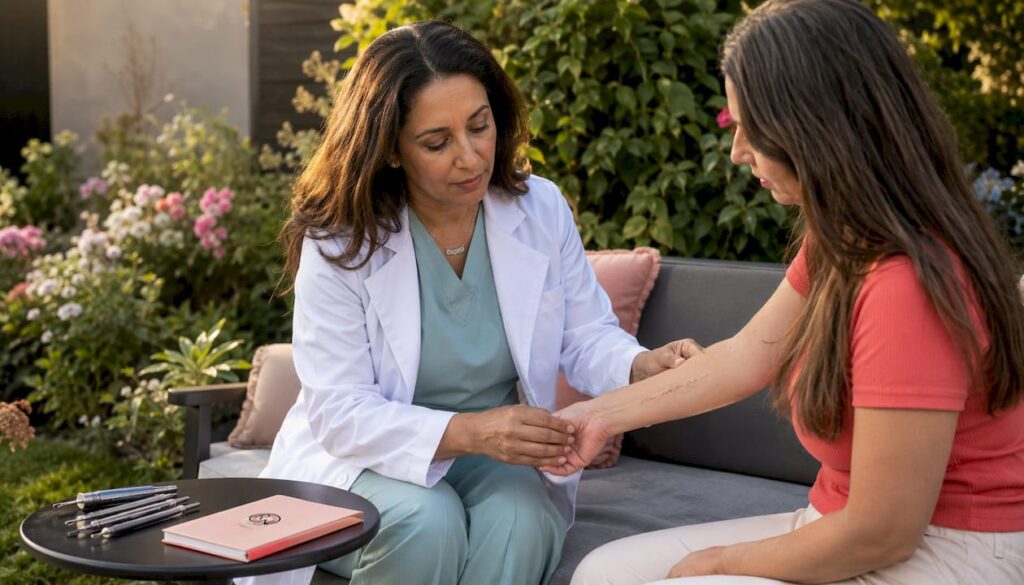
Surgical scars take approximately two years to mature and fully settle, but they cannot be removed entirely. What consistent care does is improve their appearance, soften the texture, and preserve mobility of the surrounding skin. The good news is that most of the work happens at home, and starting early makes a genuine difference.
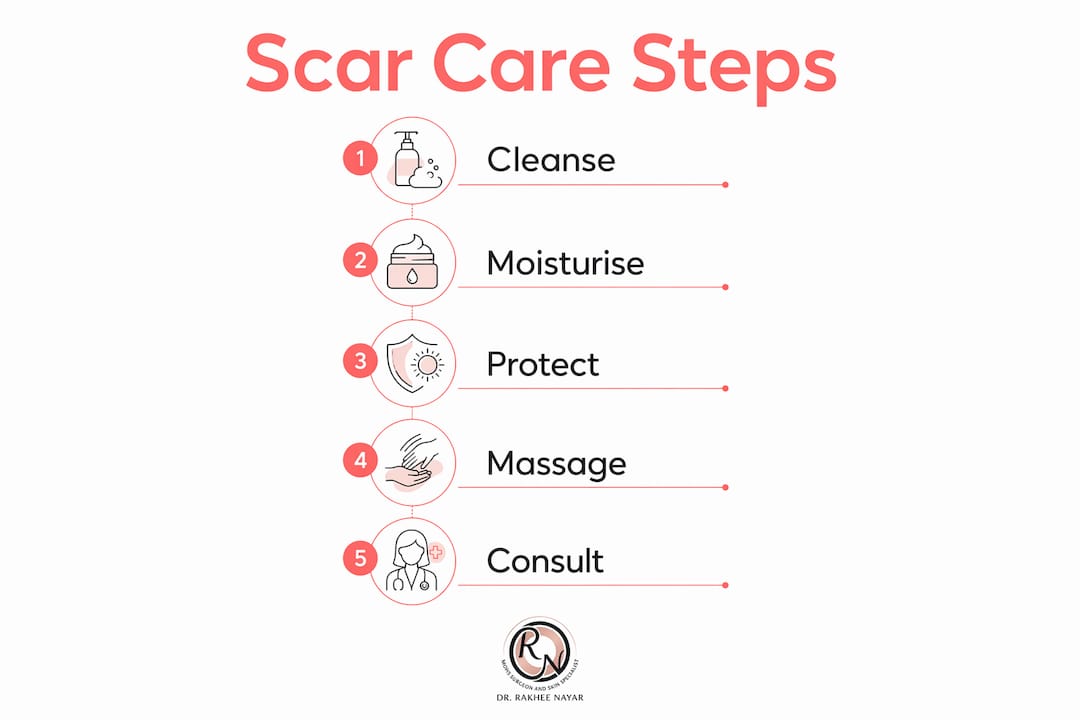
The core steps, once the wound has fully healed, are straightforward:
- Keep the wound dry for at least 48 hours post-operatively, then begin gentle moisturisation with a fragrance-free, hypoallergenic emollient such as E45, aqueous cream, or Cetraben.
- Apply emollient 2–4 times daily to prevent drying and cracking.
- Protect the scar from UV exposure with SPF 50 or above for at least 12–24 months.
- Begin gentle scar massage only once the wound is fully closed and stitches have been removed or have dissolved.
- Consider silicone gel or sheets for raised or red scars, applied to healed skin only.
- Seek specialist advice if the scar becomes increasingly painful, raised, or restricts movement.
For scars that do not settle with home care, clinical options including steroid injections, laser therapy, and surgical revision are available. This guide covers each stage in detail, directed by Miss Rakhee Nayar, GMC-registered Consultant Plastic Surgeon, FRCS (Plast), MD, dual-trained in plastic surgery and Mohs surgery.
What does good home care for a surgical scar actually involve?
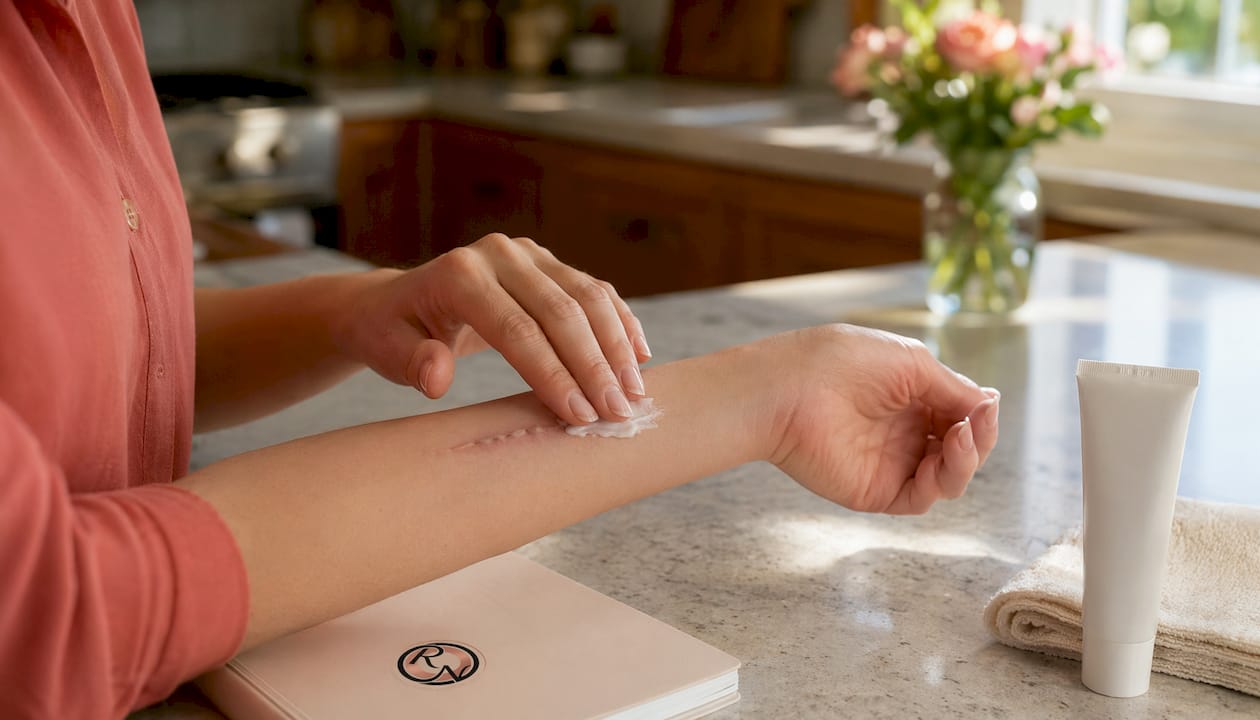
Moisturisation is the single most consistent recommendation across NHS trusts and specialist scar clinics. Scar tissue lacks the oil glands that keep normal skin supple, so it dries out quickly and can crack or itch without regular hydration. Apply a fragrance-free, hypoallergenic emollient such as E45, Cetraben, or aqueous cream 2–4 times daily once the wound has healed. Wipe away any residue before reapplying to avoid skin irritation from cream build-up.
Sun protection is non-negotiable for new scars. Scar tissue has reduced melanin and cannot defend itself against UV rays the way intact skin can, which means unprotected exposure causes lasting discolouration. The Royal National Orthopaedic Hospital recommends a minimum SPF 50 sunscreen for up to 24 months post-surgery, or covering the scar with clothing when outdoors.
Scar massage, done correctly, helps soften the tissue and reduce adhesions beneath the skin. The British Skin Foundation notes that while high-quality evidence for massage remains limited, consistent moisturisation combined with massage may reduce pain, itching, and stiffness. The key is timing: never massage an unhealed or open wound.
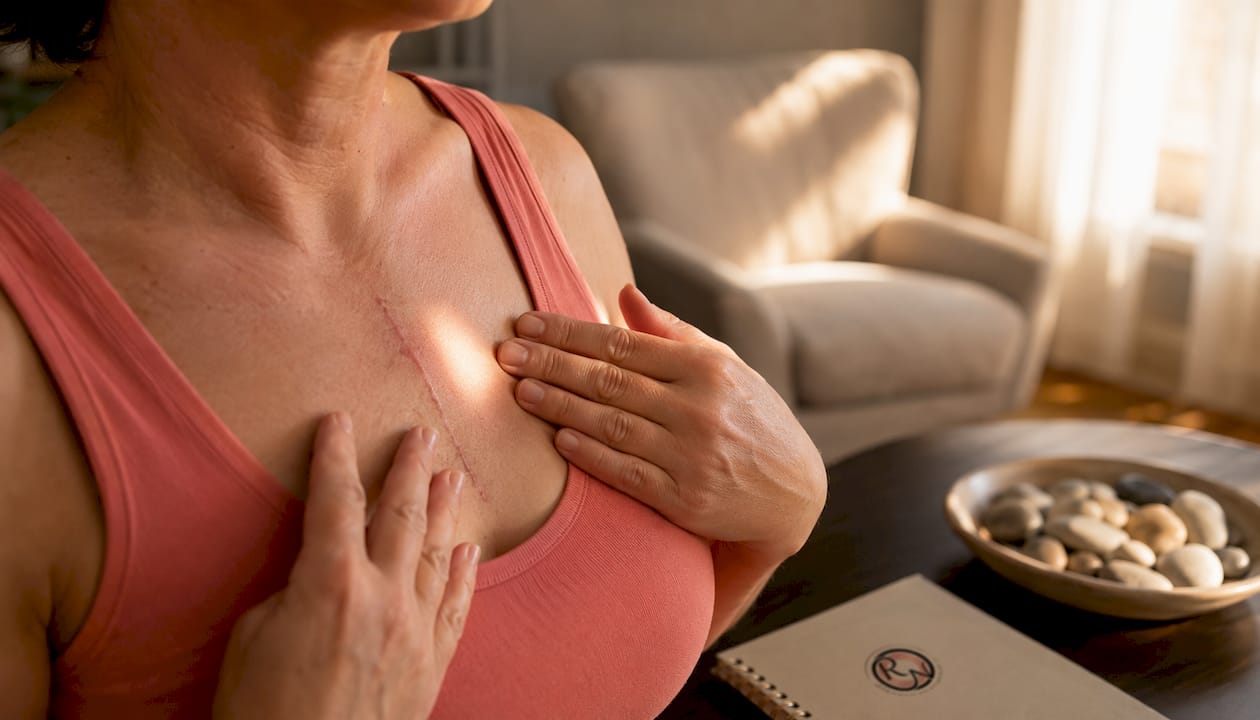
Pro Tip: Massage the skin around the scar, not just the scar line itself. Moving the surrounding tissue in slow, circular and longitudinal strokes, with enough pressure to blanch the scar, supports skin mobility and reduces the risk of adhesions forming beneath the surface.
Dos and don’ts for home scar care:
- Do apply emollient to fully healed skin 2–4 times daily.
- Do use SPF 50 or above on the scar for at least 12–24 months.
- Do begin massage only once stitches have been removed and the wound is closed.
- Do massage for 5–10 minutes, 3–4 times daily, using gentle circular and longitudinal movements.
- Don’t apply any cream or silicone to an open or unhealed wound.
- Don’t expose a new scar to direct sunlight without protection.
- Don’t use perfumed or alcohol-based products on healing skin.
- Don’t apply deep pressure to a scar in the first six weeks; keep massage light until advised otherwise.
For detailed aftercare protocols specific to facial wounds, the facial surgery wound care guide on the Rakhee Nayar – Mohs Surgeon and Skin Specialist website covers the early post-operative period step by step.
When home care is not enough: clinical treatment options
Some scars do not settle with moisturisation and massage alone. They become raised, red, itchy, or restrictive, and that is when clinical intervention is worth discussing with a specialist. The British Association of Dermatologists is clear that no single treatment cures problematic scars, particularly keloids, but a combination approach can reduce symptoms and improve appearance significantly.
Silicone gel and sheets are the most widely recommended first-line treatment for raised or red scars. Silicone acts as a moisture barrier, hydrating the scar tissue and helping it flatten and soften over time. Silicone gel is applied in a thin layer twice daily; silicone sheets are worn for up to 23 hours per day on clean, dry skin. Neither should be used on open wounds. If a rash develops, stop use immediately.
Clinical treatments available through a specialist include:
- Intralesional steroid injections: Injected directly into raised scar tissue to reduce inflammation, flatten the scar, and relieve itching. Often given in a series of sessions. Particularly useful for hypertrophic scars and keloids, though keloids frequently recur.
- Laser therapy: Pulsed dye laser and fractional laser treatments can reduce redness, improve texture, and soften raised scars. Results vary by skin tone and scar type; multiple sessions are usually required.
- Microneedling: Creates controlled micro-injuries to stimulate collagen remodelling. Devices such as the Exceed cordless microneedling system are used in clinical settings for scar remodelling, particularly for atrophic or textured scars.
- Compression garments: Worn for up to 23 hours daily, these apply sustained pressure to restrict blood flow to the scar and inhibit hypertrophic tissue growth. Typically used for larger scars or post-burn scarring.
- Surgical revision: Repositioning or excising a scar to improve its orientation or reduce tension. Most effective when the original scar healed under tension or in an unfavourable direction.
- Cryotherapy: Freezing the scar tissue, sometimes used alongside steroid injections for keloids.
Long-term monitoring matters for keloids in particular. They can regrow after treatment, and patients with a personal or family history of keloid formation should discuss preventive strategies before any elective procedure.
How to recognise different types of surgical scars
Understanding what type of scar you have guides the right approach to care. Not all raised or discoloured scars need the same treatment, and misidentifying a keloid as a hypertrophic scar, for example, can lead to inadequate management.
Common scar types and their characteristics:
- Typical post-surgical scar: Slightly raised and pink initially, gradually flattening and fading over months to years. Usually settles without specialist intervention.
- Hypertrophic scar: Raised, red, and firm, staying within the boundary of the original wound. May be itchy or uncomfortable. Often improves over time but can take longer to settle than a typical scar.
- Keloid scar: Grows beyond the original wound margins. Hard, raised, and often uncomfortable or painful to touch. Does not flatten or fade without treatment. More common in people with darker skin tones and those with a genetic predisposition.
- Contracture scar: Tight, often painful, and can restrict movement, particularly near joints. Commonly seen after burns but can occur after any surgery near a flexion point.
- Atrophic scar: Sunken or pitted, sitting below the level of the surrounding skin. Less common after clean surgical incisions but can occur if healing is disrupted.
Colour changes are a normal part of healing. A scar may appear pink, red, or purple in the early months, then gradually lighten. In patients with darker skin tones, scars may become hyperpigmented (darker than surrounding skin) or hypopigmented (lighter), and this variation is entirely normal. Persistent redness beyond 12–18 months, or a scar that continues to grow, warrants specialist review.
Scars near joints or over mobile areas of the face deserve particular attention. Tightness or restricted movement that develops weeks after surgery should be reported to your clinical team promptly, as early physiotherapy or splinting can prevent long-term functional problems.
Skin camouflage: covering scars during and after healing
Skin camouflage is not standard makeup. The products used are highly pigmented, water-resistant, and formulated to last through normal daily activity, including washing. The British Association of Dermatologists describes skin camouflage as a specialised service that improves psychological wellbeing during scar maturation, helping patients feel more comfortable in social and professional settings while the scar continues to change.
The process involves colour matching by a trained professional, who selects creams and setting powders to blend with your specific skin tone. This is not a one-size-fits-all product from a pharmacy shelf. A GP can refer you for a skin camouflage appointment, or you can self-refer through certain dermatology services. Products can be obtained on prescription or purchased directly.
Key points about skin camouflage:
- Products are water-resistant and designed for durability through daily activity.
- Colour matching is done by a trained professional, not self-selected.
- Available via GP referral or self-referral to dermatology services.
- Suitable during the scar maturation phase, which can last up to two years.
- Supports confidence and social comfort without interfering with scar healing.
- Not a substitute for sun protection; SPF must still be applied beneath or over camouflage products.
Skin camouflage is particularly relevant for facial scars, where visibility has a direct impact on confidence. Patients who have undergone facial reconstruction surgery often find it a practical bridge between the end of active treatment and the point at which the scar has matured sufficiently to be less noticeable.
Clinical guidance from Miss Rakhee Nayar on post-operative scar care
Miss Rakhee Nayar is a GMC-registered Consultant Plastic Surgeon, FRCS (Plast), MD, with dual training in plastic surgery and Mohs micrographic surgery. Her approach to scar management draws on both the technical precision of Mohs surgery and the reconstructive principles of plastic surgery, with the aim of achieving the best possible cosmetic outcome from the outset.
Post-operative instructions at Rakhee Nayar – Mohs Surgeon and Skin Specialist are aligned with guidance from the NHS, the British Association of Dermatologists, and peer-reviewed evidence. Patients are advised to keep wounds dry for the first 48 hours, avoid strenuous activity for two to four weeks, and attend suture removal at the time advised by their surgeon. Early removal or late removal of sutures both affect the final scar appearance.
Miss Nayar emphasises that patients should not wait until a scar becomes problematic before seeking advice. Signs that warrant an earlier review include increasing redness or pain beyond the first few weeks, a scar that continues to grow in size, pus or discharge, or any restriction of movement near a joint. For patients who have undergone Mohs surgery, post-operative scar care is discussed at the time of the procedure and followed up at review appointments.
How nutrition and lifestyle affect scar healing
What you eat and how you live during the healing period has a measurable effect on how well a scar forms. The skin repairs itself using collagen, and collagen synthesis depends directly on adequate nutrition, particularly vitamin C, zinc, and protein. A diet low in these nutrients slows healing and can result in weaker, wider scars.
Smoking is one of the most significant modifiable risk factors for poor wound healing. Nicotine constricts blood vessels, reducing oxygen delivery to healing tissue. Patients who smoke are at higher risk of wound dehiscence (the wound splitting open), infection, and poor cosmetic outcomes. Stopping smoking before elective surgery and during the healing period substantially reduces these risks.
Alcohol in excess impairs immune function and delays tissue repair. Staying well hydrated with water supports skin elasticity and the overall healing environment. Sleep matters too: tissue repair is most active during deep sleep, and consistently poor sleep extends the inflammatory phase of wound healing.
Physical activity needs to be balanced carefully. Gentle movement supports circulation and reduces swelling, but strenuous exercise or heavy lifting in the first two to four weeks places tension on the wound and can cause it to widen or split. Your surgical team will advise on specific restrictions based on the location and size of your wound.
Book a consultation with Miss Rakhee Nayar

If you have a surgical scar that is not settling, or you are preparing for skin cancer surgery and want to understand your options for minimising scarring, Miss Rakhee Nayar offers private consultations at Circle Cheshire in North West England, as well as e-consultations for patients across the UK and internationally.
Miss Nayar’s dual training in plastic surgery and Mohs micrographic surgery means she approaches every case with both oncological precision and an eye for cosmetic outcome. To discuss your scar or an upcoming procedure, visit mohssurgeon.co.uk to book.
This article is for general information only and does not constitute medical advice. Consult a GMC-registered specialist for guidance specific to your circumstances.
Key takeaways
Consistent moisturisation, sun protection, and timely massage form the foundation of effective surgical scar care, with clinical treatments reserved for scars that do not respond to home management.
| Point | Details |
|---|---|
| Healing takes up to two years | Scars mature over approximately two years; early care improves the final outcome. |
| Moisturise 2–4 times daily | Use fragrance-free emollients such as E45, Cetraben, or aqueous cream on fully healed skin. |
| SPF 50 for 12–24 months | Scar tissue lacks UV protection; high-factor sunscreen prevents lasting discolouration. |
| Silicone for raised scars | Silicone gel or sheets, worn up to 23 hours daily, flatten and soften red or raised scars. |
| Seek specialist advice early | Increasing pain, growth beyond the wound margin, or restricted movement all warrant clinical review. |
FAQ
When can I start massaging my surgical scar?
Begin scar massage only once the wound is fully healed and all stitches have been removed or dissolved. Massaging an unhealed wound risks reopening it and worsening the scar.
How long should I use silicone gel on my scar?
Silicone gel should be applied twice daily to clean, healed skin, and you may need to continue for several months. Silicone sheets can be worn for up to 23 hours per day; stop use if a rash develops.
What is the difference between a hypertrophic scar and a keloid?
A hypertrophic scar stays within the original wound boundary and may improve over time; a keloid grows beyond the wound margin and does not flatten without treatment. Keloids require specialist management and often recur after treatment.
Can I use any moisturiser on my scar?
Use only fragrance-free, hypoallergenic products such as E45, aqueous cream, or Cetraben. Perfumed or alcohol-based creams can irritate healing skin and cause contact reactions.
When should I see a specialist about my scar?
See a specialist if your scar is increasingly painful, continues to grow, feels warm, produces discharge, or restricts movement near a joint. Scars that remain significantly raised or red beyond 12 months also benefit from clinical review.