Key Takeaways:
- A skin graft relies entirely on the wound bed beneath it for blood supply in the first few days. A flap brings its own blood supply with it, which changes how each one is monitored and what can go wrong early on.
- Grafts come with a second healing site, the donor area, that flaps usually don’t have.
- Flaps tend to blend in colour and texture more naturally than grafts, since the tissue comes from right next door rather than from elsewhere on the body.
- Neither option is simply “better.” Which one suits a given defect depends on its size, site and depth, not on which heals marginally faster in general.
Skin grafts and local flaps heal differently because of one fundamental difference, where their blood supply comes from. That single distinction shapes almost everything about recovery, from how closely the wound needs monitoring in the first week to whether there’s a second healing site to manage at all.
Miss Rakhee Nayar, a Consultant Plastic Surgeon and Mohs Micrographic Surgeon, chooses between the two based on the defect itself, not a general preference for one technique. This article compares how recovery actually differs once that choice has been made.
The core difference, where the blood supply comes from
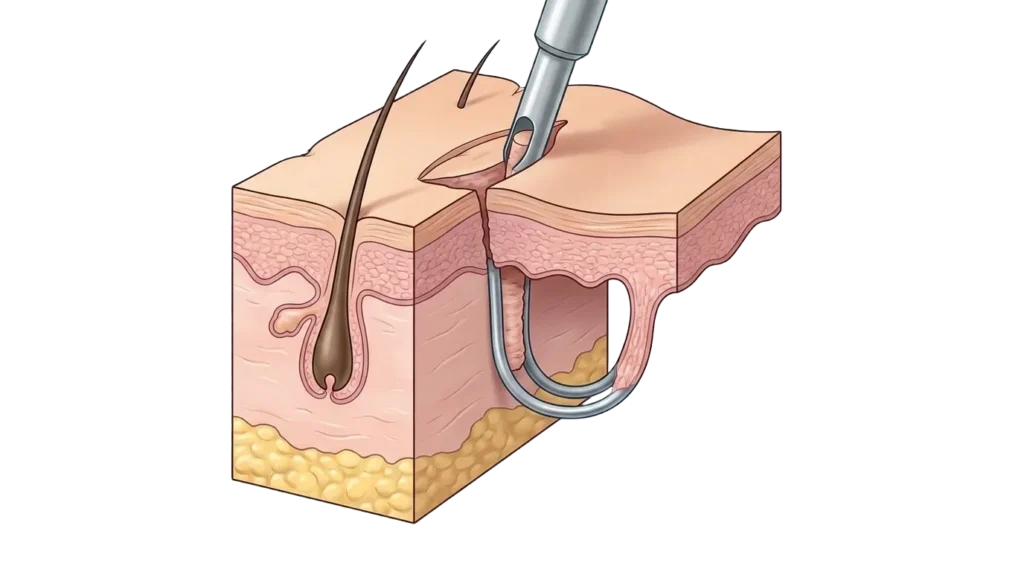
A skin graft is tissue taken completely free from another part of the body and laid into the wound. It has no blood supply of its own at first, so it survives by taking up nourishment from the wound bed beneath it. A BAPRAS patient guide to skin cancer surgery and reconstruction puts it simply: a flap “brings with it its own blood supply and so does not rely on the wound bed for a blood supply to heal like a skin graft does.”
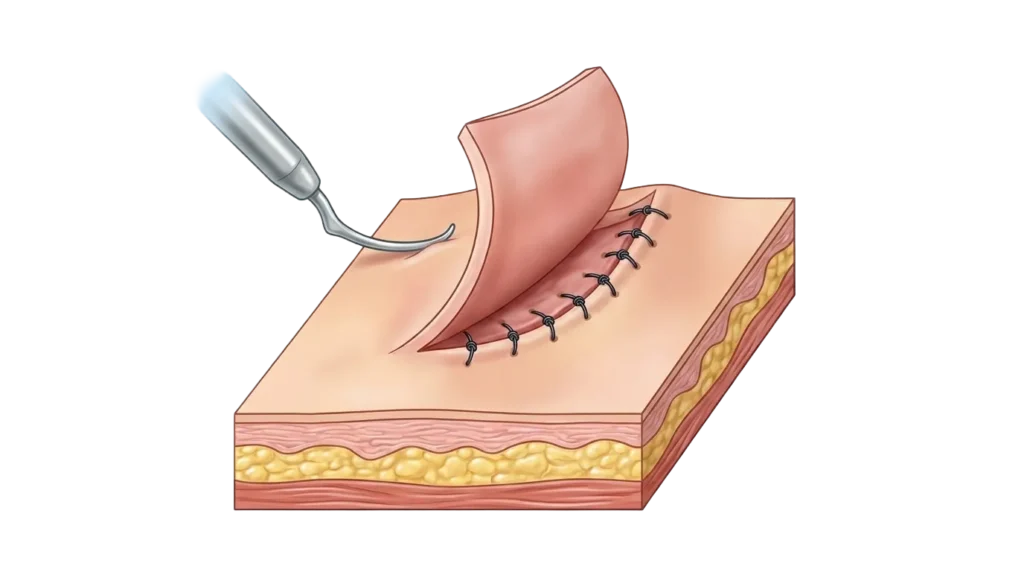
A local flap, by contrast, stays attached to its original blood supply while being moved to cover the defect. That’s the reason flaps are generally viable in places a graft might struggle, and why they don’t carry the same early “will it take” uncertainty.
Recovery after a skin graft
The first week is the most delicate period for a graft, since it needs to establish a blood supply from the wound bed before it can be considered secure. Grafts are typically checked at five to seven days to confirm they’ve taken. A dressing usually needs to stay undisturbed during this period, since movement or pressure can dislodge a graft before it’s properly attached.
A full-thickness graft, taken at full depth, needs longer protection under dressings than a thinner split-thickness graft, simply because there’s more tissue that needs to establish a blood supply. It’s also, rarely, possible for a graft to fail to take fully, which is part of why that early check matters.
Recovery after a local flap
Because a flap keeps its own blood supply, the early days carry less of that take-or-fail uncertainty. Swelling and bruising are common in the first week, since the tissue has been lifted and repositioned, and many local flaps can be done under local anaesthetic in the same sitting as the cancer removal.
What’s being watched for instead is different, early signs that the flap’s blood supply isn’t working as well as expected, which is uncommon but is exactly why follow-up appointments matter in the first week or two regardless of how straightforward the surgery felt.
The donor site, the part patients often forget to ask about
A graft leaves two wounds to heal, the repaired area and the donor site it was taken from. A split skin graft donor site, often the thigh, typically takes around two weeks to heal on its own, in much the same way as a graze. A full-thickness graft donor site, often from behind the ear or the neck, is usually stitched closed directly.
A local flap usually doesn’t have this second site at all, since the tissue comes from immediately next to the wound rather than somewhere else on the body. That’s one genuine recovery advantage flaps have, there’s only one area to look after.
How the final appearance compares
Flaps tend to blend more naturally in colour, thickness and texture, since the tissue is borrowed from right next door and already matches its surroundings closely. Grafts can look slightly different from the surrounding skin, particularly in the early months, though careful donor site selection narrows that gap considerably.
Both continue to settle for months after surgery, so neither an early graft nor an early flap result is a reliable preview of how it will eventually look.
Comparing the two
| Skin graft | Local flap | |
|---|---|---|
| Blood supply | Depends on the wound bed, checked at 5-7 days | Brought with the tissue, less early uncertainty |
| Donor site | Yes, a second healing site elsewhere on the body | Usually none, tissue comes from right next door |
| Main early risk | The graft not fully taking | Reduced blood flow to the flap, uncommon |
| Typical colour match | Good, improves with careful donor selection | Usually excellent, same local skin |
FAQ
Which heals faster, a graft or a flap?
Neither is simply faster in general. A flap avoids the early take period a graft needs, but a graft avoids having to lift and move tissue from elsewhere, which comes with its own swelling and bruising.
Why would a surgeon choose a graft if flaps blend in better?
Flaps aren’t always possible or appropriate. A graft can cover a larger area, works where there isn’t enough nearby skin laxity for a flap, and avoids distorting a nearby feature like an eyelid or nostril.
Can a skin graft fail?
It’s uncommon, but a graft can occasionally fail to take fully if it doesn’t establish a reliable blood supply from the wound bed, which is exactly why it’s checked closely in the first week.
Does a skin graft hurt more than a flap?
Not necessarily at the main site, though a graft adds a second area, the donor site, that can be tender while it heals. A flap avoids a donor site but can bruise and swell more at the repair itself.
Recommended
- Reconstruction After Mohs or BCC Surgery
- How surgeons decide between techniques more broadly is covered under when full facial reconstruction is necessary
- Full-Thickness Skin Graft After Mohs Surgery
- Local Flap Reconstruction After Mohs Surgery
Filed under Facial Reconstruction