Key Takeaways:
- Skin cancer risk rises sharply with age, but age itself isn’t really the cause. It’s a proxy for decades of accumulated sun exposure catching up with you.
- Nearly half of all non-melanoma skin cancers in the UK are diagnosed in people aged 75 and over, and melanoma incidence peaks even later, around 85 to 89.
- That doesn’t mean younger patients are safe. Skin cancer does occur in people in their 20s, 30s and 40s, and a changing mole or a sore that won’t heal deserves attention regardless of age.
- What typically changes decade by decade is less about new risk appearing and more about old sun damage finally showing up.
Most skin cancer is diagnosed later in life, and the honest reason isn’t really about getting older. It’s about sun exposure that happened decades earlier finally catching up. Cancer Research UK’s incidence statistics show that nearly half of all non-melanoma skin cancers in the UK are diagnosed in people aged 75 and over, and the pattern for melanoma is similar, peaking later still.
Understanding why age and risk track together this closely helps make sense of what’s actually happening in your skin, whichever decade you’re in. Skin Cancer Detection covers what to actually look for, whatever your age.
Why age isn’t really the risk factor, sun exposure is
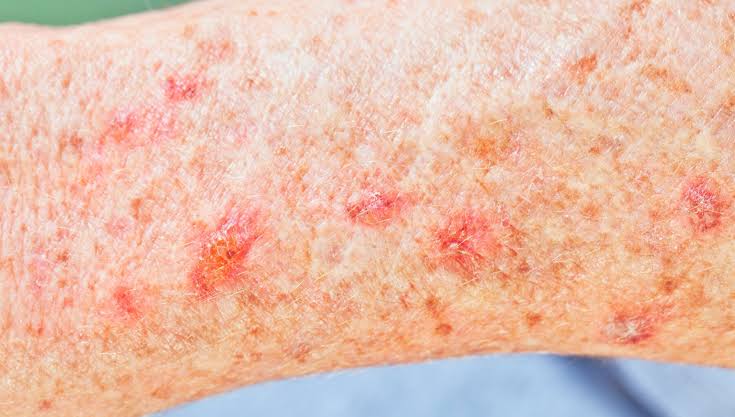
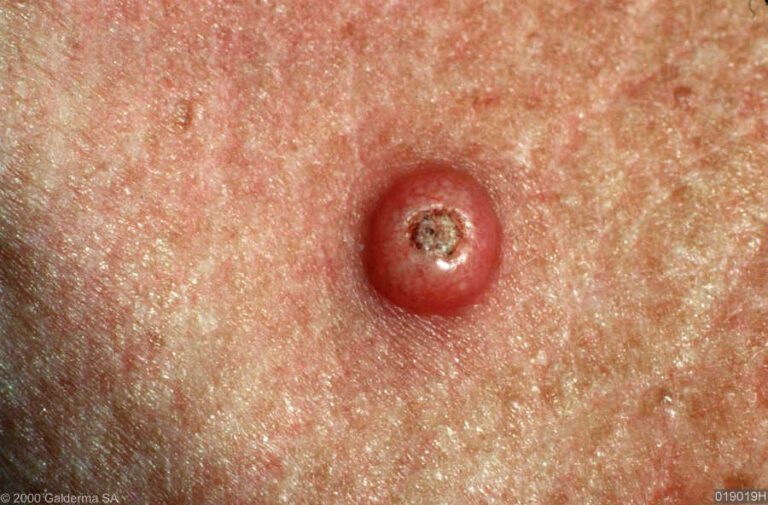
Skin cancer, particularly basal cell carcinoma (BCC) and squamous cell carcinoma (SCC), develops from cumulative UV damage built up over a lifetime. That damage doesn’t cause a visible cancer the week it happens. It sits quietly for years, sometimes decades, before a lesion actually appears.
That’s why incidence climbs so steeply with age. Someone in their 80s isn’t more vulnerable because of their current age alone, they’re more likely to be showing the result of sun exposure from their 20s, 30s and 40s.
Your 20s and 30s, building the risk rather than seeing it yet
BCC and SCC are genuinely uncommon at this age. What matters more here is history, sunburns, sunbed use, and outdoor jobs or hobbies with little sun protection, since this is exactly the exposure that tends to resurface decades later.
Melanoma is the exception worth knowing about. It behaves differently from BCC and SCC and, while still most common later in life, it’s one of the few skin cancers that does show up at a younger age than people expect. A changing mole in your 20s or 30s is still worth checking.
Your 40s and 50s, when the first lesions often appear
This is typically when actinic keratosis, rough, scaly patches caused by sun damage, starts to show up, along with the first BCC or SCC diagnoses for many patients. Neither means something new has gone wrong. It’s usually the point where earlier sun exposure becomes visible for the first time.
It’s also a sensible decade to get into the habit of a regular skin check, since catching something small and early makes treatment considerably more straightforward.
Your 60s and 70s, incidence climbing toward its peak
Risk keeps rising through these decades, and it becomes more common to be treated for more than one skin cancer over time rather than a single isolated one. Immune function also changes gradually with age, which plays a role alongside the sheer accumulation of UV exposure.
80 and beyond, where incidence is actually highest
Rates of non-melanoma skin cancer are highest in people aged 90 and over in the UK, and Cancer Research UK’s melanoma incidence data shows almost a third of all melanoma cases occur in people aged 75 and over. Age on its own is rarely a reason to avoid treatment. Reconstruction After Mohs or BCC Surgery covers how reconstruction is planned around what actually suits each patient, which includes general health and healing capacity rather than age as a number.
Why younger patients shouldn’t assume they’re exempt
Statistics describe averages, not guarantees for any individual. Why early skin cancer detection is crucial explains why acting on a changing lesion matters at any age, rather than assuming skin cancer is something that only happens much later in life.
| Decade | What’s typically happening | Worth watching for |
|---|---|---|
| 20s-30s | Risk is building from sun exposure, rarely visible yet, except melanoma | Any genuinely changing mole, regardless of age |
| 40s-50s | Actinic keratosis and first BCC/SCC diagnoses often appear | Rough, scaly patches, sores that won’t heal |
| 60s-70s | Incidence climbing toward its peak, multiple lesions more common | New lesions as well as changes to old ones |
| 80+ | Incidence is at its highest for both NMSC and melanoma | Same vigilance, treatment decisions based on health not age alone |
FAQ
What is the youngest age skin cancer is typically diagnosed?
Basal cell carcinoma and squamous cell carcinoma are uncommon before middle age, but melanoma can occur in younger adults and even occasionally in children. Age alone should never rule out a check if something looks or feels wrong.
Does age affect which treatment is recommended?
General health and healing capacity matter more than age as a number. Older patients are routinely and successfully treated with Mohs surgery and reconstruction when it’s clinically appropriate.
Is melanoma risk different from BCC and SCC by age?
All three become more common with age, but melanoma is more likely than BCC or SCC to appear in younger adults, which is why a changing mole is worth checking regardless of age.
Should older patients avoid surgery because of their age?
Not on age alone. Mohs surgery is typically done under local anaesthetic, which avoids many of the risks associated with general anaesthesia and makes it suitable for most older patients.
Recommended
- Skin Cancer Detection
- How to Spot Skin Cancer Symptoms on the Face
- Acting early is covered in more depth under why early skin cancer detection is crucial
Filed under Skin Cancer Explained