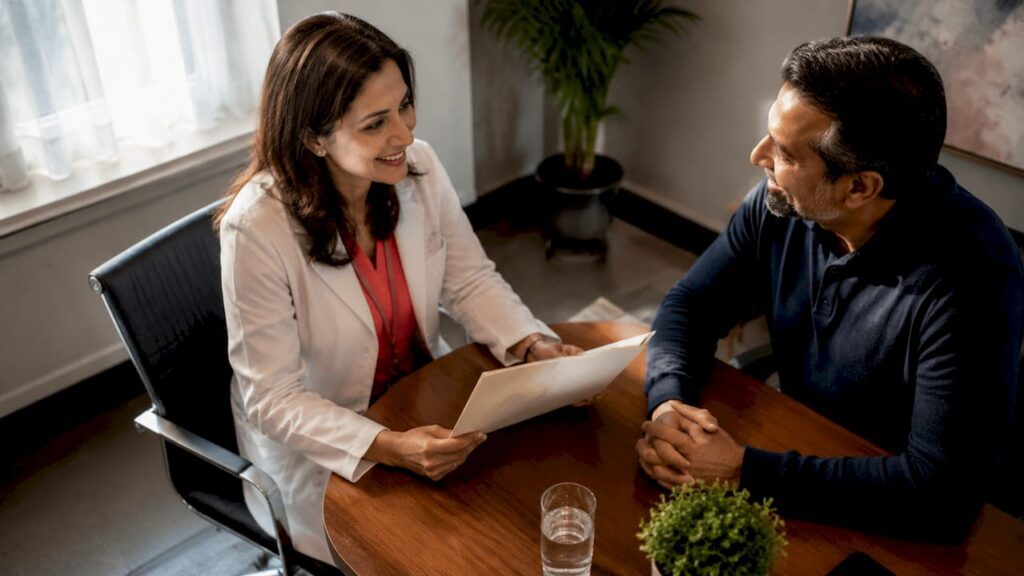
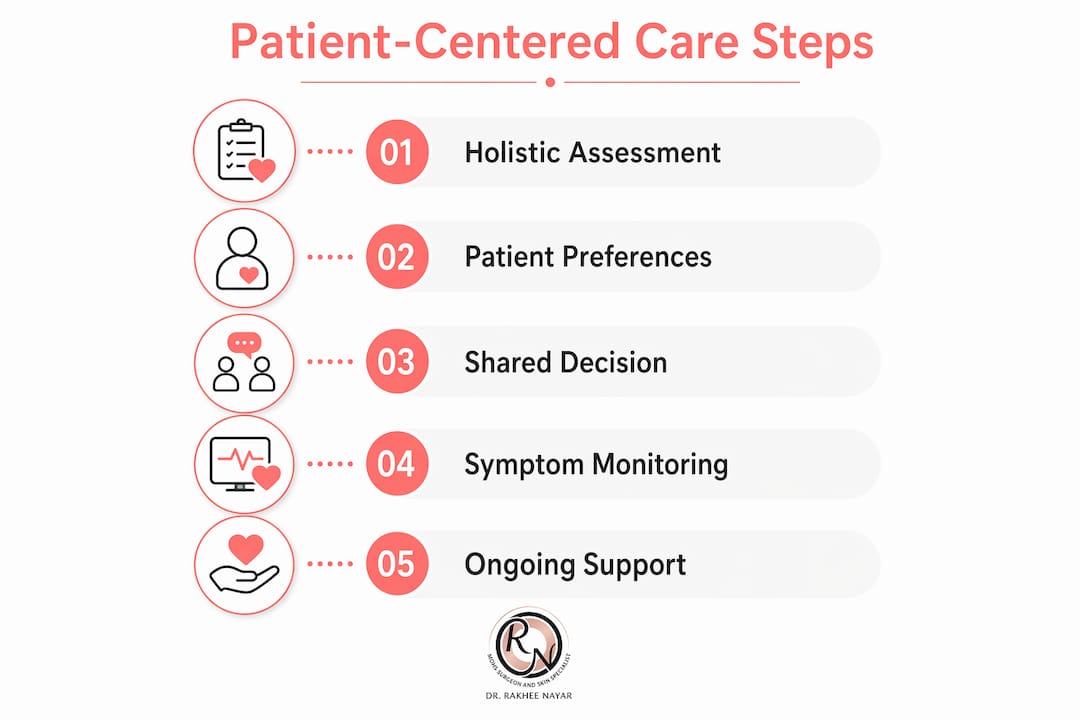
Patient-centered care in oncology places the individual’s physical, emotional, social, and practical needs at the heart of every clinical decision. Rather than treating a diagnosis in isolation, it requires clinicians to understand what matters most to each person, involve them meaningfully in treatment choices, and coordinate care across the full pathway. In the UK, this approach is embedded in NHS England standards through mandated holistic needs assessments and personalised care plans, and reinforced by GMC professional standards requiring shared decision-making that respects patient preferences. Cancer Nurse Specialists (CNS) are central to delivering this in practice, acting as the consistent point of contact who translates clinical complexity into something a patient can actually engage with.
The core elements of patient-centered oncology care include:
- Holistic Needs Assessment (HNA): a structured conversation covering physical, emotional, practical, financial, and social concerns, offered at diagnosis and at key points throughout the pathway
- Personalised Care and Support Plan (PCSP): a co-produced document recording agreed actions, referrals, and support services
- Shared decision-making: active involvement of the patient in weighing treatment options against their own values and quality-of-life priorities
- Treatment Summary: a written record shared with the patient and GP at the end of active treatment
- Cancer care review (CCR): a GP-led review within six months of diagnosis covering post-treatment needs, financial impact, and self-management
- Health and wellbeing events: group or individual sessions to support self-management after treatment
- Cultural competence: adapting communication, assessment tools, and care plans to reflect the patient’s language, beliefs, and background
What are the core principles of patient-centered care in oncology?
The foundational framework for patient-centered oncology care in England is the Recovery Package, a set of interventions commissioned by NHS England that brings together the HNA, Treatment Summary, health and wellbeing events, and cancer care review into a coherent whole-pathway approach. It applies from diagnosis through to living with and beyond cancer, and is designed to shift care away from a purely biomedical model towards one that accounts for the full person.
Underpinning the Recovery Package are several clinical principles. Holistic assessment means identifying concerns across every domain of a patient’s life, not just the tumour. Respect for patient values means that treatment planning accounts for what a patient wants to achieve, not only what is clinically possible. Shared decision-making, as defined by the GMC, requires that patients are given enough information to make a genuine choice, and that their preferences are actively sought rather than assumed.
The West Midlands Cancer Alliance has formalised these principles into personalised care standards that specify when HNAs should be offered, who should conduct them, and how the resulting PCSP should be shared across the care team. Notably, over 70% of people with a cancer diagnosis are living with at least one other long-term condition, which means a purely cancer-focused approach will miss a substantial portion of their needs.
Cancer Nurse Specialists and Cancer Support Workers (CSW) are the clinical staff most often responsible for conducting HNAs and coordinating the resulting care plans. Their role extends beyond administration: they advocate for patient preferences within multidisciplinary team (MDT) meetings, provide psychological support, and maintain continuity across what can otherwise be a fragmented care system. Family and carer perspectives are formally incorporated through the PCSP process, and the Right by You Wessex programme demonstrated that integrated working across primary, secondary, and community care is both achievable and effective when CNSs work across organisational boundaries.
Key framework elements in practice:
- HNA offered informally at diagnosis, then formally at approximately four weeks, and repeated whenever needs change
- PCSP co-produced with the patient and shared with the GP and relevant specialists
- Stratified follow-up pathways that match intensity of support to level of clinical and psychosocial risk
- Rehabilitation access for allied health professionals including physiotherapists, dietitians, and psychologists
- Proactive signposting to community and voluntary sector resources
How does patient-centered care affect outcomes for people with cancer?
The evidence that patient-centered approaches improve cancer outcomes is consistent across research settings. When patients are actively involved in their care, they report higher satisfaction, greater trust in their clinical team, and better adherence to treatment. Studies cited by the National Cancer Institute show that when patients are involved in their own care, they are more likely to receive treatment appropriate to their values and to adopt healthier self-management behaviours.
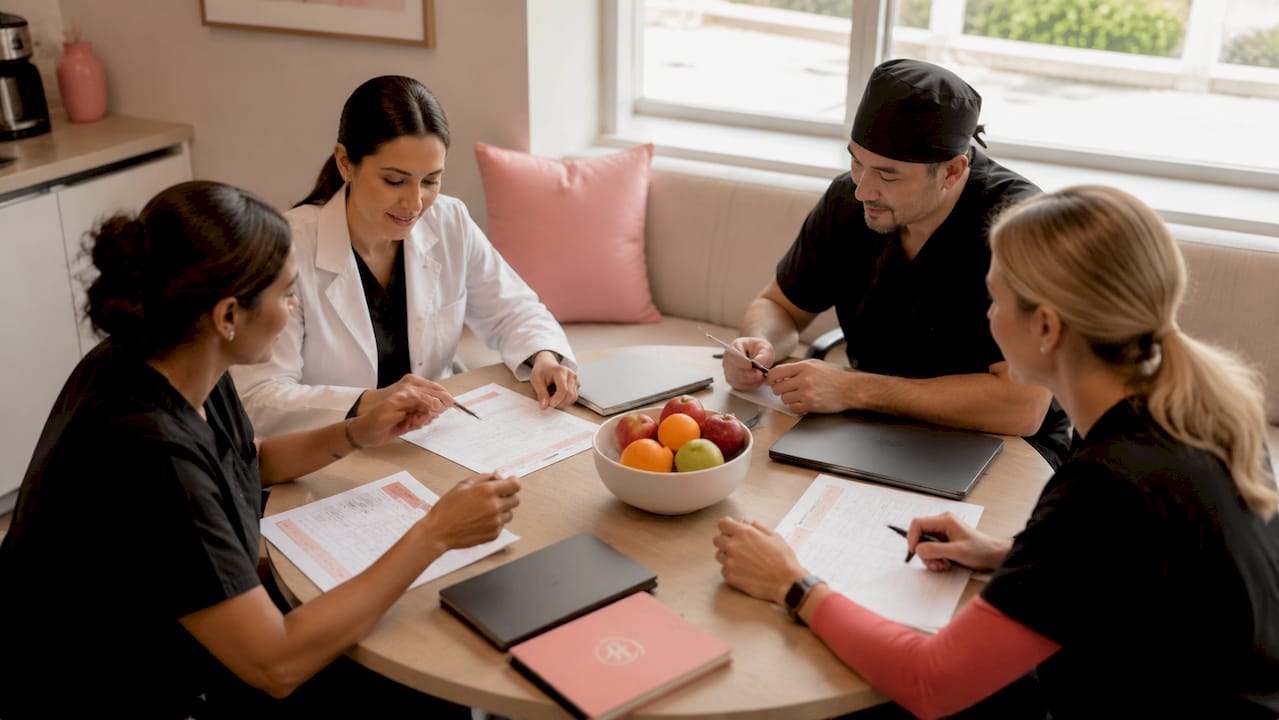
Shared decision-making has a particular effect on treatment adherence. A UK qualitative study of oncology MDT meetings found that incorporating patient preferences led to changes in treatment type, medication adjustments, dose modifications, and in some cases a shift to palliative care that better reflected the patient’s goals. All interviewed clinicians in that study found patient preferences beneficial for MDT learning and decision-making efficiency, though specific percentages were not provided.
The psychological dimension is equally well-supported. Patients who receive holistic assessment and personalised care planning report reduced anxiety and greater confidence in managing their condition. The Right by You Wessex programme, which embedded CNSs and CSWs trained in Acceptance and Commitment Therapy and the CALM psychotherapeutic model, demonstrated enhanced patient experience and outcomes alongside improved psychological support delivery.
| Outcome domain | Without patient-centered approach | With patient-centered approach |
|---|---|---|
| Treatment adherence | Variable; driven by clinician recommendation | Higher; aligned with patient values and goals |
| Patient satisfaction | Often lower; preferences not routinely elicited | Consistently higher when preferences are incorporated |
| Psychological well-being | Anxiety and uncertainty frequently unaddressed | Reduced distress through holistic assessment and support |
| Trust in clinical team | Can be undermined by poor communication | Strengthened through shared decision-making |
| Self-management | Passive; reliant on follow-up appointments | Active; supported by care plans and health and wellbeing events |
How is patient-centered care implemented in UK oncology settings?
Practical implementation in UK oncology depends on three interconnected elements: MDT structures, patient-reported outcome measures (PROMs), and staff training. None of them works well in isolation.
MDT meetings are the gold standard for oncology management in England, mandated under the 2015 Cancer Strategy. Their strength lies in bringing together surgeons, oncologists, radiologists, pathologists, and CNSs to review each case collectively. The CNS role within the MDT is specifically to represent the patient’s perspective, including preferences and psychosocial context that the clinical notes alone will not capture. Without that advocacy function, patient preferences risk being overlooked entirely.
PROMs, when embedded properly, allow clinical teams to track quality of life and symptom burden between appointments and adjust care accordingly. Guy’s Cancer Centre is a recognised example of a centre that combines routine PROM collection with staff training and defined clinical thresholds, so that a deteriorating score triggers a clinical response rather than sitting unread in a database. The Right by You Wessex programme took a complementary approach, delivering longitudinal HNA conversations in patients’ homes, which allowed CNSs to observe non-verbal cues and build a therapeutic relationship that a clinic appointment rarely permits.
Training is the third pillar. The Right by You Wessex model required CNSs and CSWs to complete CALM and ACT training in addition to their standard clinical preparation, enabling them to provide level 2 and above psychological support. This is a higher threshold than most oncology CNS roles currently require, and the programme’s outcomes suggest the investment is justified.
Best practice recommendations for clinicians and organisations:
- Designate a named CNS for every patient at diagnosis, with explicit responsibility for eliciting and documenting preferences
- Embed PROMs into clinical pathways with defined escalation thresholds, not as a standalone data-collection exercise
- Conduct HNA conversations in settings that suit the patient, including home visits where feasible
- Provide MDT chairs with training in meeting facilitation to reduce time pressure and improve patient-preference discussion
- Commission CALM or ACT training for CNSs and CSWs working with patients who have complex psychosocial needs
- Integrate primary care through cancer care reviews and shared care planning to reduce fragmentation
| Implementation component | Example in practice |
|---|---|
| MDT patient advocacy | CNS presents patient preferences and psychosocial context at each MDT meeting |
| PROMs with clinical response | Guy’s Cancer Centre: defined thresholds trigger clinical follow-up |
| Integrated community outreach | Right by You Wessex: CNSs working across acute, primary, and community settings |
| Psychosocial training | CALM and ACT training for CNSs and CSWs beyond standard clinical preparation |
What barriers prevent effective patient-centered care in oncology?
The gap between the principle and the practice of patient-centered oncology care is well-documented, and the NHS context creates specific structural pressures that other healthcare systems do not face in the same way.
Time is the most consistently cited barrier. A UK qualitative study found that MDT meeting time constraints led clinicians to rush through patient lists, increasing the risk of decisions being made without full MDT consensus. Patient preferences were often the first element to be compressed or omitted when time ran short. There is also no consistent agreement on whose responsibility it is to elicit preferences before the meeting, which means the information is frequently absent when it is most needed.
PROMs face their own implementation problems. Collecting PROMs must be coupled with clinical pathways and dedicated staff to manage the data; without that infrastructure, survey responses accumulate without generating any clinical response. Digital literacy is a further constraint, particularly for older patients or those from communities with lower technology access, and routine PROMs face barriers including resource shortages that limit their consistent application. Many patients are also unaware that they are entitled to an HNA at diagnosis and at subsequent care transitions, which means the assessment is never offered or requested.
Cultural and ethical complexity adds another layer. Integrating religious, ethical, and cultural preferences into MDT decision-making requires both awareness and time, neither of which is reliably available. The NHS England baseline activity report identified a persistent disconnect between the theoretical model of patient-centered care and what is practically achievable within NHS constraints, particularly the absence of dedicated staff roles for eliciting patient values.
Key barriers:
- Time pressure in MDT meetings, leading to abbreviated or absent patient-preference discussion
- No designated responsibility for eliciting preferences before MDT review
- PROMs collected without clinical pathways to act on the results
- Digital literacy gaps limiting electronic HNA and PROM completion
- Patients unaware of their entitlement to holistic needs assessments
- Cultural and religious preferences inadequately incorporated into care planning
- Staff shortages reducing capacity for CNS-led holistic support
Pro Tip: If you are a clinician working within a time-pressured MDT, consider submitting a brief written patient-preference summary to the MDT chair before the meeting. This ensures preferences are on the agenda even when verbal discussion time is limited, and it creates a documented record that can be referenced in the care plan.
Patient-centered care in skin cancer
In dermatologic oncology, patient-centered care carries a dimension that is less prominent in other cancer specialties: the visible, often permanent, impact of treatment on appearance. Skin cancer surgery on the face or other cosmetically sensitive areas affects how a patient sees themselves and how others see them. That reality shapes every consultation.
The Royal College of Surgeons of Edinburgh describes shared decision-making as requiring active patient participation, including the expression of individual treatment goals and quality-of-life priorities. In practice, many patients arrive at a skin cancer consultation uncertain about what questions to ask, let alone what their priorities are. Part of the clinician’s role is to create the conditions in which those priorities can emerge.
Miss Nayar’s dual training in plastic surgery and Mohs micrographic surgery means that reconstructive planning is integrated into the treatment conversation from the outset, rather than being addressed as an afterthought once the cancer is removed. Patients considering cosmetic outcomes after skin cancer surgery benefit from understanding both the oncological and reconstructive options before consenting to any procedure. That conversation, conducted thoroughly and without time pressure, is itself a form of patient-centered care.
Unique considerations in dermatologic oncology:
- Cosmetic and functional outcomes are inseparable from oncological outcomes for many patients
- Patient anxiety about visible scarring or disfigurement requires proactive, empathetic communication
- Reconstruction planning should begin at the initial consultation, not after excision
- Patients with high-risk skin cancer often face multiple treatment decisions across a prolonged pathway, requiring consistent CNS support
- Cultural attitudes to appearance and scarring vary and must be explored sensitively
- Written patient information and follow-up contact details should be provided at every stage
Pro Tip: Ask patients directly: “What matters most to you about the outcome of this treatment?” The answer is rarely what you expect, and it changes the consultation entirely.
How does technology support patient-centered care in oncology?
Digital health tools have expanded the practical reach of patient-centered oncology care, particularly in monitoring and communication between appointments. Electronic HNA platforms allow patients to complete their holistic assessment before attending clinic, giving the CNS time to review responses and focus the conversation on the concerns that matter most. Remote monitoring systems, now embedded in stratified follow-up pathways for breast, colorectal, prostate, and endometrial cancers in the West Midlands, allow patients to report symptoms and trigger clinical review without attending hospital unnecessarily.

PROMs delivered digitally can capture quality-of-life data at intervals that a clinic appointment schedule cannot match. The clinical value depends entirely on what happens next: a PROM score that crosses a threshold must generate a clinical response, and that requires both a defined pathway and a member of staff with the capacity to act. Technology creates the data; the human infrastructure determines whether it changes anything for the patient.
Telehealth and video consultations have also extended access for patients who face geographical, mobility, or work-related barriers to attending in person. For patients with skin cancer, e-consultations allow initial assessment of a lesion and triage before a face-to-face appointment, reducing unnecessary travel and wait times. Rakhee Nayar – Mohs Surgeon and Skin Specialist offers e-consultations for patients across the UK and internationally, reflecting the principle that patient-centered care should adapt to the patient’s circumstances rather than requiring the patient to adapt to the system.
The limits of technology are worth stating plainly. Digital tools work best for patients who are comfortable with them. Older patients, those with cognitive impairment, and those from communities with lower digital literacy may find electronic PROMs or remote consultations a barrier rather than a convenience. Any technology-based approach needs a non-digital alternative, and the choice should always rest with the patient.
How do you measure whether patient-centered care is actually working?
Measuring the effectiveness of patient-centered care in oncology requires more than counting how many HNAs were completed. The question is whether the assessment led to a change in care that the patient experienced as meaningful.
Process measures, such as HNA completion rates, PROM response rates, and MDT documentation of patient preferences, tell you whether the system is functioning. Outcome measures, such as patient-reported quality of life, psychological well-being scores, treatment adherence, and unplanned care utilisation, tell you whether it is working. The two are not the same, and conflating them is a common error in service evaluation.
The Right by You Wessex programme used a combination of qualitative feedback, HNA data, and healthcare utilisation metrics to evaluate its integrated model. Its key findings confirmed enhanced patient experience and outcomes, effective integrated working across care sectors, and improved healthcare professional experience. That multi-method approach is more informative than any single metric.
For individual clinicians, validated tools such as the Distress Thermometer, the Patient Activation Measure (PAM), and cancer-specific quality-of-life instruments provide a structured basis for tracking change over time. The PAM in particular measures a patient’s knowledge, skills, and confidence in managing their own health, which maps directly onto the self-management goals of the Recovery Package. Embedding these tools into routine clinical encounters, rather than treating them as research instruments, is what converts measurement into care improvement.
Organisations should also track equity: whether HNAs are being offered consistently across patient groups regardless of age, ethnicity, digital access, or cancer type. The West Midlands Cancer Alliance standards specify that HNAs must be available in accessible formats, including braille and appropriate language versions, precisely because equity of access is part of what patient-centered care means in practice.
Speak to Miss Nayar about your skin cancer care
If you have been diagnosed with a skin cancer or have a suspicious lesion and want a consultation that puts your priorities at the centre of the clinical discussion, Miss Rakhee Nayar offers private consultations at Circle Cheshire in North West England, as well as e-consultations for patients across the UK and internationally. Miss Nayar is a GMC-registered Consultant Plastic Surgeon, FRCS (Plast), MD, with dual training in Mohs micrographic surgery and plastic surgery.
Mohs micrographic surgery offers the highest cure rates for high-risk skin cancers on the face and other cosmetically sensitive areas, with reconstruction planned from the outset of the consultation. To discuss your options, visit mohssurgeon.co.uk/mohs-surgery/ or contact the clinic to arrange an appointment.
This article is for informational purposes only and does not constitute medical advice. Consult a GMC-registered specialist for advice specific to your clinical situation.
Key takeaways
Patient-centered care in oncology requires active integration of patient preferences, holistic assessment, and shared decision-making across the full cancer pathway, not just at diagnosis.
| Point | Details |
|---|---|
| NHS framework is mandatory | NHS England mandates HNAs, PCSPs, and cancer care reviews as part of the Recovery Package for all cancer patients. |
| CNS role is central | Cancer Nurse Specialists coordinate holistic care, advocate in MDT meetings, and provide continuity across the pathway. |
| MDT integration has barriers | Time constraints and unclear responsibility for eliciting preferences limit how fully patient values enter MDT decisions. |
| PROMs need infrastructure | Routine PROMs only improve care when clinical pathways and dedicated staff exist to act on the results. |
| Cosmetic outcomes matter in skin cancer | In dermatologic oncology, reconstructive planning and appearance-related concerns must be addressed from the first consultation. |
FAQ
What is patient-centered care in oncology?
Patient-centered care in oncology means placing the individual’s physical, emotional, social, and practical needs at the heart of treatment decisions, using tools such as holistic needs assessments, personalised care plans, and shared decision-making. NHS England mandates this approach through the Recovery Package, which applies from diagnosis through to living with and beyond cancer.
Who delivers patient-centered care in UK cancer services?
Cancer Nurse Specialists and Cancer Support Workers are the primary clinical staff responsible for holistic assessment and care coordination, working alongside oncologists, surgeons, and GPs within multidisciplinary teams. The CNS typically acts as the patient’s named contact and advocates for their preferences within MDT meetings.
What is a holistic needs assessment and when should it be offered?
A holistic needs assessment is a structured conversation covering physical, emotional, practical, financial, and social concerns related to a cancer diagnosis. It should be offered at diagnosis, at the end of treatment, and whenever a patient’s needs change, though many patients are unaware of their entitlement to request one.
How are patient preferences incorporated into MDT decisions?
Patient preferences are presented by the CNS during MDT meetings and can lead to changes in treatment type, dose, or approach. A UK qualitative study found that incorporating patient preferences improved treatment adherence and decision-making efficiency, though time constraints within MDT meetings remain a consistent barrier to full integration.
How is patient-centered care measured in oncology?
Effectiveness is measured through a combination of process measures, such as HNA completion rates and PROM response rates, and outcome measures including patient-reported quality of life, psychological well-being, and treatment adherence. Validated tools such as the Patient Activation Measure and cancer-specific quality-of-life instruments provide a structured basis for tracking change over time.
Recommended
- Top skin health practices for cancer prevention and recovery
- How to support skin cancer patients: practical help guide
- Dermatologic oncology: what it is and why it matters
- Role of patient education in skin cancer outcomes
Filed under Choosing Your Care


