TL;DR:
- Most patients diagnosed with or at risk for skin cancer have limited knowledge about their condition and prevention strategies. Effective patient education improves early detection, encourages protective behaviors, and enhances treatment adherence, leading to better outcomes. Utilizing digital tools and personalized information fosters sustainable skin health habits and prompt help-seeking.
Most people diagnosed with skin cancer, or told they are at high risk, know surprisingly little about what they are actually dealing with. The role of patient education in skin cancer is not simply about handing over a leaflet in a waiting room. It shapes whether you detect a problem early, how confidently you engage with your treatment team, and how well you recover. This article walks through the evidence on how education directly influences prevention, detection, treatment decisions, and long-term skin health, with practical tools you can use right now.
Key takeaways
| Point | Details |
|---|---|
| Education prevents as well as informs | Learning about sun protection and personal risk factors can measurably reduce your chance of developing skin cancer. |
| Self-examination saves lives | Monthly self-checks using the ABCDE criteria help you spot changes early, when treatment is most straightforward. |
| Informed patients make better decisions | Understanding your options reduces anxiety and helps you participate actively in your own care plan. |
| Digital tools extend your knowledge | Social media programmes, apps, and written materials reinforce clinical advice and support lasting behaviour change. |
| Screening should match your risk profile | Routine annual checks are not universally recommended; your screening frequency should reflect your individual risk. |
How patient education reduces skin cancer risk
Prevention is where education does its heaviest lifting, yet it is also the area most patients underestimate. Many people still believe that if they have darker skin, or mostly work indoors, their risk is negligible. Patient education skin cancer work consistently shows otherwise. Understanding your personal risk factors, including your skin type, history of sunburn, use of sunbeds, and family history, is the foundation of any sensible prevention plan.
The most effective sun-protection habits are not complicated, but they do require knowing why they matter. Applying SPF 30 or above daily, wearing protective clothing and broad-brimmed hats, and seeking shade between 11am and 3pm are all proven measures. What makes education particularly powerful is that it moves these behaviours from vague advice into personal routine.
Research highlights a critical distinction in who benefits most from prevention education:
- Parents and carers of children: Parental counselling significantly increases children’s sun-protection behaviours more than adult-focused counselling alone, making early family education a priority.
- High-risk individuals: Those with immunosuppression, a history of skin cancer, or extensive UV exposure benefit from targeted education about additional protective strategies, including awareness that oral nicotinamide can reduce the incidence of new nonmelanoma skin cancers.
- People with limited previous knowledge: Correcting common skin cancer myths can be as impactful as introducing new information.
Educational approaches matter as much as the content itself. Interactive and visual content produces moderate-to-large effect sizes (d=0.45 to 0.72) for improving sun-protection behaviour, well above the impact of text-heavy leaflets alone. Short videos, visual comparisons, and scenario-based learning all help people retain and act on what they have read.
Pro Tip: If you have been diagnosed with skin cancer or are considered high risk, ask your clinical team whether any prevention measures specific to your skin type and treatment history apply to you. Generic advice is a starting point, not the whole picture.
Early detection: what you need to know about your skin
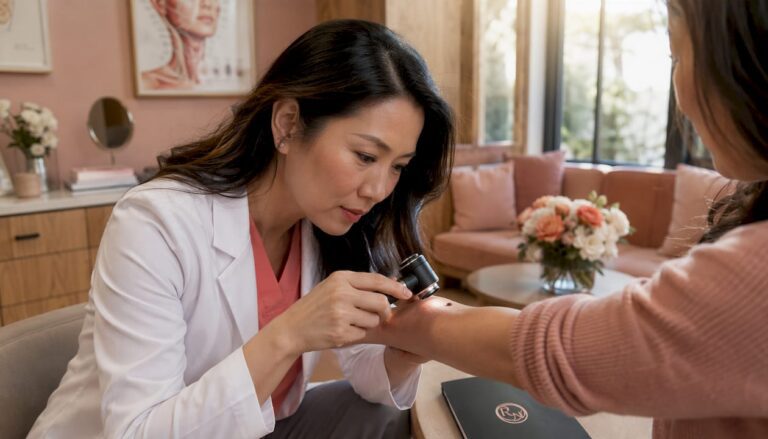
Knowing what to look for is genuinely life-changing. The majority of early skin cancers appear as new or changing growths, and getting to know your skin means you are far more likely to notice when something is different. A monthly self-examination, conducted under good lighting and using a mirror for hard-to-see areas, is the single most accessible detection tool you have.
The ABCDE criteria give you a clear framework for assessing moles and lesions:
- A (Asymmetry): One half does not match the other.
- B (Border): Edges are irregular, ragged, or blurred.
- C (Colour): Multiple shades of brown, black, red, white, or blue within a single lesion.
- D (Diameter): Larger than 6mm, roughly the size of a pencil eraser.
- E (Evolution): Any change in size, shape, colour, or any new symptom such as bleeding or crusting.
The table below shows the key warning signs for the three most common types of skin cancer, which helps you understand what to report to a clinician:
| Skin cancer type | Typical appearance | Key warning sign |
|---|---|---|
| Basal cell carcinoma | Pearly or waxy bump, flat flesh-coloured lesion | Slow-growing, may bleed or crust |
| Squamous cell carcinoma | Firm red nodule, scaly flat lesion | Fast-growing, tender, may ulcerate |
| Melanoma | Irregularly bordered, multi-coloured mole | New or changing lesion fitting ABCDE criteria |
One crucial piece of information many patients miss: nearly half of patients surveyed did not know that melanoma is a form of cancer. This gap in patient knowledge about skin cancer directly delays help-seeking. If you spot a changing lesion, prompt evaluation via a skin cancer detection specialist significantly improves your prognosis.
It is also worth understanding that routine visual skin checks are not universally recommended for everyone. Clinical guidance advises that screening frequency and type should be based on your individual risk profile rather than a blanket annual schedule. A useful resource here is the UK guide on skin cancer symptoms, which helps you understand what warrants a clinical review.
Patient education during and after treatment
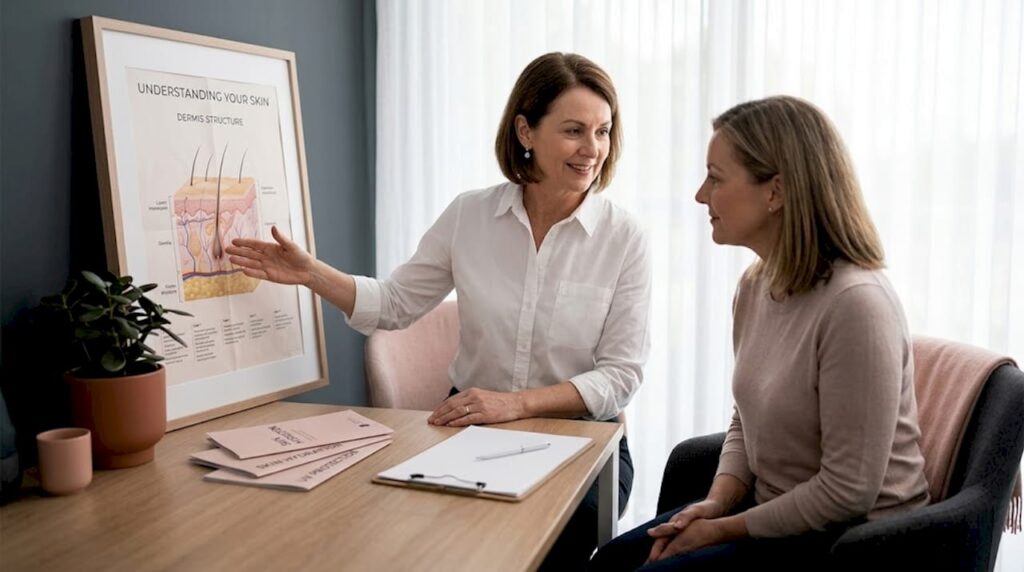
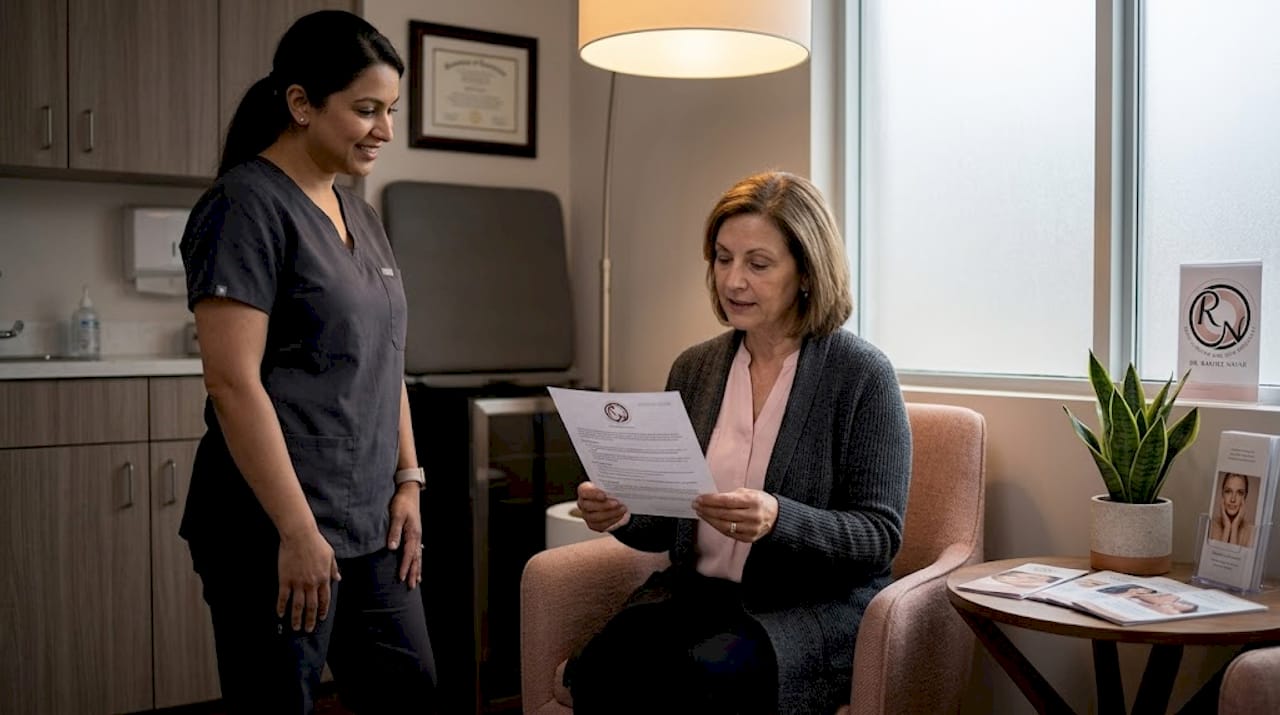
Being well-informed before and during treatment is not just reassuring. It changes outcomes. Patients who understand their diagnosis, the proposed procedure, and the likely recovery process participate more actively in decisions and show better adherence to post-treatment care.
Here is what education during the treatment phase typically needs to cover:
- Understanding your diagnosis and options: Knowing the type and stage of your skin cancer, and why a particular treatment such as Mohs micrographic surgery is recommended, allows you to ask better questions and feel in control.
- Managing skin toxicities: Cancer treatments, particularly immunotherapies and targeted therapies, can cause significant skin reactions. Early patient education on preventing skin toxicities reduces their severity and supports treatment adherence.
- Post-treatment skin care: After surgery or other interventions, your skin needs specific care. Knowing how to clean wounds, apply recommended products, and protect healing tissue prevents complications and supports recovery. The essential follow-up steps after treatment include regular check-ups at intervals determined by your risk level.
- Psychological preparation: Anxiety about treatment outcomes is normal. Education that addresses what to expect, including temporary changes in appearance and realistic timelines for recovery, reduces distress and supports better mental health throughout the process.
The most recent trends in oncodermatology are moving from reactive management to proactive prevention, with personalised education plans designed around the specific treatments a patient is receiving. This is not a future ambition; it is already being applied in leading skin cancer clinics.
Pro Tip: Ask your clinical team for written or digital summaries of every verbal consultation. Combining verbal with written or digital materials measurably reduces anxiety and improves how well patients follow care instructions, particularly in the weeks after surgery.
Practical skin cancer awareness resources
The good news is that you do not need to rely solely on clinic appointments to stay educated. A growing range of digital and community-based tools now supports ongoing skin cancer awareness between consultations.
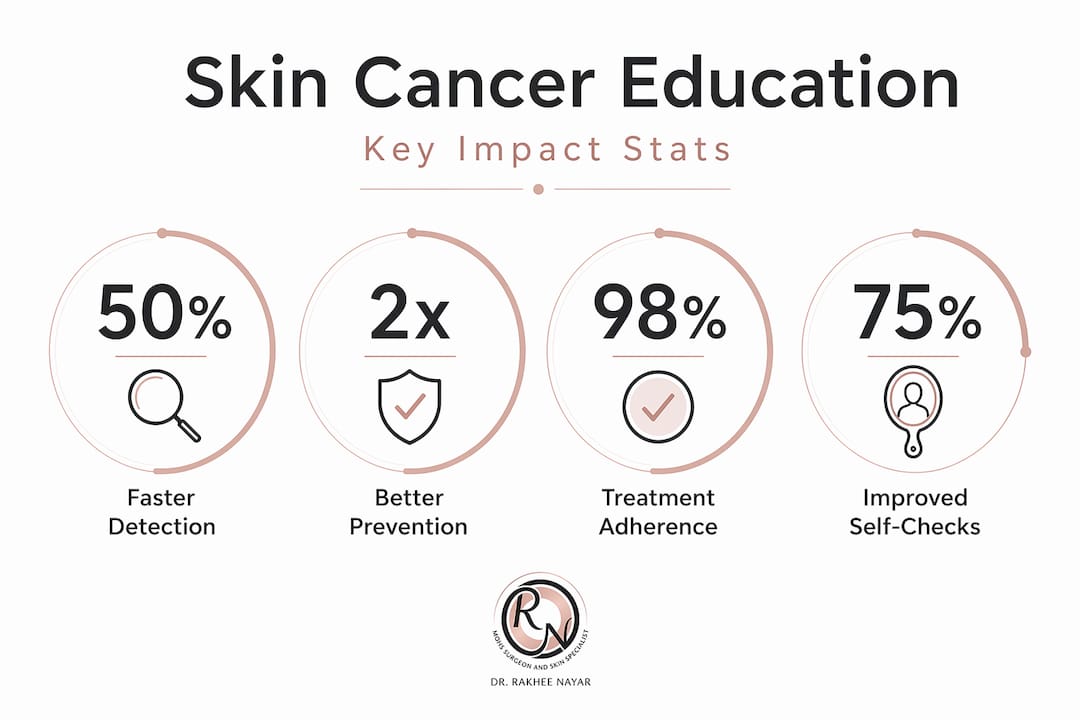
Social media has moved well beyond general tips. A social media education programme targeting high-risk women improved skin self-examination performance from 0% to 88.2% correctly performed after the intervention. That shift is striking and speaks directly to the effectiveness of digital skin cancer awareness resources when they are well-designed.
Key resources and tools worth exploring include:
- Smartphone apps: Several dermatology apps allow you to photograph and track lesions over time. Use these as a monitoring aid, not as a diagnostic replacement for clinical review.
- UV-index wearables: Small, affordable devices and smartwatch integrations now provide real-time UV exposure data, helping you make informed decisions about sun protection throughout the day.
- QR-coded clinic materials: Many clinics now provide printed materials with QR codes linking to videos or step-by-step self-examination guides, giving you a quick digital refresher at home.
- Community outreach programmes: Provider training in underserved communities, such as intensive training that improved detection rates in the Florida Keys, demonstrates that local education efforts raise the standard of care at a population level.
- Trusted clinical websites: Resources from specialist platforms give you clinically sound information rather than the unreliable content that frequently circulates on general health forums.
For patients managing an existing diagnosis or considered high-risk for skin cancer, understanding the full scope of your follow-up and ongoing monitoring needs is a key part of your care. Sustainable behaviour change does not happen after one conversation. It happens when accurate information is reinforced regularly across multiple formats.
My perspective on patient education
I have seen this pattern repeat too many times: a patient arrives at a clinic with a lesion they noticed months ago but did not act on because they assumed it was nothing serious. When you look at the data, this is not carelessness. It is a knowledge gap. Nearly half of patients do not even know melanoma is cancer. That is a systemic failure of education, not individual failure.
What I find genuinely encouraging is how quickly that changes with the right information. When patients understand what to look for, what questions to ask, and what their personalised risk actually involves, their engagement transforms. They attend follow-ups. They practise self-examination. They push back when something does not feel right.
The shift towards personalised education, tailored to the specific treatment a patient is receiving and their own skin type and risk factors, is the most meaningful development I have seen in this space. It is not just about preventing anxiety. It is about preventing actual harm.
My honest view: the clinical outcome gap between well-informed patients and poorly informed ones is wider than most people in healthcare want to admit. Education is not a soft add-on to treatment. It is part of the treatment.
— Gregg
Expert skin cancer care with Mohssurgeon
Knowing what to look for is only the first step. Acting on it, with the right clinical team, is what determines your outcome.
Mohssurgeon offers specialist skin cancer diagnosis and treatment led by Miss Rakhee Nayar, who holds dual expertise in Mohs micrographic surgery and plastic surgery. Whether you have noticed a changing lesion, received a recent diagnosis, or simply want a professional assessment of your risk, expert guidance is available through private consultations in North West England and e-consultations for patients across the UK and internationally. Explore the Mohs surgery detection service to understand your options, or review the early detection resource to learn how early intervention leads to measurably better outcomes. Your skin health deserves specialist attention.
FAQ
What is the role of patient education in skin cancer?
Patient education in skin cancer covers prevention, self-examination, treatment understanding, and recovery care. It directly improves early detection rates, treatment adherence, and long-term outcomes.
How often should I perform a skin self-examination?
Monthly self-examinations are recommended for most people. Use the ABCDE criteria to assess moles and lesions, and report any new or changing areas to a clinician promptly.
Do I need a routine annual full-body skin check?
Not necessarily. Clinical guidance recommends personalised screening intervals based on your individual risk profile rather than standard annual checks for everyone.
How does education help during skin cancer treatment?
Understanding your diagnosis and treatment plan reduces anxiety, supports better decision-making, and helps you follow post-treatment care instructions more effectively, which directly supports recovery.
What digital resources can help me stay informed about skin cancer?
Social media education programmes, smartphone apps for lesion tracking, and UV-index wearables all support ongoing skin cancer awareness. Always verify digital tools against advice from your clinical team.
Recommended
- Top skin health practices for cancer prevention and recovery
- Essential follow-up steps after skin cancer treatment
- Expert plastic surgery in skin cancer care: best results
- How to support skin cancer patients: practical help guide
Filed under Choosing Your Care