About Basal Cell Carcinoma (BCC)
If you have recently been diagnosed with basal cell carcinoma, or you are researching a suspicious lesion on your skin, the most important thing to know is this: basal cell carcinoma is the most common and most treatable form of skin cancer in the UK.
When it is caught and treated early by a specialist, the outlook is excellent. This article covers everything you need to know about BCC — what it is, what causes it, how it is diagnosed, and what your treatment options are.
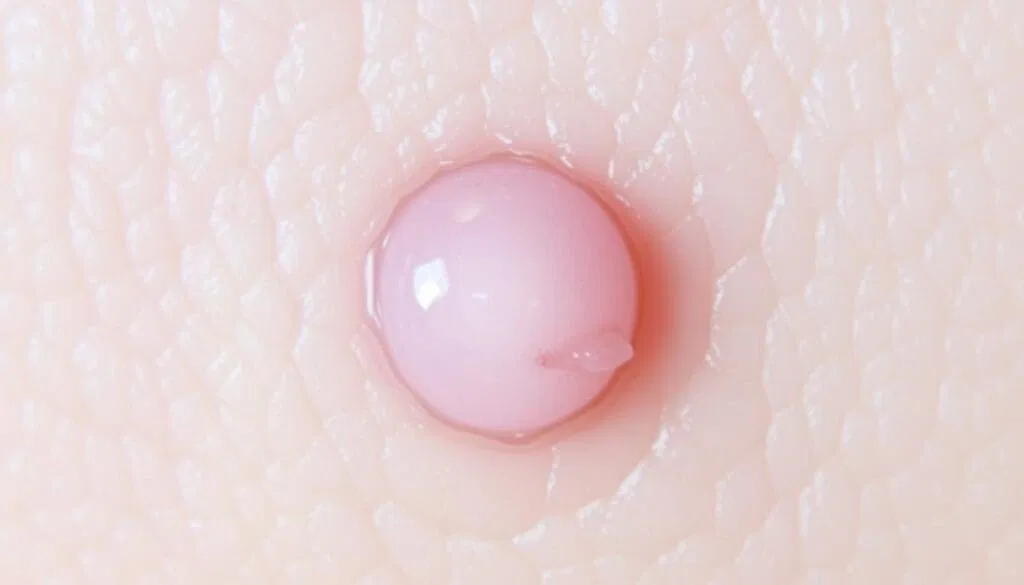
Basal cell carcinoma (BCC) is a type of skin cancer that develops in the basal cells, which form the deepest layer of the outer skin (the epidermis). It is the most common cancer in the UK, more common than all other cancers combined, with around 147,000 new cases diagnosed every year.
BCC grows slowly and, in the vast majority of cases, stays localised to the area where it first appeared. It very rarely spreads to other parts of the body, which makes it the least aggressive form of skin cancer. That said, it will not resolve on its own and should always be seen by a specialist who will then help you arrive at a management plan that suits you.
There are several subtypes of BCC, each with a slightly different appearance and behaviour:
Request an e-Consultation
Speak with Miss Rakhee Nayar from the comfort of your own home and receive expert advice on your skin concern, treatment options, and next steps.
The primary cause of BCC is cumulative exposure to ultraviolet (UV) radiation from sunlight or sunbeds. Over time, UV radiation damages the DNA in basal cells, which can cause them to multiply in an uncontrolled way.
Whilst consistent sun protection plays an important role in reducing your risk, some people develop BCC due to genetic factors that are outside of their control. If you fall into a higher risk group, regular skin checks are strongly recommended.
Sun exposure: long-term or repeated UV exposure is the leading cause
Sunbed use: artificial UV radiation carries the same risks as natural sunlight
A weakened immune system: including patients taking immunosuppressant medication
A history of sunburn: particularly severe sunburn during childhood
Certain inherited conditions: such as Gorlin syndrome, which significantly increases the risk of developing multiple BCCs
In its early stages, BCC does not usually cause pain, which is one of the reasons it can be easy to overlook. The most common signs to look out for include:
When checking your skin, the ABCDE checklist can be a helpful guide:
A
Asymmetry: one side of the lesion does not match the other.
B
Border: edges are irregular, rolled, or poorly defined.
C
Colour:pearly, translucent, pink, red, brown, or mixed colouring.
D
Diameter: any size warrants attention, particularly if growing.
E
Evolution: any change in size, shape, colour, or a new symptom such as bleeding or crusting.
If you or your GP suspects a BCC, you will be referred to a specialist for a clinical assessment. The specialist will examine the lesion carefully and, in most cases, perform a skin biopsy to confirm the diagnosis. This involves removing a small sample of tissue from the lesion, which is then examined under a microscope in a laboratory.
Biopsy results are typically available within one to two weeks. Further imaging is rarely required for BCC, as it seldom spreads beyond the skin. Once a diagnosis is confirmed, your specialist will discuss the most appropriate treatment options based on the size, location, subtype, and depth of your BCC.
The earlier a BCC is diagnosed, the simpler the treatment and the better the outcome. Always seek assessment promptly rather than monitoring a suspicious lesion at home.
Treatment for BCC depends on several factors, including the subtype, size, location, and depth of the tumour. Your specialist will recommend the most appropriate approach for your individual circumstances.
The gold-standard treatment for BCC, offering the highest cure rate of any available technique. Particularly recommended for facial BCCs and high-risk subtypes.
Surgical Excision
The lesion is cut out with a small margin of healthy surrounding tissue and the wound is neatly closed with sutures. A straightforward and widely used option for many BCCs in lower-risk locations.
Curettage & Cautery
The lesion is scraped away and the wound sealed using heat. Used for superficial BCCs in low-risk areas and achieves cure rates of close to 95%.
Radiotherapy
A non-surgical option used when a patient is not suitable for surgery, for example due to age or an underlying medical condition.
Topical Treatments
Prescription creams such as imiquimod or 5-fluorouracil are applied directly to the skin. Suitable only for small, superficial BCCs and achieve cure rates of between 80 and 90%.
Mohs micrographic surgery is widely regarded as the most effective treatment available for basal cell carcinoma, particularly for lesions on or near the face. The procedure involves removing the tumour layer by layer, with each layer examined under a microscope in real time. This continues until no cancer cells remain, ensuring the complete removal of the tumour whilst preserving as much healthy surrounding tissue as possible.
The benefits of Mohs surgery for BCC include:
Not all BCCs can be prevented, as genetic factors play a role for some patients. However, the risk of developing BCC can be significantly reduced with consistent sun protection habits.
Early detection is just as important as prevention. The sooner a BCC is identified and treated, the simpler the procedure required and the better the long-term outcome.
Helpful Answers About BCC
What patients say about Miss Nayar
Paul Bridgeman
Google review, Circle Cheshire Clinic, September 2026
I honestly couldn't have asked for a better experience with my recent Mohs surgery.
The surgeon was absolutely spectacular, incredibly professional, skilled and reassuring. I felt completely confident and in safe hands throughout, and the care and attention given to me were exceptional.
Every member of staff was fantastic. Everyone was friendly, caring, professional and genuinely attentive, which made a potentially worrying experience feel so much easier. The reception team were also excellent, welcoming, efficient and incredibly well organised.
The facilities are first class too: modern, spotless and beautifully maintained. There is plenty of parking right next to the facility, and the surrounding park seating is a lovely added touch for anyone waiting or accompanying a patient.
From the moment I arrived to the moment I left, I felt that I was in the very best hands. It's clear that patient care really matters to this team.
A huge thank you to the surgeon, Miss Rakhee Nayar, and the entire team for looking after me so brilliantly. I wouldn't hesitate for a second to recommend them. Absolutely outstanding from start to finish.
Liam Walshe
Google review, Circle Cheshire Clinic, September 2026
This is an exceptional private Clinic giving 5 star treatment and outstanding patient care. Miss Rakhee Nayar (Highly Skilled) and her amazing team were absolutely fantastic today providing both the highest quality treatment and exceptional patient care. The approach to the treatment is nothing short of gold standard and pathway to my treatment was carefully explained in advance. I have nothing but praise for Miss Nayar and her lovely team including Kelly and Lisa on the administrative side. Great leadership, skill and outstanding delivery at this excellent Clinic. Huge thanks everyone!
Lisa C.
Top Doctors verified patient, 2 July 2026
Excellent bedside manner, extremely friendly and reassuring, cannot fault
Hilary M.
Top Doctors verified patient, 27 April 2026
I would highly recommend Ms. Nayar who is a caring extremely talented Plastic Surgeon in Motts surgery. I can’t thank her team enough. Ms. Nayar removed a large BCC from my face and four months later there is no visible sign. My care was exemplary and the outcome exceptional.
Jeremy E.
Top Doctors verified patient, 14 April 2026
I unreservedly recommend Miss Rakhee Nayar. She is an extraordinary and excellent Mohs and plastic surgeon. Miss Nayar recently removed a BCC from my nose tip and now, 2 months later, there is almost no visible sign of it being done. I’m sure that in a few more weeks all trace will have vanished. She and her team are utterly professional and competent but also disarmingly charming and sensitive. I’ve had a lot of operations and none have been handled so well from start to finish.
Read all 54 patient reviews