

Managing anxiety before skin surgery: what actually helps
Anxiety before skin surgery is common, and it is manageable. Patients who understand what to expect and have a clear picture of their recovery timeline cope significantly better than those who go in uninformed. The strategies below give you a practical starting point before your procedure.
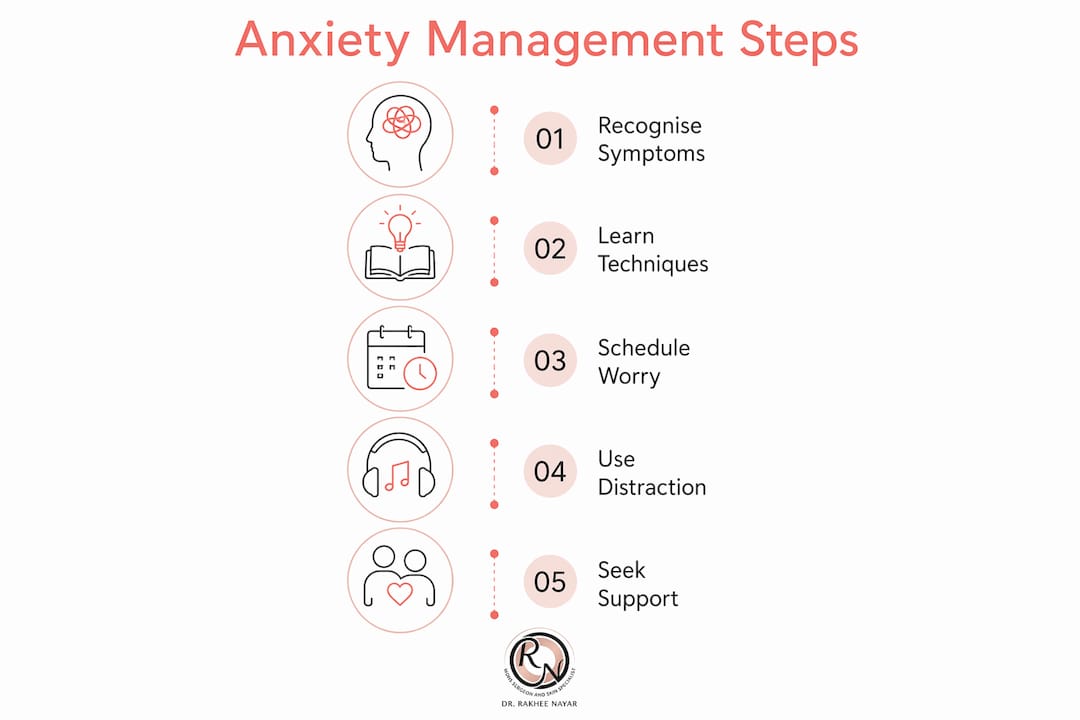
- Understand your procedure. Ask your surgical team exactly what will happen, step by step. Knowledge reduces fear more reliably than reassurance alone.
- Use breathing exercises daily. Even five minutes of controlled breathing lowers physical tension and settles a racing mind.
- Schedule a daily “worry time.” Set aside 15–20 minutes to think through concerns, then close the session. This prevents anxiety from bleeding into the rest of your day.
- Tell your team about specific fears. Needle phobia, a history of fainting, or concerns about scarring — all of these can be accommodated when disclosed in advance.
- Maintain any prescribed mental health medication unless your preoperative nurse advises otherwise.
- Plan the day itself. Bring something to read or listen to. Know your travel route. Small logistical certainties reduce background stress considerably.
- Seek professional support early if anxiety has persisted for two weeks or more, or feels overwhelming. NHS Talking Therapies is available without a GP referral.
Knowing the procedure helps. Much of the worry before skin surgery comes from not knowing what the day involves. Read what happens during Mohs micrographic surgery, or arrange a consultation with Miss Nayar.
What is pre-surgery anxiety, and how do you recognise it?
Pre-surgery anxiety is a normal psychological response to an upcoming medical procedure. It is not a sign of weakness or poor coping. The body treats anticipated threat — even a planned, beneficial one — in much the same way it treats actual danger, triggering the same stress hormones and physical reactions.
Recognising the symptoms matters because people often attribute them to other causes and miss the opportunity to address them directly. Common signs include:
- Restlessness or an inability to settle, particularly in the evenings
- Disturbed sleep, including difficulty falling asleep or waking repeatedly
- Irritability and a lower threshold for frustration
- Difficulty concentrating on everyday tasks
- Physical symptoms such as muscle tension, headaches, or a churning stomach
- Feeling tearful or emotionally flat, sometimes alternating between the two
- Withdrawing from social situations or activities you would normally enjoy
- Intrusive thoughts about the procedure, outcomes, or recovery
The Royal Berkshire NHS prehabilitation guidance notes that these symptoms can form a self-reinforcing cycle: negative thoughts increase physical tension, which reduces activity, which in turn can deepen low mood. Spotting the pattern early gives you the best chance of breaking it.
Why good wellbeing before surgery genuinely matters
Looking after yourself in the weeks before skin surgery is not simply about feeling calmer on the day. There is a direct relationship between preoperative wellbeing and how smoothly recovery tends to go. Patients who arrive in reasonable physical and emotional shape generally experience better pain management, faster wound healing, and fewer complications.
The benefits of maintaining good wellbeing before your procedure include:
- Better sleep quality, which supports immune function and tissue repair
- Reduced physical tension, making local anaesthetic injections and the procedure itself easier to tolerate
- Improved mood resilience, so that unexpected delays or minor discomforts feel less destabilising
- Lower levels of circulating stress hormones, which can otherwise slow healing
- Greater capacity to follow aftercare instructions clearly and consistently
- Reduced risk of postoperative anxiety peaks, particularly during the waiting period for results
Planning rest and distraction after surgery is just as important as preparation beforehand. The period between the operation and receiving results is often when anxiety peaks most sharply, so having a plan for that window is worth thinking about now. Understanding what to expect from cosmetic outcomes in skin cancer surgery can also reduce uncertainty-driven worry considerably.
Effective techniques to relieve anxiety before skin surgery
There is no single method that works for everyone, and that is worth saying plainly. The goal is to find two or three approaches that suit your temperament and fit into your daily routine. Clinical guidance consistently favours acceptance over avoidance: trying to suppress anxiety tends to make it louder, not quieter.
Breathing and relaxation

Rectangle breathing is a simple technique endorsed by NHS prehabilitation teams. Visualise a rectangle — a window or door frame works well. Breathe in along one side, hold along the next, breathe out along the third, and pause along the fourth. Repeat until your breathing steadies. The Royal College of Anaesthetists also recommends guided imagery and mindfulness recordings, including a series produced in partnership with the British Society of Clinical and Academic Hypnosis (BSCAH), available in both short (approximately 8 minutes) and longer (approximately 17 minutes) formats.
Scheduled worry time
Setting aside 15–20 minutes daily for structured worrying — writing concerns down, identifying which are practical and which are hypothetical, and then closing the session — trains the brain to contain anxiety rather than let it run continuously. When a worry surfaces outside that window, the instruction to yourself is simply: “Not now. I’ll think about that later.” Over days, this becomes genuinely effective.
Pro Tip: Set your worry time at least 30 minutes before bed. Reviewing concerns immediately before sleep tends to prolong the time it takes to fall asleep and can worsen overnight waking.
Lifestyle adjustments
- Limit caffeine, particularly after midday
- Take light exercise such as a short walk
- Stay well hydrated
- Avoid alcohol, which disrupts sleep architecture even in small amounts
- Engage in absorbing hobbies: reading, music, gardening, or anything that occupies attention without requiring high energy
Distraction on the day
Bring a book, a podcast, or a crossword to the hospital. Plan a small reward for when you return home. These are not trivial suggestions; having something to look forward to genuinely shifts the emotional weight of the day.

How to prepare your mind effectively for skin surgery
Mental preparation is largely about reducing uncertainty, and the most direct way to do that is to ask questions. Before your procedure, write down anything you are unsure about — the sequence of events, what the local anaesthetic will feel like, how long you will be in the clinic, what the wound will look like immediately afterwards. A well-informed patient is almost always a calmer one.
Reframing surgery as a proactive health decision rather than something happening to you shifts the psychological dynamic considerably. You are choosing treatment. That is a meaningful distinction.
Practical steps for mental preparation:
- Read about your specific procedure beforehand. For Mohs surgery, understanding the step-by-step process removes much of the uncertainty that drives anxiety.
- Plan your hospital day in detail: what time you need to leave, where to park or which transport to take, what to bring, who will collect you.
- Bring a comfort item — a familiar scent, a photograph, or a piece of music that you associate with calm.
- Focus on recovery goals rather than the procedure itself. What do you want to be doing in four weeks’ time?
- Accept that some anxiety is normal and does not need to be eliminated entirely. The aim is to keep it at a manageable level, not to feel nothing.
Pro Tip: Tell your surgical team about any specific fears before the day of surgery, not on arrival. If you have a needle phobia or a history of fainting, disclosing this in advance allows the team to arrange additional support, modified positioning, or a longer settling-in period — all of which make a real difference.
For patients preparing for more complex reconstruction, the facial reconstructive surgery preparation guide covers the practical and emotional aspects in detail. Prehabilitation programmes that address both physical and mental readiness are also worth exploring; why prehabilitation matters is a useful starting point if you want a structured approach.
Where to access professional support for preoperative anxiety in the UK
Most people manage pre-surgery anxiety with the self-help strategies above. When anxiety has been present for two weeks or longer, feels overwhelming, or is significantly disrupting sleep and daily life, professional support is appropriate and available.
NHS Talking Therapies — previously known as IAPT — can be accessed without a GP referral in most areas of England. The service offers evidence-based treatments including Cognitive Behavioural Therapy (CBT), which has a strong track record in managing health-related anxiety. Self-referral is straightforward via the NHS website.
Other routes to support:
- Your GP, who can assess whether short-term medication, a referral to talking therapies, or a specialist mental health service is most appropriate
- The preoperative assessment nurse, who is specifically trained to address surgical anxiety and can flag concerns to the wider team
- Private counselling or therapy, available at relatively short notice if NHS waiting times are a barrier
- Mindfulness-based stress reduction (MBSR) courses, available online and in person across the UK
- The NHS Every Mind Matters platform, which offers free self-help CBT tools for managing worry and anxiety
If you are already taking prescribed medication for anxiety or depression, maintain that treatment unless your preoperative nurse specifically advises otherwise. Stopping abruptly before surgery adds unnecessary physiological and emotional stress.
Miss Nayar’s clinical perspective on managing anxiety before skin surgery
Anxiety before skin surgery is not a problem to be solved — it is a signal to be acknowledged. The patients who cope best are not those who feel no fear, but those who understand what is happening and have a plan for managing it.
Key clinical points worth knowing:
- Knowledge is the most reliable anxiolytic. Patients who understand their treatment plan manage anxiety more effectively than those who do not.
- Acceptance outperforms suppression. Trying to push anxiety away tends to amplify it. Acknowledging it, scheduling time for it, and then redirecting attention is clinically more effective.
- Mental health medications should generally be continued through the surgical period unless the preoperative team advises a specific change.
- Needle phobia and fainting histories are common and entirely manageable when disclosed in advance. There is no reason to stay silent about either.
- The post-surgery waiting period — particularly when awaiting histology results — is often the most anxious phase. Planning for it is as important as preparing for the procedure itself.
- Positive reframing has real clinical value. Viewing surgery as a proactive step towards health, rather than a threat, measurably improves patient experience and recovery.
Key takeaways
Managing anxiety before skin surgery is most effective when patients combine informed preparation, daily relaxation practice, and early disclosure of specific fears to their surgical team.
| Point | Details |
|---|---|
| Knowledge reduces anxiety | Patients who understand their procedure and recovery timeline cope significantly better than those who are uninformed. |
| Schedule worry time daily | A structured daily worry period prevents anxiety from dominating the rest of the day and improves sleep. |
| Disclose specific fears early | Needle phobia or fainting history should be communicated before the day of surgery so the team can prepare appropriate support. |
| NHS Talking Therapies is self-referral | If anxiety has lasted two weeks or more, patients can refer themselves directly for free CBT without needing a GP appointment first. |
| Continue mental health medication | Prescribed medication should generally be maintained through surgery preparation unless the preoperative nurse advises otherwise. |
FAQ
Is it normal to feel very anxious before skin surgery?
Yes. Anxiety before any surgical procedure is a common and entirely normal response. The UHCW NHS patient guide confirms that understanding the treatment process and recovery timeline significantly reduces anxiety levels for most patients.
How do you accept anxiety rather than fight it?
Acceptance-based approaches involve acknowledging anxious thoughts without acting on them or trying to suppress them. Clinical guidance recommends mindfulness practice and scheduled worry time as practical tools for compartmentalising anxiety rather than letting it run unchecked.
How can you calm your nervous system before bed on the night before surgery?
Avoid caffeine and alcohol, use rectangle breathing or a guided relaxation recording, and keep your worry time well before bedtime. The Royal Berkshire NHS prehabilitation guidance specifically advises scheduling worry time at least 30 minutes before sleep to avoid prolonging the time it takes to settle.
Can you take anything for anxiety before skin surgery?
Speak to your GP or preoperative nurse before taking any new medication or supplement. If you are already prescribed anxiolytic or antidepressant medication, continue it unless advised otherwise. Do not take over-the-counter remedies without checking with your surgical team first, as some supplements affect bleeding and anaesthetic response.
When should you seek professional help for pre-surgery anxiety?
NHS guidance recommends speaking to your GP or self-referring to NHS Talking Therapies if anxiety has been present for two weeks or longer, or if it is significantly disrupting your sleep, daily routine, or ability to function.
Recommended
- Preparing for facial reconstructive surgery: your 2026 guide
- Expert skin health tips for Mohs surgery recovery
- Cosmetic outcomes checklist for skin cancer surgery
- How to prepare for a skin cancer biopsy
Filed under Recovery and Aftercare


