Key Takeaways:
- The backs of the hands get almost constant, often unprotected, sun exposure over a lifetime, which makes them a common site for skin cancer that’s easy to put down to normal ageing.
- A scaly patch, a sore that won’t heal, or a growing lump on the back of the hand are the main signs worth checking, the same patterns as elsewhere on sun-exposed skin.
- A new dark streak running the length of a fingernail is a sign specific to the hand that’s easy to dismiss as a bruise or stain, and shouldn’t be.
- Most marks on the hand are harmless age spots, warts or old scars. Knowing what sets a genuinely suspicious one apart helps you decide when to get something looked at.
Hands are rarely covered by sunscreen the way a face is, and they’re out in the open for most of the day, every day, for decades. That makes the backs of the hands one of the more common places for skin cancer to develop, and one of the easier places to mistake it for ordinary wear and tear.
Miss Rakhee Nayar, a Consultant Plastic Surgeon and Mohs Micrographic Surgeon who also holds the European Board of Hand Surgery Diploma, treats skin cancer on the hand regularly. This guide covers what’s actually worth checking, and what usually isn’t.
Why the backs of your hands are a common site
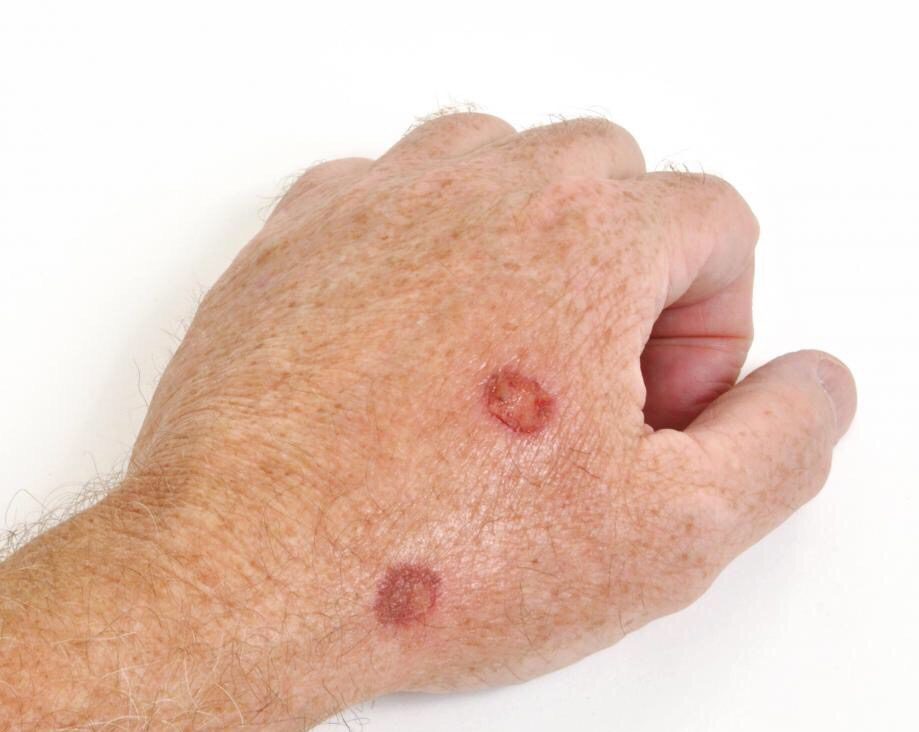
The backs of the hands sit in direct sun during driving, gardening, walking the dog, or simply resting on a desk by a window, usually without sunscreen. Over decades, that adds up to one of the highest cumulative sun exposures on the entire body.
The skin here is also thin, with little spare tissue over the tendons and knuckles, which is exactly why Mohs surgery on the hand is used when treatment is needed, to remove no more tissue than necessary around a delicate area.
What basal cell and squamous cell carcinoma look like on the hand
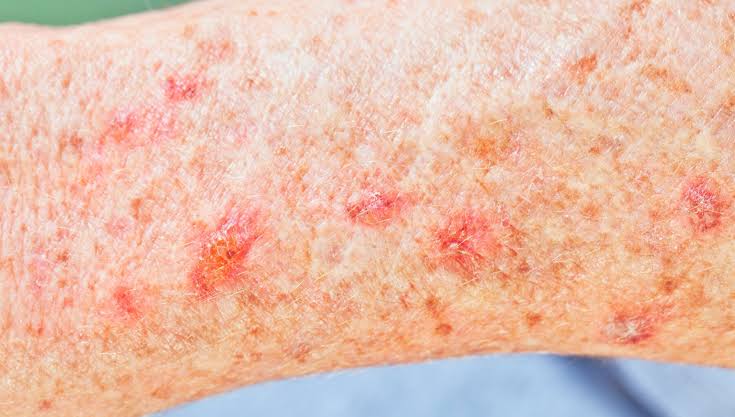
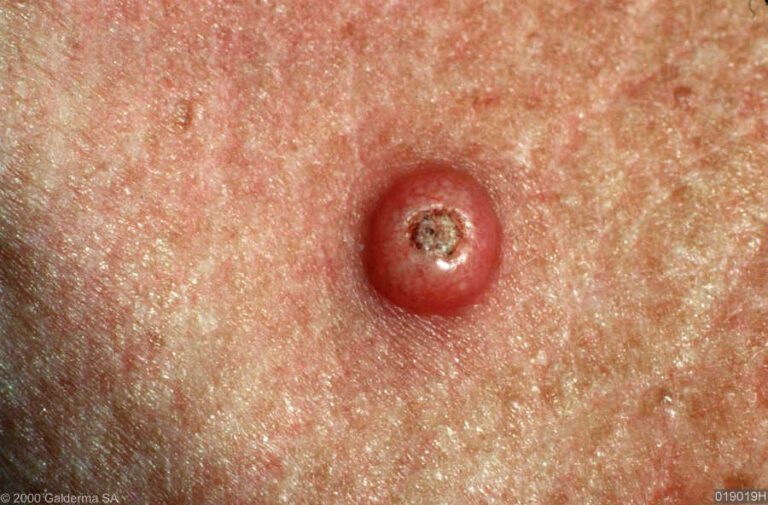
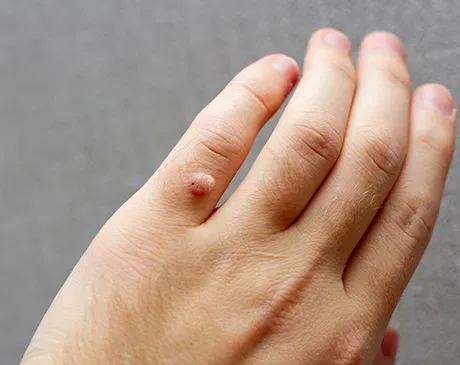
Squamous cell carcinoma is the more common of the two on the hand and typically looks like a firm, rough, scaly patch or nodule, sometimes crusted, that can bleed if knocked. It can be mistaken for a stubborn wart, particularly over a knuckle.
Basal cell carcinoma tends to appear as a small pearly or translucent bump, often with a tiny visible blood vessel, that grows slowly and rarely hurts. A British Association of Dermatologists’ patient guide to basal cell carcinoma describes this pearly appearance as one of its most recognisable features, wherever on the body it occurs.
The same general rule applies here as anywhere else on sun-exposed skin: a sore that hasn’t healed within four weeks, or a spot that’s clearly growing, is worth a professional look rather than a wait-and-see approach.
The nail sign most people miss
Melanoma can occasionally develop underneath a fingernail, known as subungual melanoma, and it’s genuinely easy to miss because it doesn’t look like a typical mole. The usual sign is a new dark brown or black streak running the length of the nail, rather than a spreading patch of pigment.
The NHS’s guide to melanoma symptoms notes that a dark streak in a nail, or pigment that spreads onto the surrounding skin and cuticle, is a sign worth having checked rather than dismissing as a stain or an old injury. Most dark marks under a nail are harmless, caused by a knock the nail took weeks earlier, but a streak that appears without an injury, or that doesn’t grow out as the nail grows, is the kind of thing a GP or specialist should look at.
Telling a worrying spot apart from a harmless one
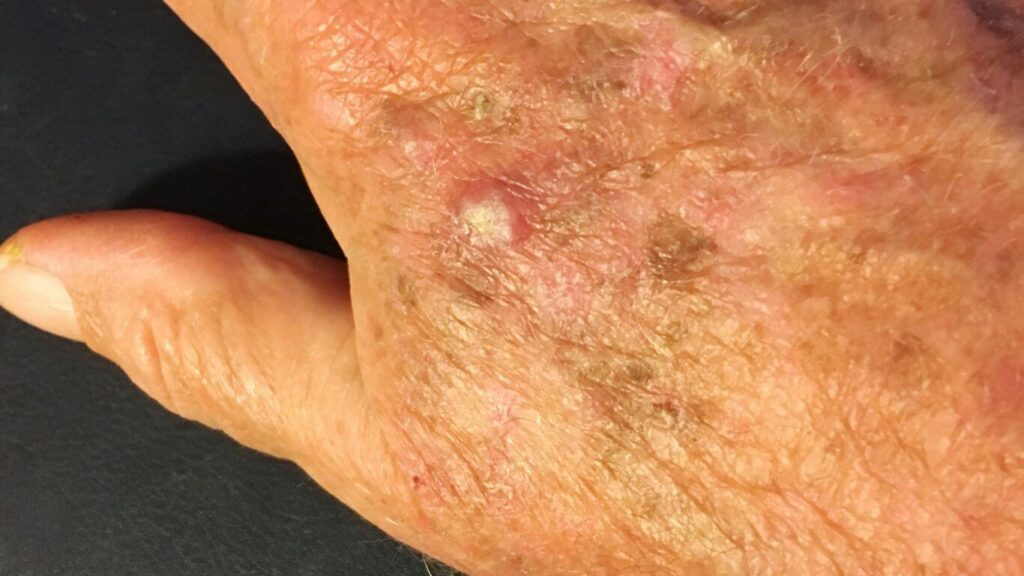
Hands accumulate a lot of harmless marks over the years: age spots (flat, brown, sun-related but not cancerous), common warts, and old scars. The features that separate a genuinely suspicious spot from these are the same ones that apply anywhere else: is it new, is it changing, has it failed to heal within a month, and does it feel rough, firm or different from the skin around it.
If you’re not sure, sun protection and skin cancer prevention covers the wider picture of what to watch for and how to reduce the risk of new lesions appearing, on the hands and elsewhere.
| Squamous cell carcinoma | Basal cell carcinoma | Subungual melanoma | |
|---|---|---|---|
| Usual location | Back of the hand, knuckles | Back of the hand | Under a fingernail |
| Typical look | Rough, scaly patch or nodule | Small pearly bump | A new dark streak in the nail |
| Easily mistaken for | A stubborn wart | An age spot | A bruise or nail stain |
| Urgency | High, assess promptly | High, assess promptly | Urgent |
FAQ
Why are hands a common site for skin cancer?
The backs of the hands receive almost constant sun exposure during everyday activities, usually without sunscreen, which builds up significant cumulative UV damage over decades.
What does a dark line under a fingernail mean?
Most are harmless and caused by an old knock to the nail. A streak that appears without injury, doesn’t grow out, or spreads onto the surrounding skin should be assessed, since it can occasionally be a sign of melanoma under the nail.
How is a wart different from squamous cell carcinoma on the hand?
Warts are common and usually stay a similar size for a long time. A patch that is new, growing, bleeding, or hasn’t resolved within about four weeks is the kind that warrants a professional opinion rather than being assumed to be a wart.
Does Mohs surgery work the same way on the hand as on the face?
The cancer removal technique is the same everywhere. What changes is the repair, which on the hand is planned around tendon movement, grip and joint flexibility rather than facial appearance.
Recommended
- Mohs Surgery on the Hand: UK Specialist
- How to Spot Skin Cancer Symptoms on the Face
- A similar early-warning approach for another often-missed area is covered in how to spot skin cancer on the eyelid
- Sun protection and skin cancer prevention: your guide
Filed under Spotting Skin Cancer