
Key Takeaways:
- The nose and ear heal differently mainly because of what’s underneath the skin. The nose has an internal airway to protect, while the ear is almost entirely cartilage with very little spare skin.
- Nose surgery tends to come with more visible swelling and some nasal congestion in the first week or two. Ear surgery tends to swell less but needs more care to protect the cartilage from knocks while it heals.
- Surgery on the outer ear doesn’t affect hearing, since the ear canal and middle ear aren’t involved.
- Both sites keep settling for months after the stitches are out. Scar maturation on the nose in particular can take 12 to 18 months before the final result is clear.
The nose and the ear are both common sites for Mohs surgery, and the cancer removal itself works exactly the same way on each. Recovery is where they genuinely part ways, because the two areas are built so differently underneath the skin.
Miss Rakhee Nayar, a Consultant Plastic Surgeon and Mohs Micrographic Surgeon, plans the repair for each area around what it actually has to protect. This article sets out how recovery compares between the two, so you know roughly what to expect depending on where your surgery is.
Why recovery differs between the nose and the ear
The nose is built around a central airway that needs to stay open, with cartilage and bone giving it shape and reasonably thick, oily skin covering it. Mohs surgery on the nose is planned with breathing function in mind as much as appearance, which shapes how the reconstruction, and the recovery, unfolds.
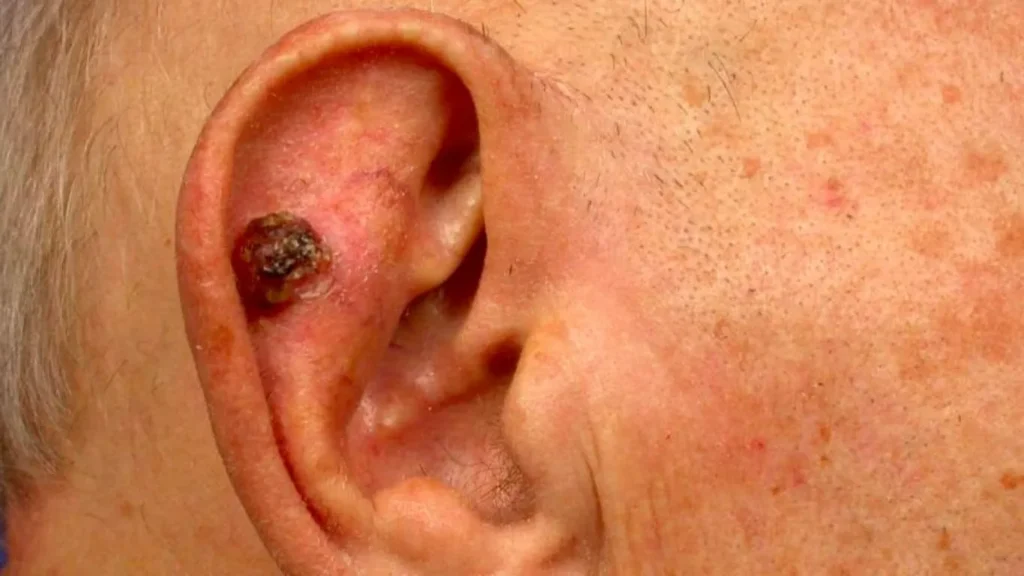
The ear, by contrast, is almost entirely a thin layer of skin sitting directly over cartilage, with very little spare tissue nearby to borrow from. Mohs surgery on the ear covers how that limited tissue shapes the repair options, and it’s also worth knowing upfront that surgery here doesn’t touch the ear canal or middle ear, so hearing isn’t affected.
The first week after nose surgery
Swelling and some bruising, often spreading faintly towards the eyes, are normal in the first week after nose surgery and tend to peak around day two or three. A degree of nasal congestion or stuffiness is common while the internal tissues settle, even when the surgery was purely on the outer skin.
Sleeping with your head slightly elevated for the first few nights helps reduce swelling, and avoiding a forceful nose-blow for around two weeks protects the repair while it’s still fragile.
The first week after ear surgery
Ear surgery generally comes with noticeably less swelling than nose surgery, since there’s no internal airway involved and the tissue itself is thinner. What matters more in the first week is protecting the ear from being knocked or slept on, since cartilage-backed repairs are more sensitive to pressure than they look.
Many ear repairs are completed on the same day as the cancer removal, and a bulky dressing is often worn for a few days afterwards to cushion the area while it starts to heal.
Swelling, bruising and getting back to normal
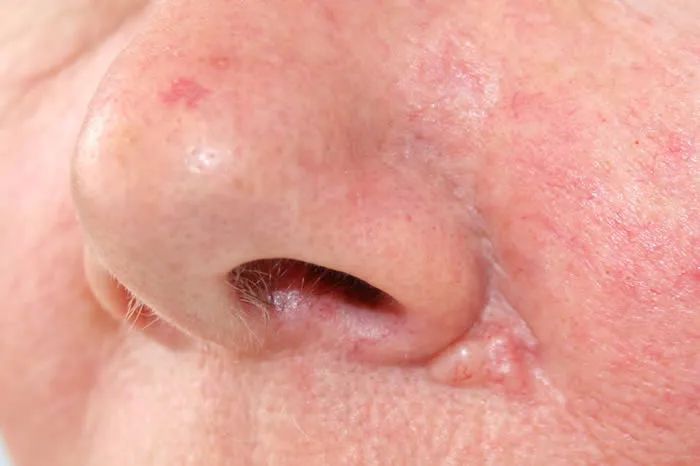
Most visible swelling on the nose settles over one to two weeks, though subtle puffiness can linger a little longer. On the ear, swelling is usually milder and tends to settle within the first week. Stitches on either site are typically removed, or dissolve, within about one to two weeks, depending on the repair.
Day-to-day activities can usually resume quickly on both sites, though glasses resting on the bridge of the nose, or earrings and sleeping on the affected side, are worth avoiding until your surgeon confirms the repair has settled enough.
How long until the scar has properly settled
Neither site gives its final result quickly. A BAPRAS patient guide to skin cancer surgery and reconstruction notes that scars continue to improve for many months after surgery, and that’s especially true on the nose, where full scar maturation can take 12 to 18 months. Ear scars generally settle a little sooner, though both benefit from patience, sun protection, and not judging the result too early.
| Nose | Ear | |
|---|---|---|
| Typical early swelling | Noticeable, peaks day 2-3, eases over 1-2 weeks | Milder, usually settles within a week |
| Main early care point | Avoid forceful nose-blowing for ~2 weeks | Protect from knocks and pressure while sleeping |
| Same-day reconstruction | Usually possible | Usually possible |
| Stitches out | Around 1-2 weeks, repair-dependent | Around 1-2 weeks, repair-dependent |
| Scar maturation | Up to 12-18 months | Generally settles a little sooner |
FAQ
Does ear surgery affect hearing?
No. Mohs surgery on the outer ear doesn’t involve the ear canal or middle ear, so hearing isn’t affected.
Why does nose surgery cause more swelling than ear surgery?
The nose has more underlying soft tissue and an internal airway, which responds to surgery with more noticeable swelling. The ear’s skin is thinner and sits almost directly over cartilage, which tends to swell less.
Can I wear glasses or earrings straight after surgery?
It’s best to avoid anything resting directly on the repair, glasses on the nose bridge or earrings and sleeping on the ear, until your surgeon confirms the area has settled enough.
Is recovery slower on the ear because of the cartilage?
Not necessarily slower, but it does need more care in the first week or two to protect the repair from pressure or knocks, since cartilage-backed skin is more sensitive to this than skin with more cushioning underneath.
Recommended
- Mohs Surgery on the Nose
- Mohs Surgery on the Ear: UK Specialist
- How the surgical approach itself differs by facial area is covered in comparing surgical approaches for delicate facial areas
- About Dr Nayar
Filed under Recovery and Aftercare