Sun protection is the single most effective strategy for reducing skin cancer risk by limiting the amount of ultraviolet (UV) radiation that reaches and damages skin cells. The role of sun protection in skin cancer prevention is supported by strong clinical evidence: daily SPF 15+ sunscreen reduces invasive melanoma risk by up to 73%. The British Association of Dermatologists (BAD), NHS, and Cancer Research UK all recommend a multidimensional approach that combines sunscreen, protective clothing, shade, and behavioural change. Miss Rakhee Nayar, GMC-registered Consultant Plastic Surgeon and Mohs specialist, sees the consequences of inadequate photoprotection in clinical practice every week. Understanding what UV radiation does to skin cells, and how to block it effectively, is the foundation of preventing skin cancer before it starts.
What is the role of sun protection in skin cancer prevention?
UV radiation is the primary environmental cause of all three major skin cancers: basal cell carcinoma (BCC), squamous cell carcinoma (SCC), and melanoma. When UV photons strike skin cells, they cause direct DNA mutations. Left unrepaired, those mutations accumulate and drive malignant transformation.
How UVB and UVA radiation each cause damage
UVB radiation is the shorter, higher-energy wavelength responsible for sunburn. It directly breaks chemical bonds in DNA, producing the characteristic thymine dimers that, over time, disable tumour-suppressor genes. UVA radiation is longer and penetrates more deeply into the dermis. It generates reactive oxygen species that oxidise DNA indirectly and contribute to photoageing as well as carcinogenesis.
The distinction matters clinically. UVB intensity varies with season, time of day, and latitude. UVA intensity remains relatively constant throughout the year and throughout the day. This is why UVA penetrates window glass, meaning skin can accumulate UV damage while sitting near a window or driving, even without any sensation of warmth or sunburn.
The myth of the “base tan”
A common and dangerous misconception is that a gradual tan provides protection. The CDC is clear: a tan reflects DNA damage, not adaptation. Melanin production is a cellular stress response to injury, not a shield. A base tan offers negligible SPF equivalent and significantly elevates the cumulative risk of all skin cancer types, regardless of skin tone.
The following UV exposure patterns carry the highest skin cancer risk:
- Repeated intermittent high-intensity exposure, such as occasional beach holidays
- Blistering sunburn, particularly during childhood and adolescence
- Cumulative occupational exposure over decades
- Use of sunbeds, which emit concentrated UVA and UVB
- Unprotected exposure through glass during long daily commutes
No safe threshold of UV exposure exists. Every unprotected exposure contributes to a lifetime burden of DNA damage that the skin’s repair mechanisms must manage.
How effective are the main sun protection methods?
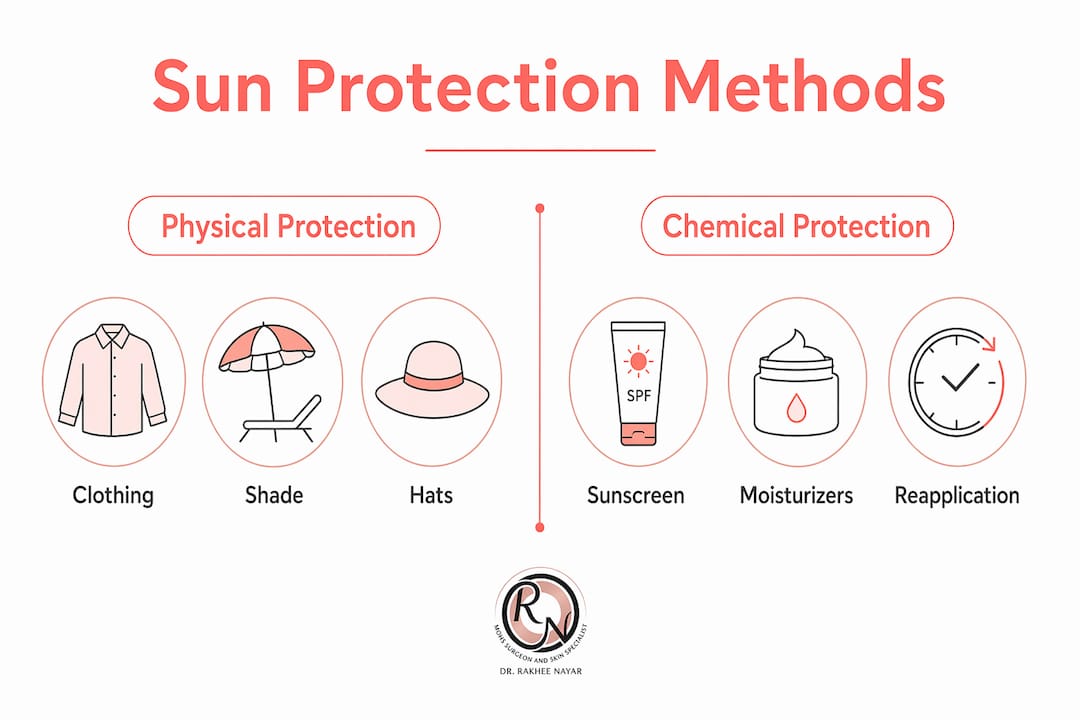
Photoprotection requires a multidimensional approach integrating sunscreen, clothing, shade, and behavioural change. No single measure provides complete protection. The evidence for each layer is well established.
Sunscreen: SPF, application, and reapplication
SPF (Sun Protection Factor) measures how much UVB radiation a product blocks. SPF 15 blocks approximately 93% of UVB rays; SPF 30 blocks approximately 97%. The incremental gain above SPF 30 is modest, but SPF 30 or above is recommended whenever sustained outdoor exposure is expected. Broad-spectrum formulations protect against both UVA and UVB.
Application quantity is where most people fall short. Apply approximately 1 ounce of sunscreen to cover all exposed skin, 15–30 minutes before going outdoors. Reapply every 2 hours, and immediately after swimming or heavy sweating. Most people apply far less than the tested quantity, which substantially reduces the effective SPF delivered to the skin.
- Choose a broad-spectrum sunscreen with SPF 30 or above for outdoor activities.
- Apply 15–30 minutes before exposure to allow the product to bind to the skin.
- Use approximately 1 ounce for a full-body application. For the face alone, a generous pea-sized amount is insufficient.
- Reapply every 2 hours without exception, and after any water exposure.
- Apply to all exposed areas including ears, the back of the neck, the dorsum of the hands, and the feet.
Pro Tip: Set a phone reminder to reapply sunscreen every 2 hours when outdoors. Most people forget after the first application, which is when protection drops significantly.
Protective clothing and shade
Clothing provides consistent, reliable UV protection that does not wash off or wear away. Tightly woven, dark-coloured fabrics with a UPF (Ultraviolet Protection Factor) rating of 50+ block over 98% of UV radiation. A wide-brimmed hat protects the scalp, ears, and the back of the neck, areas frequently missed by sunscreen. UV-blocking sunglasses protect the periorbital skin and reduce the risk of ocular melanoma.
Shade reduces UV exposure substantially, but reflected UV from sand, water, and concrete still reaches the skin. Seeking shade between 10 AM and 4 PM, when UV intensity is highest, is a sound baseline practice. The shadow rule offers a simple real-time check: if your shadow is shorter than your height, UV intensity is high and full protection is needed immediately.
Combining clothing, shade, and sunscreen consistently outperforms any single measure. Sunscreen fills the gaps that clothing cannot cover; shade reduces the total UV dose; clothing provides a reliable physical barrier that requires no reapplication.
Common misconceptions that undermine sun protection
Several persistent beliefs reduce the effectiveness of sun safety practices, even among people who consider themselves well informed. Addressing them directly is part of responsible patient education.
The most clinically significant misconceptions include:
- Darker skin is immune to UV damage. Darker skin tones remain vulnerable to UVA-induced damage and carry a real risk of skin cancer. Melanin provides some UVB attenuation but does not block UVA. Skin cancers in people with darker skin are also more frequently diagnosed at a later stage, worsening outcomes.
- Sun protection is only needed in summer. UVA levels remain relatively constant year-round. UVB is lower in winter but still present, particularly at altitude or on reflective surfaces such as snow.
- A cloudy day means no UV exposure. Up to 80% of UV radiation passes through cloud cover. Overcast conditions create a false sense of security.
- Sunscreen alone is sufficient. Sunscreen is a critical component, but it is not a complete solution. Gaps in application, inadequate quantity, and failure to reapply all reduce its effectiveness significantly.
- Indoor workers do not need sun protection. UVA penetrates ordinary window glass. People who sit near windows for several hours daily accumulate meaningful UV exposure over months and years.
Pro Tip: Apply a broad-spectrum SPF 30 moisturiser every morning as part of your daily skincare routine, regardless of the weather or your plans for the day. This single habit addresses indoor UVA exposure and incidental outdoor exposure simultaneously.
The common myths around skin cancer extend beyond sun protection. Understanding the full picture of risk helps people make better decisions about when to seek specialist assessment.
How to integrate sun protection into daily life
Consistent sun safety practices reduce lifetime skin cancer risk more effectively than intensive but infrequent protection. The goal is to make photoprotection habitual rather than situational.
The following framework supports daily integration:
- Every morning: Apply a broad-spectrum SPF 30 moisturiser or sunscreen to the face, neck, and hands before leaving the house. This covers incidental exposure during commuting, walking, and time near windows.
- Before planned outdoor activity: Switch to SPF 30 or above, applied 15–30 minutes in advance, covering all exposed skin to the full 1-ounce quantity.
- Clothing choices: Keep a wide-brimmed hat and UV-blocking sunglasses accessible. UPF-rated clothing is particularly useful for gardening, sport, and travel.
- Timing: Plan prolonged outdoor activities for before 10 AM or after 4 PM when UV intensity is lower. When this is not possible, prioritise shade and reapplication.
- Children and young people: Childhood sunburns significantly elevate the lifetime risk of melanoma. Teaching children sun safety habits early, and applying sunscreen to them consistently, is one of the most impactful long-term prevention measures available.
The table below summarises recommended sun protection by activity type.
| Activity | Recommended SPF | Key additional measures |
|---|---|---|
| Daily indoor routine near windows | SPF 30 moisturiser | Apply to face, neck, and hands each morning |
| Commuting by car or public transport | SPF 30 | Reapply if journey exceeds 2 hours |
| Outdoor exercise (under 1 hour) | SPF 30 | Hat, sunglasses, seek shade where possible |
| Prolonged outdoor activity | SPF 30–50+ | Reapply every 2 hours, UPF clothing, wide-brimmed hat |
| Beach or water activity | SPF 50+ water-resistant | Reapply after every swim, cover up when not in water |
Consulting a specialist is appropriate when you have a personal or family history of skin cancer, a large number of moles, or a history of significant sun exposure or sunburn. Miss Rakhee Nayar offers personalised skin cancer prevention advice alongside clinical assessment, helping patients understand their individual risk and act on it.
Understanding how skin cancers form through UV-driven DNA mutation also helps patients appreciate why consistent daily protection matters, rather than treating sunscreen as an occasional precaution.
Key takeaways
Consistent, multidimensional sun protection is the most evidence-based strategy available for reducing skin cancer risk across all skin types and all seasons.
| Point | Details |
|---|---|
| Daily sunscreen reduces melanoma risk | SPF 15+ used daily reduces invasive melanoma risk by up to 73%. |
| SPF 30 is the practical minimum | SPF 30 blocks approximately 97% of UVB and is recommended for sustained outdoor exposure. |
| Application quantity matters | Apply approximately 1 ounce for full-body coverage and reapply every 2 hours. |
| UVA penetrates glass | Indoor and in-vehicle exposure is real; daily SPF moisturiser addresses this risk. |
| Combine all protective layers | Sunscreen, clothing, shade, and behavioural change together outperform any single measure. |
Skin cancer care at Rakhee Nayar – Mohs Surgeon and Skin Specialist
Sun protection reduces risk, but it does not eliminate it entirely. If you have noticed a new or changing lesion, have a history of significant UV exposure, or have already received a skin cancer diagnosis, specialist assessment is the right next step.
Rakhee Nayar – Mohs Surgeon and Skin Specialist offers expert skin cancer diagnosis and treatment at a private clinic in North West England, with e-consultations available for UK and international patients. Miss Nayar’s dual training in Mohs micrographic surgery and plastic surgery means that treatment planning addresses both cure rates and cosmetic outcomes from the outset. To arrange a consultation or to learn more about your options, visit mohssurgeon.co.uk.
This article is for educational purposes only and does not constitute medical advice. Please consult a GMC-registered specialist for assessment and treatment recommendations specific to your situation.
FAQ
What SPF level is recommended for preventing skin cancer?
The BAD and NHS recommend a minimum of SPF 15 for daily use, with SPF 30 or above for sustained outdoor exposure. SPF 30 blocks approximately 97% of UVB radiation and is the practical standard for most outdoor activities.
Does sunscreen prevent all types of skin cancer?
Broad-spectrum sunscreen reduces the risk of melanoma, basal cell carcinoma, and squamous cell carcinoma, but it does not eliminate risk entirely. It must be combined with protective clothing, shade, and behavioural change for the most effective prevention.
Is sun protection necessary on cloudy or winter days?
Yes. Up to 80% of UV radiation passes through cloud cover, and UVA levels remain relatively constant throughout the year. Daily SPF moisturiser applied to the face, neck, and hands provides meaningful protection on overcast and winter days.
Can people with darker skin skip sun protection?
No. Darker skin tones still sustain UVA-induced DNA damage and carry a real risk of skin cancer. Universal sun protection is recommended for all skin types by the American Academy of Family Physicians and the BAD.
When should I see a specialist about skin cancer risk?
Seek a specialist assessment if you notice a new, changing, or unusual lesion, have a personal or family history of skin cancer, or have a history of significant cumulative sun exposure or repeated sunburn. Early detection significantly improves treatment outcomes.
Recommended
- Skin cancer symptoms and signs: the UK guide for early detection
- Top skin health practices for cancer prevention and recovery
- How to support skin cancer patients: practical help guide
- Debunking common skin cancer myths for better protection
Filed under Skin Cancer Explained