Key Takeaways:
- Checking a surgeon’s qualifications is only the first step. The more useful questions are specific to your own case: what’s actually being removed, how it will be closed, and what your recovery will genuinely look like.
- UK professional standards expect patients to be included in decisions about their own care, so asking detailed questions is a normal, expected part of a consultation, not an imposition.
- Reconstruction, scarring, and who performs each stage of your treatment are the questions patients most often forget to ask, and the ones that matter most for a facial procedure.
- A written list of questions is worth bringing. It’s easy to forget them once you’re actually in the room.
Before Mohs surgery or facial reconstruction, the questions worth asking go well beyond checking your surgeon’s credentials. How to find expert skin surgeons covers how to verify GMC registration and fellowship training. This article is about what to ask once you’ve found someone qualified, the questions specific to your own diagnosis and your own face.
Miss Rakhee Nayar, a Consultant Plastic Surgeon and Mohs Micrographic Surgeon, encourages patients to ask detailed questions at consultation, well before any commitment is made. The list below is organised in the order these questions naturally come up.
Questions about your diagnosis and the procedure itself
Start with the basics of what’s actually happening and why. What type of skin cancer is this, and how confident is the diagnosis without a biopsy? Why is this particular technique, Mohs surgery, standard excision, or something else, being recommended for your specific lesion?
It’s also worth asking how many stages are likely to be needed and how long you should plan to be at the clinic. Mohs surgery is done in layers, and the exact number isn’t known until the first one is examined under the microscope.
Questions about reconstruction, if you need it
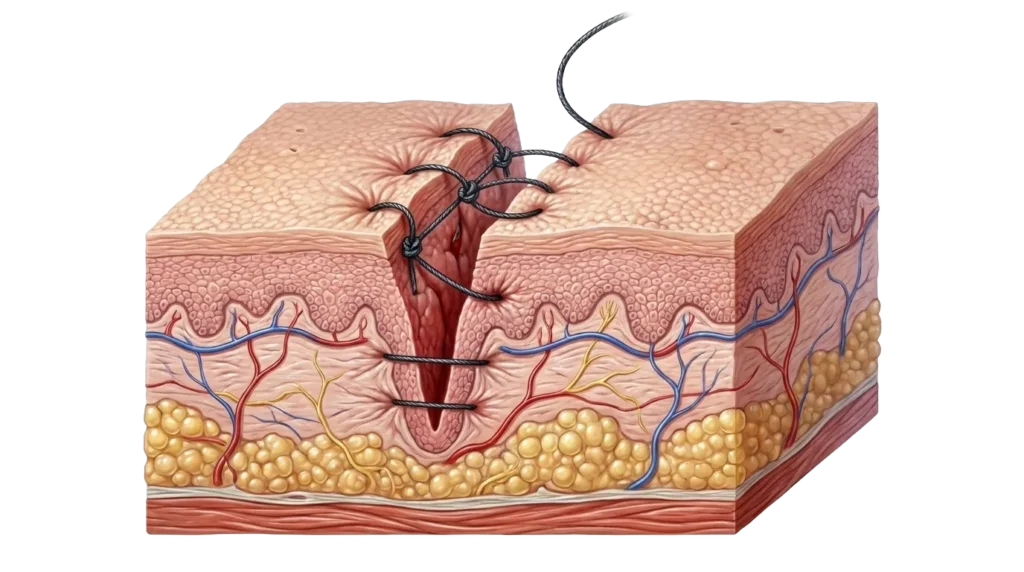
This is where many patients stop asking questions too early. Once the cancer is out, how will the wound actually be closed, direct stitching, a skin graft, or a flap? When is full facial reconstruction necessary explains how that decision gets made and why it isn’t always obvious from the size of the cancer alone.
If reconstruction is needed, ask directly whether the same surgeon performs both the cancer removal and the repair, or whether you’re being referred elsewhere for a second procedure. Ask what happens if the defect turns out larger than expected once the cancer is fully removed.
Questions about scarring and appearance
Ask what the scar is realistically likely to look like in the first few weeks versus after a year, since early appearance rarely predicts the final result. Ask whether the incision will follow natural skin creases, and whether silicone gel, massage, or other scar care will be recommended and from what point.
For anything on the face, it’s also fair to ask to see examples of similar previous results, understanding that every case and every patient’s healing is different.
Questions about risks and what happens if something goes wrong
Every procedure carries some risk, and a straightforward answer is more reassuring than a vague one. Ask what the specific risks are for your procedure and location, not just the generic list. Ask what happens if the margins aren’t clear after the first stage, and what the plan is if the cancer recurs later.
It’s also worth asking who to contact, and how quickly, if something concerns you after you’ve gone home.
Questions about recovery and what it means day to day
Ask how long before you can return to work, exercise, or driving, since this varies considerably by procedure and by how the wound was closed. Ask what wound care you’ll need to do yourself and for how long, and whether follow-up appointments happen at the same site where you were treated.
If you’re anxious about any part of the process, it’s a reasonable thing to say out loud. How to manage anxiety before skin surgery covers practical ways surgeons and patients work through this together.
Questions about cost and who’s actually treating you
Ask for a written quote once you’ve been assessed, rather than a verbal estimate, and ask what it does and doesn’t include, follow-up visits, dressing changes, any second procedure. Confirm which location you’ll be seen and treated at, since insurance recognition can vary by hospital as well as by insurer.
Ask specifically who will be in the room. In some settings, a consultant assesses you but a more junior colleague performs part of the procedure. It’s entirely reasonable to ask who is actually doing what.
A checklist to bring with you
| Area | Question worth asking |
|---|---|
| Diagnosis | What type of skin cancer is this, and how sure are you without a biopsy? |
| Procedure | Why this technique, and how many stages or visits should I expect? |
| Reconstruction | Will you do the repair yourself, and what happens if the defect is bigger than expected? |
| Scarring | What will this realistically look like at six weeks versus a year? |
| Risks | What are the specific risks for this procedure and site, and who do I contact if I’m worried afterwards? |
| Recovery | When can I return to work, exercise and driving? |
| Cost | Can I have a written quote, and what does it include? |
FAQ
Is it rude to ask my surgeon lots of questions?
No. The GMC’s professional standards on decision making and consent set out that patients should be genuinely included in decisions about their own care, so asking detailed questions is the expected standard, not an imposition on your surgeon’s time.
How many questions should I actually ask at one appointment?
As many as you genuinely need answered. Most first consultations run between 30 and 60 minutes precisely because a proper discussion takes real time, so a written list beforehand helps you use that time well.
What if my surgeon can’t answer one of these questions?
Some, like exactly how many stages you’ll need, genuinely can’t be answered until the procedure is underway. But a surgeon should always be able to explain why that’s the case, rather than simply not addressing the question.
Should I get a second opinion before deciding?
If you feel unsure after your consultation, a second opinion is a reasonable and normal step, not a sign of distrust. Macmillan Cancer Support’s guidance on questions to ask your healthcare team confirms most specialists expect that patients facing a cancer diagnosis may want one.
Recommended
- About Dr Nayar
- How to find expert skin surgeons: a UK patient guide
- What actually happens at your appointment is covered under what to expect at your first visit
- Reconstruction After Mohs or BCC Surgery
Filed under Choosing Your Care