TL;DR:
- Mohs surgery results in smaller, more precise scars and has higher patient satisfaction compared to traditional excision. Scar maturation spans 12 to 18 months, with proper care significantly enhancing cosmetic outcomes. Surgeon expertise and reconstruction choices profoundly influence the final appearance and patient confidence.
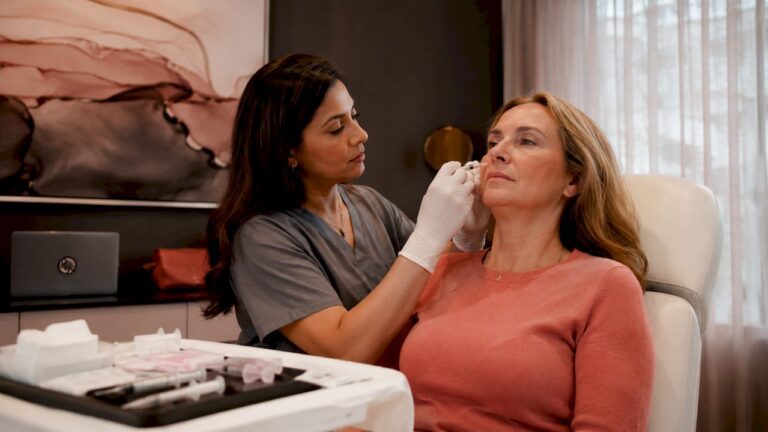
If you have been diagnosed with skin cancer on your face or another visible area, your first question often has nothing to do with cure rates. It is: “What will I look like afterwards?” Explaining cosmetic outcomes in Mohs surgery is something every patient deserves clearly and honestly, not glossed over with vague reassurances. The good news is that the evidence strongly supports Mohs as the most tissue-conservative surgical option available, meaning smaller wounds, finer scars, and better long-term appearance than most patients anticipate. This article walks you through what actually happens to your skin from the operating table to full scar maturity.
Key takeaways
| Point | Details |
|---|---|
| Mohs preserves more tissue | Scars from Mohs are up to 38% smaller in surface area than those from standard excision. |
| Healing takes longer than you think | Full scar maturation takes 12 to 18 months, so early appearance is not the final result. |
| Reconstruction shapes your outcome | The closure technique chosen, from direct suturing to local flaps, significantly affects final appearance. |
| Complications are rare | Overall complication rates sit between 0.7% and 2.6%, keeping cosmetic risks low. |
| Patients report high satisfaction | Validated outcome measures show over 90% of patients rate their Mohs scars as good or excellent. |
Why Mohs produces better cosmetic results
When surgeons perform standard excision, they remove a fixed margin of healthy tissue around the tumour because they cannot check all the edges in real time. Mohs micrographic surgery is different. Each layer is examined under a microscope before the next is removed, meaning only cancerous tissue is taken. The result is a smaller surgical defect and, consequently, a smaller scar.
The numbers behind this are striking. Mohs scars are 38% smaller in surface area than those produced by wide local excision, and typically 1 to 2 mm narrower. Every millimetre of tissue saved increases the probability of a good or excellent cosmetic result by 12%. That is not a trivial difference when the wound is on your nose, eyelid, or lip.
Key reasons why Mohs consistently produces superior cosmetic results:
- Precise tumour mapping removes only what is necessary, leaving the surrounding healthy architecture intact
- Lower recurrence rates mean revision surgery (which always worsens scars) is far less likely
- Smaller defects give reconstruction surgeons more options for closure with less tension
- Validated outcome tools such as POSAS and FACE-Q consistently confirm higher patient satisfaction scores compared with traditional excision
Economic analyses reinforce the clinical case. Mohs delivers quality-adjusted life year gains at lower cost than wider excision for many facial cancers, which is why it has become the standard of care for high-risk sites.
How your scar evolves over time
One of the most distressing moments for patients is looking in the mirror two weeks after surgery and seeing a red, swollen, raised scar. Here is what you need to know: that appearance is almost never the final result. Scar maturation continues for 12 to 18 months after surgery, and understanding each phase makes the process far less frightening.
The healing process moves through three broad stages:
- Inflammatory phase (weeks 1 to 2): The wound appears red, swollen, and sometimes bruised. Sutures are still in place. This is entirely normal and reflects the body’s repair response, not permanent damage.
- Proliferative phase (weeks 2 to 6): New collagen is laid down rapidly. The scar may appear raised, firm, and pink. Sutures are typically removed at 5 to 14 days depending on the site.
- Maturation phase (months 3 to 18): Collagen remodels, the scar flattens, softens, and loses its redness. Most patients are surprised by how much improvement occurs quietly during this window without any further intervention.
What you do during this period genuinely matters. Scar massage, silicone sheets, and sun protection are not optional extras. Gentle massage is recommended from around 2 to 3 weeks after suture removal. Silicone gel sheets worn for 12 or more hours daily reduce the risk of hypertrophic scarring. Sun protection of SPF 30 or above should continue for at least three months, because immature scar tissue pigments unevenly when exposed to UV light.
Pro Tip: Photograph your scar every four weeks in the same lighting. When you compare month two to month twelve, the transformation is often remarkable and gives patients real confidence that the process is working.

If you want deeper guidance on the recovery timeline for Mohs, tracking each phase carefully helps you know what is normal and when to seek advice.
Reconstruction options and their aesthetic impact
The moment Mohs removes the tumour, a decision has to be made about how to close the wound. That decision has a profound effect on your final appearance. There is no single best approach. The right choice depends on the size of the defect, its location, surrounding tissue quality, and your overall health.
| Closure method | Best for | Cosmetic consideration |
|---|---|---|
| Primary closure (direct suturing) | Small defects with skin laxity | Finest linear scar, lowest complexity |
| Local flap (advancement, rotation, bilobed, V-Y) | Moderate defects on nose, cheek, eyelid | Excellent colour and texture match from adjacent skin |
| Full-thickness skin graft | Larger defects, complex sites | Good cosmesis, minimal contraction, donor site scar |
| Split-thickness skin graft | Very large or infected defects | Greater contraction, more visible colour difference |
| Secondary intention (open healing) | Concave areas: inner eye corner, nasal alar groove | Often excellent cosmesis, no surgical repair needed |
Local flap techniques are frequently the gold standard for facial reconstruction because they borrow skin from immediately adjacent tissue. That neighbouring skin shares the same colour, thickness, and texture as the area lost, so the match is as close as biology allows.
Secondary intention healing deserves special mention because it is widely misunderstood. Many patients assume leaving a wound to heal on its own means accepting a poor result. In fact, 95.2% of Mohs surgeons report good to excellent cosmetic outcomes for wounds managed this way, particularly on concave areas of the face where the skin naturally contracts towards the defect. For the right site, it avoids the risks of a flap or graft entirely. You can read more about why reconstruction matters for both function and confidence after skin cancer surgery.
Managing complications that affect appearance
Honest conversations about risk are part of good care. The reassuring reality is that Mohs complication rates sit between 0.7% and 2.6%, making it one of the safest surgical procedures performed in an outpatient setting. Permanent complications or hospitalisation occur in fewer than 0.1% of cases.
The complication most relevant to cosmetic outcomes is hypertrophic scarring, which affects approximately 5 to 7% of patients. Risk factors include:
- Larger tumours requiring wider excision before clear margins are achieved
- Complex repairs under high tension, particularly around joints or mobile facial areas
- Personal or family history of keloid or hypertrophic scarring
- Wounds on the chest, shoulders, or upper back, which are naturally higher-tension areas
- Incomplete adherence to post-operative wound care instructions
Surgeon expertise is not a minor variable here. A surgeon with dual training in Mohs and plastic surgery will select the closure technique that minimises tension and matches tissue characteristics. That decision, made in the operating theatre, has a longer lasting effect on your appearance than almost any post-operative intervention.
When hypertrophic scarring does develop, it is treatable. Intralesional corticosteroid injections, fractional laser resurfacing, and scar revision surgery are all options. The key is not to panic at three months when a scar looks raised. Most hypertrophic scars respond well to treatment and continue to improve without intervention throughout the maturation phase.
Pro Tip: Avoid applying unnecessary topical antibiotics to a healing Mohs wound unless specifically directed. Evidence does not support routine antibiotic ointment use and it can trigger contact dermatitis, which delays healing and worsens scar appearance.
For broader guidance on what to expect from scarring, understanding your risk profile before surgery helps you prepare rather than worry.
What patients actually report about their results
Subjective surgeon opinions are no longer the primary way cosmetic outcomes are measured. Modern aesthetic assessment uses patient-reported outcome measures (PROMs) that capture what the person living with the scar actually thinks, not just what the operating surgeon sees.
The most widely used tools include:
- POSAS (Patient and Observer Scar Assessment Scale): Rates scar colour, pliability, thickness, relief, itching, and pain from both patient and clinician perspectives
- SCAR-Q: A validated questionnaire covering appearance, symptoms, and psychological impact of scarring
- FACE-Q modules: Specifically designed for facial surgical outcomes, capturing aesthetic, functional, and psychosocial dimensions
The data from these tools is consistent and encouraging. Over 90% of Mohs patients rate their scars as good or excellent, compared with 74% after wide local excision. Beyond appearance, patients report improved social reintegration, reduced stigma around visible skin cancer treatment, and better psychological wellbeing once healing is complete.
Clear communication about realistic expectations is the single most reliable way to improve patient satisfaction. When patients understand that the three-month scar will look very different at 18 months, anxiety during the healing period drops significantly. Patients who feel informed are more consistent with their aftercare, which in turn improves outcomes.
Expert Mohs care focused on your appearance
If cosmetic outcomes matter to you, knowing that your surgeon prioritises them as much as cancer clearance makes a real difference.
At Mohssurgeon, Miss Rakhee Nayar holds dual expertise in both Mohs micrographic surgery and plastic surgical reconstruction, which means every decision from tissue removal to wound closure is guided by both oncological and aesthetic priorities. Whether you are exploring what Mohs surgery involves, considering your facial reconstruction options, or looking for early skin cancer detection before treatment becomes complex, the clinic offers private consultations in North West England as well as e-consultations for patients across the UK and internationally. You can also find practical recovery guidance for Mohs patients to support your healing journey. Post-operative support matters as much as the surgery itself, and that principle runs through everything at Mohssurgeon.
FAQ
How visible is the scar after Mohs surgery?
Most patients achieve a fine, well-healed scar by 12 to 18 months post-surgery. Over 90% of patients rate their Mohs scars as good or excellent using validated outcome tools.
Does secondary intention healing give a poor cosmetic result?
Not necessarily. 95.2% of Mohs surgeons report good to excellent outcomes with secondary intention healing, particularly on concave areas of the face such as the inner eye corner or nasal alar groove.
How long does scar maturation take after Mohs surgery?
Scar maturation takes 12 to 18 months after Mohs surgery. The scar seen at six weeks is not the final result, and progressive softening and fading continue throughout this period.
What can I do to improve my scar after Mohs surgery?
Gentle massage from two to three weeks after suture removal, silicone gel sheets worn for 12 or more hours daily, and SPF 30 sun protection for at least three months are the most evidence-backed measures for optimising scar appearance.
Are complications common with Mohs surgery?
Complication rates are low, sitting between 0.7% and 2.6% overall. Hypertrophic scarring occurs in 5 to 7% of cases but is treatable and often improves without intervention through the natural maturation process.
Recommended
- Mohs vs standard excision: what matters for your care
- How plastic surgeons shape outcomes after Mohs surgery
- Why combine Mohs and plastic surgery for better outcomes
- Scarring after Mohs surgery: what patients should expect
Filed under Facial Reconstruction